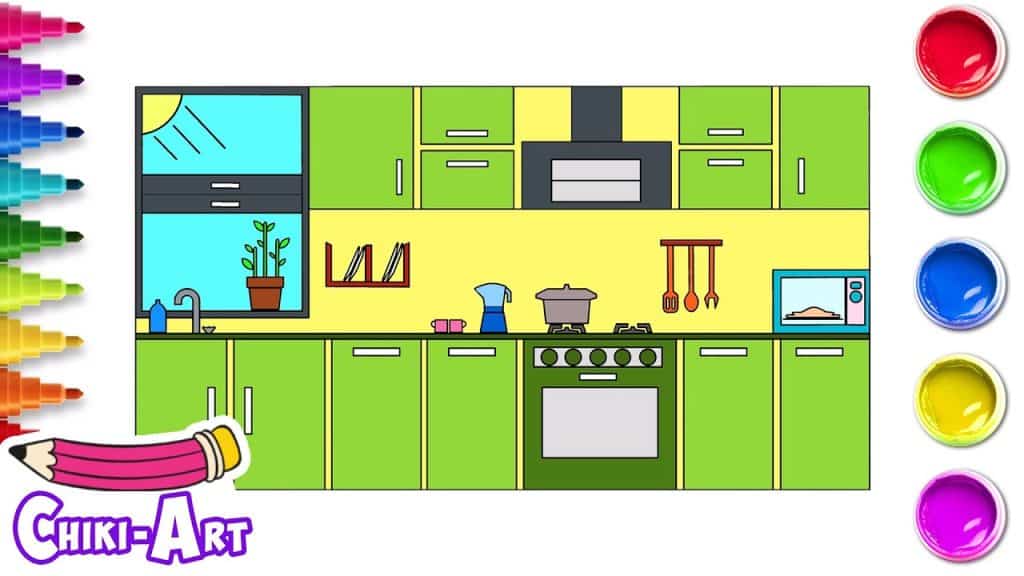
Are you ready to transform your kitchen sketching skills from simple doodles to stunning artworks? Whether you’re an aspiring artist or someone who simply loves to explore creativity, knowing how to draw kitchen can be an exciting and rewarding experience.
Picture the satisfaction of capturing every detail, from the sleek countertops to the cozy dining table, all with your own hands. In this guide, we’ll break down the process into easy, manageable steps, ensuring you gain confidence with each stroke of your pencil.
Imagine impressing friends and family with your newfound artistic talent. Keep reading, and you’ll uncover the secrets to creating a captivating kitchen drawing that truly stands out.

Credit: www.youtube.com
Planning Your Kitchen Layout
Planning your kitchen layout helps you create a space that works well. It makes cooking and cleaning easier and more enjoyable.
A good layout fits your needs and the shape of your room. Take time to plan carefully before you start drawing.
Choosing The Right Floor Plan
Pick a floor plan that suits your kitchen size and how you like to cook. Common plans include single-wall, L-shape, U-shape, and galley.
Each plan has strengths. For example, L-shape works well in corners. A galley plan fits narrow spaces.
- Single-wall: all appliances and counters on one wall
- L-shape: two walls connected at a right angle
- U-shape: counters on three walls forming a U
- Galley: two parallel walls with a walkway in between
Measuring Your Space Accurately
Measure your kitchen space before drawing. Include walls, doors, windows, and appliances.
Use a tape measure and write down each dimension. Check twice to avoid mistakes.
- Measure wall lengths from corner to corner
- Note door and window sizes and locations
- Include space for appliances and cabinets
- Leave room for walking paths and openings
Considering Work Zones
Divide your kitchen into work zones for cooking, cleaning, and storage. This helps keep tasks organized.
Common zones include the cooking zone near the stove, the cleaning zone near the sink, and the storage zone for food and utensils.
- Cooking zone: stove, oven, and nearby counter space
- Cleaning zone: sink, dishwasher, and trash area
- Storage zone: pantry, refrigerator, and cabinets
- Prep zone: counter space for cutting and mixing
Gathering Essential Drawing Tools
Drawing a kitchen requires the right tools to make your work clear and precise.
Using proper tools helps you create detailed sketches and improve your skills.
Selecting Pencils And Erasers
Choose pencils with different hardness for various lines and shading. Soft pencils like 2B make dark lines. Hard pencils like H create light lines. Use a kneaded eraser to lift graphite gently. A standard rubber eraser removes strong marks.
- 2H pencil for light outlines
- HB pencil for general drawing
- 2B or 4B for shading and dark lines
- Kneaded eraser for fine corrections
- Rubber eraser for clean erasing
Using Rulers And Templates
Rulers help draw straight lines and measure accurately. Templates assist in creating shapes like circles or squares quickly. Using these tools saves time and improves the neatness of your drawing.
| Tool | Purpose |
| Straight ruler | Draw straight lines and measure lengths |
| Triangle ruler | Draw precise angles and perpendicular lines |
| Circle template | Draw perfect circles of various sizes |
| French curve | Draw smooth curved lines |
Digital Vs. Traditional Tools
Digital tools use software and tablets for drawing. Traditional tools use pencils, paper, and rulers. Each method has strengths and fits different needs.
- Digital:Easy to edit, many effects, no mess
- Traditional:Hands-on feel, simple setup, no power needed
- Both:Can be combined for best results
Sketching Basic Kitchen Shapes
Drawing a kitchen starts with simple shapes. These shapes form the base of your sketch. You can build your drawing step by step.
Focus on the main parts first. Walls, doors, windows, cabinets, and appliances are key. This guide shows how to sketch these elements.
Drawing Walls And Boundaries
Begin by outlining the kitchen walls. Use straight lines to mark the room’s edges. Keep the lines light to adjust later if needed.
- Draw a rectangle or square for the room shape.
- Show thickness by drawing parallel lines for walls.
- Leave space for openings like doors or windows.
- Mark corners clearly to keep the shape accurate.
Marking Doors And Windows
Add doors and windows inside the wall outlines. Use simple shapes to represent them. This helps place light sources and access points.
| Element | Shape | Placement Tip |
| Door | Rectangle with arc for swing | Place on wall edge for entry |
| Window | Thin rectangle | Position on outer walls for light |
Positioning Cabinets And Appliances
Sketch cabinets and appliances inside the room shape. Use simple boxes and rectangles for each item. Arrange them logically for function.
Consider these points when placing items:
- Keep the work triangle in mind: stove, sink, refrigerator.
- Use rectangles for base and wall cabinets.
- Draw squares or rectangles for large appliances like ovens and fridges.
- Leave walking space between items.
Adding Details For Realism
Drawing a kitchen with realistic details makes your artwork stand out. Small touches help viewers connect with the scene.
Adding fixtures, textures, and lighting creates depth and interest. These elements bring your kitchen drawing to life.
Incorporating Fixtures And Fittings
Fixtures like faucets, sinks, and handles add character to your kitchen. Pay attention to their shapes and shadows.
- Draw faucet curves smoothly and add reflections.
- Show sink depth with shading inside the basin.
- Use small highlights on metal handles to show shine.
- Include hinges or screws for realism on cabinets.
Designing Countertops And Backsplashes
Countertops and backsplashes have textures and patterns. Capture these details to enhance your drawing.
| Material | Texture Features | Common Colors |
| Granite | Speckled, rough spots | Gray, black, white |
| Marble | Veins, smooth surface | White, cream, green |
| Tile | Grid pattern, grout lines | Various bright colors |
| Wood | Grain lines, knots | Brown, tan, reddish |
Including Lighting Elements
Lighting shapes the mood and shows form. Use light and shadow to add realism.
Types of kitchen lighting to consider:
- Overhead lights that cast soft shadows
- Under-cabinet lights that highlight countertops
- Natural light from windows creating bright spots
Show reflections and light sources clearly to guide the eye.
Applying Color And Texture
Adding color and texture brings your kitchen drawing to life. These elements help show the mood and style of the space.
Choosing the right colors and textures makes your drawing feel real and inviting.
Choosing A Color Palette
Select colors that match the kitchen’s mood and lighting. Warm colors create a cozy feel. Cool colors look fresh and clean.
- Pick 3 to 5 main colors for balance
- Use neutral colors for walls and floors
- Add bright colors for accents like chairs or utensils
- Test colors under different lighting
Shading Techniques For Depth
Shading shows how light hits objects in your kitchen. It adds depth and makes shapes more clear.
- Identify the light source in your drawing
- Shade areas that are farther from the light darker
- Use softer shading for smooth surfaces
- Apply harder shadows where edges are sharp
- Blend shades carefully for a natural look
Representing Materials Visually
Different materials have unique looks. Wood, metal, and tile need distinct textures to feel real.
| Material | Color Tips | Texture Tips |
| Wood | Use warm browns and tans | Add grain lines and knots with fine strokes |
| Metal | Use cool grays and silvers | Add highlights and sharp reflections |
| Tile | Use bright or neutral colors | Draw grout lines and smooth surfaces |

Credit: www.youtube.com
Finalizing And Presenting Your Design
Finishing your kitchen drawing carefully ensures the design looks clear and professional. Presentation is key to sharing your ideas with clients or using them yourself.
Focus on checking details, adding helpful notes, and preparing your design for its final use.
Reviewing For Accuracy
Look over every part of your drawing. Make sure measurements are correct and all features match the kitchen layout you planned.
- Check appliance placements and sizes
- Verify countertop dimensions
- Confirm cabinet positions and heights
- Review door swings and clearances
Adding Annotations And Labels
Labels help explain your design clearly. Use notes to show materials, colors, and special details.
| Label | Description |
| Countertop | Material type and finish |
| Cabinet | Style and color |
| Sink | Type and size |
| Lighting | Fixture type and placement |
Preparing For Client Or Personal Use
Present your design in a clean and organized way. Choose a format that works for your client or your own use.
- Print on high-quality paper
- Use clear fonts and labels
- Include a cover page with project details
- Prepare a digital version for easy sharing

Credit: www.youtube.com
Frequently Asked Questions
How Do I Start Drawing A Kitchen Layout?
Begin by sketching the kitchen’s basic shape and dimensions. Mark key areas like counters, appliances, and storage. Use simple shapes to represent each element. This helps plan space efficiently and visualize the overall layout before adding details.
What Tools Are Best For Drawing A Kitchen Design?
Use pencils, rulers, and graph paper for accuracy. Digital tools like SketchUp or AutoCAD offer precision and easy editing. Choose tools based on your comfort and the complexity of your kitchen drawing project.
How Can I Make My Kitchen Drawing Look Realistic?
Add shading and texture to surfaces like countertops and floors. Include details such as handles, tiles, and appliances. Use perspective techniques to show depth. These elements create a more lifelike and engaging kitchen illustration.
What Are Common Kitchen Elements To Include In A Drawing?
Include cabinets, countertops, sink, stove, refrigerator, and lighting fixtures. Don’t forget windows, doors, and electrical outlets. These elements ensure your drawing reflects a functional and complete kitchen space.
Conclusion
Drawing a kitchen can be simple and fun. Start with basic shapes and add details step by step. Use light lines first to make changes easy. Pay attention to the placement of cabinets, appliances, and counters. Practice often to improve your skills and confidence.
Remember, every drawing gets better with time. Keep your tools ready and enjoy the process. Soon, you will create kitchen drawings that look clear and neat. Just take your time and keep practicing. Drawing kitchens can open doors to new creative ideas.