How to Draw a Kitchen Design With Measurements
Are you dreaming of creating the perfect kitchen design but don’t know where to start? Imagine walking into a space tailored to your taste and lifestyle, where every corner reflects your vision.
Designing a kitchen can be an exciting yet daunting task. Whether you’re planning a renovation or a fresh new build, having a clear design plan is crucial. This guide will show you how to draw a kitchen design that not only meets your needs but also brings your dream kitchen to life.
By the end of this article, you’ll have the tools and confidence to create a design that’s both functional and beautiful. Let’s dive in and turn your kitchen dreams into reality!
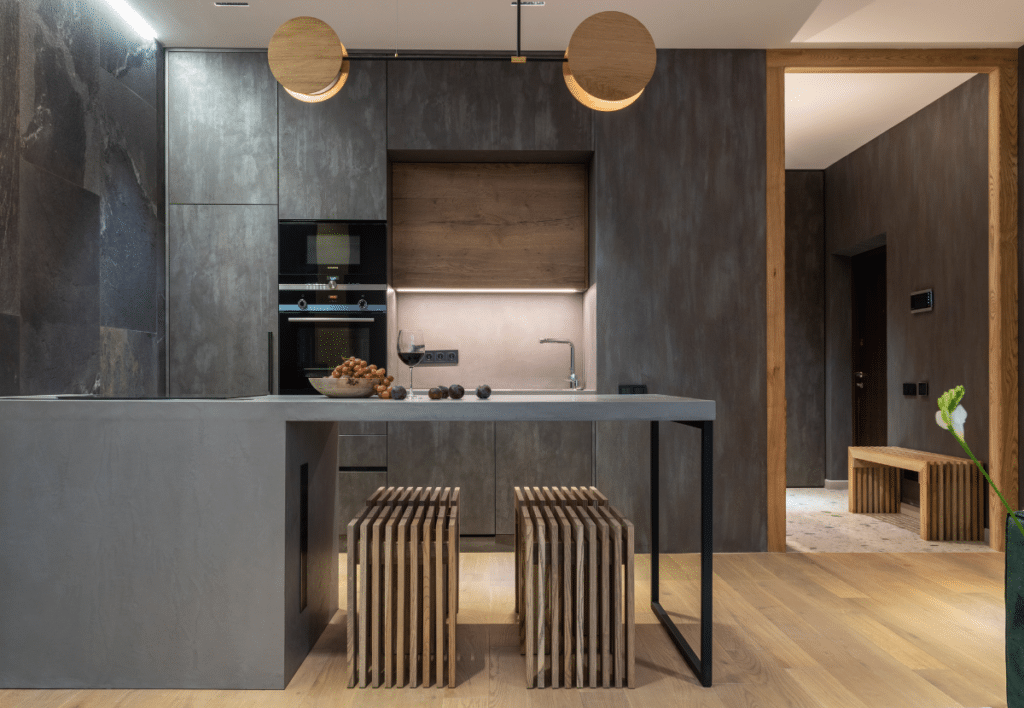
Credit: www.bestonlinecabinets.com
Gathering Inspiration
Drawing a kitchen design starts with finding good ideas. Inspiration helps you create a space you will love.
Look around for styles, colors, and materials that fit your taste. This makes the design process easier.
Exploring Kitchen Styles
Choose a kitchen style that matches your home and lifestyle. Styles guide the look and feel of the space.
Popular kitchen styles include modern, farmhouse, and traditional. Each style has unique features and layouts.
- Modern kitchens have clean lines and simple shapes
- Farmhouse kitchens use rustic materials and warm colors
- Traditional kitchens feature classic details and rich wood
- Minimalist kitchens focus on function and open space
Finding Color Schemes
Colors set the mood in your kitchen. Pick colors that make you feel comfortable and happy.
Use a mix of main colors, accents, and neutrals. This balance keeps your kitchen lively but not busy.
- White and gray create a clean, bright look
- Blue and green add calm and freshness
- Warm tones like red and yellow bring energy
- Neutral shades like beige and taupe feel cozy
Selecting Materials And Finishes
Materials and finishes affect your kitchen’s style and durability. Choose ones that fit your needs.
Think about countertops, cabinets, flooring, and hardware. Each part adds texture and color to the design.
- Wood offers warmth and natural beauty
- Stone like granite or marble is strong and elegant
- Metal finishes add shine and modern touch
- Matte surfaces hide fingerprints and scratches
- Glossy finishes reflect light and look bright
Planning The Layout
Drawing a kitchen design starts with planning the layout carefully. A good layout makes cooking easier and the space more enjoyable.
Focus on how you use the kitchen, the size of the space, and how people move around. These steps help you create a smart design.
Measuring Your Space
Measure the kitchen area accurately before drawing your design. Include walls, doors, windows, and any fixed appliances.
- Measure length and width of the room
- Mark locations of doors and windows
- Note the height of ceilings
- Record positions of water and electrical outlets
Arranging Key Zones
Divide the kitchen into key zones to improve function. These zones include cooking, cleaning, and storage areas.
| Zone | Main Features |
| Cooking | Stove, oven, microwave |
| Cleaning | Sink, dishwasher, trash bin |
| Storage | Cabinets, pantry, refrigerator |
Considering Traffic Flow
Plan clear paths between zones to allow easy movement. Avoid placing obstacles in walkways or near work areas.
Tips for good traffic flow:
- Keep pathways at least 36 inches wide
- Allow enough space between counters and islands
- Place frequently used items within easy reach
- Ensure doors and drawers can open fully without blocking paths
Sketching Basic Shapes
Drawing a kitchen design starts with simple shapes. These shapes help you plan the space clearly.
Using basic shapes makes it easy to add details later. It saves time and keeps your design neat.
Drawing Walls And Boundaries
Begin by sketching the walls of your kitchen. Use straight lines to mark the room’s edges.
Show doors and windows with breaks or openings in the walls. This helps plan the layout better.
- Draw outer walls first
- Mark door and window positions
- Use light lines for easy changes
Marking Appliances And Fixtures
Next, add the main appliances like the stove and fridge. Use simple shapes like rectangles or circles.
Show sinks and lighting fixtures too. Place them where they fit best in the space.
- Draw rectangles for ovens and fridges
- Use circles or ovals for sinks
- Place fixtures near walls or windows
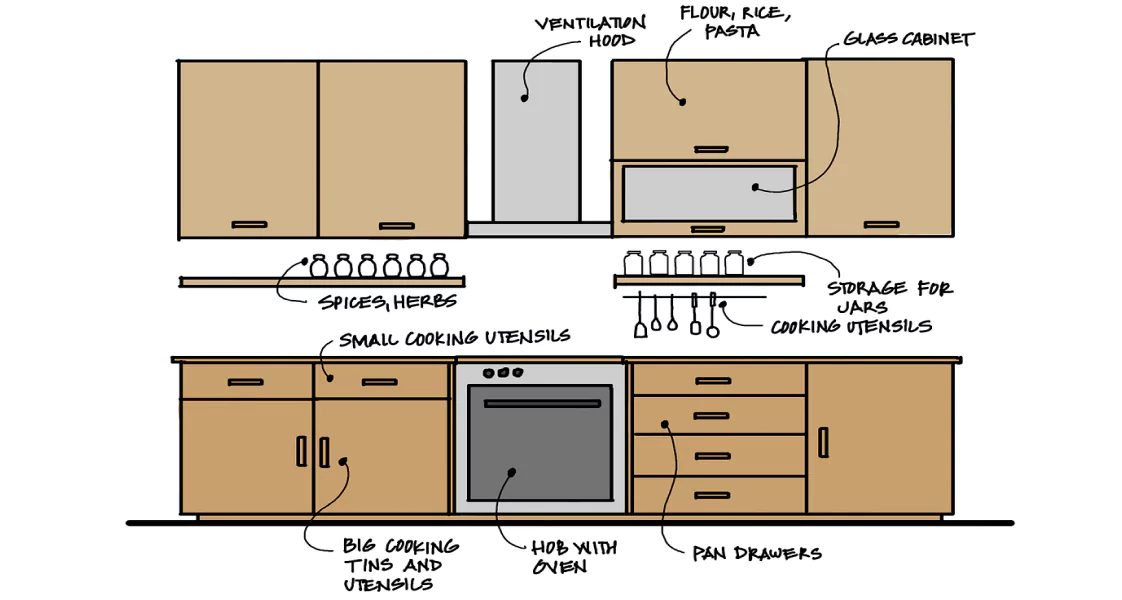
Adding Cabinets And Storage
Sketch cabinets along the walls using rectangles. Show both upper and lower cabinets.
Include storage spaces like shelves or pantry areas. This helps organize the kitchen well.
- Use long rectangles for cabinet runs
- Mark shelves with small lines inside rectangles
- Keep space for easy access and movement
Credit: foyr.com
Adding Details
Adding details to your kitchen design makes the space unique and practical. Details help bring the design to life.
Focus on elements like lighting, countertops, and decorative features. These parts improve the kitchen’s look and feel.
Including Lighting Elements
Lighting is key to a warm and functional kitchen. Use different light types to brighten up work areas and create mood.
Include ceiling lights, under-cabinet lights, and pendant lamps. Each type serves a purpose and adds style.
- Ceiling lights provide general lighting
- Under-cabinet lights illuminate countertops
- Pendant lamps add decorative touches over islands
Designing Countertops And Backsplash
Countertops and backsplash protect walls and surfaces. They also define the kitchen’s style.
Choose materials that match your design theme. Use colors and patterns to create a clean and attractive look.
- Granite and quartz offer durability and shine
- Tiled backsplashes add color and texture
- Simple materials work well in modern kitchens
Incorporating Decorative Features
Decorative features add personality to your kitchen. Use items that fit your style and space size.
Think about open shelves, plants, or unique cabinet handles. These small touches make the kitchen feel inviting.
- Open shelves show off dishes and décor
- Plants bring freshness and color
- Custom handles add character to cabinets
Refining Your Drawing
Refining your kitchen design drawing helps make your ideas clear. It turns a rough sketch into a detailed plan.
This step lets you improve the look and function of your kitchen before building or remodeling.
Using Colors And Textures
Colors and textures bring life to your kitchen drawing. They show how different materials and finishes will look.
Use colors to highlight cabinets, walls, floors, and appliances. Textures give a sense of material types like wood or stone.
- Choose light colors to make the space feel larger
- Use darker colors for contrast and depth
- Add textures like tiles, wood grain, or metal finishes
- Match colors with your style, such as modern or rustic
Adjusting Proportions
Check the size of each item in your drawing. Make sure cabinets, counters, and appliances fit well together.
Keep the proportions realistic to avoid problems in real life. Use a ruler or software tools to measure accurately.
- Measure door and window sizes carefully
- Keep walking space at least 36 inches wide
- Balance tall and low cabinets for better flow
- Ensure appliances have enough clearance around them
Reviewing For Functionality
Look at your design from a daily use view. Think about how easy it is to cook, clean, and store things.
Make sure the layout supports smooth movement and access to key areas like the sink, stove, and fridge.
- Plan the “work triangle” between sink, stove, and fridge
- Allow enough counter space near appliances
- Place storage close to where you use items most
- Check if lighting is enough for cooking and cleaning
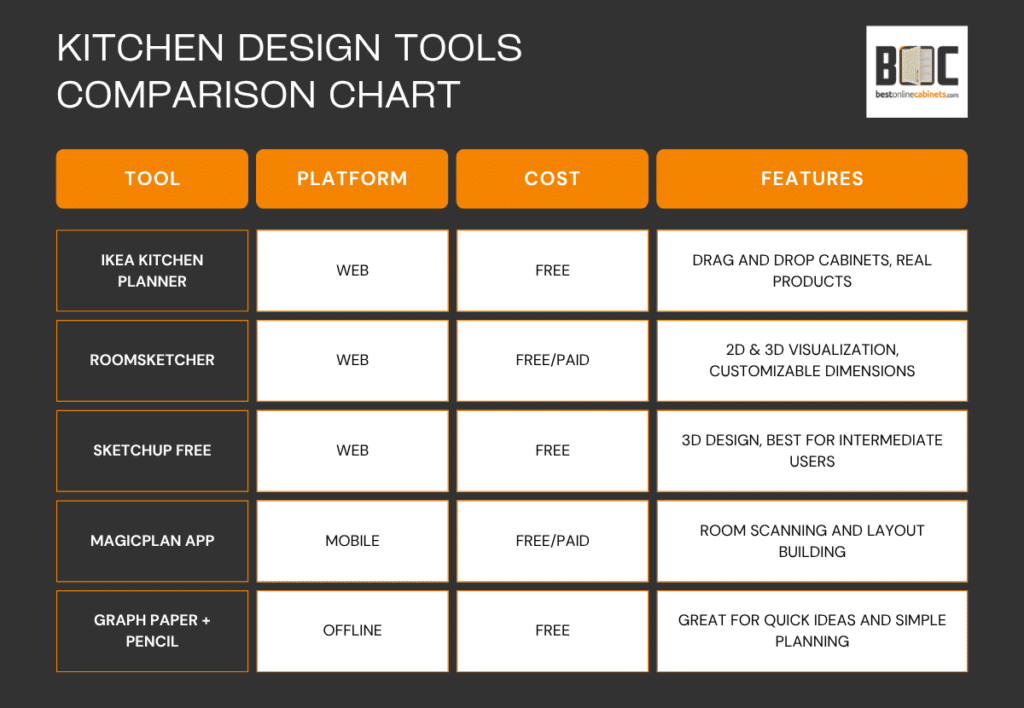
Using Digital Tools
Drawing a kitchen design with digital tools makes the process clear and fast. These tools let you create detailed plans and see your ideas on screen.
Many digital options help you change designs and try new layouts without starting over. You can save time and avoid mistakes this way.
Choosing Software Options
Pick software based on your needs and skill level. Some tools are simple for beginners, while others suit experts.
- Free software is good for basic sketches and small projects.
- Paid programs often offer more features and better tools.
- Look for software with easy drag-and-drop functions.
- Check if the program supports 2D and 3D views.
- Read reviews to see what other users say about the software.
Benefits Of 3d Modeling
3D modeling shows your kitchen design in three dimensions. This helps you understand space and how different parts fit together.
| Benefit | Description |
| Better Visualization | See the kitchen from all angles before building. |
| Easy Changes | Modify designs quickly without redrawing. |
| Accurate Measurements | Get precise sizes for cabinets and appliances. |
| Material Preview | Test colors and textures to match your style. |
Tips For Digital Sketching
Start with simple shapes to build your kitchen layout. Use layers to separate walls, furniture, and appliances.
- Use grid lines to keep your drawing aligned.
- Save your work often to avoid losing progress.
- Try different styles and colors to see what fits best.
- Zoom in for details and zoom out for the full view.
- Practice with tutorials to learn new techniques.
Final Touches
After drawing your kitchen design, the final touches help make it clear and ready. These details make sure your ideas are easy to understand.
Labeling, creating presentation boards, and preparing for implementation are key steps. They help turn your design into a real kitchen.
Labeling Key Elements
Label all important parts of your kitchen design. This includes cabinets, appliances, and work areas. Clear labels help others see your plan.
Use simple names and show sizes or materials if needed. This guides builders and clients through your design.
- Name each cabinet and drawer
- Mark appliance locations like fridge and stove
- Label sinks, counters, and islands
- Show materials for floors and walls
Creating Presentation Boards
Make presentation boards to display your kitchen design. These boards combine drawings, colors, and material samples in one place.
Presentation boards help others see your ideas clearly. They make it easier to get feedback and approval.
- Include your labeled kitchen drawing
- Add color swatches for walls and cabinets
- Attach photos of materials and finishes
- Use neat layouts for easy reading
Preparing For Implementation
Before building starts, prepare your design for implementation. Make sure all measurements and details are correct.
Provide clear instructions to contractors. This helps avoid mistakes and keeps the project on track.
- Double-check all dimensions
- List materials and quantities needed
- Explain special features or custom work
- Share contact info for questions
Credit: www.bestonlinecabinets.com
Frequently Asked Questions
What Tools Do I Need to Draw a Kitchen Design?
You need graph paper, pencils, erasers, rulers, and a scale for accurate measurements. Digital tools like design software also help create precise kitchen layouts efficiently.
How Do I Start Drawing a Kitchen Layout?
Begin by measuring your kitchen space accurately. Sketch the room’s shape, then add key elements like cabinets, appliances, and work areas to scale.
What Are Essential Kitchen Design Principles to Follow?
Focus on functionality, space efficiency, and the kitchen work triangle. Ensure proper lighting, ventilation, and enough storage for a practical, comfortable kitchen.
How Can I Choose the Right Kitchen Design Style?
Consider your home’s overall style and your personal preferences. Popular styles include modern, traditional, farmhouse, and minimalist, each with unique features and materials.
Conclusion
Drawing a kitchen design helps plan your space clearly. It shows where appliances and cabinets will go. You can see how much room you have to move. This step saves time and money during building. Start with a simple sketch, then add details.
Take your time and make changes as needed. A good design makes cooking easier and more fun. Keep practicing to improve your drawing skills. Soon, you will create a kitchen that fits your needs perfectly.