
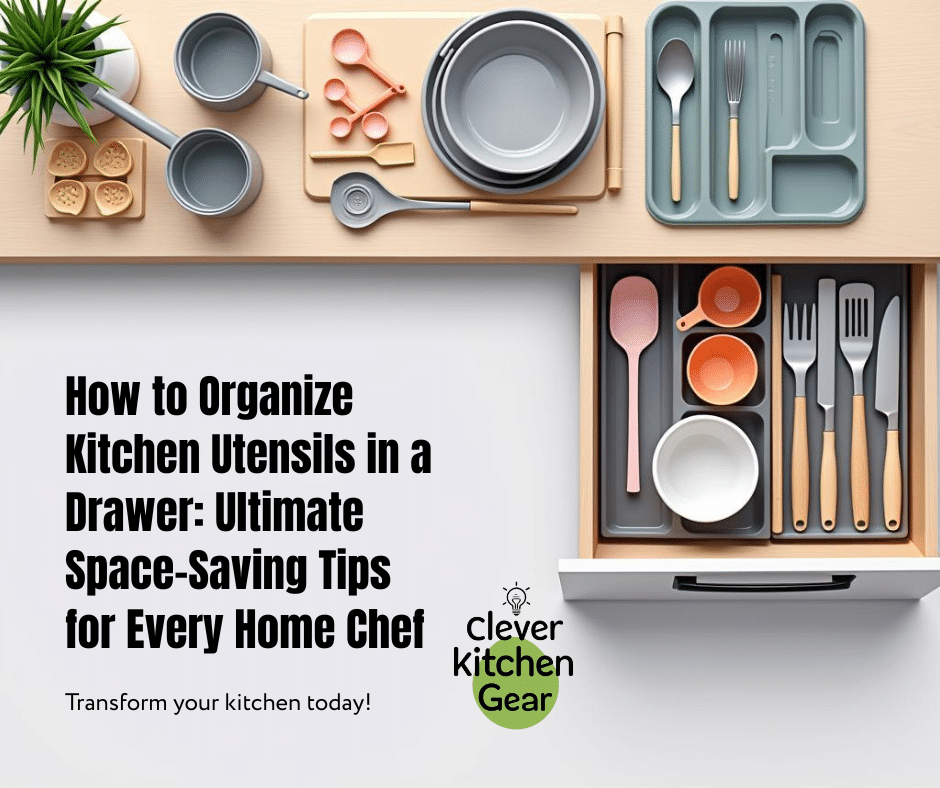
Your kitchen drawer is messy. Finding the right tool feels like a hunt. You are not alone in this. Good news: Organizing your utensils doesn't need to be stressful.
Imagine opening your drawer. You instantly spot the spoon or spatula. No digging. No frustration. This guide shows simple, practical steps. You will also learn how to organize kitchen utensils in a drawer the right way. Transform your drawer into a tidy space. Ready to make cooking smoother and better?
Let's organize your kitchen utensils perfectly!
1. Assess Your Drawer Space
Organizing starts with checking the drawer size. Knowing your room helps you plan storage better.
Taking time to check keeps tools tidy. It also makes them easy to find. This stops clutter from growing later.
Measure Dimensions
Use a tape measure for size. Find the drawer's length, width, and depth. Write these numbers down to use later.
Exact size helps you choose the right organizers. Utensils will fit neatly inside.
- Measure inside the drawer space only.
- Note any inside dividers or bumps.
- Measure the height to fit tall tools.
Evaluate Utensil Quantity
Count all your kitchen utensils first. This shows how much space you need for each type.
Group tools by use or size. See what fits best in the drawer area.
- Forks, knives, and spoons for eating.
- Cooking tools like spatulas and whisks.
- Special items like peelers and tongs.
2. Declutter Unused Items
Kitchen drawers often get messy. They fill with tools you never use. Removing unused items creates space.
Decluttering makes finding what you need easier. It also keeps your kitchen cleaner.
Sort Essential Utensils
Take all the utensils out first. Look at each item carefully. Decide if you use it often.
Keep only tools you use daily or weekly. These are your essential items. They belong in the drawer.
- Spoons, forks, and knives for daily eating.
- Measuring cups and spoons for cooking.
- Spatulas and ladles for stirring food.
- Peelers and graters for food prep.
Donate or Discard Extras
Separate extra tools you rarely use. These can be donated or thrown away.
Donating good utensils helps other people. It also reduces waste. Broken or rusty items should be thrown out properly.
- Check local charities or shelters for donations.
- Recycle metal or plastic tools if you can.
- Throw away damaged or rusty items.
3. Choose the Best Organizers
Organizing tools helps you find them fast. The right organizers keep everything neat.
Choosing the best organizer depends on your drawer. Consider the size and your utensil collection. Good organizers save space and protect your items.
Use Dividers and Trays
Dividers and trays separate tools by type or size. They stop clutter. They make it easy to stay tidy.
- Wood or plastic dividers separate spoons and forks.
- Trays with sections hold small items well.
- Use shallow trays for flat tools.
- Non-slip trays stop items from sliding.
Opt for Adjustable Inserts
Adjustable inserts fit different drawer sizes. You can change the sections easily.
| Feature | Benefit |
| Customizable sections | Organizes tools of various sizes. |
| Expandable width | Fits different drawer widths. |
| Durable material | Lasts longer and holds heavy tools. |
| Easy to clean | Keeps the drawer hygienic. |
Credit: creators.yahoo.com
4. Sort by Function
Organizing tools by function helps you find items fast. This method keeps your drawer useful.
Sorting tools by their use makes cooking easier. It also makes cleaning easier. This saves time and reduces clutter.
Group Similar Items
Put tools that do the same job together. For example, keep all knives in one area.
Grouping helps you grab the right tool fast. It makes putting items back simple, too.
-
Knives go in one area.
-
Spoons and forks in another.
-
Measuring cups stay together.
-
Whisks and spatulas are grouped.
Prioritize Frequent Use
Keep the most-used tools near the front. This saves time when you cook or eat.
Less-used items can go in the back. Or put them in a separate spot. This keeps the drawer tidy.
-
Everyday forks and knives are up front.
-
Special cooking tools go in the back.
-
Seasonal tools are stored elsewhere.
5. Maximize Vertical Space
Using vertical space helps keep tools neat. It makes finding tools faster. This also saves room in the drawer.
Good organization stops clutter. It keeps your kitchen tidy. Use these easy ways to use vertical space well.
Stack Utensils Smartly
Stacking tools by size saves drawer space. Put larger tools on the bottom layer. Place smaller ones on the top.
Use small containers or dividers to keep stacks stable. This stops items from mixing. It makes the drawer look neat.
-
Group spoons, forks, and knives separately.
-
Stack items of similar size together.
-
Use small boxes to hold tiny tools.
Use Multi-level Trays
Multi-level trays add layers inside the drawers. They use vertical space without creating a mess.
Put often-used tools on top trays. Store less-used tools underneath. This keeps everything easy to reach.
-
Choose trays that fit your drawer size.
-
Label trays to find items quickly.
-
Stack trays to keep tools organized.
Credit: creators.yahoo.com
6. Use Labels and Maintain Order
Organizing tools becomes easier with labels. Labels help you find items fast. They keep everything neat.
Clear labels show what belongs in each spot. This reduces clutter. It saves time while cooking.
Create Clear Labels
Use simple words for labels. Make sure they show exactly what goes in each space.
Print labels or write them neatly. Use text that is easy to read quickly.
-
Label sections like "Spoons", "Forks", and "Knives".
-
Use waterproof labels.
-
Place labels where you can see them easily.
Maintain Organization
Check your drawer often to keep it tidy. Put tools back in the right spot after using them.
Update labels if you change the items in a section. This keeps the system working well.
-
Clean the drawer often to avoid dirt.
-
Fix or replace old, worn-out labels.
-
Keep similar items grouped together.
Regular Care Routine
Keeping your drawer organized makes cooking easier. Regular care helps maintain order. It saves time searching for tools.
-
Take all tools out for cleaning.
-
Wipe the drawer with a damp cloth.
-
Dry the drawer fully before putting items back.
-
Check tools for damage or rust. Throw them out if needed.
-
Return tools neatly to their correct spot.

Credit: www.ikea.com
Frequently Asked Questions
How can I sort kitchen utensils?
Sort tools by category. Use groups like spoons, forks, knives, and cooking tools. This makes finding items quicker. It keeps your drawer tidy.
What drawer organizers work best?
Use adjustable trays or dividers for flexible storage. Bamboo or plastic organizers work well. They keep tools separate and easy to grab.
How often should I declutter?
Declutter every three to six months. Remove unused or duplicate items. This prevents the drawer from getting too full.
Can I store sharp knives in a drawer?
Do not store sharp knives loosely. Use a knife block or a magnetic strip. This keeps knives safe. It also protects your drawer lining.
Final Thoughts
Organizing kitchen utensils is simple and easy. Start by sorting similar items. Use dividers for better separation. Small containers help hold tiny items neatly. Declutter regularly to free up space. Label sections if you need to. Finding tools will now be easier.
A tidy drawer saves time during meal prep. It also makes cooking more enjoyable. Try different setups. Find what works best for you. Enjoy the ease of a well-organized kitchen drawer. Happy cooking!


