Is your kitchen utensil drawer a cluttered mess that makes cooking more stressful than it should be? You’re not alone.
A messy drawer can waste your time and patience every day. But imagine opening that drawer and instantly finding exactly what you need—no digging, no frustration. You’ll discover simple, effective ways to organize your kitchen utensil drawer so it works for you, not against you.
Keep reading, and transform your kitchen into a space where everything feels just right.
Credit: creators.yahoo.com
Assess Drawer Space
Organizing your kitchen utensil drawer starts with understanding the space you have. A good plan helps keep utensils neat and easy to find.
Take time to check your drawer size and type. This will guide how you arrange your utensils.
Measure Dimensions
Measure the length, width, and depth of your utensil drawer. Use a tape measure for accuracy.
- Write down the drawer’s length and width in inches or centimeters.
- Measure the depth from the bottom to the top edge.
- Note any obstacles inside the drawer, like dividers or handles.
Identify Drawer Types
Knowing your drawer type helps you choose the right organizers. Drawers differ by design and function.
| Drawer Type | Description | Best Use |
| Flat Drawer | Shallow with no dividers | Small utensils like spoons and peelers |
| Deep Drawer | More space and depth | Large utensils and kitchen tools |
| Divided Drawer | Built-in sections or compartments | Separate utensil types easily |
Sort Utensils By Use
Organizing your kitchen utensil drawer makes cooking easier. Sorting utensils by how often you use them saves time and space.
Keep your most used tools easy to reach. Store less used items in separate sections to avoid clutter.
Everyday Tools
These are the utensils you use daily. Keep them at the front or top of your drawer for quick access.
- Spoons and forks
- Knives for cooking and eating
- Spatulas and wooden spoons
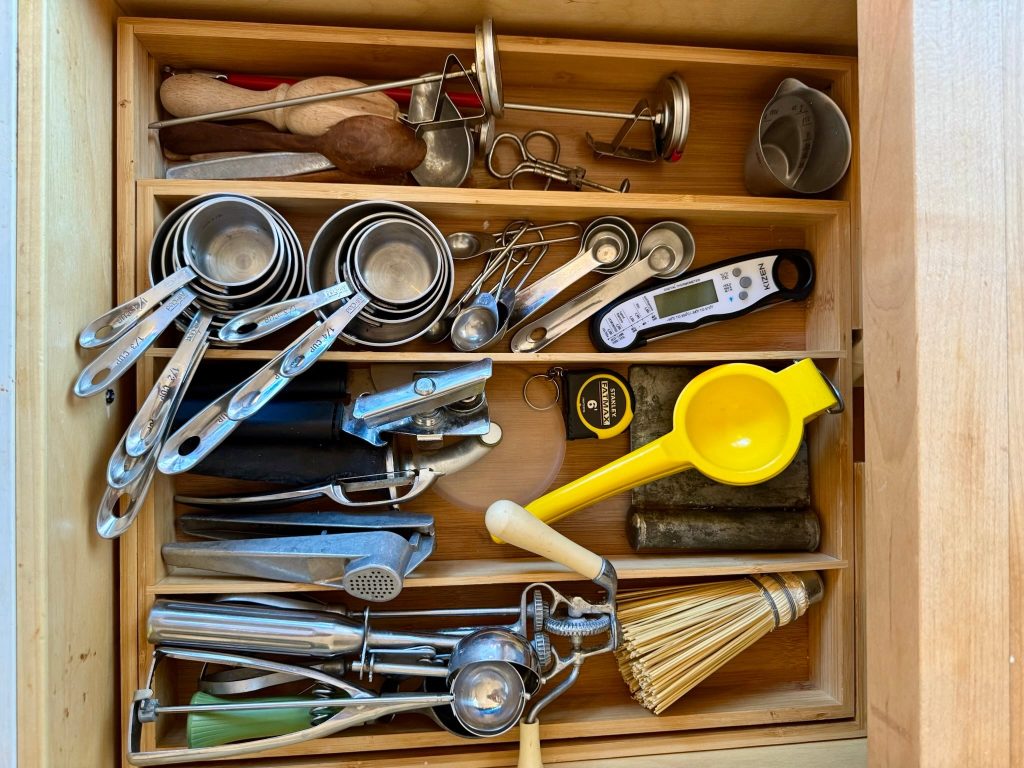
- Measuring cups and spoons
Occasional Items
These tools you use sometimes. Store them in the middle or back of the drawer to keep them out of the way.
| Utensil | Use |
| Whisk | Mixing batters |
| Garlic press | Crushing garlic |
| Corkscrew | Opening bottles |
| Peeler | Peeling vegetables |
Rarely Used Utensils
These utensils are used very rarely. Store them in a separate section or another drawer to avoid clutter.
Examples of rarely used utensils:
- Ice cream scooper
- Fondue forks
- Cherry pitter
- Melon baller
Choose Organizers
Organizing your kitchen utensil drawer makes cooking easier and faster. Using the right organizers helps keep everything neat and in place.
Choosing the best organizers depends on your drawer size and the types of utensils you have. Here are some common options to consider.
Drawer Dividers
Drawer dividers separate utensils into sections. They fit inside your drawer and create small compartments.
Dividers keep spoons, forks, and knives from mixing. They also stop utensils from sliding around.
- Adjustable dividers fit different drawer sizes
- Wooden or plastic dividers are easy to clean
- Use dividers to separate by utensil type or size
Trays And Inserts
Trays and inserts fit into drawers and hold utensils in place. They have shaped slots for each item.
They help keep small tools like peelers and measuring spoons organized and easy to find.
- Plastic trays are lightweight and simple to clean
- Silicone inserts provide a soft grip for utensils
- Some trays have special sections for knives or scissors
Custom Solutions
Custom organizers fit your specific drawer and utensil needs. They can be made from wood, metal, or plastic.
Custom options allow you to maximize space and match your kitchen style.
- Built-in compartments for large and small utensils
- Use non-slip liners to keep items from moving
- Choose materials that match your kitchen decor
Credit: creators.yahoo.com
Arrange Utensils Efficiently
Organizing your kitchen utensil drawer saves time and reduces clutter. A well-arranged drawer makes cooking easier.
Use simple strategies to keep your utensils neat and easy to find. This helps your kitchen stay tidy every day.
Group Similar Items
Put the same types of utensils together. This keeps things organized and quick to locate.
For example, place all spoons in one section and all forks in another.
- Separate cooking tools from eating utensils
- Group measuring spoons and cups together
- Keep baking tools in one area
Maximize Vertical Space
Use drawer organizers that stand upright to save space. This helps you see and reach utensils easily.
Stack trays or small containers can fit inside the drawer to add layers for different utensils.
- Use utensil holders that stand vertically
- Add small bins to separate items by height
- Use drawer dividers to create vertical slots
Keep Frequently Used Items Accessible
Place your most used utensils near the front of the drawer. This saves time when cooking or eating.
Less-used items can go towards the back or in separate sections.
- Store daily tools like knives and spoons upfront
- Keep specialty tools in the back
- Arrange items by how often you use them
Maintain Clutter-free Drawer
Keeping your kitchen utensil drawer neat helps you find tools quickly. A clutter-free drawer saves time and reduces stress.
Simple habits and regular checks keep your drawer organized and easy to use every day.
Regular Decluttering
Take time often to remove items you do not use. Throw away broken or duplicate utensils to clear space.
Only keep tools that you use daily or weekly. This makes your drawer less crowded and more useful.
- Empty the drawer completely
- Sort items into keep, toss, or donate
- Clean the drawer before placing items back
- Organize items by type and size
Daily Tidying Habits
Put utensils back in their place right after use. This stops clutter from building up over time.
Wipe the drawer surface if spills happen. Small daily tasks keep your drawer fresh and clean.
- Return items to designated spots
- Wipe handles and surfaces regularly
- Fix small problems before they grow
Periodic Reassessment
Every few months, check if your drawer still fits your needs. Remove items you no longer use or need.
Change the layout if some utensils are hard to reach. A good setup saves time and effort.
- Check drawer contents every 3-6 months
- Remove unused or broken utensils
- Adjust organizers for better fit
- Add new tools only if necessary
Creative Storage Ideas
Organizing kitchen utensil drawers can save space and make cooking easier.
Try creative storage ideas to keep your utensils neat and accessible.
Magnetic Strips
Magnetic strips hold metal utensils firmly on walls or inside drawers. They keep tools visible and free up drawer space.
- Install strips along drawer sides or walls
- Use for knives, scissors, and metal spoons
- Easy to clean and rearrange as needed
Wall-mounted Holders
Wall-mounted holders keep utensils within reach and add style to your kitchen. They work well for wooden spoons and spatulas.
| Holder Type | Best For | Material |
| Hooks | Hanging ladles and whisks | Metal or wood |
| Containers | Grouping small tools | Ceramic or metal |
| Racks | Organizing multiple utensils | Wood or plastic |
Repurposed Containers
Use old jars, tins, or boxes to store utensils inside drawers or on counters. Repurposing saves money and adds charm.
Ideas for repurposed containers:
- Clean mason jars for forks and spoons
- Decorative tins for measuring spoons
- Wooden boxes divided into sections
- Small baskets for odd-shaped tools

Credit: www.ikea.com
Frequently Asked Questions
How Do I Start Organizing A Utensil Drawer?
Begin by emptying the drawer completely. Sort utensils by type and frequency of use. Clean the drawer before placing organizers inside.
What Are The Best Organizers For Utensil Drawers?
Use adjustable dividers, trays, or bamboo organizers. These keep utensils separated and easy to find. Choose materials that match your kitchen style.
How Can I Maximize Space In A Utensil Drawer?
Stack trays or use vertical dividers. Group similar items together and remove duplicates. Keep only essential utensils to save space.
How Often Should I Reorganize My Utensil Drawer?
Reorganize every 3 to 6 months. This keeps the drawer tidy and removes unused items. Regular checks maintain efficiency and cleanliness.
Conclusion
A tidy kitchen utensil drawer makes cooking easier and more fun. Clear organization saves time and reduces stress. Place items where you can easily reach them. Use dividers to keep similar tools together. Remember to regularly declutter and clean your drawer.
This keeps your kitchen neat and efficient. A well-organized space boosts your cooking experience. Try these tips and enjoy a more organized kitchen today!