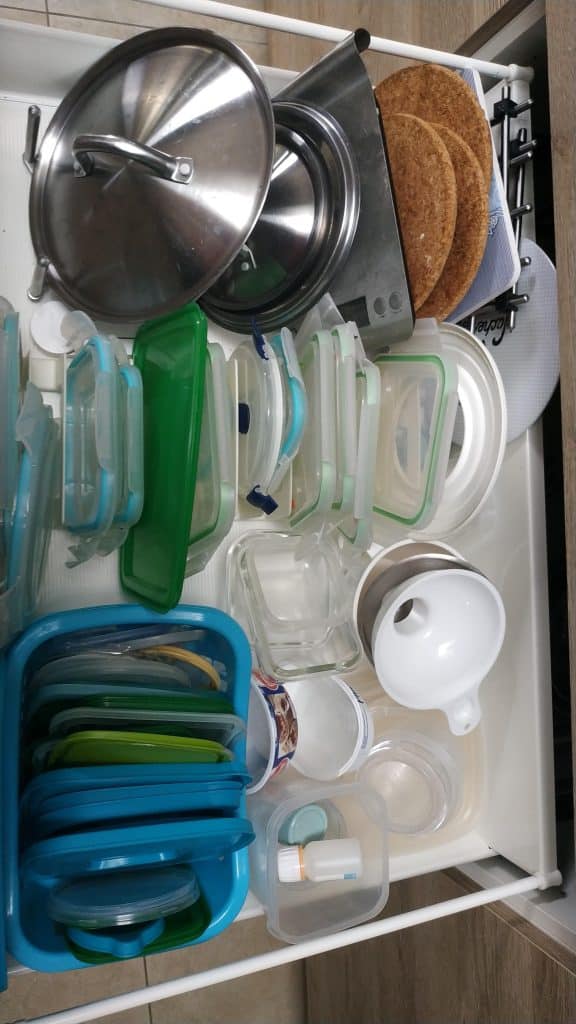
Are you tired of digging through a messy drawer every time you need a plastic container or lid? You’re not alone.
Keeping your kitchen organized can feel like a never-ending challenge. But imagine opening your cabinet and instantly finding the right container with its matching lid—no frustration, no wasted time. You’ll discover simple, effective ways to organize kitchen plastic containers and lids.
These tips will save you space, reduce stress, and make your cooking routine smoother. Ready to transform your kitchen clutter into order? Let’s dive in.
Sort Containers By Size And Shape
Organizing kitchen plastic containers and lids is easier when you sort them by size and shape. This method saves space and helps you find containers quickly.
Grouping similar containers together makes stacking simpler. It also keeps lids matched with the right containers.
Separate Containers By Size
Sort containers into small, medium, and large groups. This way, you can stack containers of the same size together without wasting space.
- Small containers fit well in drawers or small shelves.
- Medium containers work for leftovers and meal prep.
- Large containers are good for bulk storage or big meals.
Group Containers By Shape
Keep round, square, and rectangular containers in separate stacks. Matching shapes stack better and prevent tipping or sliding.
| Shape | Best Use |
|---|---|
| Round | Storing soups and liquids |
| Square | Stacking in cabinets |
| Rectangular | Holding larger meals or baked goods |
Keep lids with their containers to avoid searching later. Store lids vertically in a container or basket to save space and keep them visible.
- Stack lids inside each other by size.
- Use a small bin or basket for lids.
- Label the bin if needed for quick access.

Credit: thekrazycouponlady.com
Match Lids With Containers
Organizing kitchen plastic containers and lids can be tricky. Matching lids with containers helps keep your kitchen neat.
When lids are paired correctly, you save space and avoid frustration looking for the right lid.
Sort Containers By Size
Group containers by their size first. Small, medium, and large containers are easier to manage this way.
Stack containers inside each other to save space. This makes matching lids faster and keeps your kitchen organized.
Keep Lids Together In One Place
Store all lids in one container or basket. This stops lids from getting lost or scattered around.
Use a divider or small boxes inside the basket to sort lids by size or shape.
- Round lids in one section
- Square lids in another
- Large lids separated from small lids
Match Lids To Containers Right Away
After washing, put lids on their matching containers immediately. This prevents losing lids later.
Try to keep sets together in one spot for easy access during cooking or packing food.
Use Labels To Identify Sets
Label containers or shelves where matched sets go. This helps family members find the right containers quickly.
Labels can be simple like “Small Lids” or “Medium Containers” to make sorting faster.
Choose Clear Containers For Easy Matching
Clear containers allow you to see inside without opening them. This helps spot which lid fits easily.
When lids and containers look similar, clear plastic removes guesswork and speeds up matching.
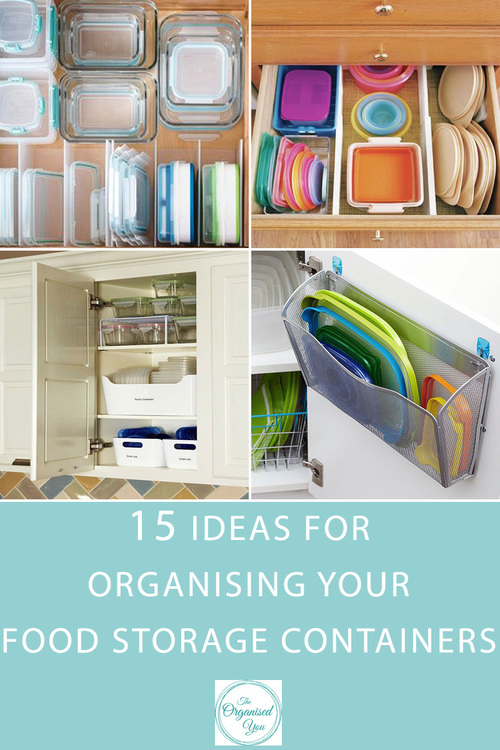
Use Clear Storage Bins
Clear storage bins help keep kitchen plastic containers and lids organized. They make it easy to see what is inside without opening each bin.
Using clear bins saves space and reduces clutter. It also helps you find the right container quickly.
Sort Containers By Size
Group plastic containers by their size to keep them neat. Store large containers together and small ones in a separate bin.
- Place large containers at the bottom of the bin
- Stack medium containers in the middle
- Keep small containers on top for easy access
Keep Lids And Containers Together
Use a clear bin to hold lids and match them with containers. You can use divider trays or small boxes inside the bin to separate lids by size.
| Container Size | Lid Type |
| Small | Snap-on lids |
| Medium | Sealing lids |
| Large | Clip-on lids |
Label Each Bin
Label clear storage bins to identify contents quickly. Use simple words like “Small Containers” or “Lids Only”.
Tip:Use waterproof labels or masking tape with a marker. This helps keep labels readable in a kitchen setting.
Credit: www.theorganisedyou.com
Label Containers And Lids
Keeping your kitchen plastic containers and lids organized saves time and space. Labeling helps you find the right container quickly.
Labels also prevent mixing lids with the wrong containers. This guide shows easy ways to label both containers and lids clearly.
Choose The Right Labels
Select labels that stick well to plastic surfaces. Waterproof and removable labels work best for kitchen use.
Label Both Containers And Lids
Write the contents and date on each container and its lid. Use the same label style for both to keep pairs matched.
- Place labels on the side of containers for visibility.
- Attach labels to the top or edge of lids.
- Use a permanent marker or printed labels for clarity.
Use Color Coding For Easy Sorting
Color coding labels can help sort containers by size or use. Assign a color to each category for quick identification.
| Color | Container Type |
| Blue | Small containers |
| Green | Medium containers |
| Red | Large containers |
| Yellow | Special use containers |
Keep Labels Clean And Updated
Check labels regularly to keep them readable. Remove old labels before adding new ones to avoid confusion.
Tip: Use a label remover or rubbing alcohol to clean label residue. This keeps containers looking neat and organized.
Stack Containers Efficiently
Organizing kitchen plastic containers and lids saves space and makes cooking easier. Stacking them properly keeps your kitchen neat and tidy.
Focus on matching containers with their lids and arranging them to avoid clutter. This helps you find what you need quickly.
Sort Containers By Size
Group containers from largest to smallest. This makes stacking easier and prevents small containers from getting lost.
Keep Lids Together
Store lids in a separate container or basket. Match lids to containers before stacking to save time later.
- Use a lid organizer rack
- Place lids in a clear basket
- Stack lids by size inside a drawer
Use Nesting To Save Space
Place smaller containers inside larger ones. Nesting reduces the amount of space needed on shelves or in cupboards.
| Tip | Reason |
|---|---|
| Label container sizes | Find matching lids faster |
| Use waterproof markers | Labels last longer |
| Mark lids and containers | Prevent mix-ups |
Credit: www.extraspace.com
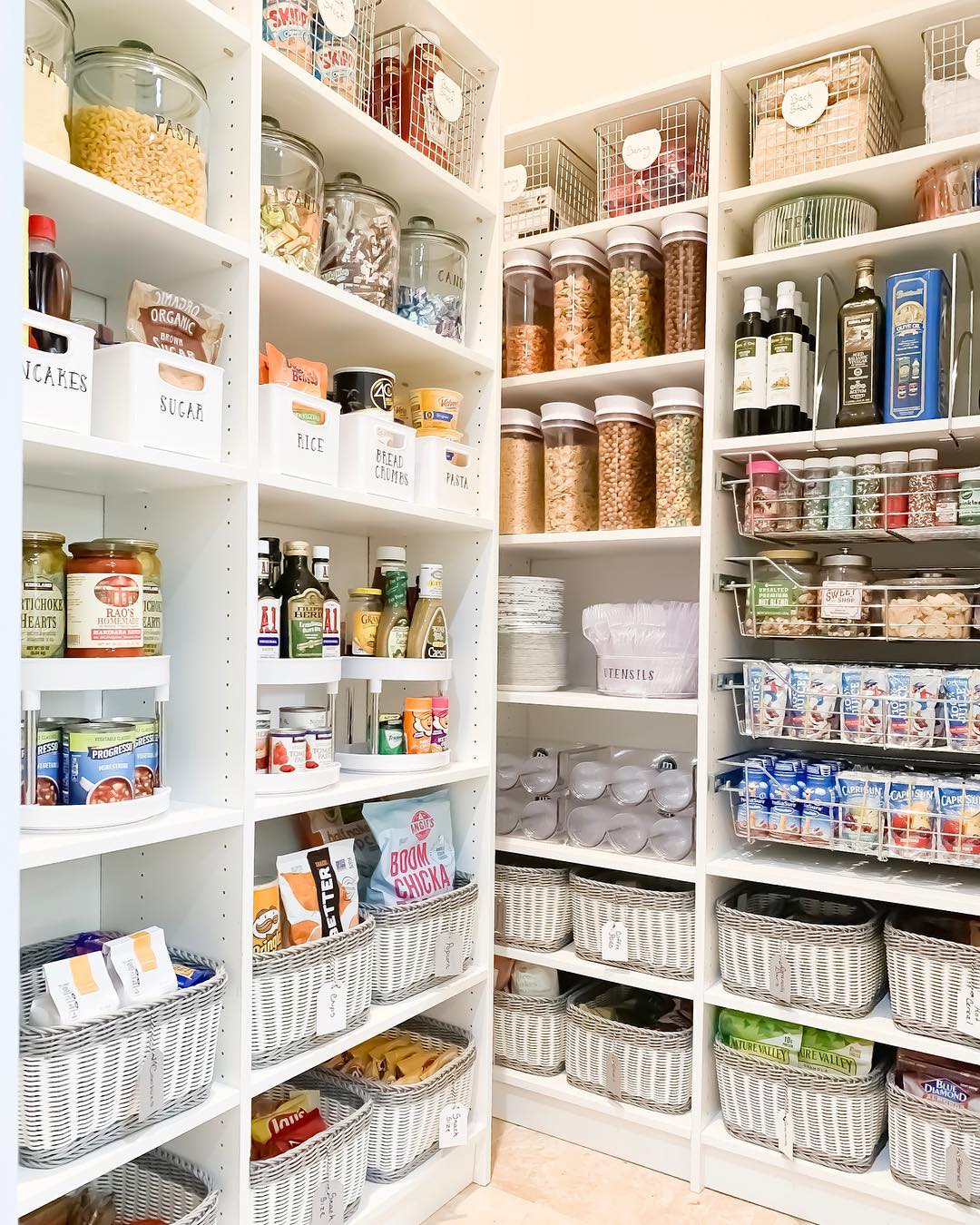
Designate A Specific Storage Area
Keeping kitchen plastic containers and lids organized saves time and space. A specific storage area helps you find what you need quickly.
Choose a spot in your kitchen that is easy to reach and has enough room for all your containers and lids.
Pick A Convenient Location
Select a cabinet or drawer near your food prep area. This saves steps and keeps containers handy when packing meals or leftovers.
Use Organizers Or Bins
Use bins or trays to group containers and lids. This keeps them from shifting and makes the area look neat.
- Stack containers by size inside bins
- Keep lids upright in a separate bin or rack
- Label bins for quick identification
Keep Containers And Lids Together
Store lids with their matching containers. This prevents losing lids and speeds up finding the right set.
| Storage Tip | Benefit |
|---|---|
| Designate one drawer or shelf | Easy access and less clutter |
| Use clear bins or trays | See contents without opening |
| Stack containers nested | Saves space |
| Keep lids upright | Prevents damage and loss |
Repurpose Household Items
Organizing kitchen plastic containers and lids can be a simple task. Using items you already have helps save money and space.
Many household objects work well for sorting containers and lids. They keep your kitchen neat and easy to use.
Use Magazine Holders For Lids
Magazine holders are tall and narrow. They fit many lids upright and keep them visible. This stops lids from getting lost.
Place the holders inside a cabinet or on a shelf. Group lids by size or shape for quick access.
Repurpose Shoe Boxes For Containers
Shoe boxes can store plastic containers neatly. They stack well and protect containers from dust.
Label each box to know what containers are inside. This keeps your kitchen organized and saves time.
Use Dish Racks To Dry And Store Containers
Dish racks are great for drying containers after washing. They also hold containers upright for easy storage.
Keep the dish rack in a cabinet or on the countertop to save space and keep containers ready to use.
Turn Old Drawer Dividers Into Organizers
Old drawer dividers can separate lids and containers inside drawers. This stops them from sliding and mixing up.
Cut the dividers to fit your drawer size. Arrange containers and lids by size for easy finding.
Use Tension Rods For Vertical Storage
Tension rods fit inside cabinets or drawers. They hold containers or lids upright, saving horizontal space.
Place rods at different heights to separate various container sizes. This method keeps everything visible and tidy.
Regularly Declutter And Clean
Keeping your kitchen plastic containers and lids tidy saves space and time. Regular cleaning and decluttering help maintain order and hygiene.
Throw away cracked or stained containers. Wash the rest to keep them fresh and ready to use.
Sort Containers And Lids By Size
Group containers and lids by size. This makes it easier to find matching sets quickly and keeps your storage neat.
- Place small containers together with their lids
- Stack medium containers in one area
- Keep large containers separate to save space
Clean Containers Thoroughly
Wash containers and lids with warm soapy water after every use. Dry them completely before storing to prevent mold.
| Cleaning Tips | Details |
|---|---|
| Use mild detergent | Protects plastic from damage |
| Avoid high heat | Prevents warping and melting |
| Air dry | Keeps lids and containers dry |
Remove Unused Or Damaged Items
Check containers regularly for cracks or stains. Toss items that are no longer safe or useful.
- Discard containers with deep scratches
- Recycle lids that are warped or broken
- Donate extra containers you don’t use
Use Vertical Space Wisely
Using vertical space helps keep kitchen plastic containers and lids neat. It frees up cabinet room and makes items easy to find.
Stacking containers and lids vertically saves space and prevents clutter. You can use racks, shelves, or organizers for this purpose.
Use Shelf Risers To Create Layers
Shelf risers add extra levels inside cabinets. This lets you stack containers without mixing lids and bases.
They help keep containers accessible and visible. You can place lids on one level and containers on another.
Install Vertical Dividers
Vertical dividers hold lids upright to save space. They keep lids from sliding and make it easy to pick the right size.
- Use dividers made for cutting boards or baking sheets
- Place dividers in cabinets or drawers
- Group lids by size for quick access
Hang Containers On Wall Or Cabinet Doors
Hanging containers frees shelf space and keeps them handy. Use hooks or wall-mounted racks to store containers vertically.
| Storage Method | Benefits | Best For |
|---|---|---|
| Shelf Risers | Creates extra layers, separates lids and containers | Cabinets with tall shelves |
| Vertical Dividers | Keeps lids upright, easy to see and grab | Drawers or narrow shelves |
| Wall or Door Hooks | Saves shelf space, quick access | Containers with handles or holes |
Organize By Frequency Of Use
Keeping kitchen plastic containers and lids tidy saves time and space. Organizing them by how often you use them helps you find what you need quickly.
Place your most used containers in easy-to-reach spots. Store items you use less often in harder-to-get areas. This method keeps your kitchen efficient and neat.
Sort Containers And Lids
Start by grouping containers and lids separately. Match lids with their containers to avoid losing pairs. If lids don’t fit containers, keep them in a separate bin.
Keep Everyday Items Accessible
Store containers and lids you use daily in the front of your cabinet or drawer. This saves time during meal prep and cleanup.
- Place frequently used containers on the top shelves or front drawers
- Keep lids in a container or rack near the containers
- Use clear bins to group these items for quick access
Store Occasional Use Items Separately
Put containers and lids you use less often in the back of cabinets or higher shelves. Label these storage spots if needed to find them easily later.
Use A Table To Plan Your Storage
| Frequency of Use | Storage Location | Example Items |
| Daily | Front shelves or drawers | Lunch boxes, snack containers |
| Weekly | Middle shelves | Meal prep containers, medium bowls |
| Monthly or Rare | Top shelves or back of cabinets | Large containers, specialty lids |
Frequently Asked Questions
How Can I Sort Plastic Containers Efficiently?
Sort containers by size and shape for easy stacking. Match lids with containers and group them together. Use bins or drawers to keep sets organized and accessible.
What Is The Best Way To Store Lids Separately?
Store lids vertically in a dedicated bin or file organizer. This prevents clutter and makes lids easy to find. Label the bin for quick identification.
How Do I Prevent Plastic Containers From Smelling?
Wash containers and lids immediately after use with mild soap. Air dry completely before storing. Avoid keeping food in containers for long periods.
Can Organizing Containers Save Kitchen Space?
Yes, organizing containers by nesting and stacking saves space. Use drawer dividers or shelf organizers to maximize storage areas. This keeps your kitchen neat and functional.
Conclusion
Organizing your kitchen plastic containers and lids brings many benefits. A tidy kitchen saves time and reduces stress. Clearly labeled containers make finding items easy. Stack similar shapes to save space. Regularly check for damaged or unused pieces. Donate or recycle them.
Consider using a dedicated storage area. This keeps everything in one place. Simple steps lead to a more efficient kitchen. You’ll enjoy cooking more. And cleaning up becomes a breeze. Start organizing today for a clutter-free kitchen. Happy organizing!