
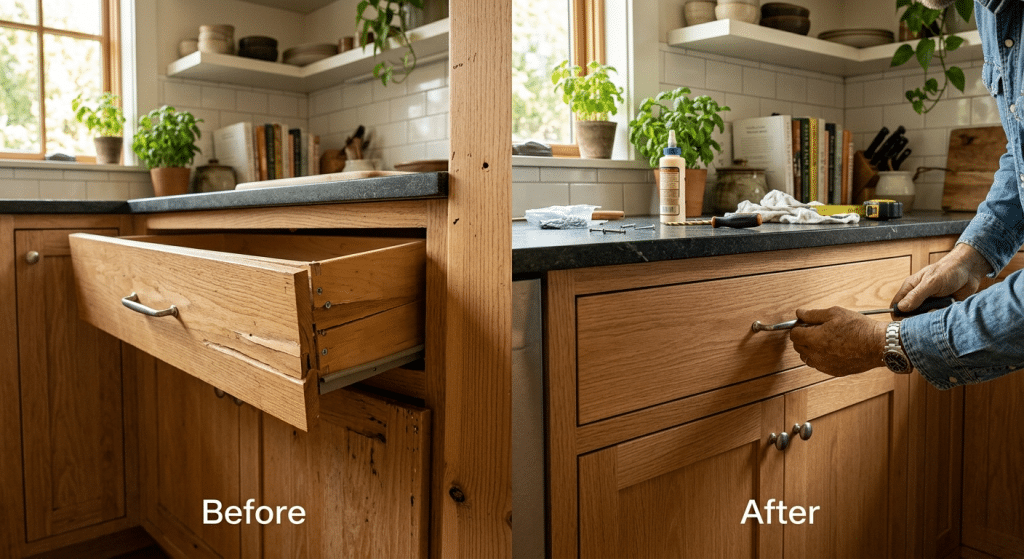
How to Fix Kitchen Drawer Front: DIY Repair Guide
Are you tired of dealing with a stubborn kitchen drawer front that just won’t stay in place? You’re not alone.
Many homeowners face this common yet frustrating problem. It might seem like a small issue, but a faulty drawer front can disrupt your daily routine and make your kitchen less functional. The good news? Fixing it is easier than you think, and you don’t need to be a DIY expert to get the job done.
In this guide, we’ll walk you through simple, effective steps to restore your kitchen drawer front to its rightful place. By the end, you’ll not only have a fully functioning drawer but also the satisfaction of knowing you fixed it yourself. Ready to tackle this challenge? Let’s get started!
Tools And Materials Needed
Fixing a kitchen drawer front requires some basic tools and materials. Having these ready makes the repair easier and faster.
Below are the common tools and recommended materials you need to complete the job well.
Common Tools For Drawer Repair
These tools help you remove, adjust, and reinstall the drawer front safely and correctly.
- Screwdriver (flathead and Phillips)
- Hammer or rubber mallet
- Measuring tape or ruler
- Clamps to hold parts in place
- Drill with drill bits
- Wood glue for bonding parts
- Sandpaper for smoothing surfaces
Recommended Materials
Using the right materials ensures your drawer front stays fixed longer and looks good.
| Material | Purpose | Notes |
| Wood filler | Filling gaps and holes | Choose a color matching your drawer |
| Replacement screws | Securing the drawer front | Use screws that fit the drawer thickness |
| Wood glue | Bonding loose joints | Use a strong, quick-drying formula |
| Painter’s tape | Protecting surfaces during repair | Helps prevent scratches and glue marks |

Credit: www.angi.com
Identify The Problem
Fixing a kitchen drawer front starts with finding out what is wrong. Knowing the problem helps you choose the right fix. You can save time and avoid more damage.
Look closely at the drawer and parts. This guide helps you check the most common issues step by step.
Check For Loose Screws
Loose screws can cause the drawer front to wobble or come off. You should remove the drawer and check each screw on the front panel and mounting brackets.
- Use a screwdriver to tighten screws gently.
- Replace any missing screws with the same size.
- If screws spin without tightening, the hole may be stripped.
- Fill stripped holes with wood filler before re-screwing.
Look For Damaged Wood Or Veneer
Damaged wood or veneer can cause the drawer front to crack or peel. Check the surface carefully for chips, cracks, or peeling veneer.
| Damage Type | Signs | Action |
| Cracks | Visible splits in wood | Fill with wood filler or glue |
| Peeling Veneer | Edges lifting from surface | Glue veneer back down carefully |
| Chips | Missing small wood pieces | Use wood putty to fill gaps |
Assess Drawer Alignment
Misaligned drawers do not close or open smoothly. Check if the drawer front sits evenly and lines up with the cabinet edges.
Look for these signs of poor alignment:
- Drawer front tilts up or down
- Gaps appear on one side
- Drawer sticks when opening or closing
- Handles do not line up evenly
Use a level to check evenness. Adjust the mounting brackets or slides to fix alignment.
Remove The Drawer Front
Removing a kitchen drawer front helps fix alignment or replace damaged parts. This guide shows easy steps to remove it safely.
Follow the instructions carefully to avoid damaging the drawer or cabinet. Prepare tools like a screwdriver before you start.
Detach Drawer From Cabinet
First, pull the drawer out fully from the cabinet. Check if the drawer has stops or clips that hold it in place.
- Look for metal or plastic clips on the drawer sides.
- Press or lift clips to release the drawer.
- Pull the drawer straight out slowly.
- If stuck, check for screws or catches inside the cabinet.
Unscrew The Front Panel
With the drawer removed, turn it over to access the screws holding the front panel. These screws keep the front panel attached firmly.
| Tool Needed | Purpose |
|---|---|
| Phillips screwdriver | Unscrew standard crosshead screws |
| Flathead screwdriver | Remove slotted screws or pry gently if needed |
| Drill (optional) | Speed up screw removal if many screws exist |
Remove all screws carefully. Keep them safe for reassembly. After unscrewing, gently pull the front panel away from the drawer frame.

Credit: www.familyhandyman.com
Repair Loose Or Stripped Screw Holes
Loose or stripped screw holes in kitchen drawer fronts cause instability. Fixing them helps drawers stay secure and work properly. Use simple materials to repair the holes and keep the drawer functional.
Two common methods to repair these holes are filling them with wood filler and reinforcing with toothpicks or dowels. Each method strengthens the screw hold and prevents future damage.
Fill Holes With Wood Filler
Wood filler fills the empty or damaged screw holes to provide a solid base for screws. Choose a wood filler that matches the drawer material color. Apply the filler, let it dry, and then reinsert the screw.
- Clean out the loose debris from the hole.
- Use a putty knife to push wood filler into the hole.
- Fill the hole completely and smooth the surface.
- Allow the filler to dry for the recommended time.
- Drill a small pilot hole if needed before screwing.
Use Toothpicks Or Dowels For Reinforcement
Toothpicks or wooden dowels provide extra support inside stripped screw holes. This method restores the hole size and gives the screw something solid to grip. It works well if the hole is too large or damaged.
| Material | Use | How to Apply |
| Toothpicks | Small holes or minor damage | Insert glued toothpicks, break off excess, screw in after drying |
| Wooden dowels | Large or deep holes | Drill out hole, glue dowel, trim flush, drill pilot hole, then screw |
Fix Cracks And Chips
Kitchen drawer fronts can get cracks or chips over time. Fixing them keeps your kitchen looking good. It also stops damage from getting worse.
Two common ways to repair these problems are using wood glue and wood filler. Each works best for different types of damage.
Apply Wood Glue
Wood glue is perfect for fixing cracks that split the wood. It holds the pieces together tightly and makes the crack less visible.
- Clean the crack to remove dirt and dust.
- Apply a small amount of wood glue inside the crack.
- Press the crack together firmly for several minutes.
- Use clamps or tape to hold the crack closed while drying.
- Let the glue dry for at least an hour before using the drawer.
Use Wood Filler For Surface Damage
Wood filler works well for chips and holes on the drawer front surface. It fills gaps and creates a smooth finish after sanding.
| Step | Description |
| 1 | Clean the damaged area to remove loose wood. |
| 2 | Apply wood filler with a putty knife, pressing it into the chip or hole. |
| 3 | Let the filler dry according to package instructions. |
| 4 | Sand the area smooth using fine-grit sandpaper. |
| 5 | Paint or stain the repaired area to match the drawer. |
Reattach The Drawer Front
Fixing a kitchen drawer front takes patience and care. Reattaching it correctly makes the drawer look good and work well.
This guide explains how to attach the drawer front firmly. Follow the tips below to do it right.
Align Properly Before Screwing
Start by placing the drawer front in its correct position. Make sure it lines up evenly with the sides and bottom of the drawer box.
- Check that the edges match the drawer frame
- Use a pencil to mark screw hole spots on the inside
- Test fit the drawer front before drilling or screwing
- Adjust the position if the gaps look uneven
Use Clamps For Stability
Clamps hold the drawer front steady while you secure it with screws. This keeps it from shifting and ensures a tight fit.
| Clamp Type | Use |
|---|---|
| Bar Clamp | Holds large drawer fronts evenly |
| C-Clamp | Good for tight, small areas |
| Spring Clamp | Quick hold for light pressure |
Place clamps evenly to avoid uneven pressure. Tighten screws while the clamps hold the front in place.
Adjust Drawer Alignment
Fixing a kitchen drawer front often means adjusting its alignment. A well-aligned drawer looks better and works smoothly.
Small changes can make a big difference. Let’s learn how to check and adjust the drawer front.
Check For Even Gaps
Look closely at the space around the drawer front. The gaps should be the same on all sides.
Uneven gaps mean the drawer is not aligned properly. This can cause sticking or rubbing.
- Open the drawer fully.
- Check the top, bottom, and sides for space.
- Notice if any side has a bigger or smaller gap.
- Mark the uneven spots to fix later.
Tighten Or Loosen Screws as Needed
Use a screwdriver to adjust the screws on the drawer front. Tighten or loosen them to move the front.
Small turns can shift the drawer front up, down, left, or right to fix the gaps.
- Find the screws behind the drawer front.
- Loosen screws slightly if the drawer front is stuck.
- Tighten screws to hold the drawer front firmly.
- Test the drawer after each adjustment.
- Repeat until the gaps are even and the drawer moves smoothly.

Credit: www.familyhandyman.com
Finish And Touch Up
Fixing your kitchen drawer front needs a good finish and touch-up. This step helps it look new and lasts longer.
Use the right tools to smooth surfaces, add color, and protect the wood.
Sand Rough Areas
Start by sanding rough spots on the drawer front. Use fine-grit sandpaper to avoid damage.
Sanding removes bumps and old finish, making the surface smooth for painting or staining.
- Wear a mask to avoid dust inhalation
- Sand evenly in the direction of the wood grain
- Wipe dust off with a clean cloth after sanding
Apply Paint or Stain
Choose paint or stain that matches your kitchen style. Use a brush or cloth to apply it evenly.
Let the first coat dry before applying a second one for better color and protection.
- Use smooth, even strokes to avoid streaks
- Paint works well for bold color changes
- Stain shows the natural wood grain
Add Protective Coating
Apply a clear protective coat to guard against scratches and water damage. Polyurethane is a common choice.
Apply thin layers and let each dry fully. This keeps the drawer front strong and shiny.
- Use a clean brush for smooth application
- Lightly sand between coats for better adhesion
- Choose satin or gloss finish based on your preference
Prevent Future Damage
Fixing your kitchen drawer front is only the first step. You must take care to stop damage from coming back. Keeping your drawers in good shape saves money and time.
Here are some tips to help you maintain your kitchen drawers and use them the right way. This helps prevent wear and tear.
Regular Maintenance Tips
Check your drawers often to catch problems early. Clean them and tighten loose screws to keep them working well.
- Wipe drawer fronts and inside with a soft cloth weekly.
- Lubricate drawer slides with a silicone spray every few months.
- Tighten all screws and handles to avoid wobbling.
- Inspect for cracks or splits in the wood or material.
- Replace worn out parts before they break completely.
Proper Usage Guidelines
Use your kitchen drawers gently. Avoid overloading them or forcing them open. This stops stress on the drawer front and slides.
| Do | Don’t |
| Open and close drawers slowly | Pull drawers too hard or fast |
| Keep weight inside limits (usually 10-15 lbs) | Overload drawers with heavy items |
| Use handles or knobs to open drawers | Pull from the drawer front or edges |
| Keep drawers clean and dry | Store wet or sticky items inside |
Frequently Asked Questions
How Do I Fix a Loose Kitchen Drawer Front?
To fix a loose drawer front, tighten or replace the screws holding it. Use a screwdriver to secure the front firmly. If screws are stripped, use wood glue or longer screws for better grip.
What Tools Are Needed To Repair A Drawer Front?
You need a screwdriver, wood glue, clamps, replacement screws, and a drill. These tools help tighten, reattach, or replace the drawer front effectively and securely.
Can I Replace A Broken Kitchen Drawer Front Myself?
Yes, you can replace it by removing the old front and attaching a new one. Measure accurately, align properly, and secure with screws or glue for a sturdy fit.
Why Is My Kitchen Drawer Front Misaligned?
Misalignment is usually due to loose screws or warped wood. Check and tighten screws, or replace damaged parts to realign the drawer front properly.
Conclusion
Fixing a kitchen drawer front can save time and money. Small problems often have simple solutions. Tighten screws, align parts, or replace broken pieces. Take your time and work carefully. You will see quick results with little effort. A well-fixed drawer looks neat and works smoothly.
Keep tools handy for future fixes. Enjoy a tidier, more functional kitchen space. Simple steps can make a big difference. Try these tips and feel proud of your work.



