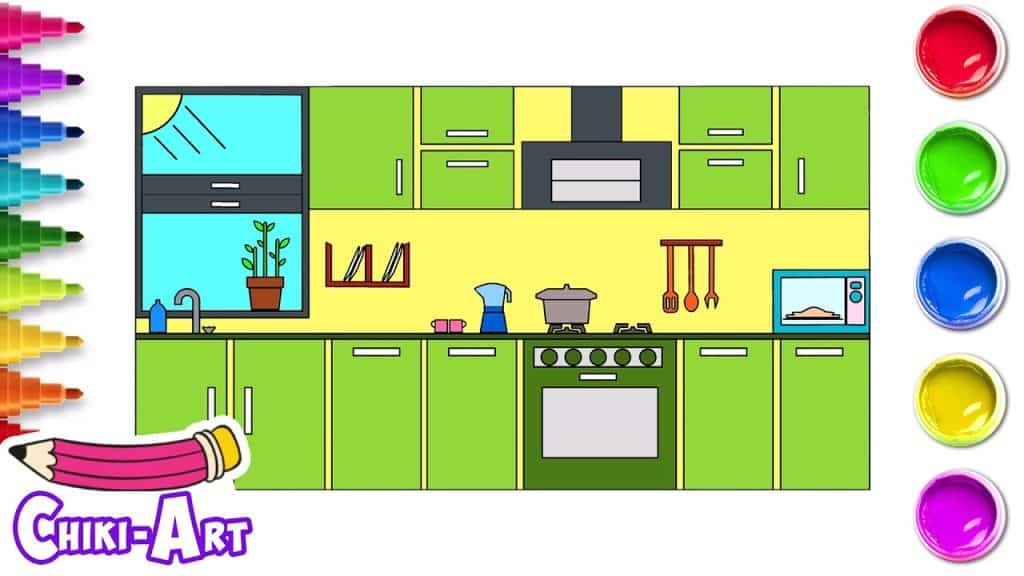
Are you ready to transform your creative visions into a stunning kitchen illustration? Whether you’re an aspiring artist or someone who simply enjoys doodling, learning how to draw a kitchen can be both exciting and rewarding.
Picture this: you, effortlessly sketching the heart of a home, capturing the warmth and charm of a space where delicious meals and cherished memories are made. Drawing a kitchen isn’t just about lines and shapes; it’s about bringing to life the unique characteristics that make every kitchen special.
In this guide, you’ll discover easy-to-follow steps and insider tips that will make your kitchen drawing come to life. So grab your pencil and paper, and let’s dive into the art of drawing a kitchen that you’ll be proud to showcase!
Planning Your Kitchen Layout
Drawing a kitchen starts with good planning. A clear layout helps make cooking easy and fun.
Think about how you use your kitchen every day. This helps create a space that fits your needs.
Choosing The Right Kitchen Style
Pick a kitchen style that fits your home’s look. It should feel comfortable and match your taste.
Popular styles include modern, traditional, and farmhouse. Each style has different features and colors.
- Modern kitchens have clean lines and simple colors
- Traditional kitchens use warm wood and classic shapes
- Farmhouse kitchens feel cozy with rustic details
Measuring Your Space
Measure your kitchen space carefully before drawing. Know the length, width, and height of the room.
Write down where doors, windows, and appliances are. This helps avoid mistakes in your plan.
- Use a tape measure for accuracy
- Note the position of plumbing and electrical outlets
- Check for any obstacles like beams or columns
Creating A Functional Work Triangle
The work triangle connects the sink, stove, and refrigerator. It makes cooking fast and easy.
Keep the triangle sides between 4 and 9 feet. This reduces walking and improves kitchen flow.
- Place the sink near the dishwasher for quick cleanup
- Keep the stove away from doors to avoid traffic
- Make sure the fridge is easy to reach from cooking areas
Gathering Drawing Tools
Before you start drawing a kitchen, it is important to gather the right tools. Good tools help you create clear and neat sketches.
This guide will cover essential drawing supplies and digital tools. Both types help you bring your kitchen ideas to life.
Essential Drawing Supplies
Traditional drawing needs a few basic supplies. These tools make your drawing process easier and more accurate.
- Pencils in different hardness (HB, 2B, 4B)
- Erasers for corrections
- Rulers and straightedges for clean lines
- Graph paper or sketchbooks
- Colored pencils or markers for adding color
- A sharpener to keep pencils fine
Using Digital Tools And Software
Digital tools allow you to draw kitchens with more flexibility. Many software programs offer easy editing and design features.
| Tool | Purpose | Example |
| Drawing Tablet | Draw directly with a pen on screen | Wacom Intuos |
| Design Software | Create and edit kitchen layouts | SketchUp, AutoCAD |
| Photo Editing | Adjust colors and textures | Adobe Photoshop |
Sketching The Basic Kitchen Shape
Drawing a kitchen starts with a simple shape. This shape shows the room’s size and layout.
Keep your lines light so you can change them later. Use a ruler for straight edges.
Drawing Walls And Flooring
Start by sketching the walls to set the kitchen boundaries. Draw straight lines for each wall.
Next, add flooring lines. These show the floor pattern or tiles in the kitchen.
- Draw parallel lines for wood planks or tiles
- Use a grid for tile floors
- Keep the floor lines lighter than walls
Marking Windows And Doors
Mark windows and doors on the walls. These openings affect kitchen design and light.
Draw rectangles or squares for windows. Use a simple line to show door swings.
- Place windows where natural light enters
- Show door openings clearly
- Leave space around doors for movement

Credit: www.youtube.com
Adding Cabinets And Countertops
Drawing a kitchen requires careful attention to cabinets and countertops. These elements shape the room’s functionality and style. This guide helps you add them step by step.
Focus on the placement and details to make your kitchen design clear. Start with the cabinets, then add the countertops for a complete look.
Drawing Upper And Lower Cabinets
Begin by sketching the upper cabinets above the countertop line. They are usually smaller and mounted on the wall. Lower cabinets sit under the countertop and provide storage and support.
- Draw rectangles for cabinet boxes, keeping consistent height and width.
- Include cabinet doors with simple lines or panels.
- Show handles or knobs as small circles or rectangles.
- Space the cabinets evenly for a balanced look.
- Mark appliances or sinks that fit between cabinets.
Designing Countertop Details
Countertops should connect smoothly with the lower cabinets. Add details like thickness and edge style to make them realistic.
| Countertop Feature | Description |
| Thickness | Draw a thin horizontal line below the countertop surface |
| Edge Style | Use straight or rounded corners depending on design |
| Material Texture | Add light shading or patterns to show stone or wood |
| Overhang | Extend countertop slightly beyond lower cabinets |
| Backsplash | Draw a short vertical strip along the wall behind countertop |
Incorporating Appliances
Drawing a kitchen involves placing key appliances correctly. Appliances give the space function and style.
Focus on the refrigerator, oven, sink, and dishwasher. Their positions affect your kitchen’s flow and look.
Positioning The Refrigerator And Oven
Start by sketching the refrigerator. It should be near the entrance for easy access. The oven goes close to the countertop.
- Place the refrigerator away from direct sunlight.
- Keep the oven near the cooking area.
- Leave enough space between the appliances for movement.
- Include ventilation space around the oven.
Sketching The Sink And Dishwasher
Draw the sink next. It should be near a window if possible. The dishwasher sits beside the sink for easy loading.
| Appliance | Ideal Location | Reason |
|---|---|---|
| Sink | Under window or central | Good lighting and easy access |
| Dishwasher | Next to sink | Easy to load and unload dishes |

Credit: www.youtube.com
Enhancing With Lighting And Fixtures
Drawing a kitchen is not just about the layout. Lighting and fixtures add life and detail. They show how a kitchen feels and works.
Good lighting makes the space bright and inviting. Fixtures like faucets and handles give character and style. Let’s look at how to include these elements in your drawing.
Adding Overhead Lighting
Overhead lighting is the main source of light in a kitchen. It helps to see clearly and sets the room’s mood. You can draw different types of overhead lights to make the kitchen look real.
- Ceiling-mounted lights: simple round or square shapes on the ceiling.
- Pendant lights: hanging lights with cords or rods above counters or islands.
- Recessed lights: small circles embedded in the ceiling for a clean look.
- Track lighting: a bar with several adjustable lights for focused lighting.
Use light shading or lines to show the glow or direction of light. This makes your drawing more dynamic and clear.
Including Faucets And Handles
Faucets and handles are small but important details. They show how the kitchen works and add style. Draw these fixtures carefully to match the kitchen design.
| Fixture | Description | Drawing Tips |
| Faucet | Controls water flow in the sink area. | Draw a curved spout and handles. Add small circles for knobs. |
| Cabinet Handles | Used to open cabinets and drawers. | Draw small rectangles or bars on cabinet doors. Keep size proportional. |
| Drawer Pulls | Attached to drawers for easy opening. | Use simple shapes like lines or bars. Place centered on drawers. |
Applying Colors And Textures
Adding colors and textures can bring your kitchen drawing to life. They help show the mood and style of the space.
Choosing the right colors and textures makes the kitchen look real and inviting. It shows materials and light effects clearly.
Choosing Color Schemes
Pick colors that match the kitchen’s mood. Use light colors for a bright look. Dark colors add warmth and depth.
Combine colors that go well together. Use one main color and two or three accent colors. This creates balance and interest.
- Neutral colors like white, beige, and gray are safe choices
- Bold colors like red or blue add energy
- Pastel colors give a soft, calm feeling
- Use contrasting colors for cabinets and walls
Adding Material Details
Textures show what materials are used in the kitchen. Wood, stone, and metal each have unique looks.
Use small patterns or shading to show texture. This helps the viewer feel the surface type.
- Wood: add grain lines and warm colors
- Stone: use speckles and rough shading
- Metal: show reflections and smooth shine
- Glass: add transparency and light reflections
Finalizing The Design
After drawing your kitchen layout, the next step is to finalize the design. This means checking every part carefully. You want the space to look and work well.
Finishing touches make the kitchen both beautiful and practical. Take time to review and prepare your drawing for the next steps.
Reviewing Proportions And Details
Look closely at the size of each element in your kitchen design. Make sure counters, cabinets, and appliances fit the space well.
Check if doors and drawers have enough room to open. Small details like lighting and outlet placement are important too.
- Ensure work areas have enough space
- Confirm appliance sizes match your plan
- Check pathways for easy movement
- Review storage options for accessibility
- Verify lighting and electrical points
Preparing For Presentation Or Renovation
Once your design is complete, prepare it for sharing or building. Clean up your drawing so it looks clear and easy to read.
Label parts and add notes if needed. This helps contractors or family members understand your plan well.
- Use clear lines and labels on the drawing
- Include measurements and material notes
- Create a list of needed items or changes
- Organize files or printed copies for easy access

Credit: www.youtube.com
Frequently Asked Questions
How Do I Start Drawing A Kitchen Layout?
Begin by sketching the room’s basic shape and dimensions. Add key elements like counters, appliances, and cabinets. Use light lines to adjust placement easily before finalizing.
What Are Essential Kitchen Features To Include In A Drawing?
Include the sink, stove, refrigerator, countertops, and storage areas. Highlight the work triangle for efficient movement between these zones. This ensures a functional and realistic kitchen design.
Which Tools Help In Drawing A Kitchen Accurately?
Use graph paper, pencils, erasers, and rulers for precise measurements. Digital tools like drawing software or apps can enhance accuracy and ease editing. Choose tools based on your skill level and preference.
How To Add Depth And Perspective In A Kitchen Drawing?
Apply one or two-point perspective techniques to create depth. Draw parallel lines converging to a vanishing point to simulate space. This makes your kitchen drawing look realistic and three-dimensional.
Conclusion
Drawing a kitchen can be simple and fun. Start with basic shapes and add details step by step. Use light lines first to plan your space. Focus on the main elements like counters, cabinets, and appliances. Keep practicing to improve your skills each time.
This guide helps you create clear and neat kitchen drawings. Soon, you will enjoy designing your own kitchen layouts. Keep your lines clean and your ideas clear. Drawing a kitchen opens new creative doors. Give it a try today!