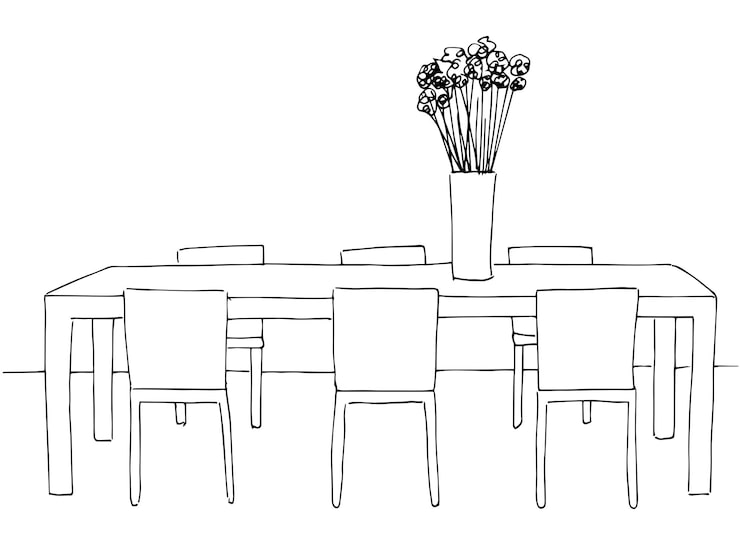
Are you ready to unleash your inner artist and learn how to draw a kitchen table? Whether you’re an aspiring illustrator, a hobbyist looking for a new project, or someone who just loves the charm of hand-drawn art, you’re in the right place.
Drawing a kitchen table might seem daunting at first, but with a few simple steps, you’ll be amazed at what you can create. Imagine impressing your friends and family with your newfound skill, transforming a blank page into a cozy scene that feels like home.
Let’s dive in and discover how easy it can be to bring this essential piece of furniture to life on paper. Stick with us, and by the end of this article, you’ll not only have a beautiful drawing but also the confidence to tackle even more artistic challenges.

Credit: www.youtube.com
Materials Needed
Drawing a kitchen table requires some basic materials. These will help you create a clear and neat sketch.
Choosing the right tools and paper makes drawing easier and more enjoyable. Let’s look at what you need.
Drawing Tools
You need simple tools to start your kitchen table drawing. Basic pencils and erasers are enough.
- Graphite pencils in different hardness (HB, 2B, 4B)
- Good quality eraser for corrections
- Sharpener to keep pencil tips fine
- Ruler to draw straight lines
Paper Selection
Choosing the right paper helps your drawing look neat. Use smooth paper for pencil sketches.
- Sketchpad or drawing paper with medium weight (around 80-100 gsm)
- White or light-colored paper to see pencil marks clearly
- A4 or larger size paper for enough space
Optional Accessories
Some extra items can help improve your drawing experience. They are not needed but useful.
- Blending stump or tissue for smooth shading
- Colored pencils to add color later
- Compass or circle template for round table parts
- Fixative spray to protect finished drawing

Credit: www.freepik.com
Basic Shapes And Structure
Drawing a kitchen table starts with simple shapes. The basic structure helps create a strong foundation. Focus on the main parts before adding details.
Use light lines to sketch and adjust as you go. This method keeps your drawing clean and easy to change.
Sketching The Tabletop
Begin with the tabletop by drawing a rectangle or square. This shape shows the surface area. Use straight lines and keep the edges even.
Draw lightly so you can change the shape if needed. The tabletop is the largest part and sets the table’s size.
Adding Table Legs
Next, add the legs under the tabletop. Legs are usually straight and vertical. Draw four legs, one at each corner for balance.
- Start with simple lines for each leg
- Make sure legs are the same length
- Space legs evenly under the tabletop
- Use rectangles or cylinders for leg shapes
Checking Proportions
Check if the tabletop and legs look balanced. The table should not look too tall or too wide. Use measuring to keep parts in proportion.
| Part | Typical Proportion | Tip |
|---|---|---|
| Tabletop Length | 2 to 3 times the leg width | Keep edges straight |
| Leg Height | About 28 to 30 inches | Match all legs evenly |
| Leg Width | 1/10 of tabletop length | Use simple shapes for legs |
Adding Details
Adding details to your kitchen table drawing makes it look real and interesting. Small touches bring the wood and shape to life.
Focus on textures, edges, and light to create a complete picture. These details help your drawing stand out.
Drawing Wood Grain
Wood grain shows the natural lines and patterns in the table. Draw soft, curved lines that follow the shape of the table surface.
- Use light strokes to create fine lines
- Draw longer lines along the length of the table
- Add small knots or swirls for a realistic look
- Vary line thickness for depth
- Keep the pattern natural and not too perfect
Including Table Edges
Table edges give the shape a clear outline. Adding these edges helps define the table’s thickness and style.
| Edge Type | Description | Drawing Tip |
| Rounded | Smooth curves on edges | Use soft, curved lines and shading |
| Beveled | Slanted edges | Draw angled lines and highlight edges |
| Sharp | Clean straight edges | Use straight, crisp lines with shadow |
Adding Shadows And Highlights
Shadows and highlights show how light hits the table. They add depth and make the table look three-dimensional.
Follow these tips for shadows and highlights:
- Identify the light source direction
- Shade areas opposite the light source
- Use softer shading for light shadows
- Add bright highlights where light hits directly
- Blend shadows to avoid harsh lines

Credit: www.freepik.com
Perspective Techniques
Drawing a kitchen table looks better when you use perspective. Perspective helps show depth and space in your picture.
There are different ways to draw perspective. This guide covers one-point and two-point perspectives and how to use vanishing points.
One-point Perspective
One-point perspective has a single vanishing point on the horizon line. All lines go toward this point.
Use this technique to draw a kitchen table seen from the front. The table’s edges will get smaller as they go back.
- Draw a horizon line across your page.
- Place one vanishing point on the line.
- Draw the front edge of the table as a rectangle.
- Connect corners of the rectangle to the vanishing point.
- Draw the back edge between these lines.
Two-point Perspective
Two-point perspective uses two vanishing points on the horizon line. It shows the table from an angle.
This style is good for showing the sides of the kitchen table clearly. The edges go to two different points.
- Draw a horizon line across your page.
- Mark two vanishing points far apart on the line.
- Draw a vertical line for the table’s corner.
- Draw lines from the top and bottom of the corner to both vanishing points.
- Close the shape by drawing vertical lines where you want the table edges.
Applying Vanishing Points
Vanishing points help create the illusion of depth. Lines seem to get closer and meet at these points.
Use vanishing points to keep your kitchen table drawing accurate. This makes the table look real and three-dimensional.
- Always start by drawing the horizon line.
- Place one or two vanishing points on the line.
- Make sure all parallel lines point toward the vanishing points.
- Check that the table parts line up with these points.
- Adjust lines as needed to keep perspective correct.
Coloring And Texturing
Adding color and texture brings your kitchen table drawing to life. It gives depth and a real feel to your artwork.
Use simple methods to create smooth colors and natural surfaces. This guide helps you add details step by step.
Choosing Colors
Pick colors that match the style of your kitchen table. Wood tones like browns and tans work well for natural tables.
- Use warm colors for a cozy look
- Choose cool colors for a modern style
- Mix light and dark shades to add contrast
- Test colors on a separate paper before applying
Blending Techniques
Blending helps colors flow smoothly into each other. It makes the table surface look natural and soft.
- Start with the lightest color as a base
- Add darker shades on edges and corners
- Use a blending tool or your finger to soften lines
- Layer colors slowly to build depth
- Keep strokes gentle to avoid harsh lines
Creating Realistic Textures
Texture gives your drawing a real touch. Wood grain and scratches make the kitchen table believable.
| Texture Type | How to Draw |
| Wood Grain | Draw thin, irregular lines along the table surface |
| Knots | Make small oval shapes with darker edges |
| Scratches | Add fine, short lines in random spots |
| Shadows | Shade under the table and around legs for depth |
Common Mistakes To Avoid
Drawing a kitchen table can be simple if you avoid some common errors. These mistakes can make your drawing look odd or unclear.
Focus on the right shapes, lighting, and details to create a balanced and realistic image.
Incorrect Proportions
Many beginners draw tables with wrong sizes for the legs or tabletop. This makes the table look strange or unstable.
- Make sure the legs are thick enough to hold the tabletop.
- Keep the tabletop width and length balanced.
- Use simple shapes to measure the parts before drawing details.
Ignoring Light Sources
Light changes how your table looks. Ignoring light can make your drawing flat and dull.
| Light Source | Effect on Table |
| Top Light | Highlights tabletop, shadows under legs |
| Side Light | One side bright, the other dark |
| Back Light | Table edges glow, front in shadow |
Overcomplicating Details
Adding too many details can confuse the viewer. It also takes longer and may ruin the drawing.
Focus on simple, clear shapes. Here are tips to avoid too much detail:
- Draw basic shapes first.
- Add only important features like wood grain or edges.
- Skip tiny decorations unless necessary.
Practice Tips
Drawing a kitchen table can be simple with regular practice. Focus on small daily efforts to improve your skills.
Use helpful tools like reference images and try different drawing styles to find what works best for you.
Daily Sketching Habits
Draw a kitchen table every day to build your confidence. Keep your sketches quick and simple at first. Over time, add details like shadows and texture.
- Set aside 10 minutes daily for sketching.
- Focus on different angles and shapes.
- Use pencils or pens to vary your lines.
- Review your work and note improvements.
Using Reference Images
Look at photos or real kitchen tables for ideas. Notice the proportions, materials, and lighting. References help you understand details better.
| Reference Type | Benefits |
| Photographs | Show exact colors and shapes |
| Real Objects | Help with perspective and texture |
| Drawings by Others | Inspire different styles and techniques |
Experimenting With Styles
Try drawing the kitchen table in different ways. Change the style to find what feels fun and comfortable.
- Sketch with loose, quick lines for a casual look.
- Use precise lines and shading for realism.
- Try cartoon or abstract styles for creativity.
- Mix colors to add mood or focus.
Frequently Asked Questions
How Do I Start Drawing A Kitchen Table?
Begin by sketching the tabletop shape, usually rectangular or round. Add simple lines for legs. Use light strokes to adjust proportions easily.
What Materials Are Best For Drawing Kitchen Tables?
Use pencils for initial sketches and fine liners for outlines. Colored pencils or markers add texture and depth to your drawing.
How Can I Add Realistic Details To My Kitchen Table Drawing?
Include wood grain, shadows, and highlights. Draw objects like plates or cups on the table to enhance realism.
What Perspective Should I Use For Drawing A Kitchen Table?
Use a two-point perspective for a natural, three-dimensional look. This shows depth and the table’s spatial relation to the room.
Conclusion
Drawing a kitchen table can be simple and fun. Start with basic shapes and add details step by step. Practice helps you improve your skills every time. Use light lines first, then darken the final drawing. Don’t worry about mistakes; they are part of learning.
Keep your drawing neat and clear for best results. Enjoy the process and be patient with yourself. Soon, your kitchen table will look just right on paper. Keep practicing, and your drawings will get better and better.