Are you dreaming of a kitchen makeover but don’t know where to start? Drawing a kitchen floor plan can be your first step toward transforming that dream into reality.
Imagine having a clear vision of your ideal kitchen layout, where every appliance and piece of furniture fits perfectly. This guide will equip you with the skills to create a floor plan that reflects your personal style and meets your practical needs.
If you’re ready to take control of your kitchen design and make the most of your space, read on to discover the secrets of crafting a flawless kitchen floor plan.
Planning Your Kitchen Space
Drawing a kitchen floor plan helps you design a space that works well. It shows where everything will go before you start building.
Good planning saves time and money. It also makes your kitchen safe and comfortable to use.
Measuring The Area
Start by measuring the length and width of your kitchen space. Use a tape measure to get exact numbers.
Note the location of doors, windows, and any fixed features like pipes or vents. These affect where you place cabinets and appliances.
- Measure walls from corner to corner
- Record door and window sizes
- Mark locations of electrical outlets and plumbing
Identifying Key Zones
Divide your kitchen into zones for cooking, cleaning, and storage. Each zone needs enough space to work comfortably.
Think about where you will cook, wash dishes, and store food and utensils. Place these zones close but not crowded.
- Cooking zone: stove, oven, and microwave
- Cleaning zone: sink and dishwasher
- Storage zone: refrigerator and cabinets
Considering Traffic Flow
Plan clear paths for walking through the kitchen. Avoid placing appliances where they block movement.
Make sure doors open without hitting counters. The kitchen should feel open and easy to move around.
- Keep main walkways at least 36 inches wide
- Allow space for appliance doors to open fully
- Place work zones in a triangle for easy access
Choosing The Right Layout
Drawing a kitchen floor plan starts with picking the right layout. The layout affects how you move and work in the kitchen.
Think about the space you have and how many people use the kitchen daily. This helps find a layout that fits your needs.
Single Wall Layout
The single wall layout places all appliances and cabinets along one wall. It works well in small spaces or open areas.
This layout keeps everything within reach but may limit counter space. It is easy to design and saves space.
L-shaped Layout
The L-shaped layout uses two adjacent walls for counters and appliances. It fits many kitchen sizes and shapes.
- Offers good counter space
- Allows for an open floor plan
- Supports multiple cooks at once
- Creates an efficient work triangle
U-shaped Layout
The U-shaped layout surrounds you on three sides with counters and storage. It maximizes space and storage.
| Feature | Benefit |
| Three connected walls | More counter space |
| Separate work zones | Efficient cooking flow |
| Good for larger kitchens | Room for multiple users |
Island Layout
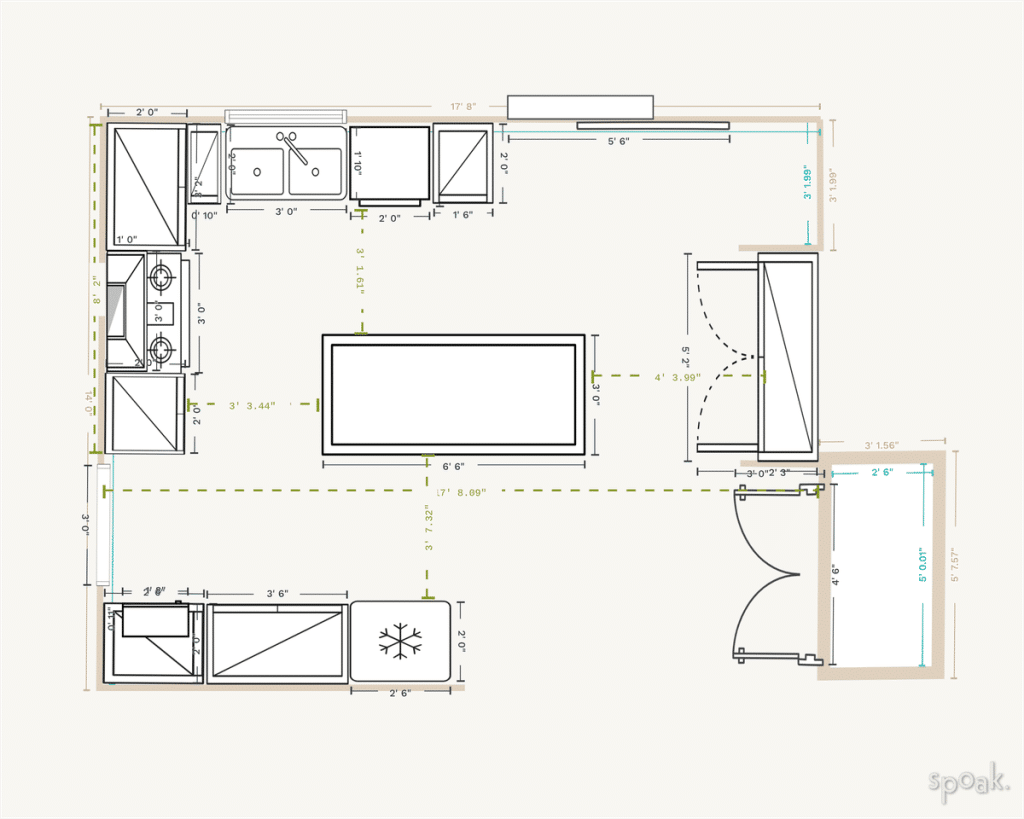
The island layout adds a freestanding counter in the center of the kitchen. It gives extra workspace and storage.
Common uses for the island include:
- Meal prep area
- Seating for casual dining
- Additional storage cabinets
- Place for appliances like sinks or cooktops
Sketching The Floor Plan
Drawing a kitchen floor plan helps you see the space clearly. It shows where everything will go.
Start by sketching the shape of the room. Then add details like doors, windows, and appliances.
Drawing To Scale
Drawing to scale means making your sketch match real measurements. This helps the plan fit the space.
Use a ruler and a scale like 1 inch equals 1 foot. Measure the walls and draw lines that match those sizes.
- Measure the length and width of the kitchen.
- Choose a scale that fits your paper size.
- Draw the outer walls using the scale.
- Check all measurements twice to avoid mistakes.
Marking Doors And Windows
Doors and windows affect where you place cabinets and appliances. Mark them clearly on your plan.
Draw door swings to show how they open. Mark window sizes and their locations on the walls.
- Use a curved line to show door swings.
- Draw rectangles for windows.
- Label each door and window for clarity.
- Keep space for walking paths near doors.
Adding Appliances And Fixtures
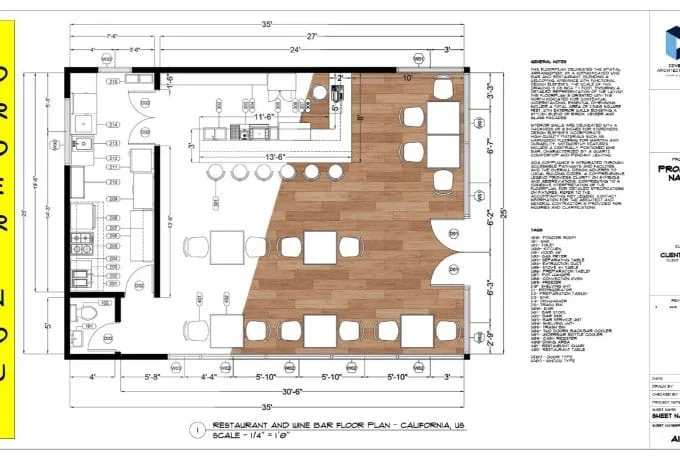
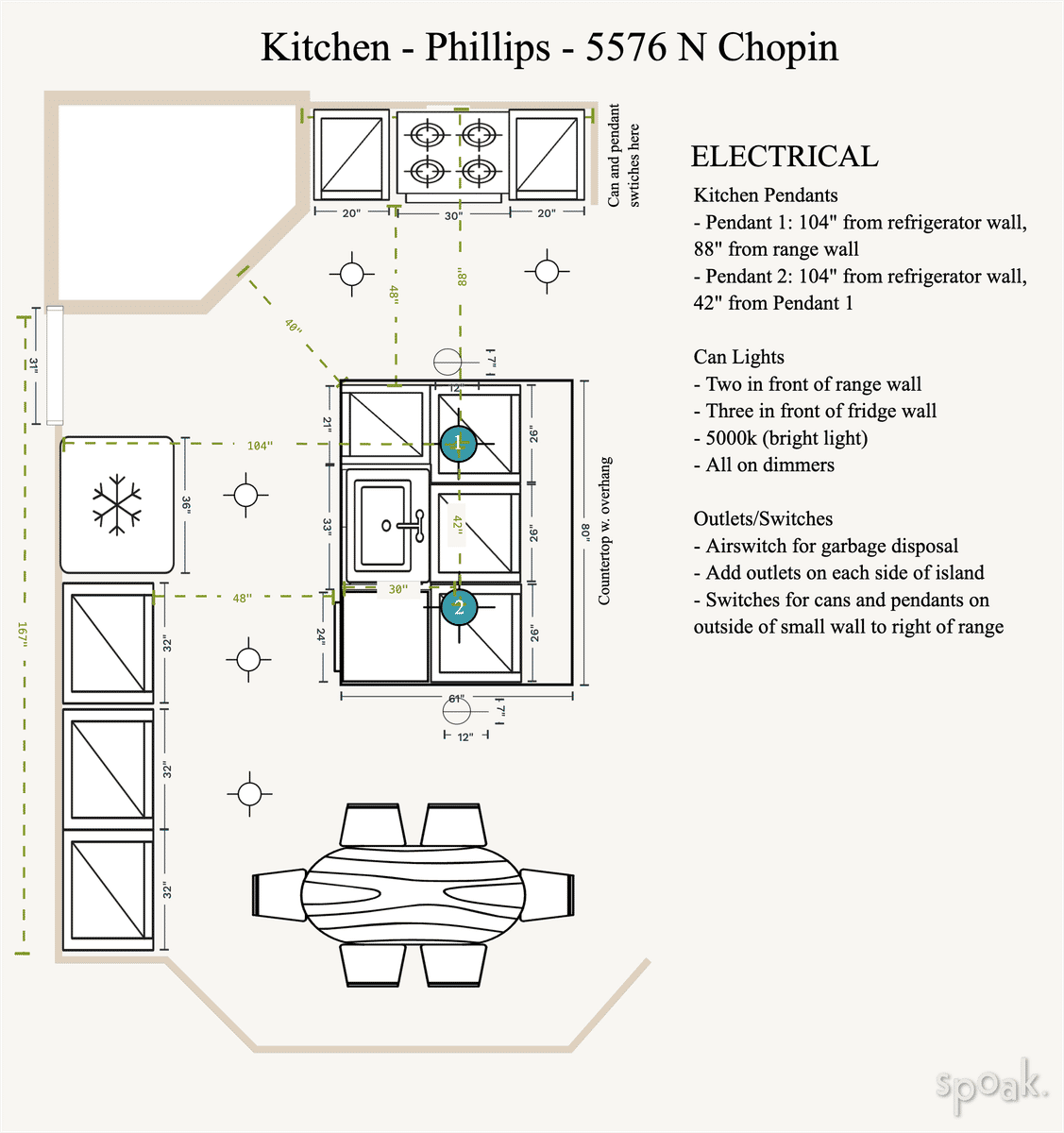
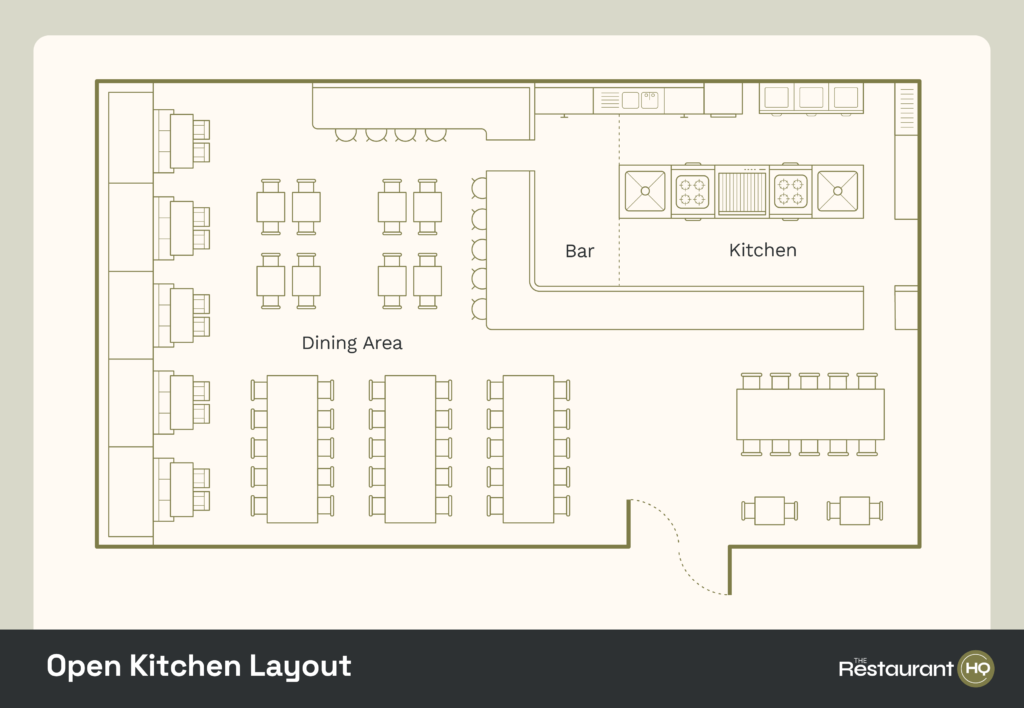
Add appliances like the stove, fridge, and sink to your floor plan. Place fixtures such as lights and outlets.
Use simple shapes to show each item. This helps you see how they fit and work together.
- Draw squares or rectangles for large appliances.
- Mark the sink near plumbing walls.
- Place appliances with enough space around them.
- Include counters and cabinets for a full layout.
Credit: www.therestauranthq.com
Incorporating Storage Solutions
Designing a kitchen floor plan requires careful thought about storage. Good storage makes the kitchen more functional and keeps it tidy.
Focus on smart storage ideas that fit your space well. This helps you use every inch wisely.
Cabinet Placement
Place cabinets near work areas like the stove and sink. This keeps utensils and ingredients close at hand. Lower cabinets hold heavy items. Upper cabinets store lighter things.
- Keep daily use items in easy reach
- Use corner cabinets with rotating shelves
- Install pull-out drawers for pots and pans
- Add cabinets above the fridge for extra space
Pantry Options
A pantry stores food and small appliances. You can choose a walk-in pantry or built-in shelves. Consider the pantry size based on your needs.
| Pantry Type | Space Needed | Best For |
|---|---|---|
| Walk-in Pantry | Large | Big families, bulk storage |
| Built-in Shelves | Small to Medium | Compact kitchens, quick access |
| Pull-out Pantry | Small | Tight spaces, easy organization |
Utilizing Vertical Space
Use walls for shelves and hooks. This frees up counter and floor space. Tall cabinets and stacked storage add capacity without crowding.
Ideas for Vertical Storage
- Install open shelves above counters
- Use magnetic strips for knives and tools
- Hang pots and pans from ceiling racks
- Add tall pantry cabinets reaching the ceiling
- Use stackable containers inside cabinets
Optimizing Lighting And Ventilation
Good lighting and ventilation are important in a kitchen floor plan. They help create a safe and comfortable space for cooking. Planning these elements carefully improves the kitchen’s usability and mood.
This guide covers natural light sources, artificial lighting choices, and ventilation considerations. These tips will help you draw a better kitchen floor plan.
Natural Light Sources
Natural light makes the kitchen bright and welcoming. Windows and skylights bring sunlight into the space. Place the kitchen near south-facing windows if possible. This gives the most light during the day.
- Use large windows above sinks or counters
- Add skylights to bring light from above
- Avoid blocking windows with tall cabinets
- Consider glass doors to let light enter
Artificial Lighting Choices
Artificial lighting is needed for night time and cloudy days. Use layers of light for the best results. Ambient light brightens the whole room. Task lighting focuses on work areas. Accent lighting adds style.
| Type of Lighting | Purpose | Example |
| Ambient | General room light | Ceiling fixtures, recessed lights |
| Task | Focused on work areas | Under-cabinet lights, pendant lamps |
| Accent | Decorative or highlighting | LED strips, spotlights |
Ventilation Considerations
Proper ventilation keeps air fresh and removes cooking smells. Plan for vents near the stove. Windows and exhaust fans help air flow. Good ventilation stops moisture and heat buildup.
- Include a range hood over the cooktop
- Place windows that open easily
- Use exhaust fans with enough power
- Check airflow paths to avoid stale air spots
Reviewing And Refining Your Plan
After drawing your kitchen floor plan, it is important to review and refine it. This step helps to make sure your design works well and fits your needs.
Careful checking and adjustments can improve the kitchen’s look and function. Take time to go over every detail before finalizing your plan.
Checking Measurements
Make sure all measurements on your plan are correct. Measure walls, windows, doors, and appliances carefully.
Double-check distances between key elements like the sink, stove, and refrigerator. This helps avoid errors during construction.
- Measure wall lengths and widths precisely
- Check appliance sizes against available space
- Confirm door and window placements
- Verify clearances for walking and working areas
Ensuring Functional Flow
Think about how you will move in the kitchen. A good flow makes cooking and cleaning easier.
Plan the work triangle between the sink, stove, and refrigerator. Keep it compact but not crowded for smooth movement.
- Allow enough space between main work areas
- Keep pathways clear of obstacles
- Place storage near where you use items
- Consider how many people will use the kitchen at once
Seeking Feedback
Show your floor plan to family or friends for their opinions. They may see problems you missed.
Ask about the design’s ease of use and comfort. Use their ideas to improve your plan.
- Share your plan with people who will use the kitchen
- Ask for honest thoughts on layout and space
- Note suggestions for changes or improvements
- Make updates based on useful feedback
Tools And Resources For Drawing
Drawing a kitchen floor plan needs some basic tools and resources. These help you create clear and accurate designs.
You can draw plans by hand or use digital tools. Templates also make the process faster and easier.
Manual Drawing Tools
Manual tools are simple and easy to find. They let you sketch your kitchen plan on paper.
Basic tools include rulers, pencils, erasers, and graph paper. These help keep your drawing neat and to scale.
- Graph paper for accurate measurements
- Mechanical pencils for fine lines
- Ruler or scale ruler for straight edges
- Eraser to correct mistakes
- Protractor for drawing angles
Digital Design Software
Digital software lets you draw kitchen plans on your computer or tablet. It offers tools for precision and editing.
Many programs come with kitchen-specific features like cabinets and appliances. You can also view your plan in 3D.
- SketchUp – easy 3D modeling
- AutoCAD – professional floor plans
- RoomSketcher – simple drag and drop
- Sweet Home 3D – free and user-friendly
- Floorplanner – create and share plans online
Helpful Templates
Templates give you a starting point. They include common kitchen layouts and standard measurements.
You can print templates for manual drawing or use digital templates within software. Templates save time and reduce errors.
- Pre-drawn grid templates on graph paper
- Kitchen layout templates with appliance outlines
- Editable digital templates in design software
- Online template libraries for free downloads
Credit: www.spoak.com
Credit: www.therestauranthq.com
Frequently Asked Questions
What Tools Do I Need To Draw A Kitchen Floor Plan?
You need graph paper, a pencil, a ruler, and measuring tape. Digital tools like SketchUp or AutoCAD also work well. These tools help create accurate, scaled drawings for your kitchen layout.
How Do I Measure My Kitchen For A Floor Plan?
Measure the length and width of your kitchen walls. Include doorways, windows, and appliances. Record measurements carefully to ensure an accurate floor plan.
What Are The Key Elements In A Kitchen Floor Plan?
Include cabinets, appliances, countertops, sink, and storage areas. Ensure proper spacing for movement and workflow. The work triangle concept is essential for efficiency.
How Can I Make My Kitchen Floor Plan Efficient?
Focus on the work triangle between the sink, stove, and refrigerator. Maintain at least 4 feet of walkway space. Optimize storage and counter space for convenience.
Conclusion
Drawing a kitchen floor plan helps you organize space clearly. It shows where cabinets, appliances, and counters will go. You can change ideas easily before building or remodeling. A good plan saves time, money, and stress. Take your time, measure well, and keep it simple.
This way, your kitchen will be both useful and nice. Start with a basic sketch and add details step by step. Drawing a kitchen floor plan makes your project smoother and smarter.