Can I Use Plunger in Kitchen Sink – Safe & Effective Guide
Have you ever found yourself staring at a stubbornly clogged kitchen sink, wondering if a plunger could be your trusty ally? You’re not alone.
Kitchen sink blockages can strike at the most inconvenient times, leaving you frustrated and searching for a quick fix. The good news is, you might already have a solution sitting in your bathroom. But before you dive in with your plunger, there are a few crucial things you need to know.
We’ll explore whether using a plunger in your kitchen sink is a safe and effective solution. By the end, you’ll have a clear understanding of how a plunger can be your go-to tool for tackling those pesky clogs without damaging your pipes or creating a mess. So, if you’re ready to reclaim your sink and keep your kitchen running smoothly, read on to discover everything you need to know about using a plunger in your kitchen sink.
When To Use A Plunger
A kitchen sink can clog from food scraps, grease, or soap build-up. Using a plunger is a simple way to clear these clogs. But it is important to know when a plunger will actually help.
Using a plunger at the right time can save you a call to a plumber. Let’s look at how to identify common kitchen sink clogs and signs that a plunger can fix them.
Identifying Kitchen Sink Clogs
Kitchen sink clogs usually happen slowly. Water drains slower than usual. Sometimes water pools around the drain or backs up into the sink.
- Water drains very slowly or not at all.
- Water pools in the sink after draining.
- You hear gurgling sounds from the drain.
- Bad smells come from the sink drain.
These signs mean there is a blockage somewhere in the drain pipe. It is often caused by food scraps, grease, or soap build-up.
Signs A Plunger Can Help
A plunger can help if the clog is near the drain opening. It creates pressure that pushes the clog loose or breaks it up.
| Sign | Reason a Plunger Helps |
| Water drains slowly but still moves | Clog is partial and near the sink |
| Water pools but does not overflow | Blockage can be pushed through |
| Drain gurgles when water moves | Air trapped by clog can be moved |
| No foul smell from drain | Clog is not caused by decay |
If water does not drain at all or smells very bad, the clog may be deeper or caused by something else. A plunger might not work in these cases.
Choosing The Right Plunger
Using a plunger is a common way to clear clogs in a kitchen sink. Picking the right plunger helps you fix the problem faster and without damage.
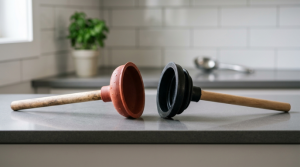
Not all plungers work well for kitchen sinks. Learning about the types can help you choose the best one for your needs.
Types Of Plungers
There are mainly two types of plungers. Each type works best for different drains and clogs.
- Cup Plunger:Has a simple rubber cup. Best for flat surfaces like sinks and tubs.
- Flange Plunger:Has an extra rubber flap that fits into pipes. Works well for toilets but can be used in kitchen sinks with deep drains.
Best Plunger For Kitchen Sinks
The cup plunger is usually the best choice for kitchen sinks. It creates a good seal on flat surfaces and moves air and water to clear clogs.
| Plunger Type | Works Well For | Notes |
| Cup Plunger | Kitchen sinks, bathroom sinks | Simple design, easy to use |
| Flange Plunger | Toilets, some deep kitchen drains | Better seal for round drains |
Preparing Your Sink
Using a plunger in your kitchen sink can help clear clogs fast. It is important to prepare your sink correctly before plunging.
Proper preparation makes the plunger work better and avoids damage to your sink or pipes.
Clearing The Drain Area
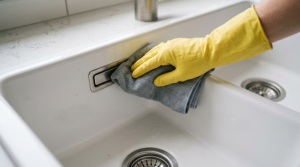
Remove any dishes, food scraps, or debris near the drain. This keeps the plunger seal tight and stops dirt from blocking the drain further.
Check inside the drain opening for any visible objects. Pull them out carefully using gloves or tongs.
- Clear dishes and utensils from the sink
- Remove food particles near the drain
- Pull out visible objects from the drain opening
Sealing Overflow Openings
Kitchen sinks may have overflow holes to prevent water from spilling out. These holes can reduce the plunger’s pressure.
Cover the overflow openings with a wet cloth or duct tape. This helps the plunger create a strong seal and push the clog out.
- Locate any overflow holes near the sink basin
- Use a wet cloth to cover the holes tightly
- Apply duct tape for a stronger seal if needed
Plunging Techniques That Work
Using a plunger can clear clogs in your kitchen sink quickly. The right technique helps push blockages away.
It is important to position the plunger correctly and use the best pumping motions. This increases the chance of success.
Correct Plunger Positioning
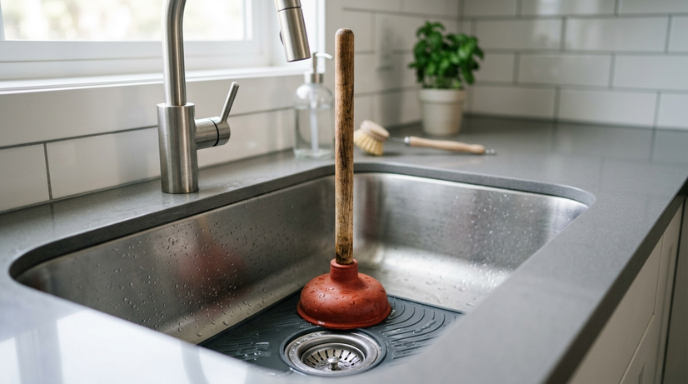
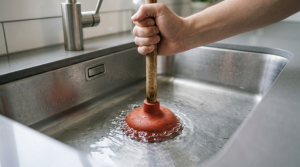
Place the plunger over the sink drain to create a tight seal. The cup must cover the drain fully to trap pressure.
- Fill the sink with enough water to cover the plunger cup.
- Center the plunger directly over the drain opening.
- Press down gently to remove air and form a seal.
- Avoid letting water or air leak out from under the cup.
Effective Pumping Motions
Use steady and strong pumps to build pressure. This helps dislodge the clog inside the pipe.
| Motion | Purpose |
| Slow and steady pushes | Build pressure gradually |
| Quick pulls | Create suction to loosen debris |
| Repeat 10 to 15 times | Maximize clearing effect |
| Finish with a strong pull | Force clog to move down |
Alternative Quick Fixes
If your kitchen sink is clogged, you might wonder about using a plunger. Sometimes, a plunger is not the best choice for kitchen sinks. There are other quick fixes that work well and are easy to try.
These alternatives can help clear minor blockages without needing special tools. They use simple household items and take only a few minutes.
Using Baking Soda And Vinegar
Baking soda and vinegar create a natural cleaning reaction. This mix can help break down grease and food stuck in the drain.
Pour half a cup of baking soda into the drain. Then add half a cup of vinegar. Let it sit for 15 minutes. After that, flush with hot water.
- Baking soda loosens grime and debris
- Vinegar helps dissolve buildup
- The fizzing action clears small blockages
- Safe for pipes and the environment
Hot Water Flushing
Hot water can help clear grease and soap scum in your kitchen sink drain. Boil water and carefully pour it down the drain in stages.
Wait a few minutes between each pour to let the hot water work. This method can loosen greasy clogs and flush them away.
- Boil about 2 to 3 liters of water
- Pour water slowly to avoid splashing
- Repeat if needed for stubborn clogs
- Do not use boiling water on PVC pipes to avoid damage
When To Call A Professional
You can use a plunger for small clogs in your kitchen sink. It helps push the blockage away. But some problems need a plumber’s help.
Knowing when to call a professional saves time and avoids damage. Some signs mean the clog is serious or plumbing is at risk.
Signs Of Serious Blockages
Serious blockages do not clear with a plunger. Water may drain very slowly or not at all. You might hear gurgling noises from the pipes.
Bad smells or water backing up into other drains show a big problem. These signs mean the clog is deep or large.
- Water stays in the sink after plunging
- Gurgling sounds when using other drains
- Foul odors coming from the sink
- Water backing up in other sinks or toilets
- Repeated clogs after plunging
Avoiding Plumbing Damage
Using a plunger too hard can harm your pipes. It may cause leaks or break old plumbing. Avoid plunging if the sink has a garbage disposal.
Do not use chemical drain cleaners with a plunger. They can damage pipes and make the clog worse. Call a plumber to protect your kitchen plumbing.
- Use gentle plunging motion, not forceful pushes
- Do not plunge sinks with garbage disposals
- Avoid chemical cleaners before plunging
- Stop plunging if water leaks or noises increase
- Call a plumber for repeated or tough clogs
Frequently Asked Questions
Can I Use A Plunger On A Kitchen Sink Clog?
Yes, a plunger works well for most kitchen sink clogs. Ensure the sink has enough water to cover the plunger cup. Create a tight seal and pump firmly to dislodge the blockage effectively.
What Type Of Plunger Is Best For Kitchen Sinks?
A cup-shaped plunger is best for kitchen sinks. Avoid flange plungers, which are designed for toilets. The cup plunger creates a good seal on flat surfaces like sink drains.
How Often Should I Use A Plunger In The Kitchen Sink?
Use a plunger only when the sink drains slowly or is clogged. Frequent use may indicate a deeper plumbing issue. Regular maintenance and cleaning help prevent clogs and reduce plunger use.
Can Plunging Damage My Kitchen Sink Pipes?
Plunging is generally safe for kitchen sink pipes. Use gentle, controlled pressure to avoid pipe damage. Avoid plunging if pipes are old, cracked, or leaking to prevent further harm.
Conclusion
Using a plunger in your kitchen sink can often clear simple clogs fast. It helps push blockages through the pipes with water pressure. Make sure to cover the drain well to create a strong seal. Avoid harsh chemicals before plunging, as they may damage pipes.
If the clog stays after a few tries, calling a plumber is best. Regular sink care can prevent future blockages. Keep the drain clean by removing food scraps and grease. A plunger is a handy tool but use it wisely.