

Have you ever paused to notice the simple moments that fill a kitchen with life? Imagine a man eating in a kitchen draw—a scene that might seem ordinary but holds more meaning than you think.
This quiet act connects us to comfort, routine, and even creativity. If you want to discover why this everyday picture captures attention and how it can inspire your own space or mindset, keep reading. You’ll see how something so simple can spark new ideas and feelings you didn’t expect.
Capturing The Moment
Drawing a man eating in a kitchen is about more than just shapes. It is about capturing a moment in time. This moment tells a story through art.
Artists use details and feelings to show what is happening. The scene becomes alive with emotion and movement.
Expressing Emotions Through Art
Art shows emotions without words. A man eating can look happy, tired, or thoughtful. The face and eyes share these feelings. Small details like a smile or frown add depth to the drawing.
- Focus on facial expressions
- Use shadows to show mood
- Highlight eyes to convey thoughts
- Include small details like wrinkles or blush
Focusing On Gestures And Movements
Gestures tell a story in a drawing. The way a man holds his fork or leans forward shows his mood. Movements add life to the scene. They make the viewer feel like they are there.
| Gesture | Meaning |
| Leaning forward | Interest or hunger |
| Slow chewing | Thoughtfulness or calm |
| Quick bites | Hurry or stress |
| Looking away | Distraction or sadness |
Setting The Scene
A man eating in a kitchen draws attention to daily life moments. The setting helps tell the story behind the scene.
Choosing the right kitchen environment and using light and shadow carefully can make the drawing feel real and alive.
Choosing The Right Kitchen Environment
Pick a kitchen style that fits the story you want to show. The environment sets the mood for the man eating.
- Modern kitchens with clean lines show a simple lifestyle.
- Rustic kitchens with wood and warm colors feel cozy.
- Small kitchens can make the scene feel intimate.
- Large kitchens give space and a sense of comfort.
Using Light And Shadow Effectively
Light and shadow create depth and focus in the drawing. They help highlight the man and his actions.
| Lighting Type | Effect on Scene |
| Soft daylight | Gentle mood, natural look |
| Harsh artificial light | Strong shadows, dramatic feel |
| Backlight | Silhouette effect, mystery |
| Side light | Texture and depth on face and objects |
Art Styles To Explore
Drawing a man eating in a kitchen offers many art style choices. You can show different moods and ideas through your style. Art styles change how viewers feel about the scene.
This guide covers two popular styles. Each style gives a unique way to express the moment. Try them to find your favorite way to draw.
Realism And Detail
Realism focuses on true-to-life images. It shows the man and kitchen with clear shapes and colors. Details like light, shadows, and textures are very important. This style makes the scene feel familiar and real.
- Draw the man’s facial expressions carefully.
- Show the kitchen tools and food items clearly.
- Use light and shadow to add depth.
- Include small details like wrinkles on clothes.
- Keep colors natural and true to life.
Impressionism And Abstract Approaches
Impressionism and abstract styles use loose shapes and colors. They focus on mood and movement, not exact detail. This style lets viewers feel the moment more freely.
| Style | Description | Key Features |
| Impressionism | Uses light brush strokes and bright colors | Soft edges, focus on light effects |
| Abstract | Focuses on shapes and colors, not realism | Bold colors, unusual shapes |

Credit: www.dreamstime.com
Color Palettes And Mood
The colors in a kitchen drawing change the room's feeling. They help show if the space feels warm or cool.
Choosing the right color palette sets the mood for the man eating in the kitchen. It can make the scene feel cozy or calm.
Warm Tones For Cozy Atmospheres
Warm colors like red, orange, and yellow create a friendly and inviting kitchen. They make the space feel comfortable.
These colors add energy and warmth to the scene. They make it look like a place where people enjoy meals together.
- Use soft reds for a gentle glow
- Orange tones add cheerfulness
- Yellow highlights bring sunlight indoors
- Brown or beige can balance bright warm colors
Cool Colors For Minimalist Vibes
Cool colors like blue, green, and gray create a calm and clean kitchen look. They give a modern and simple feel.
These colors help focus on the man and his meal. The space feels peaceful and uncluttered with cool tones.
- Light blues make the room feel open
- Soft greens add natural calmness
- Gray shades create a sleek, modern style
- White can brighten and keep the space simple
Incorporating Props And Details
Adding props and small details can make a drawing feel alive. They help tell a story without words.
In a kitchen scene, everyday items show the mood and activity. They bring the space to life.
Everyday Kitchen Items As Story Elements
Common kitchen items add meaning to the scene. A mug, plate, or fruit can hint at the time or mood.
These props give clues about the man eating. They show what he likes or his daily habits.
- A steaming mug suggests a warm drink like coffee or tea.
- A half-eaten sandwich shows a quick meal or break.
- A cutting board with vegetables hints at cooking in progress.
- Open cookbooks or notes tell about trying new recipes.
Textures And Patterns To Enhance Depth
Textures make the drawing feel real. They add depth and interest to flat areas.
Patterns on fabrics or surfaces give clues about the setting. They help separate objects visually.
- Wood grain on tables or cabinets adds warmth and age.
- Woven patterns on dish towels create a homey feeling.
- Tiles with simple shapes give a clean, modern look.
- Cloth wrinkles show movement and softness in clothes or curtains.

Credit: www.dreamstime.com
Techniques For Drawing Figures
Drawing figures requires understanding how the body moves and looks. It helps to study shapes and lines that form the human figure.
In this guide, we focus on tips to improve your figure drawing, especially a man eating in a kitchen scene.
Proportions And Anatomy Tips
Good proportions make your figure look real. Learn the main body parts and their size compared to each other.
- The head is about one-eighth of the total body height.
- Shoulders are usually two to three head widths wide.
- Arms reach mid-thigh when relaxed.
- The torso length is about three heads tall.
- Legs are about half the total body height.
Use simple shapes like circles and ovals to sketch body parts before adding detail.
Capturing Facial Expressions
Facial expressions show emotions and add life to your drawing. Focus on eyes, eyebrows, and mouth.
| Feature | Tips |
| Eyes | Draw shapes that match the mood; open wide for surprise. |
| Eyebrows | Angle and curve to express feelings like anger or joy. |
| Mouth | Shape changes show happiness, sadness, or speaking. |
| Forehead | Lines or wrinkles can show tension or thought. |
Practice drawing faces from different angles to make expressions clear and natural.
Creative Composition Ideas
Creating a drawing of a man eating in a kitchen can be more interesting with strong composition. The way you arrange shapes and elements guides the viewer’s eye. Good composition makes your artwork feel balanced and alive.
This guide shares ideas about framing the subject and using perspective. These ideas will help your drawing stand out and tell a clearer story.
Framing The Subject
Framing means placing the man and kitchen elements so they focus attention on the action. Use objects like windows, doorways, or kitchen tools to create natural frames around the man.
- Use a window or cabinet edges to frame the man’s face.
- Place kitchen utensils or plates near the edges to guide the eye inward.
- Try cropping parts of the scene to avoid empty spaces.
- Create contrast by placing light areas around the subject.
- Use shapes like rectangles or circles formed by kitchen items to frame the man.
Using Perspective To Add Interest
Perspective gives depth to your drawing and makes it look more real. You can show the kitchen from a low or high angle. This makes the scene more dynamic and shows more details.
| Perspective Type | Effect on Drawing |
| Eye-level | Neutral, natural view |
| High angle | Shows more of the kitchen counter |
| Low angle | Makes the man look bigger and more dominant |
| Two-point perspective | Shows depth with angled walls and counters |
Tip:Use perspective lines to lead the viewer’s eyes toward the man eating. Draw the kitchen counters and floor tiles pointing to him.
Inspiration From Famous Artists
Art has long shown people eating in kitchens. These scenes tell stories about daily life and culture.
Many famous artists painted or drew men eating. Their work can inspire new kitchen drawings.
Classic Works Featuring Dining Scenes
Artists like Vincent van Gogh and Jean-Baptiste-Siméon Chardin created famous dining scenes. They used light and color to show mood.
Van Gogh’s “The Potato Eaters” shows a family sharing a meal. The rough style highlights hard work and simple food.
- Van Gogh used dark tones and strong brush strokes.
- Chardin painted quiet kitchen moments with soft light.
- Both artists focused on everyday people and food.
Modern Interpretations And Innovations
Modern artists bring new ideas to kitchen dining scenes. They mix styles and add abstract elements.
Some use bold colors and unusual angles to show emotion. Others focus on digital art or mixed media.
- Bright colors create energy and mood.
- Unusual perspectives add interest.
- Digital tools allow creative effects.
Tips For Practicing
Drawing a man eating in a kitchen can improve your art skills. Practice helps you see shapes and movements clearly.
This guide gives simple tips to practice drawing scenes like this. Try these ideas to get better and enjoy sketching.
Sketching From Life
Look at real people eating in a kitchen to draw them well. Observing life helps you notice small details.
Try quick sketches to capture the pose and action fast. This practice trains your eyes and hand to work together.
- Focus on body posture and hand movements
- Note the kitchen objects around the person
- Draw fast to catch natural gestures
- Practice regularly to improve observation
Using References And Photo Studies
Use photos of people eating in kitchens to study details. Photos help you practice anytime without needing a model.
Look closely at how light falls on the subject and objects. Study shapes, shadows, and colors to make drawings realistic.
- Choose clear photos with good lighting
- Break down the image into simple shapes
- Practice drawing different angles and poses
- Repeat studies to build confidence
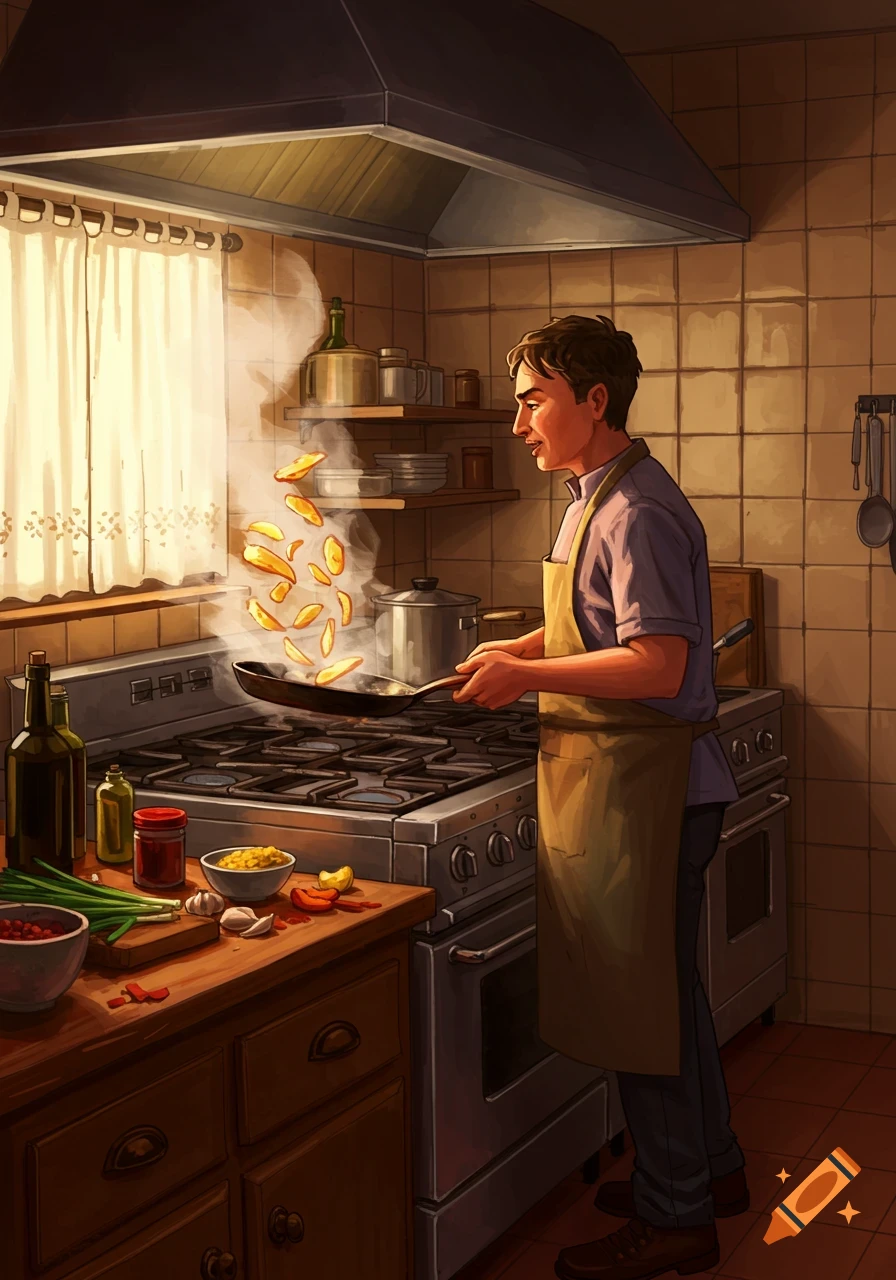
Credit: www.craiyon.com
Frequently Asked Questions
What Is The Significance Of A Man Eating In A Kitchen Drawing?
A man eating in a kitchen drawing highlights daily life and domestic comfort. It captures intimate, relatable moments that evoke warmth and simplicity. Such art often reflects culture, lifestyle, and personal habits, making it meaningful for viewers and artists alike.
How Can A Kitchen Drawing Inspire Home Decor Ideas?
A kitchen drawing offers inspiration for cozy and functional home decor. It showcases arrangement, lighting, and color schemes that enhance warmth and comfort. These visuals help homeowners design inviting eating spaces that promote family togetherness and practical use.
What Techniques Are Used To Draw A Man Eating In A Kitchen?
Artists often use sketching, shading, and perspective techniques to depict a man eating in a kitchen. Emphasis on facial expressions and posture adds realism. Attention to kitchen details like utensils and furniture brings the scene to life, creating an engaging composition.
Why Are Kitchen Scenes Popular Subjects In Art?
Kitchen scenes symbolize nourishment, family, and everyday life, making them popular in art. They provide a familiar setting that resonates emotionally with viewers. Artists use these scenes to explore themes of routine, culture, and human connection in a relatable way.
Conclusion
Eating in a kitchen drawer is quite an unusual choice. It challenges our everyday norms and routines. Such moments remind us to appreciate life’s simplicity. Maybe, it's about finding joy in unexpected places. Embracing spontaneity can bring new perspectives. This quirky habit can teach us a lot.
Perhaps, it's about breaking free from the mundane. It might even spark a bit of creativity. Next time, try something out of the ordinary. You might find it refreshing. Life is full of surprises, after all. Enjoy the little things.
They often hold the most meaning.


