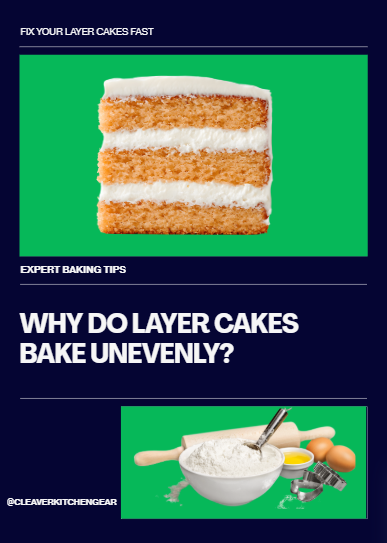
Why do layer cakes bake unevenly? Have you ever pulled a layer cake out of the oven only to find that one side is higher than the other? It’s a common baking frustration that can leave you wondering what went wrong.
You followed the recipe to a tee, and yet, your cake seems to have a mind of its own. But don’t worry, you’re not alone in this baking conundrum. Understanding why layer cakes bake unevenly is the first step to achieving that perfect, Instagram-worthy cake every time.
In this blog post, we’ll dive into the science behind your baking mishaps and reveal simple tricks to transform your cakes from lopsided to luscious. Stick around, because by the end, you’ll have the confidence to bake like a pro!

Credit: sallysbakingaddiction.com
Causes Of Uneven Baking
Layer cakes sometimes bake unevenly, causing trouble for bakers. This can ruin the look and texture of your cake.
Understanding why uneven baking happens helps you fix it. Below are common causes to watch for.
Oven Temperature Issues
Oven temperature that is too hot or too cold causes uneven baking. Hot spots inside the oven can cook one part faster.
Old or faulty ovens often have poor temperature control. This makes some layers bake more than others.
- Use an oven thermometer to check actual heat
- Avoid opening the oven door too often
- Rotate the cake halfway through baking
Incorrect Pan Size
Using a pan that is too big or too small affects baking time. Thin batter layers cook faster and dry out.
Pans that are deeper or wider than the recipe calls for change how heat moves through the cake.
- Always use the pan size the recipe says
- Check pan dimensions before baking
- Adjust baking time if you change pan size
Uneven Batter Distribution
When batter is not spread evenly, some parts cook faster. Thick spots take longer to bake than thin ones.
Uneven batter causes the cake to rise irregularly and look lopsided after baking.
- Use a spatula to level the batter in the pan
- Tap the pan lightly on the counter to remove air bubbles
- Make sure batter is smooth and even before baking
Overmixing Or Undermixing Batter
Mixing batter too much or too little changes cake texture. Overmixing adds air and makes the cake rise unevenly.
Undermixing leaves lumps that bake unevenly and create dense spots in the cake.
- Mix batter just until ingredients combine
- Follow recipe instructions for mixing times
- Use a gentle folding motion for delicate batters
Altitude And Humidity Effects
High altitude changes how cakes bake. Lower air pressure makes cakes rise faster but can cause collapse.
Humidity affects flour and sugar, changing batter texture and baking times.
- Adjust baking temperature and time at high altitudes
- Store ingredients in dry places to control moisture
- Use tested recipes for your altitude if possible

Credit: sallysbakingaddiction.com
Signs Of Uneven Baking
Layer cakes sometimes bake unevenly, causing problems in texture and shape. Knowing the signs helps fix these issues early.
Uneven baking can make cakes look less attractive and affect taste. Look for these common signs to identify the problem.
Domed Or Sunken Layers
A domed cake has a rounded, raised top. A sunken cake has a dip in the middle. Both show uneven baking.
Doming happens if heat is too high or batter is too thick. Sunken layers occur when the cake cools too fast or is underbaked.
- Domed layers can crack when cooling
- Sunken centers may feel wet or gooey
- Both affect how the cake stacks
Uneven Texture And Crumb
Uneven baking changes the cake’s texture inside. Some parts may be dense and heavy, while others are light and airy.
This happens if the oven temperature is not steady or the batter is mixed unevenly. It creates a crumb that feels rough or sticky.
- Dense areas may taste undercooked
- Light areas can dry out quickly
- Uneven crumb affects frosting and slicing
Burnt Edges With Raw Center
Burnt edges with a raw center means the cake baked unevenly from outside to inside. The edges cook too fast while the middle stays uncooked.
This often happens with ovens that have hot spots or if the baking pan is too thin. It can ruin the cake's taste and safety.
- Edges feel hard or bitter
- Center feels wet and sticky
- Can cause the cake to collapse
Baking Equipment Tips
Layer cakes sometimes bake unevenly because of the baking tools used. Using the right equipment can help cakes bake flat and even.
This guide covers tips about cake pans, baking strips, and oven calibration to improve your cake baking results.
Choosing The Right Cake Pans
Metal pans conduct heat better than glass or silicone. This helps cakes bake evenly.
Use pans of the same size and material for each layer. Different pans bake at different speeds.
- Light-colored pans reflect heat and reduce over-browning
- Dark pans absorb heat and can cause uneven baking
- Non-stick pans help release cakes easily but may bake faster
Using Baking Strips
Baking strips wrap around cake pans to keep the edges cool. This slows down the baking near the edges.
These strips help the cake rise evenly without doming or cracking.
- Soak strips in water before use
- Wrap strips tightly around the pan
- Remove strips after baking is done
Calibrating Your Oven
Ovens can be hotter or cooler than the set temperature. Use an oven thermometer to check.
Adjust the oven temperature if your cakes bake too fast or too slow. This keeps baking even.
- Place thermometer in the center of the oven
- Check temperature before baking
- Note differences and adjust settings accordingly
Batter Preparation Tips
Layer cakes often bake unevenly due to how the batter is prepared. Making sure your batter is ready can help your cake bake smooth and flat.
Small changes in mixing, spreading, and adjusting for weather can make a big difference in your baking results.
Proper Mixing Techniques
Mixing the batter right is key to even baking. Overmixing adds too much air, and undermixing leaves lumps.
- Use room temperature ingredients for smooth mixing.
- Mix ingredients gently but thoroughly.
- Stop mixing once all ingredients combine.
- Scrape bowl sides to blend evenly.
Evenly Distributing Batter
Spreading batter evenly in pans prevents thick spots that bake slower. Use a simple tool to help with this.
Try these tips for even batter distribution:
- Pour batter into the center of the pan.
- Use a spatula or an offset knife to spread batter evenly.
- Tap the pan gently on the counter to release air bubbles.
- Check that batter thickness is uniform across the pan.
Adjusting For Altitude And Humidity
High altitude and humidity affect how batter rises and bakes. Adjust your recipe for better results.
| Condition | Adjustment |
| High Altitude | Reduce baking powder; add extra liquid |
| High Humidity | Use less liquid; add a bit more flour |
| Low Altitude | Follow recipe as is |
Baking Techniques To Try
Layer cakes often bake unevenly, causing one side to rise more than the other. This can make decorating and stacking difficult. Using the right baking techniques helps create even layers.
Below are some practical tips to improve your cake baking results. These tips focus on oven use and temperature control.
Lowering Oven Temperature
Baking at a high temperature can cause the cake edges to cook faster than the center. This leads to uneven rising and cracked tops. Lowering the oven temperature helps the cake bake more evenly.
Try reducing your oven temperature by 25°F (about 15°C). This gives the heat time to reach the center of the cake. It also prevents the edges from overcooking.
Rotating Pans Mid-bake
Most ovens have hot spots where heat is stronger. This can cause one side of the cake to bake faster. Rotating your pans halfway through baking helps balance this out.
Turn the pans 180 degrees carefully. Avoid opening the oven door too often, as this can lower the oven temperature. Rotate quickly and close the door to keep heat steady.
- Rotate pans about halfway through baking time
- Turn pans 180 degrees for even heat exposure
- Use oven light to check without opening door
Using An Oven Thermometer
Oven temperatures can be inaccurate. Your oven might be hotter or cooler than the dial shows. An oven thermometer tells you the real temperature inside your oven.
Place the thermometer in the middle of the oven. Check it before and during baking. Adjust your oven settings if the temperature is not correct. This helps your cake bake evenly every time.
- Buy an inexpensive oven thermometer
- Check temperature before baking
- Adjust oven heat to match thermometer
- Recheck temperature during baking if needed
Quick Fixes For Uneven Cakes
Layer cakes often bake unevenly, causing one side to rise higher. This can make your cake look lopsided and hard to stack. Quick fixes can help you get smooth, even layers fast.
These simple tips improve your cake’s look without extra baking time. You can fix uneven layers right after baking before decorating.
Leveling Cake Layers
Leveling cake layers means cutting off the uneven tops so each layer is flat. This helps your cake stack evenly and prevents it from leaning.
Use a serrated knife or a cake leveler tool for best results. Hold the knife steady and cut slowly to avoid crumbs.
- Place the cake on a turntable or flat surface
- Mark a level line around the cake with a toothpick
- Cut along the line slowly with a serrated knife
- Remove the domed top and save it for cake pops
Trimming Domed Tops
Domed tops happen when the cake rises unevenly in the oven. Trimming these off creates flat layers that stack better.
Trim just enough to make the surface flat, but do not cut too much or the cake will become too thin.
- Wait for the cake to cool completely
- Use a serrated knife to slice off the dome
- Keep the trimmed pieces for snacks or decorations
Using Simple Syrup For Moisture
Simple syrup adds moisture to dry cake layers. It helps make even cakes taste better and stay fresh longer.
Brush the syrup lightly on each layer before stacking. This also helps the frosting stick better.
- Mix equal parts sugar and water in a pot
- Heat until sugar dissolves, then cool
- Brush syrup evenly on cake layers with a pastry brush

Credit: chelsweets.com
Frequently Asked Questions
Why Do Layer Cakes Rise Unevenly In The Oven?
Uneven rising happens due to uneven oven heat or improper batter distribution. Hot spots cause some areas to cook faster, leading to uneven layers. Ensuring even oven temperature and spreading batter evenly helps achieve uniform cake layers.
How Does Oven Temperature Affect Cake Baking?
Incorrect oven temperature causes uneven baking. Too hot ovens brown edges quickly while leaving the center undercooked. Use an oven thermometer to maintain consistent heat for evenly baked layer cakes.
Can Cake Pan Type Cause Uneven Baking?
Yes, dark or thin pans conduct heat unevenly, causing uneven baking. Use light-colored, heavy-duty pans for better heat distribution and consistent cake layers.
Does Batter Mixing Influence Cake Layer Evenness?
Improper mixing creates air pockets and uneven batter density. This causes uneven rising and texture. Mix batter until smooth and uniform for consistent layers.
Conclusion
Uneven baking in layer cakes happens for many reasons. Oven heat can be uneven or too hot. Batter might not spread properly in the pan. Using the wrong pan size also affects baking. Stirring the batter too much changes its texture.
Paying attention to these details helps bake cakes evenly. Try these tips and see better results. Baking takes practice, so don’t give up. Enjoy making delicious, even layer cakes every time!