Running out of clean dishes can be frustrating, especially when you don’t have a kitchen sink to wash them in. But what if you could easily clean your plates, cups, and utensils without one?
You’re about to discover simple, effective ways on how to wash dishes with no kitchen sink anywhere. Keep reading, and you’ll learn easy tricks that save you time, water, and effort. By the end, you’ll feel confident handling dishwashing no matter where you are.
Ready to make your cleanup routine hassle-free? Let’s dive in!
Preparing Your Washing Area
Washing dishes without a kitchen sink needs some planning. You must set up a clean and safe space for washing.
This guide helps you prepare your washing area step by step. You will learn how to pick a good spot and gather what you need.
Choosing A Suitable Spot
Find a place near a water source. It should be flat and easy to clean. Good lighting helps you see the dishes well.
- Choose an outdoor table or countertop
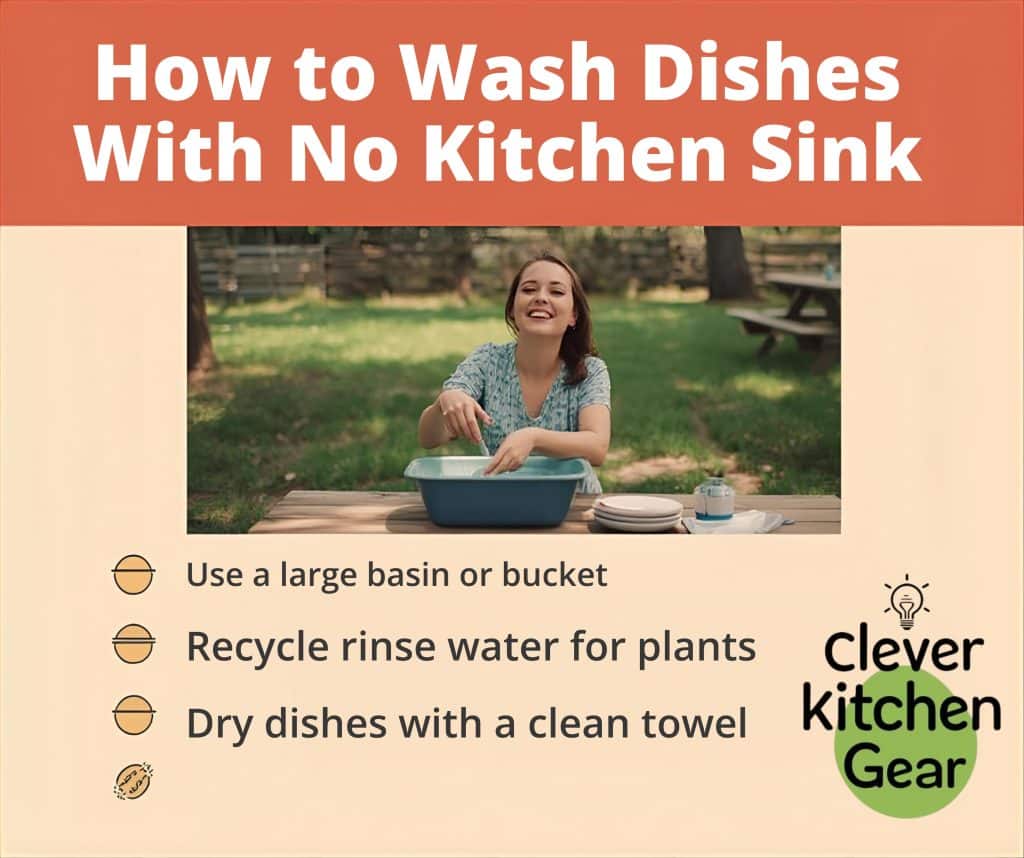
- Use a large basin or tub for washing
- Pick a shady area to keep water cool
- Make sure there is space to stack dirty and clean dishes
- Place a trash bin nearby for scraps
Gathering Necessary Supplies
Collect all the items needed before you start washing. This will save time and keep the area organized.
| Supply | Purpose |
| Two large basins | One for washing, one for rinsing |
| Dish soap | To clean grease and food |
| Scrubbing brush or sponge | To remove stuck food |
| Clean towels | For drying dishes |
| Trash bag or bin | For food waste and scraps |
| Water container or bucket | To hold clean water if no tap is nearby |

Credit: www.lisabronner.com
Using Basins And Buckets
Washing dishes without a kitchen sink is easy with basins and buckets. These tools help you clean dishes anywhere.
You can set up a simple system to wash, rinse, and dry your dishes. This method saves water and keeps things organized.
Setting Up A Two-basin System
Use two basins or buckets to create a washing station. One basin holds soapy water, the other clean water for rinsing.
- Fill the first basin with warm water and dish soap.
- Fill the second basin with clean water for rinsing.
- Scrape leftover food into the trash before washing.
- Wash dishes in the soapy water basin.
- Rinse dishes in the clean water basin.
- Place washed dishes on a drying rack or clean towel.
Effective Water Usage Tips
Save water by using the right amount in each basin. Avoid running water while washing dishes.
| Tip | Description |
| Use Two Basins | One for washing, one for rinsing to reuse water efficiently. |
| Scrape First | Remove food scraps before washing to keep water clean longer. |
| Limit Water | Fill basins with enough water but do not overfill to reduce waste. |
| Reuse Water | Use rinse water to water plants if free of harmful chemicals. |
Alternative Water Sources
If you do not have a kitchen sink, you still need water to wash dishes. You can use water from other sources instead. These options help you clean dishes safely.
Choosing the right water source keeps your dishes clean and your family healthy. Always make sure the water is clean before use.
Using Bottled Or Stored Water
Bottled water or stored water can be very useful for washing dishes. This water is usually clean and safe to use. Keep bottles or containers filled in advance.
Use a large container with a tap to make washing easier. Pour water in a basin to soak and rinse your dishes. Remember to change the water if it gets dirty.
- Use clean, sealed bottles or containers.
- Fill containers with fresh water daily if possible.
- Keep stored water away from direct sunlight.
- Use a basin or bowl to hold water for washing.
- Change water often to keep it clean.
Collecting Rainwater Safely
Rainwater is a natural source you can use for washing dishes. Collect rainwater in clean containers or barrels. Make sure the water is safe before use.
Use a clean roof and gutters to catch rainwater. Filter the water to remove dirt and leaves. Boil rainwater if you are unsure about its cleanliness.
- Use a clean surface to catch rainwater.
- Filter out leaves and debris before use.
- Store rainwater in covered containers.
- Boil rainwater to kill germs if needed.
- Use rainwater soon after collecting it.
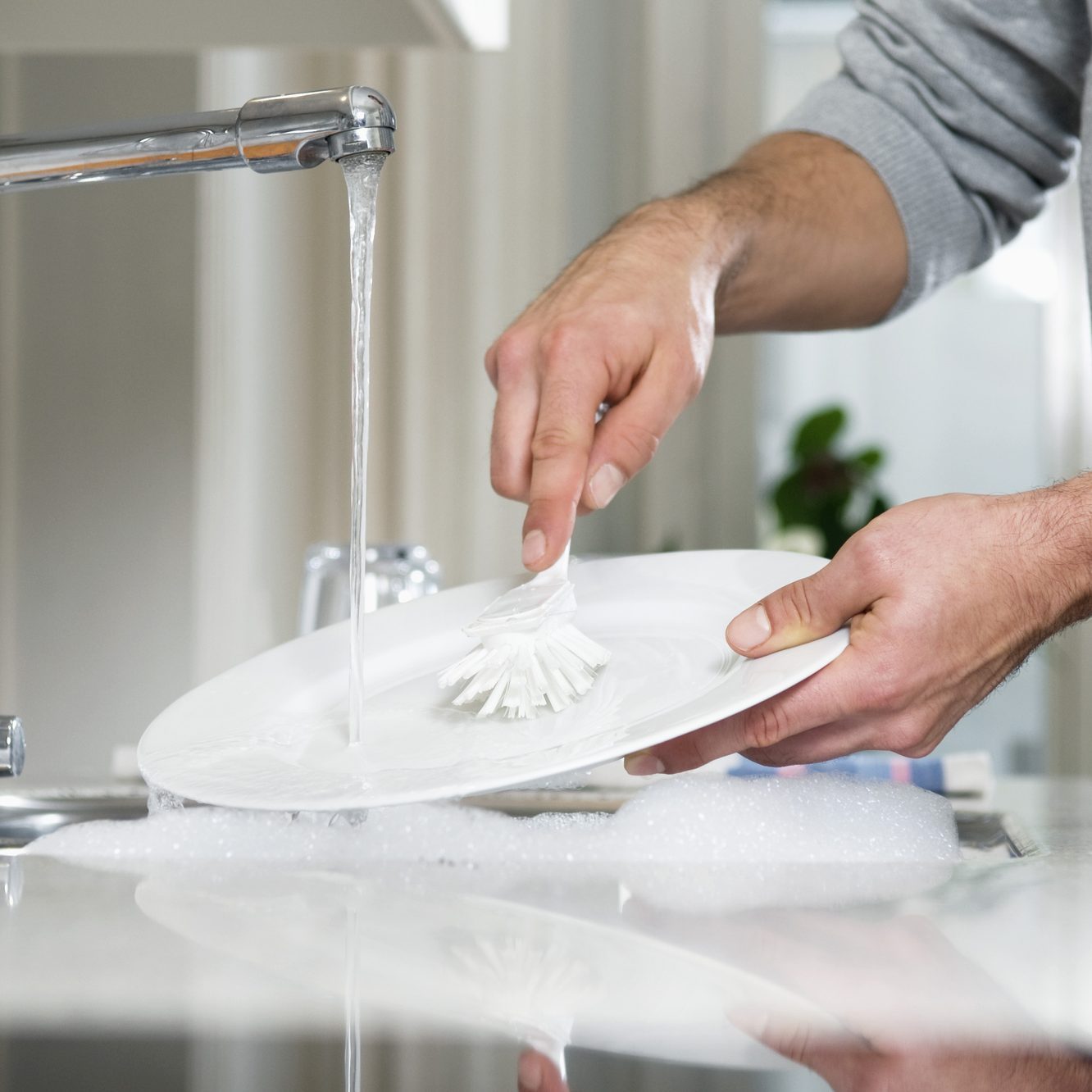
Credit: www.tasteofhome.com
Washing Techniques Without A Sink
Washing dishes without a kitchen sink can be easy if you use the right techniques. You only need some water containers and cleaning tools.
These methods help you clean dishes even if you do not have running water. They are useful for camping, emergencies, or small spaces.
Soaking And Scrubbing Methods
Fill a basin or bucket with warm, soapy water. Let the dishes soak for a few minutes to loosen dirt and food.
Use a scrub brush or sponge to clean the dishes. Scrub hard to remove stuck-on food. Change the water if it gets dirty.
- Use two containers: one for soaking, one for rinsing
- Soak dishes in soapy water for 5–10 minutes
- Scrub dishes with a brush or sponge
- Replace water if it becomes cloudy
Rinsing Without Running Water
Rinse dishes using clean water from a container. Pour water over each dish to wash away soap and dirt.
Use a second container with fresh water for rinsing. Avoid using dirty water again to keep dishes clean.
- Fill a clean bucket or bowl with fresh water
- Pour water on dishes or dip them in the water
- Use a small cup or jug to control rinsing water
- Change rinsing water often for better results
Drying And Storing Clean Dishes
After washing dishes without a kitchen sink, drying and storing them properly is very important. Clean dishes must dry fully to avoid bacteria growth.
Good storage keeps dishes safe and ready for the next use. Let’s look at how to air dry and store dishes safely.
Air Drying Tips
Air drying is the best way to dry dishes without a sink. It uses no towels, which can spread germs.
- Place dishes on a clean drying rack or a clean towel laid flat.
- Arrange dishes so air can flow freely around them.
- Stand cups and glasses upside down to drain water.
- Turn plates and bowls on their sides for faster drying.
- Keep drying area away from dust and pets.
- Let dishes dry completely before storing.
Safe Storage Practices
Storing dishes safely keeps them clean and prevents damage. Use dry, clean spaces for storing.
| Storage Tip | Why It Matters |
| Store dishes in closed cabinets | Protects from dust and insects |
| Keep dishes separated | Prevents scratches and chips |
| Use shelf liners | Stops slipping and breaks |
| Store cups and glasses upright | Prevents cracks and dirt inside |
| Check storage area for moisture | Stops mold and mildew growth |
Maintaining Hygiene And Cleanliness
Washing dishes without a kitchen sink needs care to keep things clean. You must focus on hygiene to avoid germs and dirt.
Using the right tools and handling wastewater correctly helps keep your space safe and healthy.
Sanitizing Washing Tools
Keep your washing tools clean to stop bacteria from spreading. Rinse sponges and brushes after use with hot water.
- Soak sponges in vinegar or bleach solution once a week
- Use clean cloths and change them often
- Dry brushes and sponges completely before storing
- Replace worn-out tools regularly
Disposing Of Wastewater Properly
Throw away dirty water carefully. Avoid pouring it where it can cause damage or attract pests.
| Wastewater Disposal Method | Reason |
| Pour into a bucket and use it to water plants | Reuses water safely |
| Dump in a garden area away from food plants | Prevents contamination |
| Collect in sealed container for proper disposal | Keeps area clean and pest-free |
Tips For Saving Water While Washing
Washing dishes without a kitchen sink can be challenging. Saving water is important to make the process easier and eco-friendly.
Using smart methods helps reduce water use and keeps your dishes clean. Here are some helpful tips to try.
Reusing Rinse Water
Collect rinse water from washing dishes to use it again. This water can clean other items or water plants.
- Use a basin to catch rinse water.
- Pour used water to water outdoor plants.
- Use the same water to wash less dirty dishes.
- Save water in a container to flush toilets.
Minimizing Water Waste
Control water flow and wash dishes in small batches. This reduces the water you need and cuts waste.
| Tip | How It Saves Water |
| Fill a basin with soapy water | Wash multiple dishes without running water |
| Use a second basin for rinsing | Limits water use for rinsing |
| Scrape food before washing | Reduces need to rinse repeatedly |
| Turn off water when not rinsing | Stops unnecessary water flow |

Credit: www.reddit.com
Frequently Asked Questions
How Can I Wash Dishes Without A Kitchen Sink?
Use a large basin or bucket filled with warm, soapy water. Scrub dishes with a sponge and rinse in clean water. This method works well for limited spaces or outdoor areas.
What Supplies Are Needed To Wash Dishes Without A Sink?
You need two basins or buckets, dish soap, a sponge, scrub brush, and clean water. One container is for washing, the other for rinsing. This setup ensures effective cleaning without a sink.
Is It Hygienic To Wash Dishes Without A Sink?
Yes, if you use clean water and change it regularly. Wash dishes thoroughly with soap and rinse well. Proper drying prevents bacteria growth and keeps dishes sanitary.
Can I Use Disposable Gloves When Washing Dishes Without A Sink?
Yes, gloves protect your hands from harsh detergents and dirty water. They also improve grip on slippery dishes. Gloves are especially helpful during extended washing sessions.
Conclusion
Washing dishes without a kitchen sink can seem daunting. But it’s manageable with creativity. Use a large basin or tub as a makeshift sink. Warm water and soap are your best friends. Scrub each item thoroughly. Rinse with clean water to remove soap.
Dry dishes on a clean towel or rack. These steps keep your dishes sparkling. No sink? No problem. With a little effort, dishwashing becomes easy. Remember, the key is organization. Keep your tools handy. Practice makes perfect. Soon, you’ll wash dishes like a pro, even without a kitchen sink.