How to Reseason a Cast Iron Skillet in Oven: Avoid Mistakes in 2026
If you love cooking with a cast iron skillet, you know how important it is to keep it well-seasoned. A good seasoning not only protects your skillet but also makes your food taste better and prevents sticking.
But what do you do when your skillet starts to lose its non-stick magic or looks dull? Reseasoning it in the oven is the easiest and most effective way to bring it back to life. In this guide, you’ll learn simple, step-by-step instructions to reseason your cast iron skillet at home.
By the end, your skillet will be ready to deliver perfect, delicious meals every time. Let’s get your cast iron cooking like new again!
Why Reseason Cast Iron
Reseasoning a cast iron skillet keeps it non-stick and rust-free. It also improves the skillet’s cooking surface.
Over time, seasoning can wear off from use or cleaning. Reseasoning restores the skillet’s protective coating.
Signs Your Skillet Needs Reseasoning
If your skillet looks dull or rusty, it may need reseasoning. Food sticking to the surface is another sign.
Other signs include rough texture or flaking seasoning. These affect cooking and can damage the pan.
- Dull or faded surface
- Rust spots
- Food sticks easily
- Rough or flaky coating
Benefits Of Proper Seasoning
Proper seasoning creates a smooth, non-stick surface. It protects the skillet from rust and damage.
Seasoned skillets cook food evenly and are easier to clean. They also last much longer with regular care.
- Non-stick cooking surface
- Rust prevention
- Even heat distribution
- Longer skillet life
- Easy cleaning

Credit: medium.com
Gather Necessary Supplies
Reseasoning a cast iron skillet keeps it in great shape. You need some supplies before you start.
Gathering the right oil and tools makes the process easier and more effective.
Choosing The Right Oil
Pick an oil with a high smoke point for the best seasoning. This helps create a strong, non-stick layer on your skillet.
- Flaxseed oil offers a durable coating but is pricier.
- Canola oil is affordable and works well.
- Vegetable oil is easy to find and effective.
- Grapeseed oil has a neutral flavor and high smoke point.
Additional Tools Needed
| Tool | Purpose |
| Oven Mitts | Protect hands from heat |
| Aluminum Foil | Catch drips during seasoning |
| Paper Towels | Apply oil evenly |
| Soft Cloth | Buff the skillet after seasoning |
| Wire Rack | Allows air circulation in oven |
Prepare The Skillet
Reseasoning a cast iron skillet starts with proper preparation. Cleaning and drying the skillet well helps the seasoning stick better.
This guide covers cleaning off old residue and drying the skillet completely before you begin.
Cleaning Off Old Residue
Remove any leftover food, rust, or old seasoning from your skillet. Use the right tools and methods to avoid damage.
- Scrub the skillet with a stiff brush and hot water.
- Use mild soap if needed to remove grease and grime.
- For tough spots, apply coarse salt and scrub with a cloth.
- Rinse thoroughly to remove all cleaning agents.
- Dry the skillet immediately to prevent rust.
Drying The Skillet Completely
Moisture left on the skillet can cause rust and weak seasoning. Dry your skillet fully before applying oil.
| Drying Method | Instructions |
| Stove Top | Heat the skillet over low heat for 5-10 minutes. |
| Oven | Place the skillet upside down at 200°F for 10 minutes. |
| Air Dry | Wipe with a dry cloth, then leave in a warm place. |
Apply Oil Evenly
Applying oil evenly is key to reseasoning your cast iron skillet. It helps create a smooth, non-stick surface.
Too much oil can cause sticky spots. Too little oil won’t protect the skillet well.
Amount Of Oil To Use
Use only a thin layer of oil to coat your skillet. A little goes a long way in the reseasoning process.
Start with about one teaspoon of oil for a standard-sized skillet. You can add more if needed, but avoid thick layers.
- Pour a small amount of oil into the skillet
- Use a cloth or paper towel to spread it thinly
- Make sure the entire surface is covered
- Wipe off excess oil to prevent sticky residue
Tips For Even Coating
Use a soft cloth or paper towel to spread the oil evenly. This helps avoid thick spots and uneven seasoning.
Apply oil to the inside, outside, and handle of the skillet. Every part should have a thin, smooth coat.
- Pour oil in the center of the skillet
- Use circular motions to spread oil outward
- Check for shiny or wet spots and wipe them off
- Let the oil dry slightly before placing skillet in the oven
Set The Oven Correctly
Reseasoning your cast iron skillet in the oven helps build a strong, non-stick surface. Setting the oven correctly is key for the best results. This guide explains how to choose the right temperature and position your skillet inside the oven.
Proper heat and placement ensure the oil bonds well to the skillet’s surface. This creates a durable coating that improves cooking and prevents rust.
Optimal Temperature For Seasoning
Set your oven temperature between 375°F and 450°F (190°C and 230°C). This range allows the oil to polymerize without burning. Too low heat will not create a solid layer. Too high heat may cause smoke and damage the seasoning.
- 375°F (190°C) for oils with low smoke points
- 400°F (204°C) for common vegetable oils
- 450°F (230°C) for flaxseed oil and high smoke point oils
How To Position The Skillet
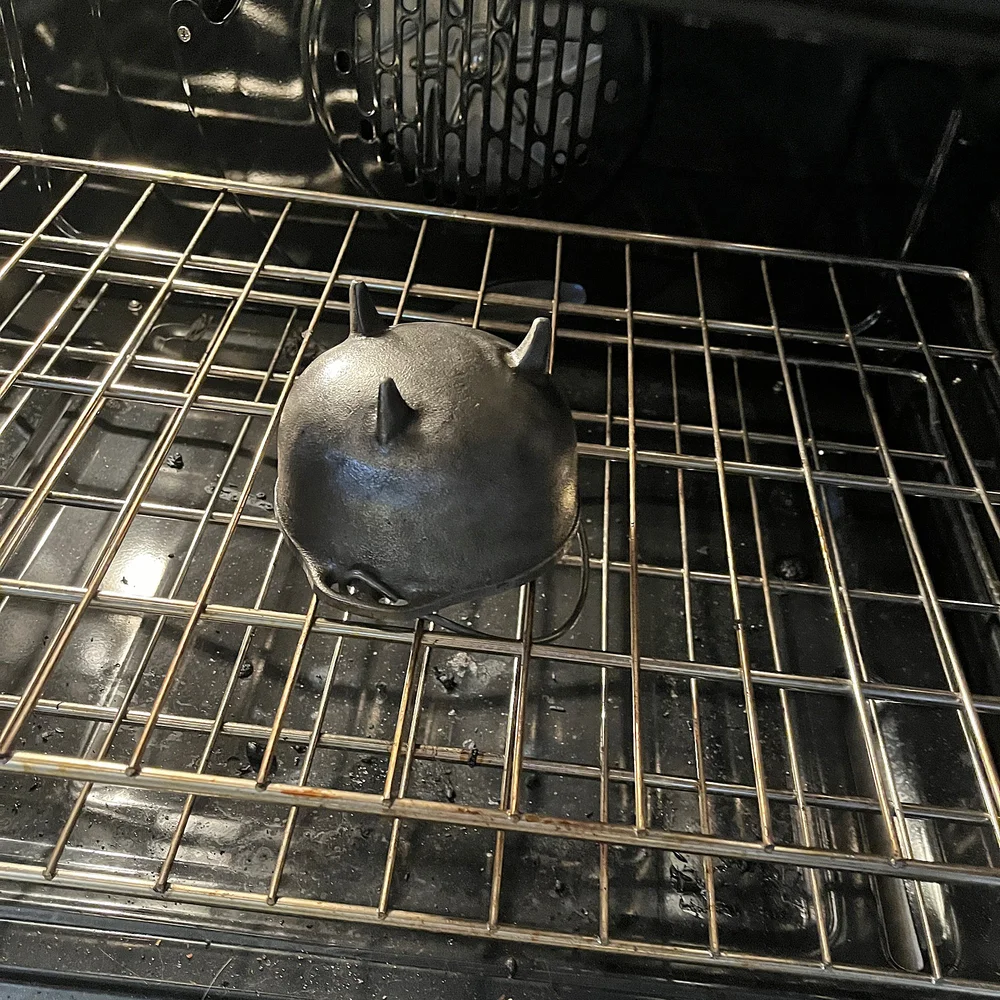
Place the skillet upside down on the oven rack. This helps oil drip off and prevents pooling. Use a baking sheet or foil on a lower rack to catch drips. Keep space around the skillet for air flow.
| Placement | Purpose |
| Upside down on middle rack | Prevents oil buildup on cooking surface |
| Baking sheet on lower rack | Catches oil drips to keep oven clean |
| Leave space around skillet | Ensures even heat circulation |
Credit: www.greenwitchvintage.com
Bake The Skillet
Baking the cast iron skillet helps build a strong, smooth coating. This step locks in the oil and protects the pan from rust.
It is important to bake the skillet at the right temperature and time. This forms a durable layer that improves cooking performance.
Recommended Baking Time
Set your oven temperature between 400°F and 500°F (204°C to 260°C). Bake the skillet upside down to avoid oil pooling.
- Preheat the oven to 450°F (232°C).
- Place the skillet upside down on the middle rack.
- Put a sheet of foil or a tray on the lower rack to catch drips.
- Bake for 1 hour to allow the oil to polymerize.
- Turn off the oven and let the skillet cool inside.
What Happens During Baking
Heating the skillet causes the oil to change. The oil polymerizes and bonds tightly to the iron surface.
| Process | Effect |
|---|---|
| Heating oil | Breaks down fats into smaller molecules |
| Polymerization | Forms a hard, plastic-like coating |
| Bonding | Oil fuses to iron creating a non-stick layer |
| Cooling | Solidifies the seasoning to protect the pan |
Cool And Store
After reseasoning your cast iron skillet in the oven, it is important to cool it properly. Cooling helps the seasoning set well and protects the skillet’s surface.
Proper storage keeps the skillet ready for your next use and maintains its seasoning for a long time.
Proper Cooling Method
Let your cast iron skillet cool down slowly at room temperature. Avoid sudden temperature changes to prevent warping or cracks.
- Turn off the oven and leave the skillet inside.
- Allow it to cool completely inside the oven.
- Do not place the hot skillet on a cold surface.
- Once cool, wipe off any excess oil with a paper towel.
Storage Tips To Maintain Seasoning
Store your cast iron skillet in a dry place to avoid rust. Proper storage keeps the seasoning strong and your skillet ready for cooking.
| Storage Tip | Reason |
|---|---|
| Keep skillet dry | Prevents rust and damage |
| Store with lid off or use paper towel inside | Allows air circulation to avoid moisture |
| Place skillet on a shelf or hook | Keeps it safe and avoids scratches |
| Apply a thin coat of oil before storing | Maintains the seasoning layer |
Troubleshooting Common Issues
Reseasoning a cast iron skillet in the oven can sometimes cause problems. Some issues make the skillet sticky, flaky, or rusty. These problems can stop your skillet from working well.
Fixing these common problems is easy if you know what to do. Here are tips for fixing sticky or flaky seasoning and rust spots on your cast iron skillet.
Sticky Or Flaky Seasoning
Sticky or flaky seasoning happens when the oil layer is too thick or not heated enough. This stops the oil from forming a hard, smooth coating. The skillet feels sticky or the seasoning flakes off.
To fix this, clean the skillet well. Then, apply a thin layer of oil. Use a high-smoke-point oil like flaxseed or vegetable oil. Heat the skillet in the oven at 450°F (232°C) for one hour. Let it cool inside the oven.
- Use a thin, even layer of oil
- Heat at a high temperature to harden the oil
- Cool the skillet slowly to avoid cracks
- Repeat seasoning if needed for a smooth finish
Rust Spots And How To Fix Them
Rust spots appear when moisture stays on the skillet too long. Rust can damage the cast iron and harm the seasoning. It makes the skillet look rough and unsafe for cooking.
To remove rust, scrub the spots with steel wool or a scrub brush. Use warm water but do not soak the skillet. Dry it completely with a towel or by heating it on the stove. After drying, reseason the skillet in the oven.
- Scrub rust spots with steel wool
- Use warm water, avoid soaking
- Dry the skillet fully and quickly
- Apply a thin oil layer before oven seasoning
Maintaining Seasoning Over Time
Keeping your cast iron skillet well-seasoned makes cooking easier and prevents rust. Regular care helps keep the non-stick surface strong.
Reseasoning in the oven is important but daily habits also protect the seasoning. Let’s look at how to care for your skillet every day and when to reseason it again.
Daily Care Tips
Clean your skillet right after use with warm water and a soft brush. Avoid soap or harsh scrubbing that can strip the seasoning.
Dry your skillet completely to stop rust. You can warm it on the stove to remove all moisture.
- Use a small amount of cooking oil after drying
- Rub oil over the surface with a paper towel
- Store the skillet in a dry place
- Avoid soaking the skillet in water
- Cook fatty foods regularly to help maintain seasoning
When To Reseason Again
Reseason your skillet when food starts sticking or the surface looks dull. Rust spots also mean it’s time to reseason.
If the skillet feels sticky or has a sticky residue, clean it well and reseason. This will restore the smooth, non-stick coating.
- Season every few months with regular use
- Reseason after scrubbing with soap
- Reseason if rust appears
- Season if the surface looks dry or cracked

Credit: bitzngiggles.com
Frequently Asked Questions
How Often Should I Reseason A Cast Iron Skillet?
Reseason your cast iron skillet every 3 to 6 months. Frequent use and cleaning wear down the seasoning. If food starts sticking or the surface looks dull, it’s time to reseason. Regular reseasoning keeps the skillet non-stick and rust-free.
Can I Reseason A Cast Iron Skillet In A Home Oven?
Yes, you can reseason your cast iron skillet in a home oven. Preheat the oven to 450-500°F. Apply a thin layer of oil and bake upside down for one hour. This method creates a durable, non-stick coating effectively.
What Type Of Oil Is Best For Reseasoning Cast Iron?
Use oils with high smoke points like flaxseed, vegetable, or grapeseed oil. These oils polymerize well, forming a strong seasoning layer. Avoid low-smoke-point oils as they can become sticky or rancid. Proper oil choice ensures a smooth, long-lasting surface.
How Do I Prepare My Skillet Before Reseasoning?
Clean your skillet thoroughly with hot water and a stiff brush. Avoid soap unless necessary. Remove rust or old seasoning with steel wool if needed. Dry completely to prevent rust. Proper prep ensures even oil absorption and a strong seasoning layer.
Conclusion
Reseasoning a cast iron skillet keeps it non-stick and long-lasting. Regular maintenance ensures great cooking results every time. Clean the skillet thoroughly before starting. Apply a thin layer of oil evenly. Bake it in the oven for optimal results. Let it cool completely before storing.
This process can be repeated as needed. Your skillet will look new and perform well. Enjoy cooking with your well-seasoned skillet. Happy cooking!