How to Pan Fry Noodles (Crispy, Flavorful & Easy Guide)
Craving a delicious noodle dish that’s quick, easy, and bursting with flavor? Pan frying your noodles could be the tasty solution you’re looking for!
Imagine the satisfaction of golden-brown, crispy noodles paired with your favorite veggies, proteins, and seasonings. You don’t need to be a culinary genius to master this technique; with just a few simple steps, you can elevate your noodle game to restaurant-quality levels right from your kitchen.
Whether you’re a seasoned cook or a kitchen newbie, learning how to pan fry noodles is a skill you’ll want in your culinary toolkit. Are you ready to transform your weeknight dinners and impress your taste buds? Stick around, and we’ll guide you through the foolproof method of achieving perfectly pan-fried noodles every time.

Credit: www.youtube.com
Choosing The Right Noodles
Picking the right noodles is key to making great pan-fried noodles. Different noodles cook and taste differently when fried.
Some noodles hold up well in a hot pan, while others get soggy or break apart. Choose noodles that fry nicely for best results.
Best Noodle Types For Pan Frying
Thick noodles work well for pan frying. They keep their shape and texture during cooking. Wheat noodles and egg noodles are good choices. They become crispy outside while staying soft inside. Understanding the variety of pasta is the first step in mastering how to pan fry noodles.
- Lo mein noodles
- Udon noodles
- Egg noodles
- Rice noodles (thicker kinds)
Fresh Vs. Dried Noodles
Fresh noodles cook faster and have a soft texture. They can get sticky if not handled right.
Dried noodles need longer cooking but hold up better in the pan. They become firmer and crispier.
- Fresh noodles: soft, quick cooking, may stick
- Dried noodles: firmer, longer cooking, crispier

Credit: tiffycooks.com
Preparing Noodles For Pan Frying
Pan frying noodles gives them a crispy texture and rich flavor. Preparing the noodles right is key to a great dish. Start by cooking the noodles properly and then drying them well. These steps help the noodles crisp up when fried and are essential for anyone learning how to pan fry noodles effectively.
Boiling And Draining Tips
Boil noodles until they are just tender, not too soft. Overcooked noodles will break during frying.
- Use plenty of water to prevent noodles from sticking.
- Stir noodles gently while boiling.
- Test noodles often for firmness.
- Drain noodles immediately after boiling.
- Rinse noodles with cold water to stop cooking.
Drying Noodles For Crispiness
Dry noodles well before pan frying to get a crispy outside. Moisture causes noodles to steam, not fry.
| Drying Method | Description |
|---|---|
| Air Drying | Spread noodles on a clean cloth or tray. Let air dry for 15 to 30 minutes. |
| Pat Dry | Use paper towels to gently press and remove water from noodles. |
| Use a Salad Spinner | Spin noodles lightly to remove excess water quickly. |
Selecting The Perfect Pan And Oil
Pan frying noodles needs the right pan and oil. These choices affect how well the noodles cook and taste. Picking the best pan and oil helps you get crispy, tasty noodles every time. Knowing how to pan fry noodles with the right equipment ensures a consistent result.
Pan Materials For Even Cooking
Choose a pan that heats evenly to avoid burnt or soggy noodles. Thick pans keep temperature steady.
- Cast iron pans hold heat well for even cooking.
- Stainless steel pans heat quickly and spread heat evenly.
- Non-stick pans need less oil but heat unevenly sometimes.
- Carbon steel pans are light and heat fast but need seasoning.
Best Oils For Flavor And Crisp
Oil choice affects noodle flavor and crispiness. Use oils that handle heat without burning.
| Oil Type | Smoke Point (°F) | Flavor |
| Peanut Oil | 450 | Mild, nutty |
| Canola Oil | 400 | Neutral |
| Vegetable Oil | 400 | Neutral |
| Sesame Oil | 350 | Strong, toasted (use small amounts) |
| Olive Oil (Light) | 465 | Light, fruity |
Step-by-step Pan Frying Process
Pan frying noodles is a quick way to get a tasty and crispy meal. You only need a few simple steps to do it right.
This guide shows you how to pan fry noodles for the best texture and flavor.
Heating The Pan And Oil
Start by heating your pan on medium heat. Use a pan that distributes heat evenly for best results.
Pour a small amount of oil into the pan. Let it heat until it shimmers but does not smoke.
- Use oils with a high smoke point like vegetable or canola oil
- Heat the pan for about 1-2 minutes before adding noodles
- Check oil temperature by dropping a small noodle piece; it should sizzle
Adding And Spreading Noodles
Add your cooked noodles to the hot pan carefully. Spread them out in an even layer.
Keep the noodles in one layer to help them cook and crisp evenly. Avoid stirring too soon.
- Use tongs or a spatula to spread noodles evenly
- Press noodles gently against the pan for better contact
- Cook without stirring for 3-5 minutes to form a crust
Achieving The Perfect Crispy Texture
Let the noodles cook undisturbed to develop a golden crust. Check the bottom for crispiness before flipping or stirring. Flip or toss the noodles gently to crisp other sides. Cook until all sides have a crunchy texture. Once you learn how to pan fry noodles, you can achieve this crunch consistently.
- Cook on medium heat to avoid burning
- Flip noodles in sections for even crisping
- Remove from heat once desired crunch is reached
Enhancing Flavor And Texture
Pan frying noodles gives them a crispy texture and rich flavor. It is a simple way to make noodles tasty and enjoyable.
By adding the right seasonings, vegetables, and proteins, you can create a balanced and delicious dish.
Seasoning Options
Seasonings add taste and aroma to pan-fried noodles. Use sauces and spices to bring out the best flavors. Simple ingredients like soy sauce or garlic powder can make a big difference when considering how to pan fry noodles with depth.
- Soy sauce for salty and umami flavor
- Garlic powder or fresh garlic for a strong aroma
- Chili flakes to add heat
- Sesame oil for a nutty taste
- Black pepper for mild spiciness
- Ginger for a fresh and zesty note
Adding Vegetables And Proteins
Vegetables add crunch and color while proteins make noodles more filling. Both improve texture and nutrition.
Choose quick-cooking veggies and cooked proteins for best results.
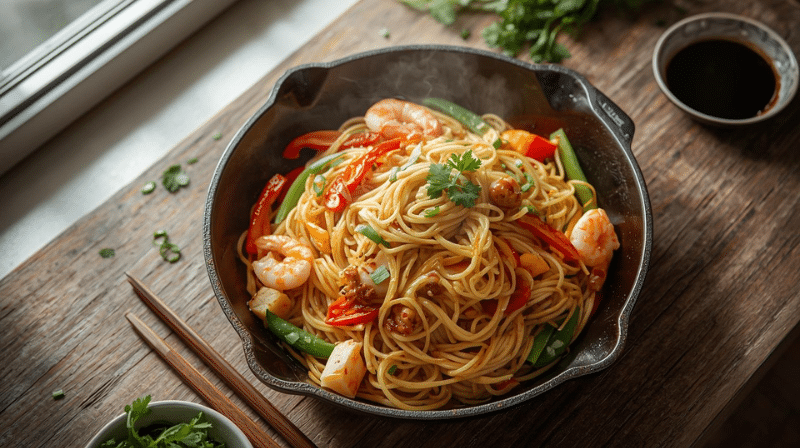
- Bell peppers, carrots, and snap peas add sweetness and crunch
- Mushrooms bring a meaty texture
- Green onions add fresh flavor
- Cooked chicken, shrimp, or tofu provide protein
- Eggs can be scrambled into the noodles
Troubleshooting Common Issues
Pan frying noodles is quick and tasty. Sometimes, noodles turn soggy, stick, or burn. Fixing these issues makes your dish better.
Learn simple tips to avoid soggy noodles and prevent sticking and burning while pan frying.
Avoiding Soggy Noodles
Soggy noodles happen when they soak too much water. Drain noodles well before frying. Use a colander and shake off extra water.
Cook noodles just until tender, not too soft. Overcooking adds water inside noodles, causing sogginess during frying.
- Rinse noodles under cold water after boiling.
- Drain and pat dry with a clean towel.
- Use noodles soon after draining to avoid moisture buildup.
Preventing Sticking And Burning
Sticking happens when the pan is too dry or the heat is too high. Use enough oil to coat the pan. Heat the oil before adding noodles.
Burning happens if noodles cook too long or the pan is too hot. Stir noodles often. Cook on medium heat for even cooking.
- Use a non-stick or well-seasoned pan.
- Heat oil until shimmering before adding noodles.
- Keep noodles moving by stirring gently.
- Lower heat if noodles start to burn.
Serving Suggestions
Pan-fried noodles taste best when served with care. The right presentation makes a big difference. Simple touches like sauces and garnishes add flavor and style to your dish. Knowing how to pan fry noodles is only half the battle; serving them correctly is the final step.
Plating Crispy Noodles
Arrange crispy noodles on a warm plate to keep them crunchy. Use a flat spoon or tongs to lift them gently.
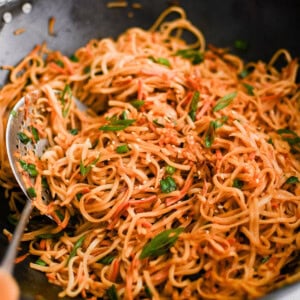
Stack noodles in a small mound or spread them thin for more crispiness. Add fresh herbs on top for color.
- Use white or light-colored plates to show off the noodles
- Place noodles in the center for a neat look
- Add a small side of vegetables for balance
Complementary Sauces And Garnishes
Serve sauces on the side or lightly drizzle over the noodles. This keeps them crispy while adding flavor.
Fresh garnishes bring brightness and texture. Use simple ingredients that match the noodle taste.
- Soy sauce or tamari for salty flavor
- Chili oil or hot sauce for spice
- Fresh chopped scallions or chives
- Toasted sesame seeds for crunch
- Fresh cilantro or parsley for freshness
Credit: thesaltymarshmallow.com
Frequently Asked Questions
How Do You Prevent Noodles From Sticking While Pan Frying?
To prevent sticking, use enough oil and preheat the pan well. Stir noodles frequently. Adding a splash of water can help loosen noodles and avoid clumping.
What Type Of Noodles Is Best For Pan Frying?
Wheat-based noodles like egg noodles or ramen work best. They hold texture well and don’t become mushy. Avoid delicate noodles that break easily.
How Long Should I Pan Fry Noodles?
Pan fry noodles for 5 to 7 minutes on medium-high heat. Cook until they turn golden and slightly crispy, stirring occasionally for even cooking.
Can I Add Vegetables While Pan Frying Noodles?
Yes, add vegetables like bell peppers, carrots, and onions. Cook them first until tender, then mix in noodles for a balanced, flavorful dish.
Conclusion
Pan frying noodles is quick and simple to do at home. You only need a few ingredients and a hot pan. Stir often to keep noodles from sticking or burning. Add your favorite veggies or protein for extra flavor. The noodles will turn crispy on the outside and soft inside.
This cooking method saves time and tastes delicious. Try different sauces to find what you like best. Enjoy your meal with a fresh, homemade touch. Cooking noodles this way brings a tasty change to usual meals. Give it a try and enjoy the results!