Are you tired of pesky flies buzzing around your kitchen compost bin? It’s a common frustration that many of us face, and it can turn your eco-friendly efforts into a bothersome chore.
The good news is, you’re not alone, and there are simple solutions to keep those flies at bay. Imagine a kitchen where your composting is clean, efficient, and free from unwanted visitors. Sounds perfect, right? In this guide, you’ll discover practical tips and tricks to maintain a fly-free composting environment, enhancing your kitchen’s cleanliness and your peace of mind.
Ready to transform your composting experience? Let’s dive in and explore how you can achieve a fly-free kitchen compost bin effortlessly.
Credit: www.housework.com
Choose The Right Compost Bin
Keeping flies out of your kitchen compost bin starts with choosing the right bin. The bin’s material, size, and features affect how well it controls odors and pests.
Selecting a bin that fits your space and compost needs helps reduce fly problems. The right design also keeps your kitchen clean and fresh.
Material Matters
Choose compost bins made from non-porous materials like plastic or stainless steel. These materials are easy to clean and do not absorb smells.
Bins made from porous materials can hold moisture and odors. This can attract flies and make your kitchen smell bad.
- Plastic bins are lightweight and easy to clean
- Stainless steel bins resist rust and odors
- Avoid wooden bins indoors, as they absorb moisture
Size And Design
Pick a bin size that fits your compost amount and kitchen space. Too big bins can hold waste too long and attract flies.
Compact bins with a wide opening make it easy to add scraps. A narrow base helps reduce the surface area where flies can enter.
- Choose bins sized for your household waste
- Look for designs with small openings or flaps
- Compact shapes fit better in small kitchens
Lid And Ventilation Features
A tight-fitting lid keeps flies out and traps smells inside. Make sure the lid seals well without gaps or cracks.
Good ventilation helps reduce moisture and odor. Look for bins with small vents covered by fine mesh to keep flies away.
- Use bins with secure, tight lids
- Choose vents with fine mesh to block insects
- Proper airflow helps stop bad smells and flies

Credit: www.reddit.com
Manage Moisture Levels
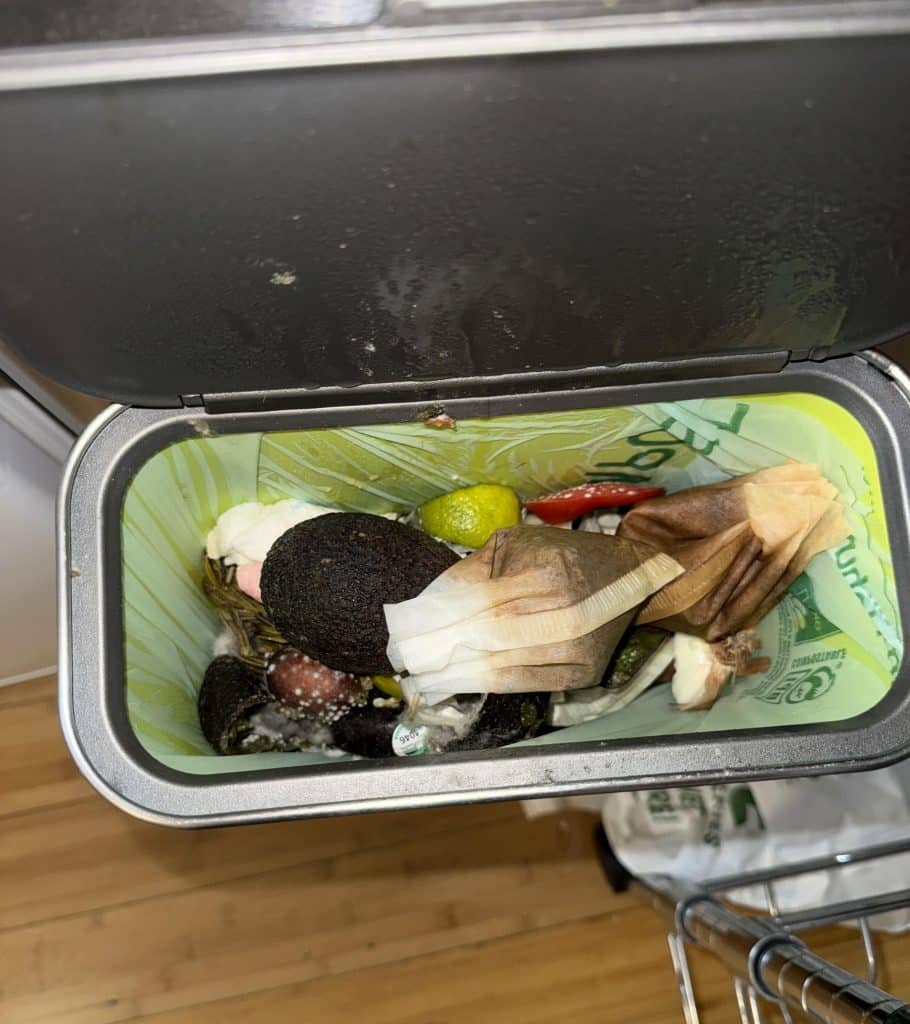
Keeping the right moisture in your kitchen compost bin stops flies from gathering. Too much wetness creates a perfect place for them.
Managing moisture helps your compost break down well. It also keeps bad smells away.
Avoid Excess Moisture
Do not add too many wet scraps at once. Too much moisture makes the compost soggy and smelly. Flies like wet compost because it is easier for them to lay eggs.
Empty your compost bin often if you see liquid collecting at the bottom. This liquid is called leachate and can attract flies.
Use Dry Browns
Dry brown materials balance wet kitchen scraps. They soak up extra moisture and keep the bin dry. Examples of dry browns include:
- Dry leaves
- Shredded paper
- Cardboard pieces
- Wood chips
Balance Greens And Browns
Greens are wet scraps like fruit and vegetable peels. Browns are dry materials like leaves and paper. A good balance keeps moisture at the right level.
| Material Type | Examples | Purpose |
| Greens (Wet) | Fruit scraps, vegetable peels, coffee grounds | Add moisture and nitrogen |
| Browns (Dry) | Dry leaves, shredded paper, straw | Absorb moisture and add carbon |
Proper Food Waste Preparation
Keeping flies out of your kitchen compost bin starts with how you prepare food waste. Proper preparation reduces odors and stops flies from breeding.
Simple steps like chopping waste and freezing scraps help control flies. Avoiding certain foods also keeps your compost bin fresh.
Chop Waste Into Small Pieces
Cutting food waste into small pieces helps it break down faster. It also reduces the smell that attracts flies.
Small pieces take up less space and dry out quicker. This keeps your compost bin less inviting to flies.
Freeze Scraps Before Composting
Freezing food scraps kills fly eggs and larvae. It stops flies from laying eggs in your compost bin.
Keep scraps in a sealed bag or container before adding them to compost. This reduces the chance of flies finding fresh food.
Avoid Adding Meat And Dairy
Meat and dairy products attract flies quickly. They also create strong odors that can cause problems.
Stick to vegetable scraps, fruit peels, and coffee grounds. These items break down well and do not attract flies.

Credit: www.a1pestcontrol.co.uk
Keep The Bin Clean
Keeping your kitchen compost bin clean stops flies from gathering. Clean bins reduce smells that attract pests.
Regular cleaning removes food scraps and bacteria that cause bad odors. This makes composting more pleasant.
Regular Cleaning Schedule
Clean your compost bin often to keep flies away. A weekly cleaning works well for most kitchens.
- Empty the bin completely.
- Rinse it with warm water.
- Scrub the inside with a brush.
- Dry the bin before adding new compost.
Use Natural Cleaning Agents
Use natural cleaners to avoid harsh chemicals. These keep your compost safe for plants.
| Cleaning Agent | How to Use |
| White Vinegar | Spray inside, let sit 10 minutes, then scrub. |
| Baking Soda | Sprinkle on stains, scrub with a damp sponge. |
| Lemon Juice | Mix with water, spray on bin, rinse after 5 minutes. |
Use Natural Fly Repellents
Flies can be a big problem around kitchen compost bins. They spread germs and make a mess. Using natural repellents helps keep flies away safely. These options are simple and eco-friendly.
This guide covers two effective ways to repel flies naturally. You can add herbs and spices to your bin or use vinegar sprays. Both methods reduce flies without harsh chemicals.
Add Herbs And Spices
Certain herbs and spices have strong smells that flies dislike. Placing them near or inside your compost bin helps keep flies away. They also add a fresh scent to the area.
- Bay leaves: Scatter dry leaves on top of compost.
- Cloves: Stick cloves into a lemon or apple slice.
- Mint: Place fresh mint leaves around the bin.
- Basil: Add fresh or dried basil for a strong aroma.
- Rosemary: Use sprigs inside the compost or near it.
Spray Vinegar Solutions
Vinegar is a natural fly deterrent. It masks odors that attract flies and can trap them when used correctly. Making a vinegar spray is quick and easy.
| Vinegar Spray Recipe | Instructions |
|---|---|
| Apple Cider Vinegar & Water | Mix equal parts apple cider vinegar and water. Spray around compost bin edges daily. |
| White Vinegar & Essential Oil | Combine 1 cup white vinegar, 1 cup water, and 10 drops eucalyptus oil. Shake well and spray on bin surfaces. |
| Vinegar Trap | Pour apple cider vinegar into a small container. Cover with plastic wrap and poke holes. Place near compost. |
Cover Fresh Waste
Keeping flies out of your kitchen compost bin starts with covering fresh waste. Flies like to lay eggs on food scraps. Covering them stops flies from getting to the waste.
This simple step also helps reduce smell and speeds up composting. Use natural materials to cover your fresh scraps every time you add new waste.
Use Brown Materials As Cover
Brown materials help cover fresh food scraps well. They absorb moisture and block flies. Common brown materials include dry leaves, shredded paper, and sawdust.
- Dry leaves
- Shredded newspaper or cardboard
- Sawdust or wood chips
- Straw or hay
- Dry grass clippings
Layering Techniques
Layering fresh waste with brown materials creates a good barrier against flies. Add food scraps first, then cover with a thick layer of brown materials.
| Layer | Material | Purpose |
| Bottom | Brown materials | Absorbs moisture and air flow |
| Middle | Fresh food scraps | Source of compost material |
| Top | Brown cover layer | Blocks flies and reduces odor |
Maintain Proper Aeration
Keeping air flowing inside your kitchen compost bin helps stop flies from gathering. Aeration breaks down waste faster and keeps smells low.
Two simple ways to keep good airflow are turning the compost often and using tools made for aeration.
Turn Compost Regularly
Turning your compost moves the materials and lets fresh air inside. This stops bad odors that attract flies. Aim to turn your compost every few days.
- Use a small shovel or spoon to stir the compost.
- Mix wet and dry materials evenly.
- Check for areas that look wet or smelly and mix them well.
- Turning also helps speed up the composting process.
Use Aeration Tools
Special tools make it easier to add air to your compost bin. These tools help break up clumps and create air channels.
| Tool | Use |
| Compost Aerator | Insert and twist to mix compost without emptying the bin |
| Garden Fork | Lift and turn compost layers to add air |
| Drill with Mixing Attachment | Quickly stir large amounts of compost |
Set Up Fly Traps Nearby
Flies can quickly become a problem near kitchen compost bins. Setting up fly traps nearby helps reduce their numbers. This keeps your compost area cleaner and less smelly.
There are many ways to trap flies. You can make your own traps or buy ready-made ones. Both options work well to catch flies before they reach your compost.
Diy Traps
DIY fly traps are easy to make with simple materials. They are cheap and can be customized to fit your needs. These traps attract flies and keep them trapped.
- Use a jar with a little apple cider vinegar inside. Cover the top with plastic wrap and poke small holes. Flies enter but cannot escape.
- Fill a bowl with sugar water or fruit juice. Add a few drops of dish soap to break surface tension. Flies drown when they try to land.
- Make a paper cone and place it in a jar with bait. Flies fly in but cannot find their way out.
Commercial Options
Commercial fly traps are ready to use. They come in many styles and sizes to suit different spaces. Many are designed to be safe and effective around food areas.
- Sticky fly strips hang near the compost. Flies stick to the glue and stay trapped.
- Electric fly zappers attract flies with light and kill them quickly.
- UV light traps lure flies into a container where they cannot escape.
- Traps with replaceable bait cartridges work for long-term fly control.
Frequently Asked Questions
How Can I Prevent Flies In My Kitchen Compost Bin?
Keep the compost bin covered with a tight lid. Avoid adding meat or oily food scraps. Regularly turn the compost to reduce odor and moisture, which attract flies.
What Materials Keep Flies Away From Compost Bins?
Add dry materials like shredded newspaper, dry leaves, or cardboard. These absorb excess moisture and reduce odor, making the compost less attractive to flies.
How Often Should I Clean My Kitchen Compost Bin?
Clean your compost bin every 1 to 2 weeks. Use mild soap and water to remove residue and prevent fly breeding sites.
Does Adding Lime Or Baking Soda Help Reduce Flies?
Yes, sprinkling lime or baking soda neutralizes odors and balances compost pH. This makes the compost less inviting for flies to gather.
Conclusion
Keeping flies out of your kitchen compost bin takes small, smart steps. Cover food scraps with dry leaves or paper to stop flies. Clean your bin often to avoid smells that attract insects. Use a bin with a tight lid to keep flies away.
These simple actions help your compost stay fresh and fly-free. Enjoy a cleaner kitchen and better compost every day. Easy habits make a big difference. Try these tips and see the change yourself.