Struggling to get that stubborn kitchen drawer out? You’re not alone.
Many find themselves wrestling with a drawer that simply won’t budge, turning a simple task into a frustrating ordeal. Whether you’re attempting a deep clean or retrieving a lost utensil, understanding how to get a kitchen drawer out safely can save time and prevent damage.
Imagine the relief when you no longer have to forcefully tug at it, risking injury or breakage. In this guide, you’ll discover straightforward methods to effortlessly remove any kitchen drawer, ensuring your kitchen stays organized and functional. Curious about the simple tricks that can make this task a breeze? Keep reading to learn how to master drawer removal with ease!
Tools You Might Need
Removing a kitchen drawer is easier with the right tools. Having them ready saves time and effort.
Different drawers may require different tools. It helps to know what basic tools and safety gear to use.
Basic Tools
Some simple tools can help you pull out a stuck or heavy drawer. These tools also help if you need to remove screws or fix parts.
- Screwdriver (flathead and Phillips) to remove screws or loosen parts
- Pry bar or putty knife to gently lift the drawer or remove trim
- Hammer for tapping parts loose if stuck
- Flashlight to see inside dark drawer tracks
- Measuring tape to check drawer size before removal
Optional Safety Gear
Safety gear is not always needed but can protect you during the process. It helps prevent injuries from sharp edges or falling parts.
- Work gloves to protect your hands from splinters and sharp edges
- Safety glasses to shield your eyes from dust or small debris
- Knee pads if you need to kneel while working on low drawers

Credit: www.youtube.com
Preparing The Drawer
Removing a kitchen drawer safely starts with good preparation. This helps avoid damage and makes the task easier.
Focus first on clearing the drawer and its surroundings. This reduces the risk of dropping items or hurting yourself.
Empty The Drawer
Take everything out of the drawer before you try to remove it. A full drawer is heavy and hard to handle.
- Remove all utensils, containers, and items inside.
- Check for small or fragile objects and place them safely aside.
- Clean the drawer if there is any dirt or crumbs.
- Keep a container nearby to hold loose parts or screws you find.
Clear Surrounding Area
Make space around the drawer to move freely. This helps prevent accidents and gives you room to work.
| Task | Reason |
|---|---|
| Remove nearby objects | Prevents tripping or knocking things over |
| Clear floor space | Allows easy access to drawer slides and hardware |
| Ensure good lighting | Helps see screws and parts clearly |
| Have tools ready | Makes the removal process faster and safer |
Locating Drawer Mechanism
Knowing how to find the drawer mechanism helps you remove it safely. Drawers have different types of slides and locks.
Finding the mechanism lets you understand how the drawer opens and closes.
Identify Slide Type
Look inside the drawer sides to see the slide type. Slides guide the drawer in and out smoothly.
Common slide types include side-mount, under-mount, and center-mount slides.
- Side-mount: Slides are on the sides of the drawer and cabinet.
- Under-mount: Slides are hidden under the drawer bottom.
- Center-mount: One slide runs under the center of the drawer.
Check For Locks Or Stops
Some drawers have locks or stops that keep them from sliding out fully. Check for these parts before pulling hard.
Look for clips, levers, or tabs near the slides. These may need to be pressed or lifted to release the drawer.
- Clip locks: small plastic or metal clips on the slides
- Lever stops: levers that must be pushed or pulled
- Tab catches: tabs that hold the drawer in place

Credit: www.yahoo.com
Removing The Drawer
Removing a kitchen drawer can make cleaning and repairs easier. Most drawers slide out smoothly once you know the right way to remove them.
This guide explains how to remove different types of kitchen drawers safely and easily.
Standard Slide Removal
Standard slides usually have a simple design. They slide in and out on metal or plastic tracks inside the cabinet.
To remove the drawer, pull it out as far as it will go. Then, look under the drawer sides for small tabs or levers.
- Press or lift the tabs on both sides at the same time.
- Hold the tabs and pull the drawer out gently.
- If no tabs are visible, lift the drawer slightly while pulling.
Soft-close Or Ball-bearing Slides
Soft-close and ball-bearing slides are smoother and have extra parts. They often have small levers or clips to release the drawer.
Pull the drawer out fully. Look for a lever or clip on each side of the slides near the cabinet walls.
- Push the lever up or down to unlock the slide.
- Hold both levers and pull the drawer straight out.
- If you cannot find levers, check for release buttons or screws.
- The National Kitchen & Bath Association (NKBA) emphasizes the correct technique for modern slides: “For high-end or soft-close slides, the release mechanism is engineered to be discrete, which often frustrates homeowners. You must locate the subtle plastic or metal lever on the underside of the drawer box near the front. Crucially, one side will typically need to be pushed up while the other must be pushed down simultaneously. Failure to apply opposing force will prevent the lock from disengaging and can lead to damage if the drawer is forced.”
Dealing With Stuck Drawers
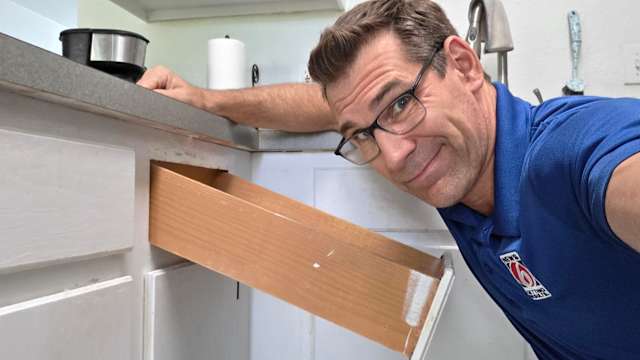
Sometimes drawers get stuck due to dirt, damage, or swelling. Do not force them out to avoid damage.
Try these tips to loosen a stuck drawer:
- Check for screws or nails blocking the drawer.
- Use a flat tool to gently pry the drawer sides.
- Spray lubricant on the slides to reduce friction.
- Tap the drawer sides lightly with a rubber mallet.
- Clean the tracks and remove debris inside the cabinet.
- Popular Mechanics Magazine advises on preventing major repair work: “If a wooden drawer is stuck due to swelling, forcing it out will almost certainly strip the wood from the cabinet slide or tear the drawer box apart. The goal is patience. Use a hair dryer on a low setting directed at the side of the drawer for 30 seconds at a time to slowly shrink the wood and free the catch point. The $20 minutes spent patiently troubleshooting is cheaper than the $200 cost of a new slide system or custom drawer box.“
Tips For Smooth Removal
Removing a kitchen drawer can be tricky if it gets stuck. Use simple tips to take it out without trouble.
This guide helps you remove drawers safely and easily. Follow these steps to avoid damage and ease movement.
Avoiding Damage
Be gentle when pulling the drawer. Avoid forcing it out hard to stop cracks or breaks.
Check if there are stops or clips holding the drawer. Release or push them carefully before pulling.
- Empty the drawer first to reduce weight
- Pull the drawer straight out, not at an angle
- Look for any screws or catches and remove them
- Use both hands to keep the drawer balanced
Using Lubricants
Lubricants help drawers slide smoothly. Use a small amount on the tracks or runners.
Choose a lubricant safe for wood and metal parts. Avoid sticky or oily products that attract dust.
- Apply lubricant sparingly along the drawer slides
- Wipe off any excess to prevent buildup
- Test the drawer movement before full removal
- Repeat if the drawer still feels stuck
Credit: www.clickorlando.com
Reinstalling The Drawer
Reinstalling a kitchen drawer requires careful alignment and testing. You must ensure the slides fit correctly. This helps the drawer move smoothly.
Follow the steps below to align the slides and test the drawer’s movement. This will prevent damage and improve function.
Aligning Slides
First, check the drawer slides and cabinet tracks. They should be clean and free of debris. Next, carefully fit the slides into the tracks on both sides.
- Hold the drawer level and steady
- Insert the slides into the cabinet tracks
- Push the drawer gently until you feel resistance
- Make sure both sides are aligned evenly
- Adjust if the drawer is crooked or stuck
Testing Movement
After aligning the slides, test the drawer by opening and closing it several times. Watch for smooth movement and listen for unusual sounds.
| Test | What to Check | Action if Problem |
|---|---|---|
| Open fully | Drawer moves without sticking | Realign slides or clean tracks |
| Close fully | Drawer fits flush with cabinet front | Adjust slide position or screws |
| Side to side | No wobbling or looseness | Tighten screws or replace slides |
| Listen | No grinding or squeaking sounds | Lubricate slides or clean debris |
Frequently Asked Questions
How Do I Safely Remove A Stuck Kitchen Drawer?
To safely remove a stuck drawer, first empty its contents. Check for visible screws or clips holding it in place. Gently lift or pull the drawer while pressing release levers under the sides. Avoid forcing it to prevent damage.
What Tools Are Needed To Take Out A Kitchen Drawer?
Typically, you need a screwdriver and possibly a putty knife. A flashlight helps to see inside the drawer slides. These tools allow you to loosen screws or release clips for easy removal.
How Can I Fix A Drawer That Won’t Come Out?
Inspect for obstructions or damage inside the drawer track. Clean the tracks and apply lubricant if needed. If damaged, replace the drawer slides or realign the drawer for smooth operation.
Why Won’t My Kitchen Drawer Slide Out Completely?
Drawers often don’t slide out due to safety stops or locked sliders. Locate and press the release mechanism under the drawer sides. Check if anything blocks the drawer’s path or if the slides are misaligned.
Conclusion
Removing a kitchen drawer can be simple with the right steps. Start by checking for any stops or screws inside. Gently lift or slide the drawer to free it. Avoid forcing it, as this can cause damage. Taking your time helps prevent accidents.
With patience and care, you can easily get the drawer out. Keep these tips handy for future use. Small fixes like this save time and frustration in the kitchen. Try these methods next time you need to remove a drawer.
Simple and clear—just what you need.
For a focused visual guide on removing the trickiest types of drawers—those with hidden, under-mount slides—watch this step-by-step video: