Imagine tasting a perfectly cooked ribeye steak. Its juicy flavor is a great experience. You can do this from your own kitchen. You can learn How to Cook Ribeye Steak in a Frying Pan. You do not need a grill or oven.
You just need a good frying pan and a few simple steps. This guide shows how to cook ribeye steak, turning raw meat into a great meal. You may cook often or just be learning. Achieving the perfect steak is easy. The secret to a perfect crust is simple, and a tender inside is also simple.
Ready to cook a great steak in your pan? Let’s start the process now!
Picking The Right Ribeye
Choosing the right ribeye makes the cook better. Good meat cooks evenly. It also tastes wonderful.
Learn to pick ribeye steaks. They must bring flavor and juice to your meal.
Selecting Quality Meat
Look for a bright red color. Buy ribeye that feels firm. Do not buy meat that looks dull. Avoid meat that feels sticky.
Good quality meat is fresh. It comes from healthy cows. Check for a slight smell of freshness.
Thickness Matters
Choose a ribeye that is at least one inch thick. Thin steaks cook too fast. They can easily dry out.
- 1 to 1.5 inches is the perfect thickness.
- Thicker steaks give more cooking control.
- Thinner steaks cook fast. They might lose juice.
Marbling And Flavor
Marbling is the white fat inside the meat. It adds flavor to the steak. It keeps the steak tender.
| Marbling Level | Flavor Result |
| Low | Less juicy, mild taste. |
| Medium | Good flavor and tenderness. |
| High | Rich flavor, very tender. |

Getting The Steak Ready
Preparing ribeye is key for great taste. Good prep helps the steak cook well.
This guide shows how to prep the steak. Do this before it goes into the frying pan.
Warm Up to Room Temperature
Take the ribeye from the fridge. Do this 30 to 60 minutes before you cook. This helps it cook evenly.
Cold meat cooks unevenly. The inside may stay raw. The outside gets overcooked.
Seasoning is Important
Season the steak simply. Use salt and pepper for natural flavor. Add seasoning right before cooking.
You can use garlic powder for extra taste. Dried herbs also add flavor. Do not add too much salt too early. Early salt makes meat dry.
-
Pat the steak dry with paper towels.
-
Sprinkle salt evenly on both sides.
-
Add fresh ground black pepper.
-
Optional: use garlic powder or dried herbs.
Food experts advise on salting time. Seasoning too early is a big mistake. Salt pulls moisture out fast. Salt at least 40 minutes before cooking. You can also salt right before the pan. Salting late keeps the surface dry. This helps make a perfect crust. It keeps the inside juicy.
Optional Marinades
Marinating ribeye is not necessary. It can add new flavors. Use a simple marinade. It should not overpower the meat.
Marinate for 30 minutes to 2 hours. Keep it in the fridge. Pat the steak dry before cooking.
-
Olive oil, garlic, and rosemary work well.
-
Try soy sauce, lemon juice, and pepper.
-
Use Worcestershire sauce and some mustard.
Picking The Best Pan
The right pan is key to a perfect steak. The pan affects heat and flavor.
This guide compares two pan types. It shares tips to get your pan hot.
Cast Iron Vs. Stainless Steel
Both cast iron and steel pans are good. Cast iron holds heat very well. It makes a great crust.
Stainless steel heats fast. It is also easier to clean. Each pan has its strong points.
-
Cast Iron: Heavy, holds steady heat, great for searing.
-
Stainless Steel: Lighter, heats fast, good for quick cooking.
-
Durability: Both last long with good care.
-
Care: Cast iron needs seasoning. Steel is easier to wash.
Preheating Tips
Preheating the pan is important. It helps the steak cook evenly. It also stops the steak from sticking.
| Preheat Method | What to Do | Time Needed |
| Medium Heat | Heat the pan slowly for warmth. | 4-5 minutes |
| Test Heat | Water drops should move and vanish. | Instant |
| Oil Addition | Add oil after the pan is hot. | Before cooking |

Credit: steakrevolution.com
Cooking The Ribeye
Cooking ribeye in a pan is simple. It is also rewarding. You get a juicy steak with a great crust.
This guide explains how to cook ribeye well. Follow these steps for great results.
Searing For A Perfect Crust
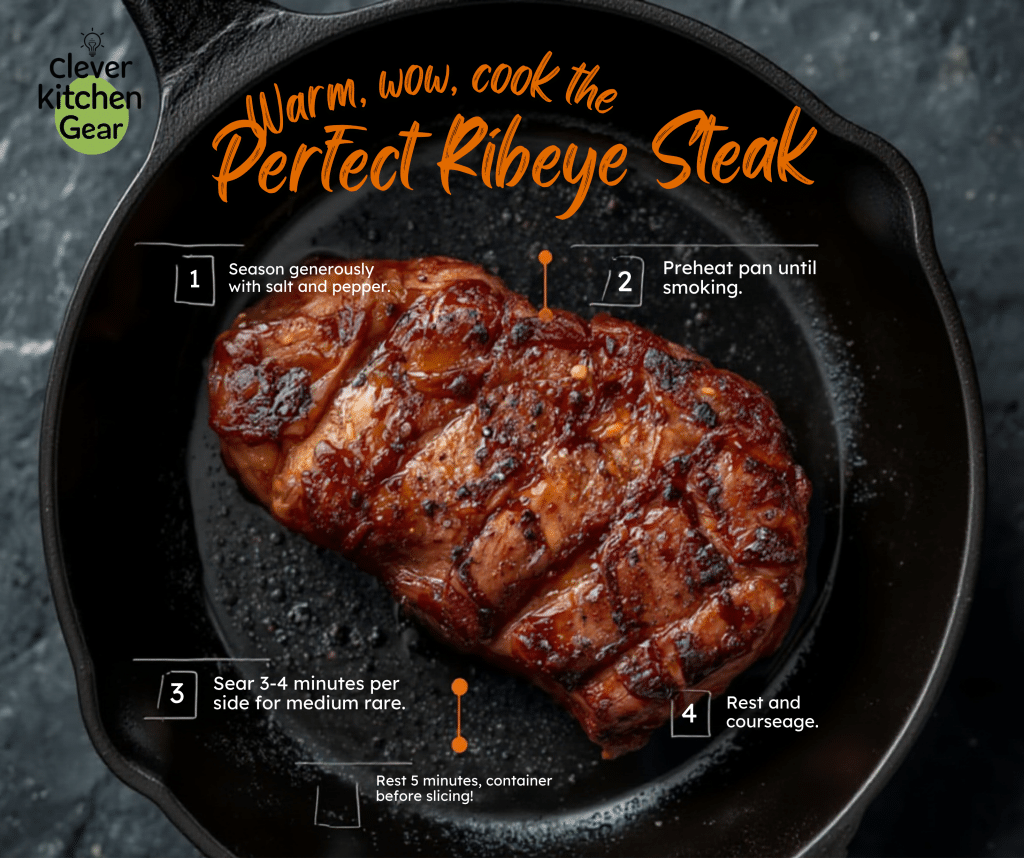
Start by heating your pan on high heat. Use a heavy pan like cast iron. This makes the best sear.
Pat the ribeye dry with paper towels. The steak will brown instead of steam.
-
Add a little oil with a high smoke point.
-
Put the steak in the hot pan. Do not move it.
-
Sear for 2 to 3 minutes to form the crust.
Flipping And Timing
Flip the steak when the first side is brown. Use tongs to turn it gently.
Cook the second side for 2 to 4 minutes. Time depends on thickness. It also depends on how you like it.
-
Rare: Cook 2 minutes per side.
-
Medium rare: Cook 3 minutes per side.
-
Medium: Cook 4 minutes per side.
Using Butter And Herbs
Add butter and fresh herbs later. Try thyme or rosemary. This boosts the flavor.
Tilt the pan to melt the butter. Spoon the butter over the steak. Do this for 1 to 2 minutes.
-
Use unsalted butter for salt control.
-
Baste the steak often with the butter mix.
-
This keeps the meat juicy and rich.
Checking Doneness
Knowing when your steak is done matters. Checking doneness ensures great taste.
Use a meat thermometer or the touch test. Both methods help avoid bad cooking.
Using A Meat Thermometer
A thermometer gives the most exact reading. Insert it into the steak’s thickest part. Get the internal temperature there.
| Doneness | Internal Temperature (°F) |
| Rare | 120–130 |
| Medium Rare | 130–135 |
| Medium | 135–145 |
| Medium Well | 145–155 |
| Well Done | 155+ |
Remove the steak when it hits your temperature. Let it rest before cutting.
Touch Test Method
The touch test uses the steak’s feel. Press the steak gently with a finger. Compare its firmness to your hand.
-
Rare feels soft, like your cheek.
-
Medium rare is a bit firmer, like your nose tip.
-
Medium feels firmer, like pressing your chin.
-
Well done feels very firm, like your thumb base.
This method needs practice. It works great without a thermometer.
Resting The Steak
Resting the steak is crucial after cooking. It keeps the steak juicy and tender.
Skipping this step makes the steak lose flavor. It also loses moisture quickly.
Why Resting Matters
Resting lets the meat juices spread evenly. Cooking moves juices to the edges.
The juices run out if you cut it too soon. This makes the steak dry.
-
Juices move evenly inside the meat.
-
Steak becomes more tender and moist.
-
Temperature evens out for better taste.
How Long To Rest
Rest your ribeye for 5 to 10 minutes. This time works well.
Cover the steak loosely with foil. This keeps the meat warm while it rests. Do not wrap it tightly.
-
Small steaks rest for 5 minutes.
-
Large steaks rest for 7 to 10 minutes.
-
Keep steak covered but not sealed.
Serving Suggestions
Ribeye tastes best with simple sides. Good sauces also make it better. These choices balance the meal.
Use easy recipes for sides. Keep the steak as the main food. Add flavors and textures that match the meat.
Simple Side Dishes
Choose sides that are quick to make. They should fill the plate nicely. They should not hide the steak flavor.
-
Roasted garlic mashed potatoes.
-
Steamed green beans with lemon.
-
Grilled asparagus with olive oil.
-
Fresh garden salad with dressing.
-
Sautéed mushrooms with thyme.
Sauces And Toppings
Sauces add moisture and extra flavor. Toppings add texture and a visual pop.
| Sauce or Topping | Description |
| Chimichurri | Fresh herbs with garlic and vinegar. |
| Garlic butter | Soft butter mixed with garlic. |
| Blue cheese crumble | Sharp cheese that melts slightly. |
| Caramelized onions | Sweet onions cooked until golden. |
| Mushroom gravy | Rich sauce made with mushrooms. |
Mistakes To Avoid
Cooking ribeye in a pan is simple. It can also be very tasty. Some mistakes hurt the steak flavor.
Knowing what to avoid helps you cook better. Watch out for these common errors.
Overcrowding The Pan
Too many steaks lower the pan heat. The meat steams instead of searing. A good sear locks in juice.
-
Cook one or two steaks at a time.
-
Leave space between steaks for even heat.
-
Use a bigger pan for more steaks.
-
Cook in small groups if needed.
Cutting Too Early
Cutting the steak right after cooking loses juice. This results in a dry steak. Let it rest before cutting.
| Rest Time | Result on Steak |
| 0 minutes | Juices escape, steak dries out. |
| 5 minutes | Juices stay inside, steak is juicy. |
| 10 minutes | Steak is slightly cool but still juicy. |
Using Low Heat
Low heat prevents a good crust from forming. The steak cooks slowly and loses flavor. Use high heat to sear quickly.
Tips for using heat:
-
Preheat the pan until it is very hot.
-
Use high smoke point oil.
-
Place steak in pan. Do not move it for 2-3 minutes.
-
Flip and cook to desired done
Frequently Asked Questions
How Long to Cook Ribeye Steak In Frying Pan?
Cook ribeye steak 3–4 minutes per side. That is for medium-rare. Adjust time for thickness. Adjust for your preferred doneness. Use a thermometer for accuracy.
What Oil Is Best For Frying Ribeye Steak?
Use oils with a high smoke point. Try canola, vegetable, or avocado oil. These oils stop burning. They ensure even cooking.
Should Ribeye Steak Be Rested After Frying?
Yes, rest ribeye 5–10 minutes after cooking. This allows juices to spread. The steak becomes tender and flavorful.
How To Achieve A Perfect Sear On Ribeye Steak?
Preheat the pan until very hot. Then add oil and the steak. Do not move the steak at first. This creates a crispy crust.
Conclusion
Cooking ribeye steak in a pan is easy. It is also fast. Start with a hot pan. Season the steak well. Cook each side to your preferred level. Let the steak rest before you cut it. This keeps the steak juicy. This method brings great flavor and tender texture.
Try this tonight for a tasty homemade meal. Enjoy every single bite!
To see a chef show the searing, flipping, and butter-basting. This is the easiest way to get that perfect crust, check out this classic tutorial: