How to Clean Stained Cutting Board: Are you tired of looking at your stained cutting board, wondering if it will ever look clean again? You’re not alone.
Many home cooks and kitchen enthusiasts face this challenge. Those pesky stains not only make your board look worn out but can also make you question its cleanliness. But don’t worry—there’s good news. You can restore your cutting board to its former glory with just a few simple steps.
Imagine the satisfaction of seeing it look almost brand new, ready to handle your culinary creations. Ready to dive into these easy, effective cleaning methods? Let’s get started and bring back the sparkle to your kitchen essential.
Choosing The Right Cleaning Tools
Cleaning a stained cutting board needs the right tools to work well. Using proper brushes and cloths helps remove stains and keep the board safe.
Picking the right cleaning tools can protect your cutting board from damage. This guide focuses on brushes, scrubbers, and cloths that clean effectively.
Best Brushes And Scrubbers
Choose brushes with stiff but gentle bristles. These remove food particles and stains without scratching the board. Avoid metal brushes that may damage the surface.
- Soft nylon bristle brushes work well on wood and plastic boards.
- Scrubbers with a rough side help remove tough stains.
- Brushes with long handles keep your hands away from cleaning solutions.
- Avoid wire brushes to prevent deep scratches.
Safe Cleaning Cloths
Use cloths that absorb water but are gentle on the board’s surface. Microfiber cloths are good for wiping and drying after scrubbing.
| Cloth Type | Best Use | Care Tips |
| Microfiber | Wiping and drying | Wash separately, avoid fabric softeners |
| Cotton | Light cleaning | Use fresh cloths to avoid bacteria |
| Dishcloth with sponge | Scrubbing stains | Rinse well and dry after use |
Common Causes Of Stains
Cutting boards often get stained from daily use. Some foods leave marks that are hard to remove.
Knowing what causes these stains helps you clean your cutting board better.
Food Types That Stain
Some foods are known to stain cutting boards more than others. These foods have strong colors or acids.
- Beets and other root vegetables with deep colors
- Tomatoes and tomato-based sauces
- Turmeric and curry spices
- Berries like blueberries and blackberries
- Red wine and grape juice
These foods can leave red, yellow, or purple stains that soak into the board.
Material Sensitivity
Cutting boards come in different materials. Some materials absorb stains more easily.
| Material | Stain Resistance | Cleaning Tips |
| Wood | Low | Use lemon and salt to scrub stains |
| Plastic | Medium | Use baking soda paste or bleach solution |
| Bamboo | Low to Medium | Clean quickly after use and oil regularly |
| Glass | High | Easy to clean, stains rarely stick |
Natural Cleaning Solutions
Cutting boards can get stains from fruits, vegetables, and meats. Cleaning them well keeps your kitchen safe and fresh. Natural cleaning solutions work without harsh chemicals.
These methods use simple ingredients found in most homes. They help remove stains and odors while protecting your cutting board.
Using Lemon And Salt
Lemon and salt work together to scrub away stains. Lemon juice acts as a natural bleach and salt adds gentle scrubbing power.
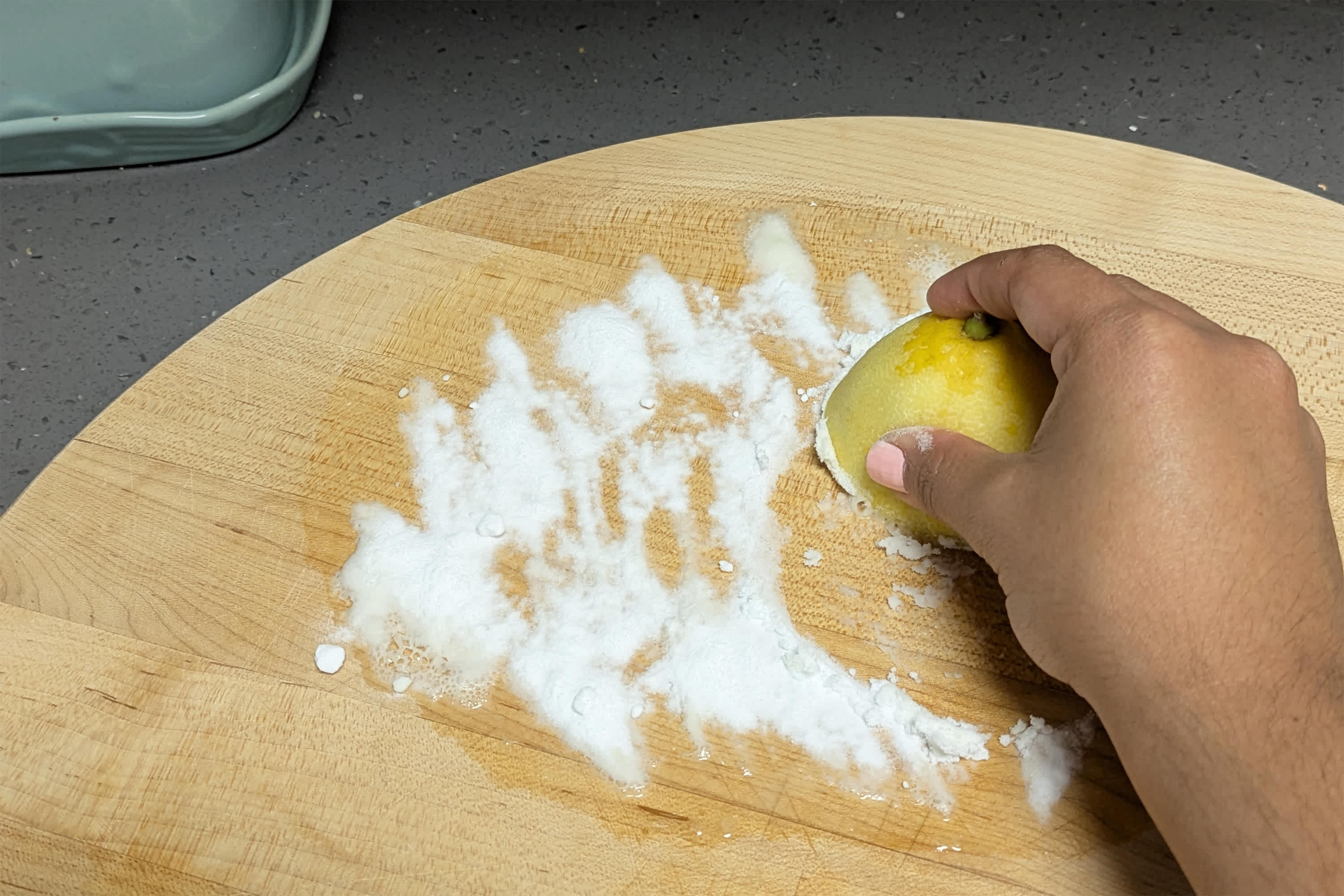
Cut a lemon in half and sprinkle coarse salt on the stained area. Rub the lemon over the salt for a few minutes, then rinse with warm water.
- Cut lemon in half
- Sprinkle salt on stains
- Rub lemon on salt and stains
- Let sit for 5 minutes
- Rinse with warm water
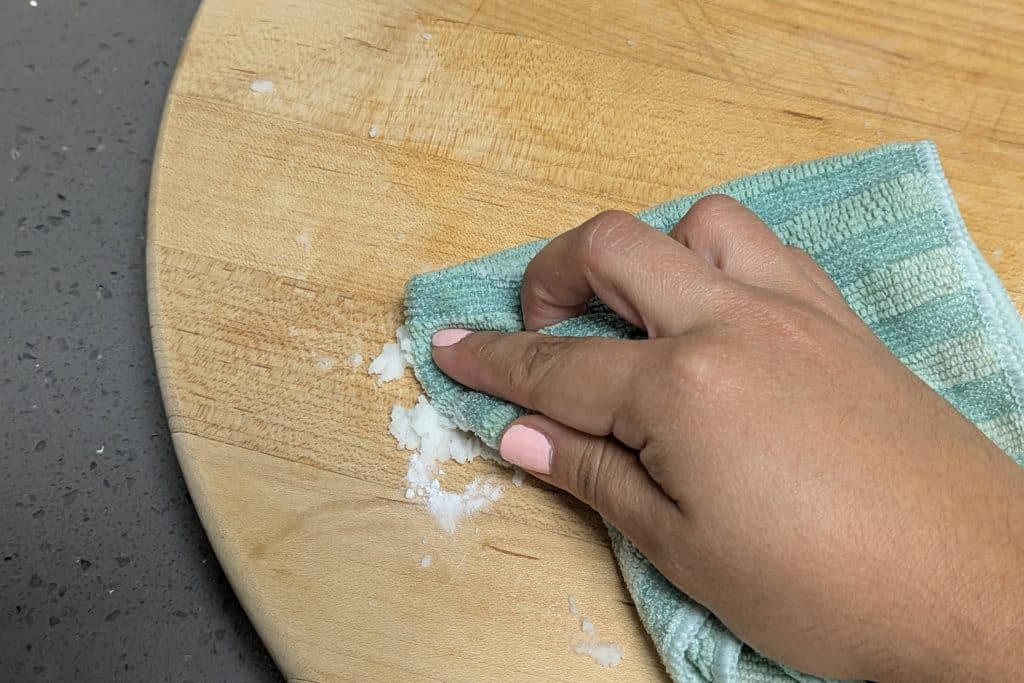
Baking Soda Paste Method
Baking soda is a mild abrasive that lifts stains gently. Making a paste helps it stick to the cutting board surface.
Mix baking soda with water until thick. Spread the paste over the stained areas and let it sit for 15 minutes. Scrub lightly with a sponge, then rinse clean.
- Mix baking soda and water
- Apply paste on stains
- Wait 15 minutes
- Scrub gently
- Rinse with warm water
Vinegar Rinse
Vinegar is a natural disinfectant and deodorizer. It helps remove stains and kills bacteria on cutting boards.
Pour white vinegar over the board or wipe it with a vinegar-soaked cloth. Let it sit for a few minutes before rinsing with water.
- Use white vinegar only
- Pour or wipe on cutting board
- Let sit for 5 minutes
- Rinse with water
Credit: www.thekitchn.com
Deep Cleaning Techniques
Cutting boards can get tough stains from food and liquids. Deep cleaning helps remove these marks and keeps your board safe.
Using the right cleaning methods can bring back your cutting board’s fresh look. Let’s explore two strong cleaning options.
Bleach Soak For Tough Stains
Bleach kills germs and breaks down deep stains on cutting boards. Use it carefully to avoid damage.
Mix one tablespoon of bleach in one gallon of water. Soak your cutting board for a few minutes.
- Prepare a bleach solution with one tablespoon bleach per gallon of water.
- Submerge the cutting board completely in the solution.
- Let it soak for 2 to 5 minutes, not longer.
- Rinse the board well with clean water.
- Dry the board fully before using again.
Hydrogen Peroxide Application
Hydrogen peroxide cleans stains and kills bacteria without harsh chemicals. It works well on both plastic and wooden boards.
Pour 3% hydrogen peroxide directly on the stained area. Let it bubble for a few minutes before wiping.
- Use 3% hydrogen peroxide for safety.
- Apply it to the stained spots on the board.
- Wait 5 minutes to let it work.
- Scrub gently with a soft brush or cloth.
- Rinse the board with water and dry it.
Preventing Future Stains
Cleaning a cutting board well helps remove stains. You can also stop stains from coming back. Taking care of your board every day keeps it looking new.
Some simple habits protect your cutting board. These habits save time and keep your board safe from germs and marks.
Regular Maintenance Tips
Clean your cutting board after each use. Use warm water and mild soap. Avoid soaking it in water for a long time. Dry it quickly with a clean towel.
Use natural oils to keep the wood strong. Apply mineral oil once a month. This stops cracks and stains from setting in.
- Wash board with soap and water after use
- Do not leave it wet or soak in water
- Dry the board well before storing
- Apply mineral oil monthly for wood boards
- Use separate boards for meat and veggies
Proper Storage Practices
Store your cutting board in a dry place. Avoid spots with lots of moisture. This stops mold and stains from growing.
Keep the board upright or flat with air around it. Do not stack heavy items on top. This keeps the board from warping or getting marks.
- Store in a dry, well-ventilated area
- Keep board upright or flat with space
- Avoid stacking heavy items on the board
- Do not store near heat or sunlight
Credit: www.thekitchn.com
Special Care For Wooden Boards
Wooden cutting boards need special care to stay clean and last long. Stains can be hard to remove if the wood is dry or damaged.
Proper care keeps the board safe for food and helps it look good over time.
Oiling And Conditioning
Oiling your wooden board keeps it from drying out and cracking. Use food-safe mineral oil or special cutting board oil. Apply the oil evenly and let it soak in for several hours or overnight.
- Clean the board before oiling and let it dry completely.
- Use a soft cloth to apply a thin layer of oil.
- Wipe off any extra oil after soaking.
- Repeat this process every few weeks or when the board looks dry.
Avoiding Water Damage
Wood can warp or crack if it stays wet too long. Avoid soaking your board in water or putting it in the dishwasher. Instead, wash it gently by hand with mild soap and warm water.
| Do | Don’t |
| Wash with warm soapy water | Soak in water |
| Dry immediately with a towel | Leave wet to air dry |
| Store standing up or in a dry place | Store flat in a damp area |
Tips For Plastic And Bamboo Boards
Cutting boards can get stains from food like berries and spices. Cleaning them well keeps them safe and looking good.
Plastic and bamboo boards need different care. Use the right cleaning tips to avoid damage and remove stains.
Dishwasher Safety
Plastic cutting boards usually are safe in the dishwasher. They can handle hot water and strong soap.
Bamboo boards should not go in the dishwasher. The heat and water can crack or warp them.
- Check the board’s label for dishwasher instructions
- Place plastic boards on the top rack only
- Wash bamboo boards by hand with mild soap
- Dry bamboo boards quickly to avoid warping
Stain Removal Tricks
Stains can be tough on cutting boards. Use natural cleaners to keep boards safe and clean.
Plastic boards can handle stronger stain removers. Bamboo boards need gentle treatments.
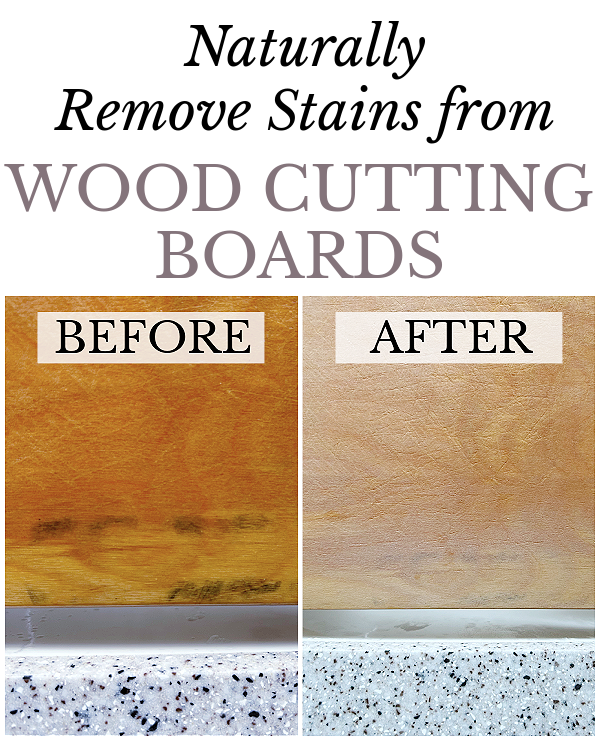
- Rub lemon juice on stains, then rinse with water
- Sprinkle baking soda on the board, scrub with a sponge
- Use white vinegar to wipe away stubborn spots
- For bamboo, avoid soaking to protect the wood
- Dry boards well after cleaning to prevent mold
Credit: www.lemonslavenderandlaundry.com
Frequently Asked Questionscccc
How Do I Remove Stains From A Wooden Cutting Board?
To remove stains, sprinkle coarse salt, then rub with lemon halves. Let it sit 5 minutes, then rinse and dry. This natural method whitens and disinfects wooden boards effectively.
Can Baking Soda Clean Cutting Board Stains?
Yes, baking soda gently lifts stains. Make a paste with water, apply it, scrub with a sponge, then rinse well. It deodorizes and brightens cutting boards safely.
Is Vinegar Effective For Cutting Board Stains?
Vinegar is a natural disinfectant and stain remover. Spray or wipe the board with white vinegar, let it sit a few minutes, then rinse thoroughly. It kills bacteria and helps lighten stains.
How Often Should I Deep Clean My Cutting Board?
Deep clean your cutting board weekly or after cutting raw meat. Regular cleaning prevents stains, bacteria buildup, and keeps the board safe for food prep.
Conclusion
Cleaning stained cutting boards is easy with simple steps. Use baking soda, lemon, or vinegar for tough stains. Always scrub gently to protect the board’s surface. Rinse well and dry completely to avoid bacteria. Regular cleaning keeps your cutting board safe and fresh.
A clean board means safer meals every time. Try these tips to make your kitchen healthier today. Simple care goes a long way for your cutting board.