How to Cook Sirloin Steak in a Frying Pan: A Complete Guide to Juicy, Restaurant-Quality Results
There’s something deeply satisfying about pulling a perfectly seared steak out of your own kitchen. You don’t need a grill, a sous-vide machine, or years of culinary school training to get there. If you’ve ever wondered how to cook sirloin steak in a frying pan, the truth is that it comes down to a handful of controllable variables: the cut you choose, how you prepare it, the pan you use, and how closely you manage heat and time.
This guide walks through every stage of the process, from picking out the steak at the store to slicing and plating it at the table. Along the way, you’ll learn the reasoning behind each step so you’re not just following instructions blindly — you’ll actually understand why a hot pan matters, why resting the meat is non-negotiable, and how a simple pan fried sirloin steak can rival anything served at a steakhouse.
Why Pan-Frying Works So Well for Sirloin
Sirloin sits in an interesting spot among steak cuts. It’s leaner than a ribeye but more affordable than a filet, which means it rewards a cooking method that develops flavor on the outside without drying out the middle. A hot, dry pan does exactly that. Unlike grilling, where flare-ups and uneven grates can lead to inconsistent results, a frying pan gives you full, direct control over heat and contact with the meat — which is a big part of why so many home cooks eventually prefer a sirloin steak in frying pan over other methods.
Pan-frying also lets you build a flavorful fond — the browned bits left behind after searing — which becomes the base for a quick pan sauce or the foundation for a butter baste. That level of control is one reason the stovetop tends to win out over the grill for a weeknight dinner.
Choosing the Right Cut of Sirloin Steak
Not all sirloin cuts are created equal, and the one you bring home has a direct impact on the final result. Before you even think about turning on the stove, spend a minute evaluating the meat itself.
What to look for:
- Color — Choose steaks with a bright, cherry-red hue. Dull, brownish-gray coloring can be a sign the meat has been sitting too long.
- Marbling — Thin white streaks of fat running through the muscle add flavor and help keep the meat moist as it cooks.
- Thickness — A steak between 1 and 1.5 inches thick gives you enough mass to develop a deep crust on the outside while keeping the center from overcooking. Thin-cut steaks tend to dry out before they ever get a proper sear.
- Fresh vs. frozen — Fresh sirloin cooks more evenly and holds its texture better. If you’re working with a frozen cut, thaw it slowly in the refrigerator over 24 hours rather than rushing it on the counter.
Getting this first step right sets the stage for everything that follows, and it’s genuinely one part of the best way to cook sirloin steak in a pan — good technique can only do so much with a poor cut of meat.
Prepping Your Steak Before It Hits the Pan
Preparation is where a lot of home cooks lose points, mostly because they skip steps that seem optional but actually make a measurable difference in texture and flavor.
Bring It to Room Temperature
Pull your steak from the fridge about 30 to 40 minutes before cooking. A cold steak placed straight into a hot pan cooks unevenly — the exterior can scorch while the interior is still cool and undercooked. Letting it come closer to room temperature helps the whole cut cook more uniformly.
Pat It Dry and Season Generously
Moisture on the surface of the meat works against you, since it has to evaporate before any real browning can happen. Use paper towels to blot the steak dry, then season both sides generously with kosher salt and freshly cracked black pepper. For a more layered flavor, add garlic powder, smoked paprika, or fresh cracked herbs.
A simple stovetop sirloin steak seasoning doesn’t need to be complicated — salt and pepper alone, applied with a heavy hand, will get you most of the way to a great crust and well-balanced flavor.
Consider a Quick Marinade
If you have extra time, a short marinade can add another dimension of flavor:
| Marinade Style | Key Ingredients | Marinating Time |
|---|---|---|
| Classic Herb | Olive oil, garlic, rosemary, lemon juice | 30 minutes |
| Asian-Inspired | Soy sauce, ginger, garlic, honey | 20 minutes |
| Spicy Citrus | Chili flakes, olive oil, garlic, lime juice | 25 minutes |
Whichever you choose, let the steak return to room temperature after marinating and pat away any excess liquid before it touches the pan.
Picking the Right Pan and Tools
The pan you use plays a bigger role than most people expect. Heavy, heat-retentive cookware sears far better than thin, lightweight pans that lose temperature the moment meat touches the surface.
A heavy-bottomed cast iron sirloin steak setup is widely considered the gold standard for home cooks. Cast iron holds an enormous amount of heat and distributes it evenly, which translates directly into a deeper, more consistent crust. Stainless steel is a solid second choice — it heats evenly and stands up to high temperatures, though it lacks some of cast iron’s heat retention. Non-stick pans, while convenient, generally can’t reach the searing temperatures needed for a proper crust.
Beyond the pan itself, a few tools make the process easier:
- Tongs — for flipping the steak without piercing it and losing juices
- An instant-read meat thermometer — the most reliable way to judge doneness
- A heat-resistant spatula — useful for repositioning the steak in the pan
- A resting plate or tray — to let the meat rest undisturbed after cooking
Step-by-Step: How to Pan Sear Sirloin Steak
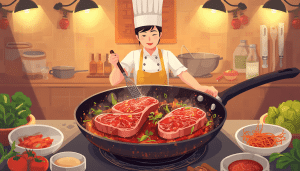
Once your steak is prepped and your equipment is ready, the actual cooking process moves quickly. Here’s exactly how to pan sear sirloin steak from start to finish.
- Preheat the pan. Set your burner to medium-high and let the pan heat for two to three minutes before adding any oil. It should be hot enough that a drop of water sizzles and evaporates almost instantly.
- Add a high-smoke-point oil. Avocado oil, canola oil, or refined vegetable oil all handle high heat well without breaking down or smoking excessively.
- Lay the steak down and don’t touch it. Place the steak in the pan and resist the urge to move it around. Letting it sit undisturbed allows a proper crust to form.
- Sear one side fully. Depending on thickness, this typically takes three to four minutes. You’ll see the color change creeping up the sides of the steak as it cooks.
- Flip once. Use tongs to turn the steak a single time. Flipping repeatedly interrupts crust formation and can make the surface steam instead of sear.
- Finish to your target doneness, checking internal temperature with a thermometer rather than guessing by eye.
The science behind that deep brown crust is called the Maillard reaction — a chemical process where intense heat transforms proteins and natural sugars into hundreds of new flavor compounds. It typically kicks off around 300°F (150°C), which is exactly why a properly preheated pan is so important; anything cooler and you’ll end up steaming the meat instead of browning it.
Sirloin Steak Cooking Time and Doneness Guide
Getting sirloin steak cooking time right is mostly a matter of matching internal temperature to your preferred level of doneness, rather than relying purely on the clock. That said, approximate timing is still a useful guide, especially for a 1 to 1.5-inch cut.
| Doneness | Internal Temperature | Approximate Time After Flipping |
|---|---|---|
| Rare | 120–130°F (49–54°C) | 1–2 minutes |
| Medium-Rare | 130–135°F (54–57°C) | 2–3 minutes |
| Medium | 135–145°F (57–63°C) | 3–4 minutes |
| Medium-Well | 145–155°F (63–68°C) | 4–5 minutes |
| Well Done | 155°F+ (68°C+) | 5+ minutes |
Keep in mind that carryover cooking will raise the internal temperature by another 5–10°F after the steak leaves the pan, so it’s generally best to pull it off the heat just before it hits your target number.
Butter Basting for Extra Flavor
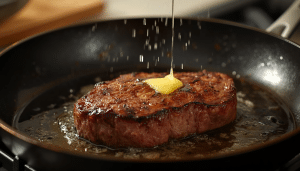
One of the easiest ways to elevate a simple pan-seared steak is to baste it in butter during the final minutes of cooking. A butter basted sirloin steak develops a richer, rounder flavor than one cooked in oil alone, and the technique itself is simple enough for a first-time cook to pull off.
Once the steak is close to done, add a few tablespoons of unsalted butter to the pan along with a few sprigs of fresh thyme or rosemary and a smashed garlic clove. Tilt the pan slightly so the melted butter pools to one side, then use a spoon to continuously ladle it over the top of the steak for 30 to 60 seconds. This basting motion cooks the top surface gently while infusing the meat with herb and garlic flavor.
Using unsalted butter gives you more control over the final seasoning, since salted butter can push an already-seasoned steak toward being too salty.
Resting, Slicing, and Serving
Why Resting Matters
Cutting into a steak immediately after cooking causes the juices — which have been pushed toward the center by the heat — to spill out onto the cutting board instead of staying in the meat. Letting your steak rest for 5 to 10 minutes on a warm plate, loosely tented with foil, gives those juices time to redistribute throughout the muscle fibers.
Slicing Against the Grain
Always slice sirloin against the grain, meaning you cut perpendicular to the direction of the muscle fibers. This shortens the fibers in each bite, making the meat noticeably easier to chew. A sharp knife and a steady, deliberate cutting motion go a long way toward making even a slightly tougher cut feel tender.
Serving Suggestions
A finished, juicy pan seared sirloin steak pairs well with simple, unfussy sides that don’t compete with the meat’s flavor:
- Garlic mashed potatoes
- Roasted or grilled seasonal vegetables
- A crisp green salad with a light vinaigrette
- A spoonful of the herb butter left in the pan, drizzled over the sliced steak
Plating matters more than most people realize. Fan the sliced steak out across a warm plate rather than piling it in a heap, and spoon any remaining pan juices over the top just before serving. It’s a small touch, but it’s the kind of detail that makes a juicy pan seared sirloin steak feel like it came from a restaurant kitchen rather than your own stovetop.
Common Mistakes to Avoid
Even a straightforward recipe has a few pitfalls that trip up home cooks. Watch for these common mistakes:
- Cooking straight from the fridge. A cold steak cooks unevenly and is more likely to overcook on the outside before the inside catches up.
- Overcrowding the pan. Adding too many steaks at once drops the pan’s temperature and prevents proper browning. Cook one or two at a time, in a single layer with space around each piece.
- Skipping the rest period. Cutting too soon lets valuable juices escape, leaving the meat drier than it needs to be.
- Flipping too often. Constant flipping disrupts crust formation. One flip is usually all you need.
- Guessing doneness instead of checking it. A meat thermometer removes the guesswork and prevents both undercooking and overcooking.
- Under- or over-seasoning. Too little salt leaves the steak tasting flat; too much can overpower the meat’s natural flavor. Season evenly on both sides before it goes into the pan.
Any skillet sirloin steak can turn out dry or tough if these basics get overlooked, so slowing down for each step really does pay off in the final bite. In fact, most complaints about a sirloin steak in frying pan turning out chewy trace back to one of these avoidable mistakes rather than the cut of meat itself.
Frequently Asked Questions – How to Cook Sirloin Steak in a Frying Pan
How long should I cook sirloin steak in a frying pan?
For a 1 to 1.5-inch steak, plan on roughly three to four minutes per side for medium-rare, adjusting based on thickness and your stove’s heat output. A meat thermometer is far more reliable than timing alone.
What’s the best way to cook sirloin steak in a pan without drying it out?
Start with a properly preheated, heavy pan, sear the steak without moving it, flip only once, and pull it from the heat slightly before your target temperature to account for carryover cooking. Resting afterward locks in the remaining moisture.
Is cast iron really necessary for how to pan sear sirloin steak at home?
It isn’t strictly required, but a cast iron sirloin steak setup does hold heat more consistently than thinner pans, which generally produces a deeper, more even crust.
Should I season the steak before or after cooking?
Season generously before cooking. Salt and pepper applied ahead of time have a chance to draw out moisture and then reabsorb into the meat, improving both flavor and crust formation on a stovetop sirloin steak.
What oil works best for a pan fried sirloin steak?
Oils with a high smoke point — avocado, canola, or refined vegetable oil — hold up to high heat without burning or turning bitter.
How do I know my sirloin steak cooking time is accurate?
Rely on an instant-read thermometer inserted into the thickest part of the steak rather than the clock alone, since pan temperature and steak thickness both affect actual cooking time.
Can I still get a good sear without butter basting?
Yes — a well-seasoned steak seared in oil alone will still develop a solid crust. Butter basting simply adds an extra layer of richness and aroma; it isn’t required for a good result.
Can I cook a frozen sirloin steak straight in the pan?
It’s best to avoid it. Cooking from frozen makes it nearly impossible to get an even sear, since the exterior tends to overcook long before the center comes up to temperature. Thaw the steak fully in the refrigerator first, then let it sit at room temperature before it goes into the pan.
Conclusion
Cooking a great steak at home isn’t about specialized equipment or professional training — it’s about understanding a few key principles and applying them consistently. Choose a well-marbled cut of the right thickness, let it come to room temperature, season it generously, and give it a hot, heavy pan to sear in. Flip once, monitor internal temperature rather than the clock, and always let the meat rest before slicing against the grain.
Once you’ve walked through how to cook sirloin steak in a frying pan a few times, the process becomes second nature. From there, it’s just a matter of experimenting with seasonings, marinades, and butter-basting techniques until you land on the version that tastes best to you.