How to Open a Stuck Kitchen Drawer: Step-by-Step Guide
Is your kitchen drawer stuck and refusing to budge no matter how hard you pull? It’s frustrating when you need something quickly, but that drawer just won’t open.
A stuck kitchen drawer can turn a simple cooking task into a frustrating experience. If you’ve ever faced a drawer won’t open situation at an inconvenient moment, you know how irritating it can be. Knowing how to open a stuck kitchen drawer safely and efficiently is essential for every home cook.
Keep reading and say goodbye to stuck drawers for good!

Credit: www.youtube.com
Common Causes Of Stuck Drawers
Before attempting a stuck drawer fix, it’s important to identify why the drawer is sticking. Common issues include humidity, worn tracks, loose hardware, or obstructions inside the drawer.
-
Swollen wood drawer due to moisture
-
Misaligned or damaged drawer slides repair issues
-
Loose drawer hardware
-
Obstructions inside the drawer (removing drawer obstruction)
-
Build-up of dust or grime (drawer cleaning and care)
Swollen Wood And Humidity
Wood expands when it absorbs moisture. This swelling makes drawers hard to open.
Humidity in the kitchen can cause wood parts to swell and stick together.
- High humidity levels raise wood moisture
- Swollen wood blocks drawer movement
- Dry air helps wood shrink back to size
Loose Or Damaged Tracks
Drawer tracks guide the drawer when it moves. Loose or broken tracks cause sticking.
Worn-out tracks may bend or break and stop the drawer from sliding smoothly.
- Loose screws can make tracks unstable
- Damaged rollers slow down drawer movement
- Check tracks for dirt or rust build-up
Overloaded Drawers
Too many items in a drawer add weight. Heavy drawers may get stuck in their tracks.
Overloaded drawers can pull tracks out of place or cause bending.
- Heavy contents strain the drawer slides
- Uneven weight causes drawer misalignment
- Remove extra items to ease drawer movement
Tools You’ll Need
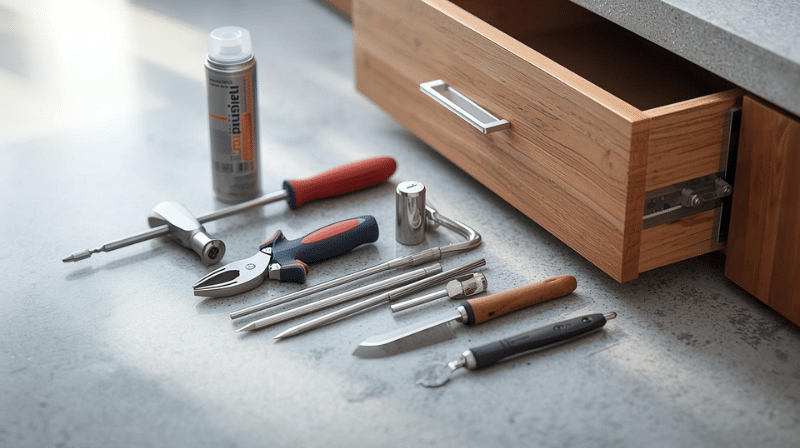
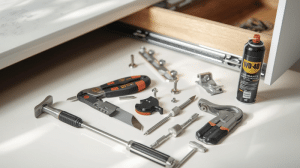
For any stuck drawer quick fix, having the right tools makes the process easier:
-
Flathead screwdriver
-
Hammer or rubber mallet
-
Sandpaper for sanding stuck drawer surfaces
-
Lubricant for drawer track lubrication
-
Flashlight to inspect inside the drawer
Basic Hand Tools
You will need some simple tools to work on the drawer. These tools help you remove or adjust the drawer parts carefully.
- Screwdriver (flathead and Phillips)
- Pliers
- Putty knife or thin pry bar
- Hammer
- Utility knife
Lubricants And Cleaners
Lubricants and cleaners help free the drawer if it sticks due to grime or swelling wood. Use these carefully to avoid damage.
| Type | Purpose |
| WD-40 or silicone spray | Lubricate metal parts and runners |
| Soap and water | Clean dirt and sticky residue |
| Mineral oil | Moisturize and protect wooden parts |
| Rubbing alcohol | Remove grease and grime |
Step-by-step Quick Fixes
Stuck kitchen drawers can be annoying. They slow you down in the kitchen. Fixing them is often easy and quick.
This guide shows simple steps to open a stuck drawer. Use these tips to clear blockages, lubricate slides, and adjust hardware.
Clearing Obstructions
Check inside the drawer and its path for anything blocking it. Small objects or debris can cause the drawer to stick.
- Remove items inside the drawer.
- Look for crumbs, paper, or broken parts.
- Use a flashlight to see deep inside.
- Clean out dust and dirt with a cloth.
- Check the drawer tracks for stuck objects.
- Repair experts use the ‘Ruler Technique’: “If the drawer opens an inch and stops with a hard, solid ‘thud,’ do not pull harder—you will break the face frame. This is almost always a utensil jammed against the upper cabinet lip. The expert fix is to slide a thin metal ruler or a long, flat spatula into the gap, feel for the object sticking up, and press it down firmly while gently pulling the drawer open.”
Lubricating Drawer Slides
Lubrication helps the drawer move smoothly. Use a lubricant that works well on metal or plastic slides.
| Lubricant Type | Best For | Notes |
| Silicone Spray | Metal and plastic slides | Dries quickly, no sticky residue |
| Wax | Wooden drawer slides | Use a candle or beeswax |
| Petroleum Jelly | Metal slides | Apply sparingly to avoid mess |
- Cabinet makers warn against wet lubricants: “In a kitchen environment, never use standard WD-40, cooking oil, or bar soap on tracks. These substances attract flour, dust, and crumbs, creating a sticky paste that will eventually seize the drawer completely. The authoritative choice is always a Dry PTFE (Teflon) Lubricant or paraffin wax, which provides glide without leaving a wet residue for grime to stick to.”
Adjusting Or Tightening Hardware
Loose or misaligned hardware can cause sticking. Tighten screws and realign parts to fix this.
- Open the drawer as far as possible.
- Use a screwdriver to tighten all screws on slides and handles.
- Check if the drawer sits evenly in the frame.
- Adjust brackets or rails if the drawer is crooked.
- Test the drawer by opening and closing it a few times.

Credit: www.reddit.com
Advanced Solutions For Stubborn Drawers
Stuck kitchen drawers can be very frustrating. Simple fixes may not work for drawers that are stuck tight. This guide offers advanced tips to help you free those stubborn drawers.
These methods focus on careful removal, checking for damage, and fixing wood problems. Follow the steps to avoid harming your drawer or cabinet.
Removing And Inspecting The Drawer
Start by carefully removing the drawer from the cabinet. Check for screws, clips, or stops that hold it in place. Pull gently to avoid breaking parts.
- Empty the drawer completely.
- Look inside for release clips or screws.
- Use a screwdriver to remove any stops.
- Pull the drawer out slowly and evenly.
- Inspect the sides and bottom for damage or warping.
- Installers clarify the safety lock mechanism: “For modern metal ball-bearing slides (common in newer kitchens), you cannot just lift the drawer out. You must fully extend the drawer and look for the plastic levers inside the track on both sides. Crucially, the mechanism is usually anti-symmetrical: you must push the left lever down and the right lever up at the same time to disengage the safety lock and remove the drawer.”
Replacing Damaged Parts
Check the rails, slides, and stops for wear or breaks. Broken parts can cause drawers to stick or jam. Replace any damaged hardware to improve function.
| Part | Signs of Damage | Replacement Tips |
| Drawer Slides | Rust, bending, or missing wheels | Buy slides that match size and type |
| Stops or Clips | Cracks or missing pieces | Use hardware from a hardware store |
| Rails | Loose screws or warping wood | Tighten screws or replace rails |
Sanding Or Refinishing Swollen Wood
Wood can swell from moisture, causing tight drawers. Sanding or refinishing can reduce swelling and smooth the surface.
Try these sanding tips:
- Remove the drawer from the cabinet.
- Focus on edges that rub the frame.
- Use fine-grit sandpaper for a smooth finish.
- Wipe away dust before testing the drawer.
- Apply a wood sealant to prevent future swelling.
Preventing Future Drawer Issues
Stuck kitchen drawers can be frustrating and slow down your cooking. Taking steps to prevent problems saves time and effort later.
Simple care and good habits help keep your drawers working smoothly for years.
Regular Maintenance Tips
Check your drawers often for signs of wear or damage. Clean the tracks and slides to remove dirt and crumbs.
Lubricate the drawer runners with a small amount of wax or silicone spray. Avoid oil-based lubricants that attract dust.
- Remove debris from tracks weekly
- Apply dry lubricant every few months
- Tighten loose screws and handles
- Replace damaged parts promptly
Proper Drawer Usage
Use drawers gently to avoid damage. Do not overload them with heavy items that strain the slides.
Open and close drawers fully and smoothly. Avoid forcing them if they feel stuck or hard to move.
- Do not push drawers hard
- Keep weight within drawer limits
- Distribute items evenly inside
- Close drawers completely each time
Controlling Kitchen Humidity
High humidity causes wood to swell and metal to rust. Keep your kitchen dry to protect your drawers.
Use ventilation fans when cooking and fix leaks quickly. A dehumidifier can help in very damp kitchens.
- Use exhaust fans to reduce moisture
- Check for and repair leaks fast
- Keep kitchen temperature steady
- Consider a small dehumidifier if needed
Credit: www.reddit.com
Frequently Asked Questions
How Can I Safely Open A Stuck Kitchen Drawer?
To open a stuck drawer safely, first remove nearby items. Then gently wiggle the drawer side to side while pulling. Avoid forcing it to prevent damage. Use a lubricant like WD-40 if needed to loosen tight spots. Always check for visible obstructions inside.
What Tools Help Open A Jammed Kitchen Drawer?
Useful tools include a flathead screwdriver, lubricant spray, and a putty knife. The screwdriver helps pry gently, lubricant eases tight spots, and the putty knife can remove debris blocking movement. Use tools carefully to avoid damaging the drawer or cabinet.
Why Do Kitchen Drawers Get Stuck Over Time?
Drawers stick due to dirt buildup, warped wood, or loose hardware. Moisture and frequent use can cause swelling or misalignment. Regular cleaning and maintenance prevent sticking. Checking drawer slides and tightening screws helps maintain smooth operation.
Can I Fix A Stuck Drawer Without Removing It?
Yes, try lubricating the tracks or hinges first. Cleaning debris from the slides may help. Gently tapping or wiggling the drawer can also free it. If these fail, partial removal might be necessary for deeper inspection or repair.
Conclusion
Fixing a stuck kitchen drawer is easy with simple steps. Regular maintenance prevents future jams. Check for obstructions and clean tracks often. Tighten loose screws to ensure smooth operation. Use a lubricant for easy sliding. Simple household items can help.
Patience and persistence solve the problem. Next time, you can handle it with ease. No special tools needed. Just a little effort. Your kitchen will stay functional and hassle-free. Enjoy smoother kitchen experiences. No more stuck drawers!