How do you practice sanitation in the kitchen? It’s a question that might not be on your mind every day, but it should be.
Your kitchen is the heart of your home, where delicious meals are crafted and cherished memories are made. Yet, without proper sanitation, it can quickly become a breeding ground for bacteria and germs. This isn’t just about keeping things tidy; it’s about safeguarding the health of you and your loved ones.
Imagine preparing a meal without the worry of contamination. Imagine feeling confident that your kitchen is as clean as it can be. You’ll discover simple, effective steps to elevate your kitchen hygiene to a whole new level. Ready to transform your cooking space into a safe haven? Let’s dive in.
Kitchen Cleanliness Basics
Keeping the kitchen clean is very important for safe cooking. A clean kitchen stops germs and bacteria from spreading.
Good sanitation helps prevent food poisoning and keeps your family healthy. Simple daily habits make a big difference.
Daily Cleaning Routine
Clean your kitchen every day to keep it safe. Wipe counters, wash dishes, and sweep the floor daily.
Cleaning regularly stops dirt and germs from building up. It also makes cooking easier and more pleasant.
- Wash dishes and utensils after use
- Wipe down countertops and stove tops
- Sweep or vacuum crumbs and dirt on the floor
- Clean sinks and faucets
- Keep kitchen towels and sponges clean
Sanitizing Surfaces
Sanitizing kills harmful bacteria on kitchen surfaces. Use safe cleaning products for this task.
Sanitize areas where you prepare food, like cutting boards and counters. This stops cross-contamination.
- Use a disinfectant spray or solution
- Apply to all food contact surfaces
- Let it sit for the recommended time
- Rinse or wipe with a clean cloth
- Sanitize cutting boards after cutting raw meat
Proper Waste Disposal
Throw away food scraps and trash quickly. This helps stop bad smells and pests.
Use covered trash bins and empty them often. Recycle items when possible to reduce waste.
- Use a bin with a tight lid
- Empty trash daily or when full
- Clean bins regularly to avoid odors
- Separate recyclables from food waste
- Compost vegetable scraps if possible
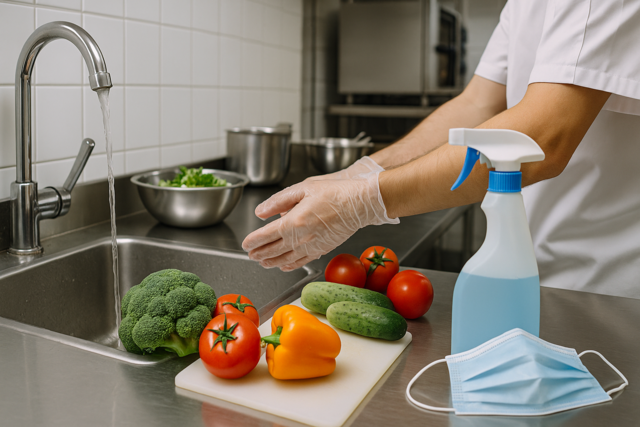
Credit: www.universalclass.com
Safe Food Handling
Sanitation in the kitchen keeps food safe and healthy. Proper handling helps stop germs from spreading.
Follow simple rules to clean food, avoid mixing bacteria, and store items well.
Washing Fruits And Vegetables
Wash all fruits and vegetables under running water before eating or cooking. This removes dirt and bacteria.
- Use cold water to rinse produce thoroughly.
- Scrub firm fruits with a clean brush.
- Remove outer leaves from leafy vegetables.
- Dry with a clean cloth or paper towel.
Avoiding Cross-contamination
Keep raw and cooked foods separate. Use different tools and cutting boards for meats and vegetables.
| Food Type | Recommended Cutting Board Color |
| Raw Meat | Red |
| Vegetables | Green |
| Cooked Food | White |
| Seafood | Blue |
Storing Food Correctly
Store food in clean containers and at the right temperature. This stops germs from growing.
- Keep raw meat on the bottom shelf of the fridge.
- Cover foods tightly with lids or plastic wrap.
- Use leftovers within three days.
- Freeze food if you do not use it soon.
Personal Hygiene In The Kitchen
Keeping clean in the kitchen helps stop germs from spreading. Good hygiene protects food and people.
Everyone working in the kitchen should practice safe and clean habits all the time.
Hand Washing Techniques
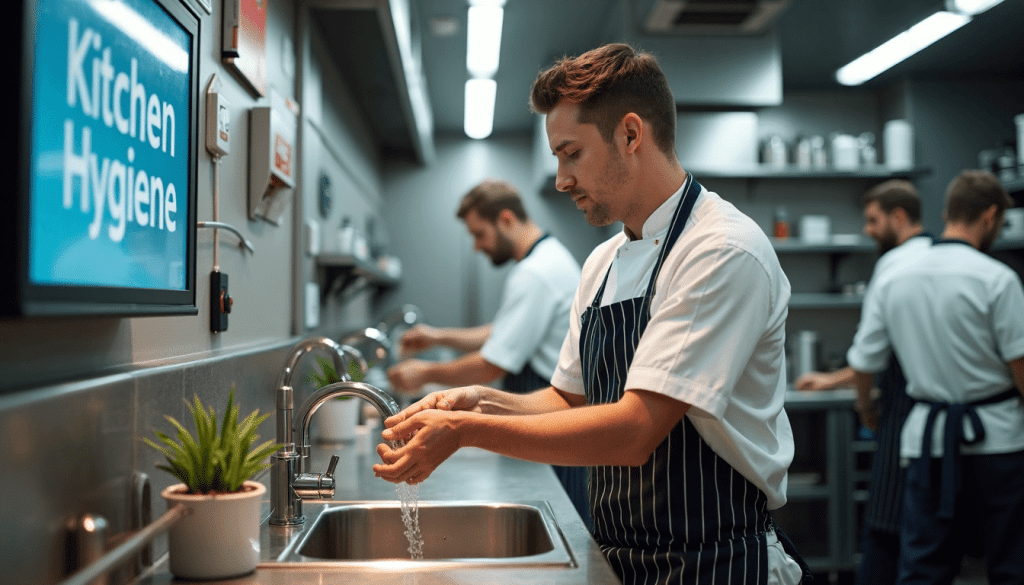
Washing hands well is the best way to stop germs. Use warm water and soap every time before cooking.
Rub hands together for at least 20 seconds. Clean all parts, including fingers and nails.
- Wet hands with clean water
- Apply soap and scrub thoroughly
- Wash backs of hands, between fingers
- Rinse with clean water
- Dry with a clean towel or air dryer
Using Gloves And Aprons
Gloves protect food from germs on your skin. Change gloves often, especially after touching raw food.
Aprons keep clothes clean and stop dirt from getting on food. Use clean aprons each day.
- Wear gloves when handling ready-to-eat food
- Change gloves after breaks or touching trash
- Use aprons to cover clothes fully
- Wash aprons regularly
Managing Illness And Injuries
Do not work with food if you feel sick. Illness can spread germs to others through food.
Cover cuts and wounds with clean bandages. Use gloves over bandages to keep food safe.
- Stay home if you have fever, diarrhea, or vomiting
- Tell your manager about any illness or injury
- Cover wounds with waterproof bandages
- Wear gloves over bandages when handling food
Cleaning Kitchen Tools And Equipment
Keeping your kitchen tools and equipment clean is key to safe food preparation. Dirt and bacteria can hide on utensils and appliances.
Regular cleaning stops germs from spreading and keeps your kitchen safe for cooking.
Washing Utensils And Cookware
Wash all utensils and cookware right after use. Use hot water and dish soap to remove food and grease.
- Scrub pots, pans, and knives with a sponge or brush.
- Rinse well under running water to remove soap.
- Dry with a clean towel or let air dry on a rack.
- Store in a clean, dry place to avoid contamination.
Maintaining Appliances
Appliances need regular cleaning to work well and last longer. Unplug them before cleaning.
| Appliance | Cleaning Method | Frequency |
| Blender | Wash jar and blades with warm soapy water | After each use |
| Microwave | Wipe inside with damp cloth and mild cleaner | Weekly |
| Refrigerator | Clean shelves and drawers with baking soda solution | Monthly |
Sanitizing Cutting Boards
Cutting boards can hold bacteria from raw foods. Sanitize them often to keep safe.
Use this simple sanitizer solution:
- Mix 1 tablespoon of bleach in 1 gallon of water.
- Soak the cutting board for a few minutes.
- Rinse thoroughly with clean water.
- Let it dry completely before use.
Pest Prevention
Keeping your kitchen clean stops pests from coming in. Pests can spread germs and make food unsafe.
Good pest prevention means blocking pests and cleaning well every day.
Sealing Entry Points
Close all cracks and holes where pests can enter your kitchen. Check doors, windows, and walls carefully.
- Use weather stripping on doors and windows.
- Seal holes around pipes and cables with caulk.
- Fix torn screens on windows and vents.
- Keep door sweeps tight to the floor.
Proper Food Storage
Store food in pest-proof containers. Keep dry and fresh foods sealed tightly.
| Food Type | Best Storage |
| Grains and cereals | Airtight plastic or glass containers |
| Fruits and vegetables | Refrigerated or sealed bags |
| Leftovers | Sealed containers in the fridge |
Regular Pest Inspections
Look for signs of pests often. Early checks help stop big problems.
- Check under sinks and behind appliances.
- Look for droppings, nests, or damage.
- Clean spills and crumbs right away.
- Use traps or contact pest control if needed.

Credit: blog.ochsner.org
Temperature Control
Keeping the right temperature in the kitchen is key to safe food handling. It stops harmful bacteria from growing.
Temperature control includes cooking food fully, storing it cold, and tracking how long food stays good.
Cooking Temperatures
Cooking food to the correct temperature kills bacteria that cause illness. Different foods need different temperatures.
- Chicken and turkey: cook to at least 165°F (74°C)
- Ground meats: cook to 160°F (71°C)
- Beef, pork, lamb steaks: cook to 145°F (63°C) and rest for 3 minutes
- Fish: cook to 145°F (63°C)
- Egg dishes: cook until yolk and white are firm
Refrigeration Guidelines
Cold storage slows bacteria growth. Keep your refrigerator and freezer at safe temperatures.
| Storage Type | Temperature | Notes |
|---|---|---|
| Refrigerator | Below 40°F (4°C) | Use within 3-5 days for most foods |
| Freezer | 0°F (-18°C) or lower | Stores food for months; prevents bacteria |
Monitoring Food Shelf Life
Check food dates and conditions often. Use or discard food before it spoils to avoid illness.
- Label leftovers with date before storing
- Throw away food past its expiration or if it smells bad
- Use FIFO (First In, First Out) method to rotate food
- Keep track of opened and cooked foods separately
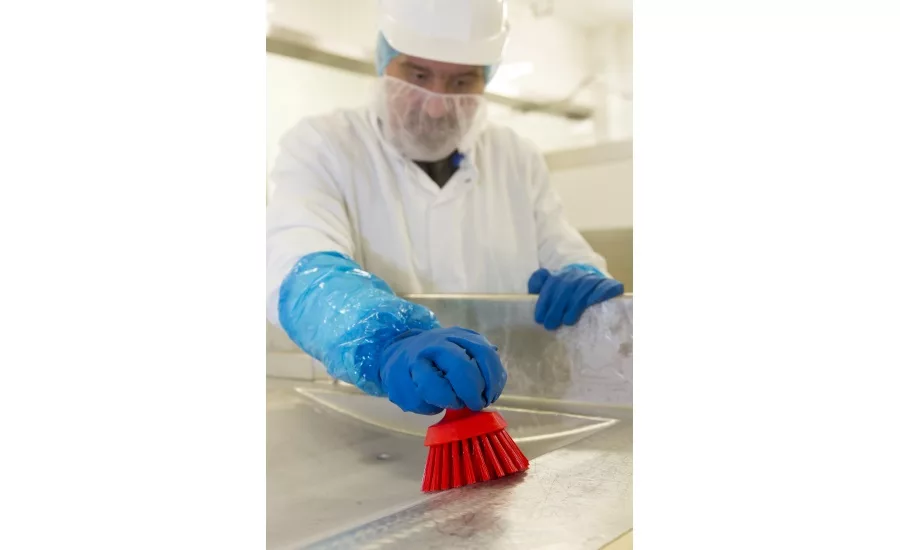
Credit: www.food-safety.com
Frequently Asked Questions
How Do You Keep Kitchen Surfaces Sanitary?
Regularly clean and disinfect kitchen surfaces with appropriate cleaners. Use hot, soapy water first, then apply a disinfectant to kill germs effectively.
What Is The Best Way To Sanitize Kitchen Utensils?
Wash utensils with hot, soapy water after each use. For extra sanitation, soak them in a bleach solution or run them through a dishwasher.
How Often Should Kitchen Sponges Be Replaced?
Replace kitchen sponges every one to two weeks. Alternatively, sanitize them daily by microwaving damp sponges for two minutes to kill bacteria.
Why Is Handwashing Important In Kitchen Sanitation?
Handwashing removes germs and prevents cross-contamination. Always wash hands thoroughly with soap and water before handling food or kitchen tools.
Conclusion
Keeping your kitchen clean protects your health and food safety. Wash hands often and clean surfaces after use. Use separate boards for raw meat and vegetables. Store food properly to avoid spoilage. Regularly clean appliances and trash bins. Small habits make a big difference in preventing germs.
Practice these simple steps daily for a safer kitchen. Clean kitchen, healthy family.