Are you tired of digging through cluttered cabinets every time you need a plate or bowl? Knowing exactly where to put dishes in your kitchen cabinets can save you time, reduce frustration, and make cooking more enjoyable.
Imagine opening your cabinets and instantly finding what you need, without any hassle. You’ll discover simple, practical tips to organize your dishes in a way that fits your kitchen and your daily routine. Keep reading to transform your kitchen into a space that works for you, not against you.
Choosing The Right Cabinet
Choosing the right cabinet for your dishes helps keep your kitchen neat. It also makes cooking and cleaning easier.
Think about how much space you need and how easy it is to reach your dishes. This helps you pick the best spot.
Assessing Cabinet Size And Depth
Look at the size and depth of each cabinet before placing dishes. Cabinets that are too small can cause clutter.
Deep cabinets hold large plates and pots. Smaller cabinets work well for cups and small bowls.
- Measure cabinet height, width, and depth
- Match cabinet size to your dish sizes
- Use deep cabinets for big plates and pans
- Use shallow cabinets for cups and small plates
Considering Accessibility And Convenience
Put dishes where you can reach them easily. Place daily use items in lower or eye-level cabinets.
Keep rarely used dishes in harder-to-reach cabinets. This saves space for items you use often.
- Store everyday dishes in easy-to-reach spots
- Place heavy dishes in lower cabinets
- Use upper cabinets for less-used items
- Arrange dishes by how often you use them
Credit: www.rd.com
Organizing By Dish Type
Organizing kitchen cabinets by dish type helps you find items quickly. It keeps your kitchen neat and easy to use.
Sorting dishes into groups like plates, bowls, and glasses saves space. It also protects your dishes from damage.
Plates And Bowls
Store plates and bowls near the dishwasher or sink for easy access. Group them by size and type for better order.
Place large dinner plates on the bottom shelves and smaller plates on top. Stack bowls carefully to avoid chips and cracks.
- Large plates on lower shelves
- Small plates on higher shelves
- Bowls stacked by size
- Keep frequently used items within reach
Glasses And Cups
Keep glasses and cups in a cabinet close to the coffee maker or dining area. Group similar items together for easy use.
Place cups on hooks or shelves to save space. Arrange glasses by type, like wine glasses separate from everyday glasses.
- Mugs and cups near coffee station
- Wine and specialty glasses in a safe spot
- Use hooks for hanging cups
- Stack sturdy glasses carefully
Serving Platters And Specialty Items
Store large serving platters and specialty dishes in higher or less-used cabinets. Keep them flat to avoid damage.
Place specialty items like teapots or punch bowls where you can see them easily. Use dividers or trays to keep them stable.
- Large platters flat on top shelves
- Specialty dishes in visible spots
- Use dividers to separate items
- Keep fragile pieces stable
Maximizing Vertical Space
Kitchen cabinets often have unused space above dishes. Using this space well helps keep your kitchen neat. It also makes it easy to find and reach your dishes.
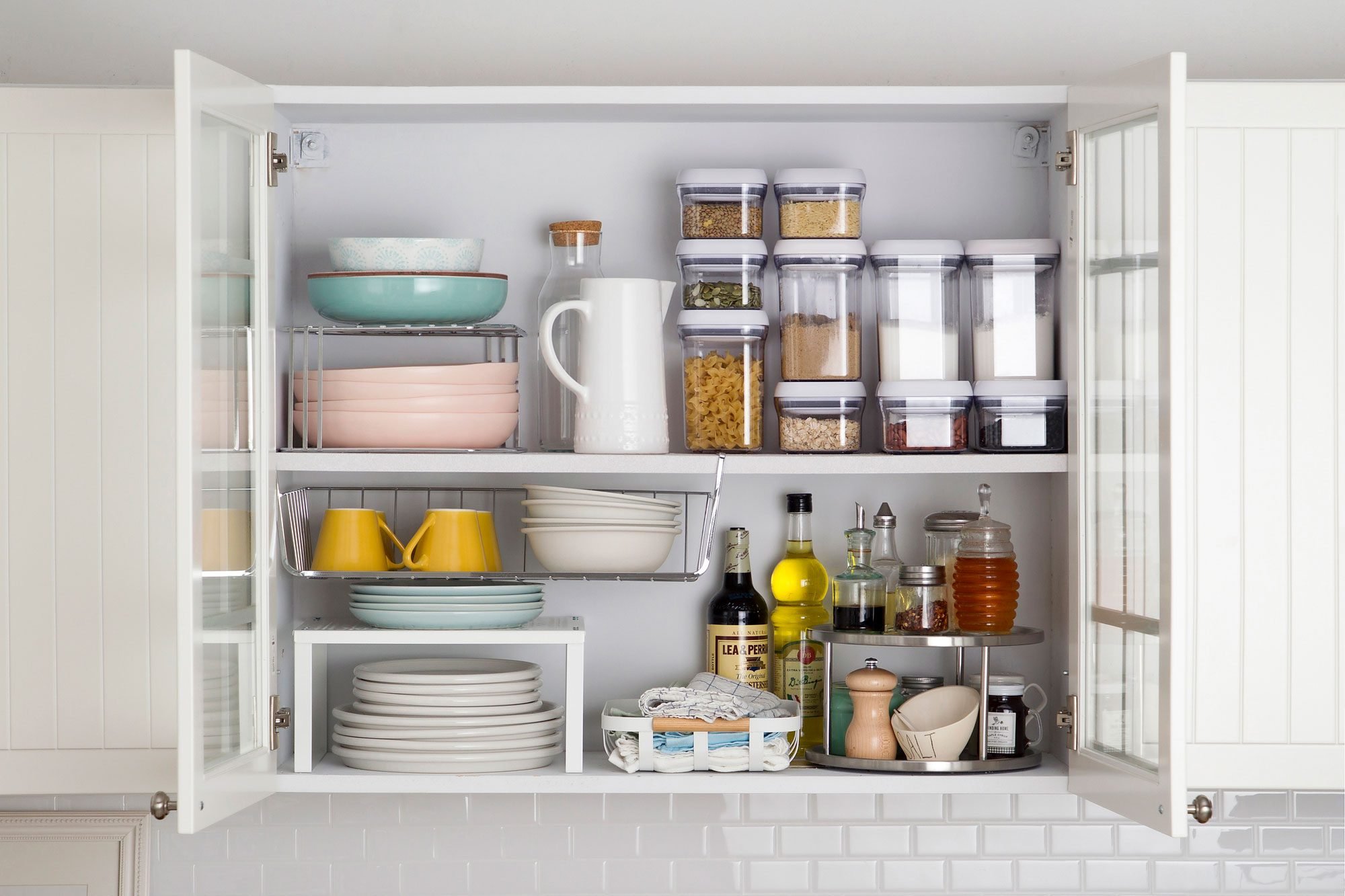
Stacking dishes and adding extra shelves can save space. These tricks let you store more items without clutter.
Using Shelf Risers
Shelf risers add an extra level inside your cabinet. They lift plates or bowls so you can use the space above them.
With risers, you can store small plates under and large plates on top. This keeps everything visible and easy to grab.
- Choose risers that fit your cabinet depth
- Use adjustable risers for different dish sizes
- Pick risers with non-slip surfaces for safety
Stacking Techniques
Stack dishes by size and shape to save vertical space. Place heavier items at the bottom for stability.
Use a plate stand or divider to keep stacks neat. This prevents dishes from tipping or scratching each other.
- Stack plates from largest to smallest
- Place bowls inside each other to save space
- Use dividers for cutting boards and lids
Utilizing Cabinet Doors
Kitchen cabinet doors offer extra space to store dishes and kitchen tools. Using this space helps keep your kitchen neat.
By adding storage options on cabinet doors, you can make your kitchen more organized and easy to use.
Installing Hooks And Racks
Hooks and racks are easy to add to cabinet doors. They hold plates, cups, or lids and save shelf space.
You can hang small baskets or racks to keep items like measuring spoons or pot holders within reach.
- Use strong adhesive hooks for light items
- Install metal racks for plates or cutting boards
- Add small baskets for lids or kitchen towels
- Space hooks evenly for easy access
Magnetic Strips For Small Items
Magnetic strips on cabinet doors hold metal kitchen tools like knives or scissors. They keep items safe and visible.
This method frees up drawer space and helps you find small tools quickly when cooking.
- Choose a strong magnetic strip that fits your cabinet door
- Attach knives, scissors, or metal measuring spoons
- Keep the strip at a safe height away from children
- Clean the strip regularly to keep magnets strong
Incorporating Pull-out Shelves
Pull-out shelves help you organize dishes in kitchen cabinets. They make it easy to reach items at the back. This saves time and reduces clutter.
Using pull-out shelves is a smart way to keep dishes neat and accessible. They work well in deep cabinets where items can get lost.
Benefits For Deep Cabinets
Deep cabinets can be hard to use without help. Pull-out shelves bring dishes out to you. This prevents stacking too many items and breaking them.
- Easy access to dishes in the back
- Better use of deep cabinet space
- Reduces the risk of dropping or breaking dishes
- Keeps dishes organized and visible
- Saves time when cooking or cleaning
Choosing Smooth-glide Mechanisms
Smooth-glide mechanisms let shelves move easily without noise. They support heavy dishes and prevent jerky movements. Choosing the right mechanism is key.
| Type | Features | Best For |
| Ball Bearing Slides | Quiet, strong, smooth | Heavy dishes and frequent use |
| Roller Slides | Less expensive, smooth | Light to medium load |
| Undermount Slides | Hidden, soft close | Aesthetic and quiet operation |
Separating Everyday And Special Occasion Dishes
Organizing your kitchen cabinets can help you find dishes quickly. Keeping everyday dishes separate from special occasion ones saves time and space.
It also protects delicate dishes by storing them safely away. This guide shows how to separate and store your dishes efficiently.
Prioritizing Frequent Use Items
Place everyday dishes where you can reach them easily. This means lower shelves or near the dishwasher.
Keep plates, bowls, and cups you use daily in these spots. This helps you grab what you need fast.
- Store plates and bowls on lower shelves
- Keep cups and glasses near the sink or dishwasher
- Arrange items by size for easy stacking
- Use shelf organizers for better space
Storing Seasonal Or Rarely Used Pieces
Special occasion dishes should go in harder-to-reach cabinets. This keeps them safe and out of the way.
Store these items higher up or in cabinets you use less often. Wrap fragile pieces to avoid damage.
- Use upper shelves for holiday or fine china
- Wrap fragile items in cloth or bubble wrap
- Group similar items together in one cabinet
- Label shelves or boxes for easy identification
Labeling And Maintenance
Keeping dishes organized in kitchen cabinets makes cooking and cleaning easier. Labeling and maintenance help keep your kitchen neat and tidy.
Good labels guide you to find dishes fast. Regular maintenance stops clutter and broken items from piling up.
Creating Clear Labels
Use simple and clear labels for your dishes. Labels show what is inside each cabinet or shelf. This saves time when you look for plates or bowls.
Choose labels that are easy to read and stay in place. You can use stickers, tags, or small signs. Put labels at eye level or on the cabinet door.
- Write dish type like “Plates,” “Bowls,” or “Glasses”
- Use large font for easy reading
- Place labels where you can see them quickly
- Use waterproof labels to avoid damage
Regular Decluttering Practices
Check your kitchen cabinets often to remove dishes you do not use. This keeps space free and makes the kitchen look clean.
Throw away chipped or broken plates and cups. Donate dishes you no longer need but are still in good condition.
- Set a schedule to review dishes every few months
- Remove items that are damaged or rarely used
- Clean shelves and cabinets during decluttering
- Keep only dishes you use daily or weekly

Credit: designthusiasm.com

Credit: www.detroitnews.com
Frequently Asked Questions
Where Should I Place Everyday Dishes In Cabinets?
Place everyday dishes in lower or mid-level cabinets for easy access. Keep frequently used plates and bowls within arm’s reach near the dishwasher or sink to save time and effort during meal prep and cleanup.
How To Organize Dishes In Kitchen Cabinets Efficiently?
Group dishes by type and frequency of use. Store plates, bowls, and mugs together. Use shelf organizers or risers to maximize space and keep items visible and accessible.
Can I Store Dishes Above The Countertop Cabinets?
Yes, lightweight or decorative dishes can go in upper cabinets. Keep heavy or frequently used items lower to prevent accidents and ease daily handling.
What’s The Best Cabinet Location For Large Serving Dishes?
Store large serving dishes in lower cabinets or deep drawers. These spots provide enough space and are easier for lifting heavy or bulky items safely.
Conclusion
Organizing your kitchen cabinets can simplify daily routines. Keep frequently used dishes within easy reach. Stack similar items together for a tidy look. Use cabinet space wisely by utilizing vertical space. Consider shelf organizers for better arrangement. Grouping items by type saves time and effort.
A well-organized kitchen promotes efficiency and ease. It creates a more enjoyable cooking experience. Neatly stored dishes also enhance kitchen aesthetics. Start small and organize one cabinet at a time. Enjoy the benefits of a clutter-free kitchen. Your efforts will pay off with less stress and more convenience.