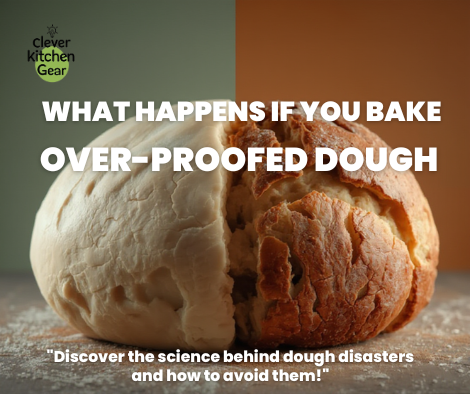
Dough Disaster: What Happens If You Bake Over-Proofed Dough?
You were excited to bake. Then you realized your dough sat out too long. Over-proofed dough is a common kitchen mistake. It happens if you are busy or try a new recipe.
But What Happens If You Bake Over Proofed Dough? You might worry about the taste and final look. Maybe you wonder if you can save it. You are not alone in this baking trouble — understanding the science helps a lot and can even help you recover your dough for a decent bake.
Stick around now. We will dive into the world of yeast. We will reveal secrets that can save your baking adventures.
Signs Of Over-Proofed Dough
Over-proofed dough has risen too much. This causes problems with your finished bread.
Knowing the signs helps you avoid baking bad dough. You can tell if the dough will not turn out well.
Appearance Changes
Over-proofed dough looks very puffy. It is often very large. You may see cracks or bubbles on its surface.
The dough can also look flat. It may have started to deflate after rising too much.
-
Dough swells beyond a normal size.
-
The surface shows thin spots or bubbles.
-
Cracks or splits may start to appear.
-
The dough may look flat or deflated.
Texture And Feel
The dough feels very soft when over-proofed. It feels loose. It also loses all its strength and feels sticky.
It will not spring back when gently pressed. This shows the structure inside is weak.
-
Dough feels too soft or mushy.
-
It is sticky or wet to the touch.
-
It does not bounce back when pressed.
-
The texture is weak and fragile.
- Artisan bakers teach the poke test as the ultimate gauge for proofing: "When you gently press the dough, the speed of the rebound tells the story. A perfectly proofed dough will spring back slowly, leaving a small indent. However, an over-proofed dough is unmistakable: it will collapse instantly, leaving a large, soft dent that does not fill in at all. If you see that instant collapse, you know the gluten network has torn and is too weak to support any oven spring."
Smell Alterations
Over-proofed dough often smells sour or alcoholic. Yeast makes extra alcohol and acids.
The smell may be stronger than usual. It will also smell less pleasant.
-
You will notice a strong, tangy, or sour smell.
-
The scent may be alcohol-like.
-
The smell is less fresh and more fermented.

Credit: www.reddit.com
Impact On Dough Structure
Baking over-proofed dough changes the structure. The dough loses shape and strength.
Understanding this helps you avoid bad texture. It helps prevent rise problems in your bread.
Gluten Network Breakdown
Gluten gives dough its stretch and structure.4 Over-proofing makes this network weak. The gluten strands stretch too far. They start to tear apart.
-
The dough becomes very sticky and soft.
-
It cannot hold its shape during baking.
-
The bread may turn out dense or flat. The structure collapses easily.
Gas Retention Issues
Yeast makes gas.7 This helps the dough rise up. Over-proofed dough holds less gas. The weak gluten lets gas escape easily.8
| Effect | Description |
| Reduced Gas Hold | Gluten traps gas poorly. This creates flat bread. |
| Irregular Crumb | Gas escapes unevenly. This causes dense spots or big holes. |
| Weaker Rise | Dough cannot expand fully during baking. |
Effects On Baking Results
Using over-proofed dough changes your final bread. It affects the rise, texture, and flavor.
Understanding these effects helps you know what will happen. You will know what to expect if your dough rests too long.
Crust And Crumb Texture
Over-proofed dough often results in a soft, pale crust. The inside crumb can become uneven and very open.
-
The crust may not have a crisp finish.
-
The crumb can have large, strange holes.
-
The texture might feel gummy or dense in places.
-
The bread may crumble quite easily.
Rise And Volume Problems
The dough loses strength when it over-proofs.9 It cannot rise well in the oven. This creates sunken or flat bread.
| Problem | Cause | Effect |
| Flat Loaf | Dough loses its gas retention. | Bread does not rise well. |
| Sunken Top | Gluten becomes too weak. | Loaf collapses after baking. |
| Dense Texture | Too much fermentation happens. | The crumb is heavy and tight. |
Flavor Differences
Over-proofing changes the flavor greatly. Yeast eats the sugars for too long. This makes the bread taste off or sour.
Common flavor changes include:
-
Sourness increases from too much fermentation.10
-
The fresh, sweet dough taste is lost.
-
You may taste yeasty or alcoholic notes.
- Professional baking coaches offer a quick fix for the acidic flavor: "Over-proofed dough has consumed too much sugar, leading to sourness and a pale crust. To counteract this easily, dissolve 1 teaspoon of sugar in 2 tablespoons of water and pour it into a clean spray bottle. Mist the surface of your over-proofed loaf with this sugar water just before placing it in the oven. This quick layer of sugar will caramelize, giving you a better-colored crust and balancing out the excessive sourness."

Credit: www.reddit.com
Common Mistakes Leading To Over-Proofing
Over-proofing dough ruins texture and flavor. Many bakers face this without knowing why. Understanding mistakes helps prevent the problem.
Two main things cause over-proofing: wrong time and wrong temperature. Simple fixes can solve both issues.
Temperature Control Errors
Heat changes how fast yeast works.11 If the dough gets too warm, it rises too fast. It then collapses.
-
Do not leave dough near a heater or sun.
-
Do not use water that is too hot for mixing.
-
Always check the room temperature during proofing.
-
Refrigerate dough if proofing will take too long.
| Temperature Range | Effect on Dough |
| Below 70°F (21°C) | Slow yeast activity. Longer proofing time. |
| 70°F–80°F (21°C–27°C) | Ideal proofing speed and texture. |
| Above 80°F (27°C) | Fast proofing. High risk of over-proofing. |
Timing Misjudgments
Proofing time is essential. Wrong timing leads to poor dough quality. Knowing when to stop the rise is key.
-
Check the dough size often. Avoid over-expanding.
-
Follow recipe times. Adjust them for room temperature.
-
Use the poke test: gently press the dough. It should spring back slowly.
-
Do not leave the dough alone for too long.
How To Fix Over-Proofed Dough
Over-proofed dough can collapse. It may bake poorly. Fixing it takes steps to restore the texture.
Here are two main ways to handle dough that has risen too much.
Punching Down And Reshaping
Punching down removes the extra gas. This helps reset the dough's structure. It allows it to rise again.
-
Gently press the dough. Release the trapped air bubbles.
-
Shape the dough into a tight loaf or ball.
-
Let it rest and rise again for 30 to 60 minutes.
This works best for slightly over-proofed dough. It improves the final texture.
Adjusting Baking Techniques
You can change the baking process. This helps over-proofed dough bake better. Lower heat slows the baking process.
| Adjustment | Purpose |
| Lower oven temperature by 25°F (about 15°C) | Stops the crust from forming too fast. |
| Increase baking time slightly | Ensures the inside dough cooks through. |
| Use steam during baking | Keeps the crust wet. Allows more oven rise. |

Credit: www.reddit.com
Preventing Over-Proofing In Future Bakes
Over-proofed dough gives poor texture. It affects the final taste. Stopping over-proofing helps your bread rise well.
Watching the time and storage keeps dough fresh. It ensures it is ready to bake.
Monitoring Proofing Time
Proofing time depends on many factors. It changes with yeast amount and temperature. Watch the dough, not just the clock.
Check dough by gently pressing it. If it springs back slowly, it is ready. If it does not spring back, it is likely over-proofed.
-
Set a timer based on your recipe time.
-
Check the dough every 10 minutes near the end.
-
Use the finger test to check readiness.
-
Adjust time if your kitchen is warm or cold.
Optimal Storage Conditions
Temperature and wet air affect proofing. Keep dough in a warm, still spot for best results.
Too warm makes dough rise too fast. Too cold slows the rise. Cover the dough in a bowl. This keeps in moisture.
-
Store dough at 75-80°F (24-27°C) for normal proofing.
-
Use a proofing box or a warm spot in the kitchen.
-
Cover the dough with plastic wrap or a damp cloth.
-
Use the refrigerator for a slow, cold proofing if needed.
Frequently Asked Questions
What Happens If You Bake Over-Proofed Dough?
The baked loaf will be flat and dense. It loses gas. This causes poor texture and rise. It may also taste sour.
Can Over-Proofed Dough Be Saved Before Baking?
Yes. Gently punch down the dough. This releases gas. Then reshape it. Allow a brief second rise. This helps restore some structure.
Why Does Over-Proofed Dough Collapse In The Oven?
Gluten weakens from too much fermentation. The dough cannot hold gas when baking. This causes it to deflate.
How To Prevent Dough From Over-Proofing?
Watch proofing time and temperature closely. Use a cool spot and a timer. Check the dough often for signs of readiness.
Conclusion
Baking over-proofed dough changes the taste and texture. The bread may be flat and dense. It loses its nice shape. It can also have large internal holes. Even so, the bread is still safe to eat.
To avoid this, watch the dough carefully while it rises. Baking with well-proofed dough makes soft, tasty bread. Experiment with timing. Find what works best for you. Keep practicing. Your bread will surely improve!
To see an easy, step-by-step method on how to fix and save over-proofed dough using the punch-down and reshape technique, watch this tutorial: