Are you tired of opening your kitchen cabinets only to be met with a chaotic jumble of dishes? Does the thought of finding the right plate feel like a treasure hunt in your own home?
You’re not alone, and there’s good news! Learning how to Set Up Dishes in Kitchen Cabinets doesn’t have to be a daunting task. Imagine reaching for a bowl or a mug and finding it exactly where you expect it to be, every single time. This isn’t just about tidiness; it’s about creating a kitchen space that feels welcoming and efficient.
By the end of this article, you’ll discover simple, effective strategies to set up your dishes in kitchen cabinets, transforming your kitchen into a place of order and calm. Let’s get started on this journey to a more organized and stress-free kitchen experience.
Choose The Right Cabinet Space
Set Up Dishes in Kitchen Cabinets to make your kitchen more organized. Choosing the right space helps you find dishes easily and keeps them safe.
Think about your cabinet size, how easy it is to reach, and how often you use each dish. These factors help you decide the best spot for your dishes.
Assess Cabinet Dimensions
Measure the height, width, and depth of your cabinets. This helps you know what dishes fit well. Avoid placing large plates in small spaces.
| Cabinet Size | Type of Dishes | Notes |
|---|---|---|
| Small (less than 12 inches deep) | Bowls, small plates | Use stackable dishes to save space |
| Medium (12 to 18 inches deep) | Plates, cups | Good for most everyday dishes |
| Large (more than 18 inches deep) | Large serving dishes, pots | Keep heavy items on lower shelves |
Consider Accessibility
Place dishes you use often in easy-to-reach cabinets. Avoid high or deep shelves for daily items. Keep less used dishes in harder spots.
- Use lower shelves for plates and bowls you grab daily
- Keep cups near the coffee maker or sink
- Store special occasion dishes higher or deeper
- Make sure shelves are stable to prevent accidents
Separate By Frequency Of Use
Organize dishes by how often you use them. This saves time and keeps your kitchen tidy. Group everyday dishes separately from rare-use items.
- Daily dishes: Keep on middle or lower shelves
- Weekly dishes: Place on higher or back shelves
- Rarely used dishes: Store in deep or top cabinets
Sort Dishes By Type
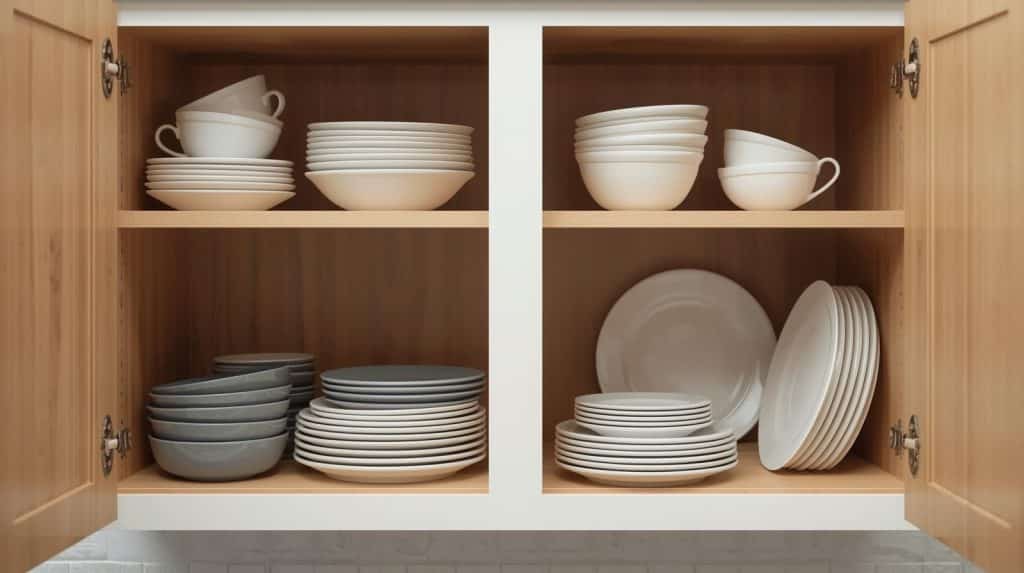
Organizing dishes in kitchen cabinets makes your kitchen neat and easy to use. When you Set Up Dishes in Kitchen Cabinets, sorting dishes by type helps you find what you need quickly.
Separate plates, bowls, glassware, cups, and mugs. This system keeps your kitchen tidy and saves time during meals.
Group Plates And Bowls
Stack plates by size and type. Place dinner plates, salad plates, and bowls in separate stacks.
Keep bowls together but separate soup bowls from cereal bowls. This helps you grab the right dish fast.
- Stack dinner plates in one pile
- Put salad plates in another pile
- Group soup and cereal bowls separately
- Use shelf risers to save space
Organize Glassware
Arrange glassware by type and size. Keep drinking glasses, wine glasses, and tumblers in separate areas.
Store fragile glasses where they won’t be knocked over. Place frequently used glasses in easy reach.
- Group drinking glasses together
- Keep wine glasses in a safe spot
- Arrange tumblers by size
- Use cabinet liners to prevent slipping
Arrange Cups And Mugs
Place cups and mugs in a dedicated space. Sort them by size or style for easy access.
Hang mugs on hooks or stack them carefully. Avoid overcrowding to prevent chips or cracks.
- Store cups and mugs together
- Use hooks for hanging mugs
- Stack mugs with care
- Keep daily mugs within reach
Maximize Vertical Space
Kitchen cabinets often have unused space above and below dishes. When you Set Up Dishes in Kitchen Cabinets, using vertical space well keeps your kitchen neat. It also makes finding dishes easier.
Try simple tools and ideas to stack and hang dishes safely. This saves space and protects your plates and mugs.
Use Shelf Risers
Shelf risers add a second level inside your cabinets. They lift dishes so you can store more without stacking too high. Risers work well for cups, bowls, and small plates.
- Choose risers that fit your cabinet depth and width
- Use risers with non-slip surfaces to keep dishes stable
- Place heavy items on the bottom shelf and lighter ones on top
- Adjust risers if they are stackable for extra layers
Stack Plates Safely
Stacking plates saves space but needs care to avoid chips or cracks. Use padding between plates to protect them. Organize plates by size for easy access.
| Stacking Tips | Details |
| Use felt or soft liners | Place between plates to prevent scratches |
| Stack plates by size | Put largest plates at the bottom for stability |
| Limit stack height | Keep stacks low to avoid tipping over |
| Store frequently used plates at the front | Makes grabbing easier without disturbing stack |
Hang Mugs With Hooks
Hooks under shelves or inside cabinets hold mugs by their handles. This frees shelf space and keeps mugs easy to reach. Use strong hooks that fit your cabinet style.
- Install adhesive or screw-in hooks under shelves
- Space hooks to fit different mug sizes comfortably
- Hang mugs by their handles for safety and balance
- Keep mugs you use daily closest to the cabinet door

Credit: designthusiasm.com
Create Zones For Easy Access
Organizing dishes in kitchen cabinets saves time and effort. Group similar items into zones for quick reach.
Use zones to keep daily dishes handy and special items separate. This helps everyone find what they need fast.
Daily Use Zone
Keep plates, bowls, and cups you use daily in this zone. Place them at eye level or just below.
- Everyday plates and bowls
- Cups and mugs
- Cutting boards and frequently used pans
Special Occasion Zone
Store fine china, glassware, and serving dishes in this zone. These items are used less often.
| Item | Storage Tip |
| Fine china | Place in upper cabinets with padding |
| Glassware | Store away from daily dishes to avoid damage |
| Serving platters | Keep in deep shelves for easy stacking |
Kids’ Dishes Zone
Make a low shelf or cabinet area just for kids. Use colorful bins or trays to keep things neat.
- Use plastic plates and cups for safety
- Label bins with pictures for easy recognition
- Place snacks and small bowls within reach
Use Organizers And Dividers
Organizers and dividers help keep dishes neat when you Set Up Dishes in Kitchen Cabinets. They make it easier to find and store your plates, bowls, and cups.
Using these tools saves space and protects your dishes from damage. You can choose from many types to fit your cabinet style.
Install Drawer Inserts
Drawer inserts separate dishes inside drawers. They keep plates and bowls from moving when you open or close the drawer.
Choose inserts with soft edges to avoid scratches. You can find inserts with different compartments for various dish sizes.
- Measure your drawer before buying inserts
- Use foam or silicone inserts for extra protection
- Sort dishes by size and type in each compartment
Add Plate Holders
Plate holders keep plates upright and organized. They prevent plates from sliding and breaking in cabinets.
These holders fit inside cabinets or drawers. Choose adjustable ones to hold different plate sizes securely.
- Place plates vertically to save space
- Use holders with padding to avoid scratches
- Stack plates by size for easy access
Use Lazy Susans
Lazy Susans are rotating trays that help store dishes when you Set Up Dishes in Kitchen Cabinets, especially in corner cabinets. They make items easy to reach without moving others.
Place small plates, bowls, or cups on the tray. The spinning action lets you see and grab dishes quickly.
- Choose a size that fits your cabinet space
- Use non-slip mats to keep dishes steady
- Keep frequently used dishes on the Lazy Susan
Maintain Cleanliness And Safety
Keeping kitchen cabinets clean and safe helps protect your dishes. It also keeps your kitchen organized and easy to use.
Follow simple tips to avoid damage and keep your dishes ready for use. Clean cabinets and careful storage improve kitchen hygiene.
Keep Cabinets Dust-free
Dust can collect inside cabinets and on dishes. Clean cabinets regularly to avoid dust buildup. Wipe shelves with a damp cloth every week.
- Remove all items before cleaning.
- Use a soft cloth to wipe shelves and cabinet doors.
- Clean spills and crumbs immediately.
- Keep cabinet doors closed when not in use.
Avoid Overloading Shelves
Too many dishes on one shelf can cause damage. Overloading makes shelves unstable and unsafe. Distribute weight evenly to keep shelves strong.
| Tip | Reason |
| Limit heavy items per shelf | Prevents shelf bending or breaking |
| Place frequently used dishes on lower shelves | Reduces risk of dropping |
| Use shelf organizers | Keeps dishes stable and separated |
| Check shelf weight limits | Ensures safety and durability |
Store Fragile Items Carefully
Fragile dishes need special care to avoid chips and cracks. Store them where they won’t move or bump into other items.
- Place fragile items on padded shelf liners.
- Keep them away from heavy pots or pans.
- Stack plates with soft cloth or paper between them.
- Use cabinet dividers or holders for glasses.
Personalize Your Setup
Setting up dishes in kitchen cabinets can be simple and fun. Personalizing your setup when you Set Up Dishes in Kitchen Cabinets helps you find what you need fast.
Organize your dishes so the space looks nice and works well for your daily use.
Incorporate Aesthetic Elements
Choose cabinet liners and dish holders that match your kitchen style. Use colors and patterns that make your space feel warm and inviting.
- Use wooden or bamboo dish racks for a natural look
- Add soft lighting inside cabinets to highlight your dishes
- Pick matching plates and bowls for a clean, uniform look
- Include decorative jars or containers to hold small kitchen items
Label Sections
Labeling helps everyone in the home find dishes quickly. Use clear labels on shelves or containers to keep things organized.
| Section | Label Example | Items Stored |
| Top Shelf | Everyday Plates | Plates used daily |
| Middle Shelf | Special Dishes | Fancy or seasonal dishes |
| Bottom Shelf | Bowls & Cups | Bowls, mugs, and cups |
Adapt Setup Over Time
Your kitchen needs may change. Update your dish setup to fit new habits or space changes.
Try these tips to adapt your setup:
- Move frequently used dishes to easy-to-reach shelves.
- Store rarely used items higher or in less accessible spots.
- Swap out containers or holders as your dish collection grows.
- Clean and declutter cabinets every few months to keep space fresh.

Credit: uk.style.yahoo.com

Credit: thecrownedgoat.com
Frequently Asked Questions
How Should I Organize Dishes In Kitchen Cabinets?
Group dishes by type and frequency of use. Place everyday plates and bowls at eye level. Store rarely used items on higher shelves. This keeps your kitchen efficient and clutter-free.
What Is The Best Way To Stack Plates Safely?
Stack plates by size, largest at the bottom. Use shelf liners to prevent slipping. Avoid overstacking to reduce risk of chips or cracks. This ensures safety and easy access.
How Can I Maximize Space In Kitchen Cabinets?
Use vertical dividers or shelf risers to create more layers. Store plates and bowls upright where possible. Utilize cabinet doors for small dish racks. This helps you store more efficiently in limited space.
Should I Separate Dishes By Type Or Size?
Separate dishes primarily by type, then by size within each group. This makes finding and accessing items faster. For example, keep dinner plates separate from salad plates. It improves kitchen organization and workflow.
Conclusion
Organizing dishes in kitchen cabinets saves time and space. When you Set Up Dishes in Kitchen Cabinets, place items you use daily within easy reach. Stack plates and bowls neatly to avoid clutter. Use shelves and dividers to keep things tidy. Keep heavy dishes on lower shelves for safety.
Regularly check and clean your cabinets to stay organized. A well-set cabinet makes cooking and cleaning easier. Small changes can make your kitchen feel fresh and calm. Try these tips to enjoy a neat, functional kitchen.