If you love cooking with enameled cast iron, you probably want to keep it in perfect shape. But did you know that seasoning your enameled cast iron can make a big difference?
It helps prevent sticking, protects the surface, and even improves the flavor of your food. In this guide, you’ll learn simple, step-by-step tips to season your enameled cast iron like a pro. Keep reading to unlock the secret to making your cookware last longer and cook better every time.

Credit: www.reddit.com
Benefits Of Seasoning Enameled Cast Iron
Seasoning enameled cast iron can improve how you cook. It helps your cookware work better and last longer.
This process adds a thin layer that protects the surface and makes cooking easier.
Enhanced Nonstick Surface
Seasoning creates a smooth layer on the enameled cast iron. This layer helps food slide off easily. It reduces the need for extra oil or butter.
- Prevents food from sticking
- Makes cleaning easier
- Improves cooking performance
Protection Against Stains And Odors
Seasoning helps stop stains from forming on the enamel. It also blocks smells from soaking into the cookware. This keeps your pot or pan fresh for every meal.
| Benefit | Effect |
| Stain Resistance | Prevents discoloration |
| Odor Protection | Stops food smells |
| Easy Cleaning | Reduces scrubbing |
Prolonging Cookware Lifespan
Seasoning adds a protective layer that lowers wear and tear. This helps keep your cookware in good shape for years. It also reduces chips and cracks on the enamel.
Tips to prolong lifespan with seasoning:
- Season regularly after cooking
- Use gentle cleaning methods
- Avoid sudden temperature changes
Choosing The Right Oil
Seasoning enameled cast iron requires picking the right oil. The oil’s smoke point affects how well the seasoning forms. Oils with higher smoke points can handle heat better without burning.
Choosing the correct oil helps protect your cookware and keeps food from sticking. Learn about good oils and which to avoid for the best results.
Oils With High Smoke Points
Oils with high smoke points are best for seasoning. They can withstand high heat without breaking down. This creates a strong, durable layer on the cast iron surface.
- Avocado oil (smoke point around 520°F / 271°C)
- Refined safflower oil (around 510°F / 266°C)
- Refined sunflower oil (around 450°F / 232°C)
- Grapeseed oil (around 420°F / 216°C)
Common Oils For Seasoning
| Oil | Smoke Point (°F) | Notes |
|---|---|---|
| Flaxseed Oil | 225°F (107°C) | Popular for drying and hardening |
| Vegetable Oil | 400-450°F (204-232°C) | Easy to find and affordable |
| Canola Oil | 400°F (204°C) | Neutral flavor and good smoke point |
| Olive Oil (Extra Virgin) | 375°F (191°C) | Lower smoke point, less ideal |
Avoiding Unsuitable Oils
Not all oils work well for seasoning. Some oils have low smoke points or leave sticky residues. Avoid oils that can spoil quickly or smell bad when heated.
- Butter and margarine – low smoke points and burn easily
- Coconut oil – can leave a sticky finish
- Unrefined oils – low heat tolerance
- Nut oils – may cause allergies and spoil fast
Preparing Your Cookware
Seasoning enameled cast iron helps protect it and improve cooking. Proper preparation keeps the cookware safe and ready.
Before seasoning, you need to clean, dry, and check your cookware carefully. These steps help the seasoning last longer.
Cleaning Before Seasoning
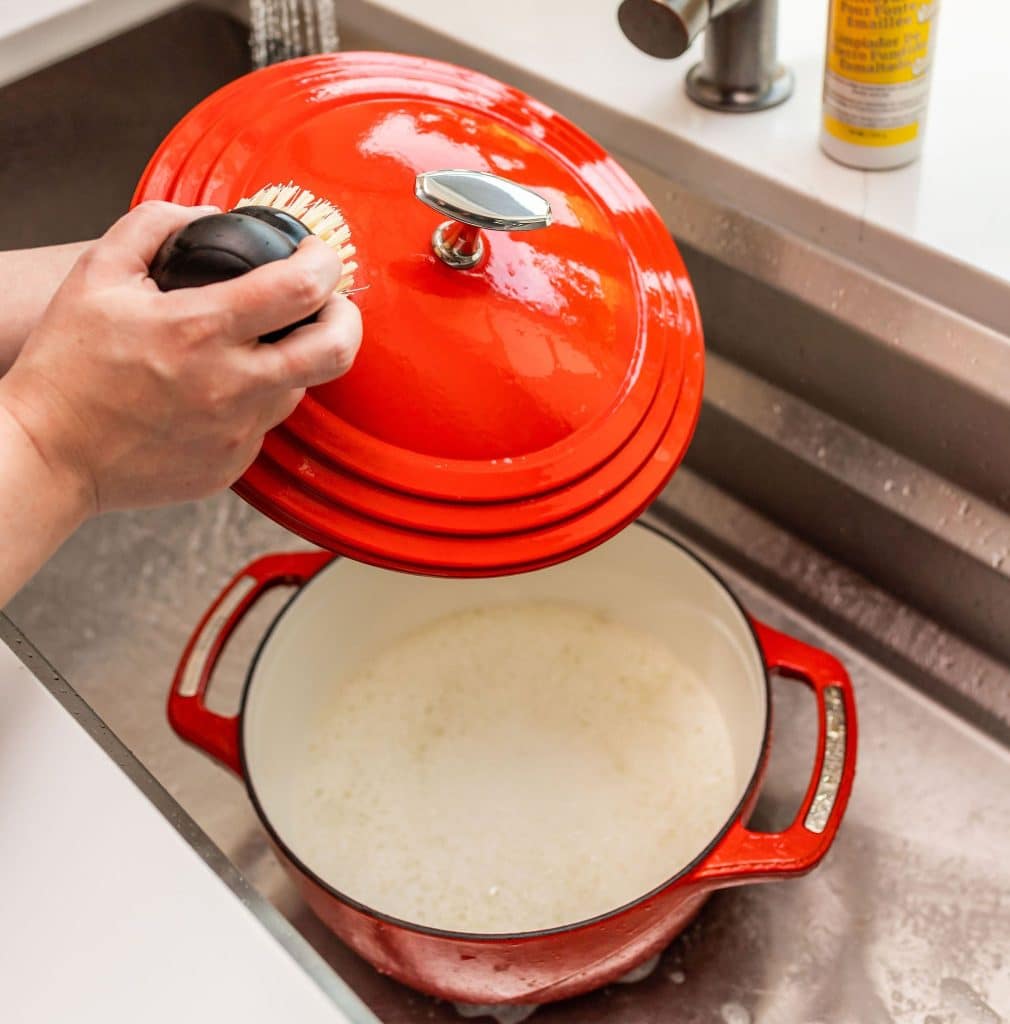
Wash the cookware with warm water and mild soap. Remove any dirt, dust, or factory oils.
Use a soft sponge or cloth to avoid scratching the enamel surface. Rinse well to clear all soap.
- Do not use steel wool or harsh scrubbers
- Dry wash is not enough; cleaning is essential
- Check that no food residue is left
Drying Techniques
Dry your cookware completely before seasoning. Moisture can cause uneven seasoning and rust.
Use a clean towel to wipe the cookware. Let it air dry in a warm spot to remove all moisture.
- Wipe inside and outside carefully
- Do not leave water spots
- Air dry for at least 30 minutes if possible
Inspecting For Damage
Look closely for chips, cracks, or scratches on the enamel. Damage can affect seasoning and cooking.
If you find damage, avoid seasoning until you repair it. Use gentle tools to protect the enamel.
- Check the lid and handle too
- Do not season if enamel is chipped deeply
- Use cookware only in good condition
Credit: www.carawayhome.com
Step-by-step Seasoning Process
Seasoning enameled cast iron helps protect its surface and improves cooking results. This process creates a thin, smooth layer that stops food from sticking.
Follow these simple steps to season your enameled cast iron cookware properly and keep it in good condition for years.
Applying Oil Evenly
Start by choosing a cooking oil with a high smoke point, like vegetable or canola oil. Use a small amount to avoid sticky buildup.
Apply oil all over the inside surface using a soft cloth or paper towel. Make sure to cover every part evenly without leaving pools of oil.
- Use about one teaspoon of oil for a medium pan
- Rub the oil gently to spread it thinly
- Do not forget the sides and rim of the cookware
Heating Methods
After applying oil, heat your enameled cast iron to bond the oil to the surface. You can do this in the oven or on the stove.
Oven heating works well for even seasoning. Preheat the oven to 350°F (175°C), place the cookware upside down, and bake for one hour.
- Use oven mitts to handle hot cookware
- Place a foil sheet on the lower rack to catch drips
- Alternatively, heat on low stove burner for 10-15 minutes
Cooling And Wiping Off Excess
Turn off heat and let the cookware cool completely. Cooling helps the oil set and form a protective layer.
Once cool, wipe the surface with a clean cloth to remove any extra oil. This step keeps the finish smooth and prevents stickiness.
- Allow cooling for at least 30 minutes
- Use a dry cloth for wiping excess oil
- Store cookware in a dry place after seasoning
Maintaining The Seasoned Surface
Keeping the seasoned surface of your enameled cast iron in good shape is key for cooking performance. It helps food release easily and protects the cookware.
Simple care steps after cooking help maintain the smooth, protective layer. Follow these tips to keep your enameled cast iron ready to use.
Proper Cleaning After Use
Clean your enameled cast iron soon after cooking. Use warm water and a soft sponge or cloth. Avoid metal scrubbers that can scratch the surface.
- Rinse with warm water to remove food particles
- Use mild dish soap if needed
- Gently scrub with a non-abrasive sponge
- Dry completely with a soft towel to prevent rust
Re-seasoning Frequency
Re-season your enameled cast iron only when the surface looks dull or food starts to stick. This is less often than with bare cast iron.
| Condition | Re-seasoning Needed |
| Food sticks easily | Yes |
| Surface looks shiny and smooth | No |
| Discoloration or rust spots | Yes |
| Regular use with no issues | No |
Avoiding Harsh Detergents
Harsh detergents can damage the seasoned surface and dull the enamel. Use gentle cleaners and avoid bleach or strong chemicals.
- Choose mild dish soap
- Skip bleach or ammonia-based cleaners
- Do not use oven cleaners on enameled cast iron
- Test new cleaning products on a small area first
Common Mistakes To Avoid
Seasoning enameled cast iron helps keep it in good condition. Many people make simple mistakes that can ruin the process. Avoid these errors to keep your cookware working well.
Learn about common mistakes to skip when seasoning your enameled cast iron. This guide shows what to watch out for.
Over-oiling
Using too much oil can cause sticky spots on your cast iron. The oil should form a thin layer, not pools or drips.
Too much oil can also create a sticky or uneven coating. This makes cooking harder and can damage the enamel.
- Use a small amount of oil, just enough to cover the surface.
- Wipe off extra oil with a clean cloth or paper towel.
- Apply oil evenly for a smooth finish.
Using Too Low Or Too High Heat
Heat affects how well the oil bonds to the cast iron. Too low heat means the seasoning won’t stick properly.
Too high heat can burn the oil and damage the enamel coating. Find a medium heat level for best results.
- Preheat the oven or stove to a medium temperature (around 350°F or 175°C).
- Avoid sudden temperature changes to protect the enamel.
- Follow the seasoning time recommended for your cookware.
Neglecting Drying
Water left on the surface can stop the oil from bonding well. It can also cause rust under the enamel.
Make sure your cast iron is completely dry before applying oil. Use a towel or heat it to remove moisture.
- Dry the cookware with a clean cloth after washing.
- Heat it gently on the stove to evaporate any leftover water.
- Only apply oil after the cast iron is fully dry.
Troubleshooting Seasoning Issues
Seasoning enameled cast iron helps protect the surface and improve cooking. Sometimes problems happen during seasoning. This guide covers common issues and how to fix them.
Read each section to learn why problems like sticky residue, uneven seasoning, or flaking occur. Follow the tips to get a smooth, durable finish on your cookware.
Sticky Or Gummy Residue
Sticky or gummy residue usually forms if too much oil is used or if the oil is not heated enough. This leaves a tacky layer that is hard to clean.
- Use a thin coat of oil when seasoning.
- Choose oils with a high smoke point, like flaxseed or grapeseed oil.
- Heat the cookware long enough to let the oil fully polymerize.
- Wipe off excess oil before heating.
- Allow the cookware to cool slowly after seasoning.
Uneven Seasoning
Uneven seasoning causes some spots to look shiny while others appear dull. This happens when oil is not spread evenly or heating is inconsistent.
| Cause | Fix |
|---|---|
| Too much oil in some areas | Apply a thinner, uniform coat of oil |
| Uneven oven temperature | Use an oven thermometer and rotate cookware |
| Incomplete heating | Heat long enough at recommended temperature |
Flaking Or Peeling
Flaking or peeling means the seasoning layer is not sticking well. This can happen if the surface was dirty or if seasoning was done too quickly.
- Clean the cookware thoroughly before seasoning.
- Remove any rust or old seasoning with a gentle scrub.
- Season with thin layers, allowing each to fully cure.
- Avoid cooking acidic foods until the seasoning is strong.

Credit: www.reddit.com
Frequently Asked Questions
How Often Should I Season Enameled Cast Iron?
Enameled cast iron typically doesn’t require seasoning. The enamel coating protects against rust. However, occasional oiling after cleaning helps maintain its surface and prevents sticking.
Can I Use Vegetable Oil To Season Enameled Cast Iron?
Yes, vegetable oil is safe for seasoning enameled cast iron. Apply a thin layer and heat the cookware gently to help the oil bond and improve non-stick qualities.
Does Seasoning Improve Cooking Performance On Enameled Cast Iron?
Seasoning can enhance non-stick properties and protect the surface. While enamel resists rust, light seasoning reduces food sticking and makes cleaning easier over time.
Is It Necessary To Season New Enameled Cast Iron Cookware?
No, new enameled cast iron usually comes pre-seasoned or with a protective coating. Simply wash with warm soapy water before first use and dry thoroughly.
Conclusion
Seasoning enameled cast iron keeps it in good shape. It prevents food from sticking. Always clean your cookware gently. Avoid using harsh detergents. Dry it completely after washing. Apply a thin oil layer before storing. This method helps maintain its shine.
Enjoy long-lasting cooking joy with these easy steps. Happy cooking!