If you want your cast iron skillet to last for years and cook like a dream, seasoning it properly is key. Using shortening to season your skillet is a simple, effective way to create a smooth, non-stick surface that improves with every use.
Whether you’re new to cast iron or looking for a better seasoning method, this guide will show you exactly how to do it step-by-step. Keep reading to discover how this easy technique can transform your cooking and make your skillet shine.

Credit: semihomesteadlife.com
Preparing Your Skillet
Seasoning a cast iron skillet with shortening helps protect it and stop rust. Proper preparation makes seasoning work well.
Start by cleaning and drying your skillet carefully. These steps get it ready for the shortening layer.
Cleaning Before Seasoning
Clean the skillet to remove dirt, dust, and old oils. Use warm water and a mild brush or sponge.
Do not use soap or harsh cleaners. They can strip the skillet’s surface. If there is rust, scrub it off gently.
- Rinse skillet with warm water
- Use a soft brush or sponge to clean
- Remove any rust with a scrub pad
- Avoid soap or strong detergents
Drying Completely
Dry the skillet fully to stop rust from forming. Water left on the surface will cause problems.
Use a clean towel to wipe the skillet dry. Then, heat it on low for a few minutes to remove all moisture.
- Wipe skillet with a dry cloth
- Heat skillet on low for 3-5 minutes
- Let it cool before adding shortening
Choosing Shortening For Seasoning
Seasoning a cast iron skillet makes it non-stick and rust-resistant. Shortening is a popular choice for this process.
Picking the right shortening helps create a strong, even layer on your skillet.
Why Shortening Works
Shortening is solid at room temperature, which helps spread it evenly. It melts and bonds well with the skillet’s surface.
It forms a hard, protective layer that resists sticking and rust. This makes your skillet last longer and cook better.
- Solid texture spreads easily
- Melts to create a smooth coating
- Protects against rust and food sticking
- Affordable and easy to find
Comparing With Other Oils
Other oils like vegetable oil or flaxseed oil can also season skillets. Each has different smoke points and drying times.
Shortening has a high smoke point and does not dry too fast or too slow. This balance helps build a strong seasoning layer.
| Oil Type | Smoke Point | Drying Time | Seasoning Result |
|---|---|---|---|
| Shortening | 360°F (182°C) | Moderate | Durable, smooth coating |
| Vegetable Oil | 400°F (204°C) | Fast | Good but can be sticky |
| Flaxseed Oil | 225°F (107°C) | Slow | Hard, brittle coating |
| Olive Oil | 375°F (191°C) | Moderate | Less durable layer |
Applying Shortening Evenly
Seasoning a cast iron skillet with shortening helps create a smooth, non-stick surface. Applying it evenly ensures the skillet cooks food well and lasts longer.
Even application prevents sticky spots and uneven seasoning layers. This guide explains how to spread shortening properly on your skillet.
Amount To Use
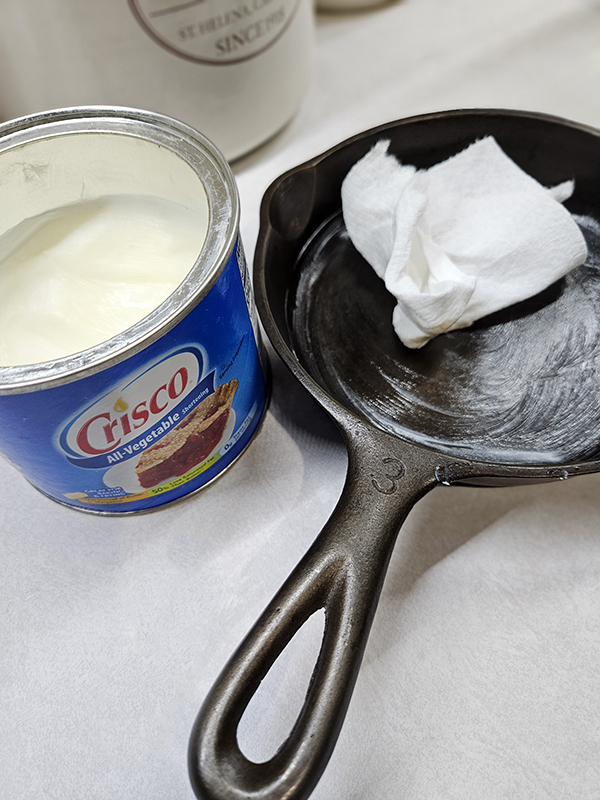
Use just enough shortening to cover the skillet’s surface lightly. Too much makes the seasoning sticky and uneven.
A small amount about the size of a dime is usually enough for one application. You can add more if needed, but start small.
Spreading Techniques
Spread shortening with a clean cloth or paper towel. Rub it in thin, smooth layers over the entire skillet.
- Start with the inside surface, covering every spot.
- Include the sides and handle for full protection.
- Remove any excess shortening to avoid sticky patches.
- Use circular motions for even coverage.
Credit: extension.msstate.edu
Baking The Skillet
Baking your cast iron skillet with shortening creates a strong, even coating. This step helps protect the skillet from rust and makes it non-stick. It is important to bake the skillet correctly for the best results.
Proper oven temperature and baking time are key to seasoning your skillet well. Follow the steps below to bake your skillet safely and effectively.
Setting The Oven Temperature
Preheat your oven to a high temperature to allow the shortening to bond with the skillet surface. The ideal temperature range is between 400°F and 450°F (204°C to 232°C). This heat helps create a durable, smooth seasoning layer.
- Set the oven temperature to 425°F (218°C) for best results.
- Place the skillet upside down on the middle rack.
- Put a sheet of aluminum foil on the bottom rack to catch drips.
- Ensure the oven is fully preheated before placing the skillet inside.
Optimal Baking Time
Baking time affects how well the seasoning sticks to the skillet. Too little time will not build a strong coat. Too long can cause the shortening to burn and create sticky residue.
| Baking Duration | Effect |
|---|---|
| 30 minutes | Basic seasoning layer forms, but may be thin |
| 1 hour | Strong, durable seasoning forms |
| Over 1 hour | Risk of burning shortening and sticky surface |
Cooling And Repeating
After applying shortening and heating your cast iron skillet, cooling is key. Proper cooling helps the skillet develop a strong, non-stick surface. Repeating the seasoning process builds layers that protect your skillet from rust and food sticking.
This guide explains how to cool your skillet correctly and how many coats of seasoning you need for the best results.
Proper Cooling Method
Once the skillet finishes heating, let it cool slowly at room temperature. Avoid cooling it too fast, such as by placing it in water or a cold area. Slow cooling allows the shortening to bond well with the cast iron surface.
- Turn off the heat and leave the skillet on the stove.
- Allow the skillet to cool naturally for at least 30 minutes.
- Do not touch or wash the skillet while it is still hot.
- Once cool, wipe off any excess shortening with a clean cloth.
Number Of Coats Needed
Seasoning your skillet once is not enough. Multiple coats build a better, long-lasting surface. Usually, three to four coats are ideal for a strong seasoning layer.
| Number of Coats | Effect |
| 1 | Basic layer, may be sticky or uneven |
| 2 | Smoother surface, some non-stick effect |
| 3 | Good protection and non-stick quality |
| 4 or more | Strong, durable seasoning layer |
Repeat the cooling and seasoning steps after each coat. This helps the skillet develop a dark, smooth finish that lasts for years.
Maintaining The Seasoned Surface
Seasoning your cast iron skillet with shortening creates a protective layer. This layer prevents rust and keeps food from sticking. Proper care helps keep this surface strong and smooth.
Maintaining the seasoning means cleaning gently and reapplying oil when needed. This care will make your skillet last for years.
Cleaning Tips After Use
Clean your cast iron skillet while it is still warm but not hot. Avoid using soap or harsh detergents that can break down the seasoning. Use a soft brush or sponge with hot water to remove food bits.
If food sticks, add a little coarse salt and scrub gently. Rinse with warm water and dry the skillet completely with a cloth or low heat on the stove.
- Do not soak the skillet in water
- Use minimal soap only if needed
- Dry completely to avoid rust
- Apply a thin layer of shortening after drying
Re-seasoning Frequency
Re-season your skillet when the surface looks dull or food starts sticking more. This can happen every few months with regular use. You can also re-season after deep cleaning or rust removal.
To re-season, apply a thin layer of shortening all over the skillet, inside and out. Bake it upside down in the oven at 350°F (175°C) for one hour. Let it cool in the oven before storing.
- Check seasoning every 2-3 months
- Re-season after heavy scrubbing or rust
- Use shortening as the oil for best results
- Store skillet in a dry place after seasoning
Troubleshooting Seasoning Issues
Seasoning a cast iron skillet with shortening can sometimes cause problems. Knowing how to fix these issues keeps your skillet in good shape.
Two common problems are sticky residue and rust spots. Both need quick attention to keep your skillet working well.
Dealing With Sticky Residue
Sticky residue happens if too much shortening is used or the skillet is not heated enough. This leaves a tacky layer on the surface.
To fix sticky residue, clean the skillet with warm water and a soft brush. Avoid soap as it can strip seasoning.
- Dry the skillet completely after washing.
- Apply a thin layer of shortening evenly.
- Heat the skillet in the oven at 350°F (175°C) for one hour.
- Let it cool in the oven before storing.
Fixing Rust Spots
Rust forms when moisture stays on the skillet for too long. It can damage the seasoning and metal.
To remove rust spots, scrub the affected area with steel wool or a scrub brush. Rinse and dry well.
- Apply a thin layer of shortening to the cleaned surface.
- Bake the skillet in the oven at 350°F (175°C) for one hour.
- Repeat if rust spots return.
- Store the skillet in a dry place.
Credit: www.martieduncan.com
Frequently Asked Questions
How Do I Season A Cast Iron Skillet With Shortening?
To season, coat the skillet thinly with shortening. Bake it upside down at 375°F for an hour. Let it cool in the oven. This process creates a non-stick, rust-resistant surface.
Why Use Shortening For Seasoning Cast Iron Skillets?
Shortening has a high smoke point and creates a durable seasoning layer. It bonds well to cast iron, ensuring long-lasting protection and improved cooking performance.
How Often Should I Season My Skillet With Shortening?
Season your skillet when food starts sticking or the surface looks dull. Typically, seasoning every few months keeps the skillet in top shape.
Can I Use Any Type Of Shortening For Seasoning?
Yes, use pure vegetable shortening without additives. Avoid flavored or butter-based shortenings as they may leave residue or cause uneven seasoning.
Conclusion
Seasoning your cast iron skillet with shortening is simple. First, clean the skillet. Next, apply a thin layer of shortening. Heat it in the oven to let it soak in. This process creates a non-stick surface, making cooking easier. Regular seasoning maintains your skillet’s quality.
Plus, it extends its lifespan. Remember, care and attention make a difference. Your skillet will reward you with delicious meals. So, grab your shortening and start seasoning today. Enjoy cooking with your well-seasoned cast iron skillet. Happy cooking!