

If you want your cast iron pan to last for years and cook like a dream, seasoning it properly is key. But how exactly do you season your cast iron pan in the oven to get that perfect, non-stick surface?
You might think it’s complicated, but it’s actually simple once you know the right steps. In this post, you’ll discover a clear, easy-to-follow method to bring out the best in your cast iron cookware. Stick with me, and you’ll learn how to protect your pan, enhance its flavor, and make every meal better.
Ready to unlock the full potential of your cast iron? Let’s dive in.
Credit: www.greenwitchvintage.com
Benefits Of Seasoning Cast Iron
Seasoning a cast iron pan means coating it with oil and heating it. This process creates a natural, nonstick surface. Seasoning also protects the pan from damage.
Many people use seasoning to keep their cast iron pans working well for years. It helps the pan stay strong and easy to use.
Enhancing Nonstick Properties
Seasoning builds a smooth layer on the pan’s surface. This layer stops food from sticking. Cooking with less oil becomes easier. The pan cleans more quickly too.
- Food releases easily from the pan
- Less oil is needed for cooking
- Cleaning the pan is faster
- Flavors stay pure without sticking
Preventing Rust And Corrosion
Seasoning forms a protective barrier on the metal. This barrier stops water and air from reaching the pan. Rust and corrosion cannot form easily. The pan stays safe and dry.
| Without Seasoning | With Seasoning |
| Metal exposed to air and moisture | Metal covered by oil layer |
| Rust forms quickly | Rust is prevented |
| Shorter pan life | Longer pan life |
Improving Pan Longevity
Proper seasoning keeps the pan strong over time. It stops cracks and scratches. The pan stays smooth and ready for cooking.
Tips to keep your cast iron pan long-lasting:
- Season after each deep cleaning
- Avoid soaking in water for long
- Use gentle cleaning tools
- Store in a dry place
Credit: hopewellheightsblog.com
Choosing The Right Oil
Seasoning a cast iron pan helps create a non-stick surface. The oil you choose affects how well the seasoning holds up.
Oils differ in smoke points and types of fat. Picking the right oil makes the seasoning process easier and better.
Smoke Point Considerations
The smoke point is the temperature when oil starts to smoke and break down. Use oils with a high smoke point to avoid bad flavors.
- Oils with low smoke points can burn during seasoning.
- Burned oil leaves a sticky or uneven layer on the pan.
- High smoke point oils create a hard, smooth coating.
Popular Oils For Seasoning
| Oil | Smoke Point (°F) | Notes |
| Flaxseed Oil | 225 | Polyunsaturated, dries hard but low smoke point |
| Canola Oil | 400 | Neutral taste, good balance of fats |
| Grapeseed Oil | 420 | High smoke point, light flavor |
| Vegetable Oil | 400 | Common and affordable, good for seasoning |
| Avocado Oil | 520 | Very high smoke point, mild flavor |
Choose oils that dry and harden when heated. Avoid oils that stay sticky or soft.
Avoiding Common Mistakes
- Do not use butter or olive oil; they have low smoke points and can go rancid.
- Apply a thin, even layer of oil to prevent sticky spots.
- Wipe excess oil before baking the pan in the oven.
- Do not reuse old or rancid oil for seasoning.
Preparing Your Pan
Seasoning a cast iron pan starts with preparing it properly. This ensures the seasoning sticks well and lasts longer. Clean and inspect your pan before applying oil and heating.
Taking the time to prepare your pan makes cooking easier and keeps your pan in good shape. Follow these steps carefully.
Cleaning And Drying
First, clean your pan to remove dirt and leftover food. Use warm water and a brush or sponge. Avoid soap if possible, as it can remove natural oils. After washing, dry the pan thoroughly to stop rust from forming.
- Rinse the pan with warm water
- Scrub gently with a brush or sponge
- Dry immediately with a towel
- Place the pan on low heat for a few minutes to evaporate any moisture
Removing Old Residue
Old residue can stop new seasoning from bonding to the pan. Remove sticky or burnt layers with these methods:
- Use coarse salt and a paper towel to scrub the surface
- For stubborn residue, apply a paste of baking soda and water
- Scrub with a nylon brush or non-metal scrubber
- Rinse and dry well before seasoning
Inspecting For Damage
| Damage Type | What to Look For | Action Needed |
|---|---|---|
| Rust | Reddish-brown spots on the surface | Scrub off rust with steel wool; dry and season immediately |
| Cracks | Visible splits or fractures | Stop use; consider replacement as cracks worsen |
| Warping | Uneven or bent surface | May affect cooking; try gentle heating or replace if severe |
Step-by-step Oven Seasoning
Seasoning a cast iron pan in the oven protects it from rust. It also creates a non-stick surface for cooking.
This guide shows how to season your pan evenly and safely using an oven.
Applying Oil Evenly
Start with a clean, dry pan. Use a cloth or paper towel to apply a thin layer of oil.
- Choose an oil with a high smoke point, like flaxseed or vegetable oil.
- Rub the oil over the entire surface, inside and out.
- Remove any excess oil to avoid sticky spots.
Setting Oven Temperature
Preheat your oven to the right temperature to bake the oil onto the pan. This helps the seasoning bond well.
| Oven Temperature | Recommended Range |
| Low Heat | 350°F (175°C) |
| Medium Heat | 400°F (205°C) |
| High Heat | 450°F (230°C) |
Baking Duration Tips
Bake the pan for the right time. This allows the oil to polymerize and form a strong coating.
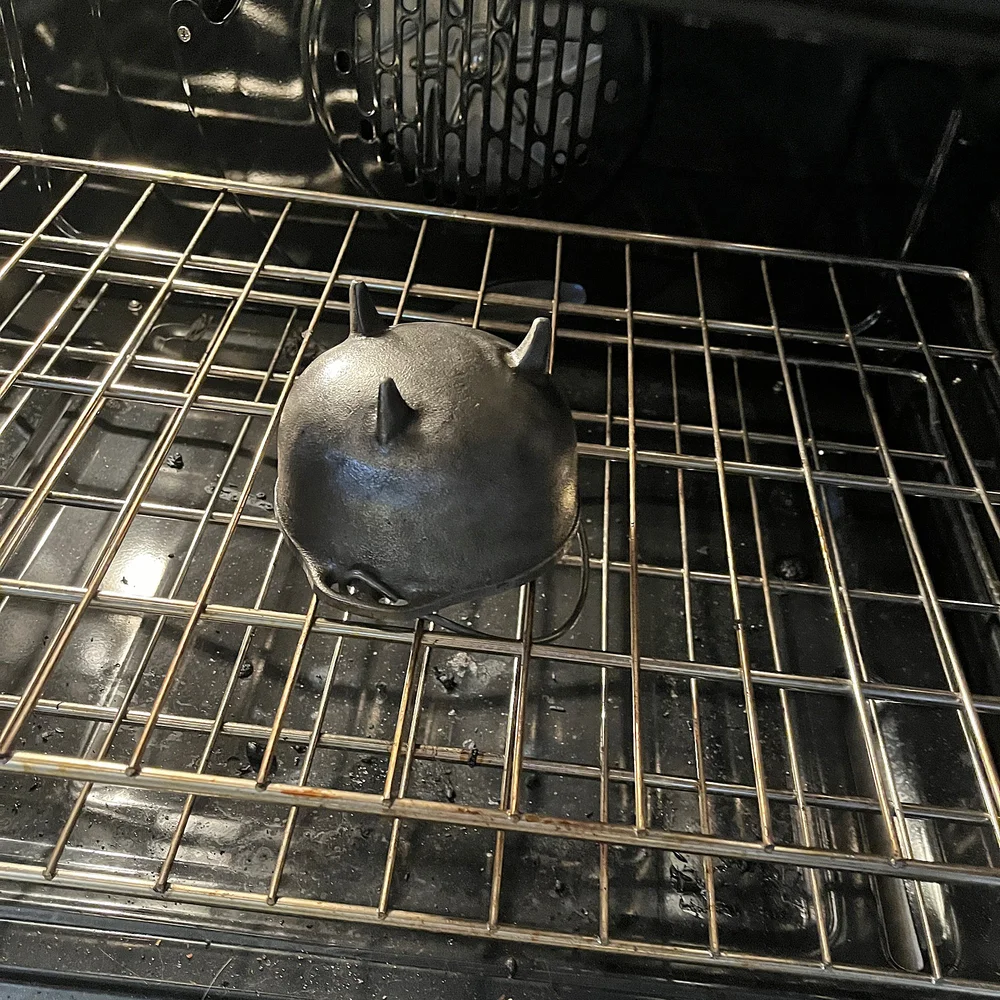
- Place the pan upside down on the middle rack.
- Put a sheet of foil on the lower rack to catch drips.
- Bake for 1 hour at 400°F (205°C).
- Turn off the oven and let the pan cool inside for 30 minutes.
Cooling And Storage
Let the pan cool slowly in the oven to avoid cracking. After cooling, store it in a dry place.
For best results:
- Do not cover the pan while cooling.
- Wipe the pan with a light coat of oil before storage.
- Store in a dry cabinet or hang it to avoid moisture.
Maintaining Seasoned Cast Iron
Keeping a cast iron pan well-seasoned helps it stay non-stick and rust-free. Proper care after each use protects the seasoning layer. This guide explains simple ways to clean, reapply seasoning, and avoid damage.
Cleaning After Use
Clean your cast iron pan while it is still warm. Avoid soaking it in water for a long time. Use a brush or a sponge with hot water to remove food bits. Skip harsh soaps or steel wool, as they can strip the seasoning.
- Rinse with hot water immediately after cooking
- Scrub gently with a non-metal brush or sponge
- Dry completely with a towel or on low heat
- Apply a thin layer of oil to prevent rust
Reapplying Seasoning
Re-season your pan regularly to keep the surface smooth and protected. Use cooking oil with a high smoke point like flaxseed or vegetable oil. Apply a thin, even coat over the pan’s surface, inside and out.
Heat your oven to about 450°F (230°C). Place the pan upside down on the top rack. Put a foil-lined tray below to catch drips. Bake for one hour, then turn off the oven and let the pan cool inside.
Avoiding Common Pitfalls
| Common Mistake | Why It Hurts | How to Avoid |
| Using soap or detergent | Strips the seasoning layer | Clean with hot water only |
| Leaving pan wet | Causes rust | Dry thoroughly after washing |
| Applying thick oil coats | Creates sticky surface | Use a thin, even layer of oil |
| Heating pan too fast | Can cause warping | Heat gradually in oven |
Troubleshooting Seasoning Issues
Seasoning a cast iron pan in the oven helps create a non-stick surface. Sometimes problems happen during seasoning. These issues can stop your pan from working well.
Fixing common problems will keep your pan in good shape. Below are solutions for sticky surfaces, peeling layers, and rust spots.
Sticky Or Gummy Surface
A sticky or gummy surface happens when too much oil stays on the pan. This means the oil did not bake fully. It feels sticky and can catch dirt.
To fix this, clean the pan and dry it well. Apply a thin layer of oil and bake at a higher temperature for about an hour. Use oils with high smoke points, like flaxseed or grapeseed oil.
- Use thin oil layers only
- Bake at 400–450°F (200–230°C)
- Let the pan cool in the oven
- Repeat if stickiness remains
Flaking Or Peeling Seasoning
Flaking or peeling means the seasoning layer is not sticking to the pan. This can happen if the pan was not clean or dry before seasoning. Also, using soap or scrubbing too hard can cause peeling.
Remove the loose seasoning by scrubbing with a stiff brush and hot water. Dry the pan completely. Then, reseason the pan using a thin coat of oil and baking it in the oven.
- Remove old, loose seasoning
- Clean and dry the pan well
- Use thin oil layers to season
- Do not wash with soap after seasoning
Rust Spots And Repairs
Rust spots appear when moisture stays on the pan. Rust can damage the cast iron and ruin the seasoning. Fix rust quickly to protect your pan.
Scrub rust spots with steel wool or a scrub pad until the rust is gone. Wash and dry the pan well. Then, apply oil and bake it in the oven to reseason the surface.
- Scrub rust off with steel wool
- Wash and dry the pan fully
- Apply a thin layer of oil
- Bake at 400–450°F (200–230°C) for 1 hour
- Store pan in a dry place
Credit: hopewellheightsblog.com
Frequently Asked Questions
How Long Should I Season A Cast Iron Pan In Oven?
Season your cast iron pan in the oven for 1 hour. Preheat the oven to 450°F (232°C). This duration allows the oil to polymerize and create a non-stick surface.
What Type Of Oil Is Best For Seasoning Cast Iron?
Use oils with high smoke points like flaxseed, vegetable, or canola oil. These oils bond well during seasoning, creating a durable coating.
How Often Should I Season My Cast Iron Pan?
Season your pan every 3 to 6 months, depending on usage. Frequent cooking and cleaning can wear down the seasoning layer.
Can I Season A Cast Iron Pan Without An Oven?
Yes, you can season on a stovetop, but oven seasoning is more even and thorough. The oven’s heat ensures better oil polymerization.
Conclusion
Seasoning a cast iron pan in the oven is simple and effective. Clean the pan thoroughly. Dry it completely to prevent rust. Apply a thin layer of oil. Use vegetable or canola oil for best results. Heat the oven to 375°F (190°C).
Place the pan upside down on the middle rack. Bake for one hour. Let it cool inside the oven to prevent cracking. Repeat the process for better results. Well-seasoned pans enhance cooking and add flavor. Your cast iron will last for generations with proper care.
Enjoy cooking with your seasoned cast iron pan!



