Are you trying to remove stains from wooden cutting board surfaces that just won’t budge? You’re not alone.
Many of us love our wooden cutting boards for their durability and aesthetic appeal, but they can be surprisingly difficult to keep spotless. The good news is, you don't have to live with those unsightly marks forever. Imagine your cutting board looking brand new again—clean, fresh, and free from stains.
In this guide, you'll learn how to remove stains from wooden cutting board materials using simple, natural methods. Stick around, because you're about to discover the secrets that will transform your kitchen routine and restore your cutting board to its pristine condition.
Common Causes Of Stains
Wooden cutting boards often get stains from daily kitchen use. Knowing what causes these stains helps you clean them better.
Stains can come from food, liquids, or even how you care for the board. Let’s explore the common causes.
Fruit And Vegetable Juices
Many fruits and vegetables have strong colors that can leave marks. For example, beets, berries, and carrots often stain wood.
Oils And Fats
Oils from cooking or food can soak into the board. Over time, this causes dark, greasy stains that are hard to remove.
Raw Meat And Fish
Juices from raw meat and fish can leave stains and odors. They may also cause bacteria growth if not cleaned well.
Water Damage
Leaving a wooden board wet for long can cause water stains. The wood may swell and discolor in spots.
Improper Cleaning Products
Using harsh chemicals or colored detergents can stain wood. Some cleaners leave residues that attract dirt.
- Bleach can lighten or damage the wood
- Colored soaps may leave marks
- Strong acids can etch the surface
Heat And Sunlight Exposure
Heat and sunlight dry out the wood. This causes uneven color changes and can make stains more visible.
Credit: www.thekitchn.com
Daily Cleaning Tips
Keeping your wooden cutting board clean every day helps remove stains and germs. Simple daily care keeps your board looking fresh.
Use gentle cleaning methods to protect the wood and extend the board’s life. Avoid harsh chemicals that can damage it.
Wipe Off Food Residue Immediately
After each use, scrape off leftover food with a plastic spatula or paper towel. This stops stains from setting into the wood.
Wash With Mild Soap And Warm Water
Use a soft sponge and mild dish soap to clean your board. Rinse with warm water and dry it well with a clean cloth.
Use Vinegar To Disinfect
Spray white vinegar on the board and let it sit for a few minutes. Vinegar kills bacteria without harming the wood.
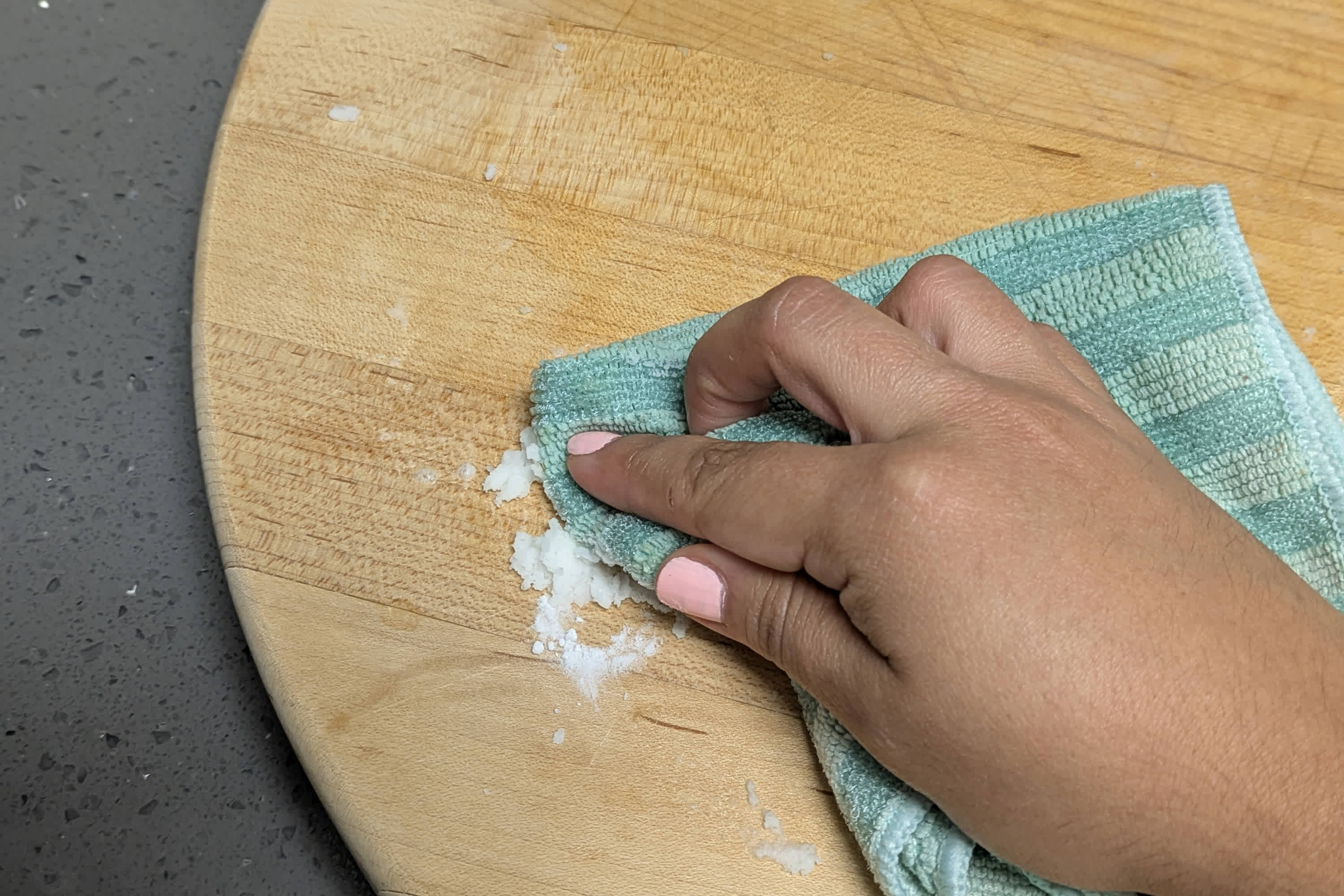
Remove Stains With Baking Soda
- Sprinkle baking soda on the stained area.
- Rub gently with a damp cloth or sponge.
- Let it sit for 5 minutes to absorb stains.
- Rinse thoroughly with warm water.
- Dry the board completely with a towel.
Keep Your Board Dry And Oiled
Always dry your cutting board right after washing. Apply food-safe mineral oil once a week to prevent cracks and stains.
| Cleaning Tip | Why It Works |
| Wipe Off Food Residue | Prevents stains and bacteria buildup |
| Wash with Mild Soap | Removes dirt without damaging wood |
| Use Vinegar Spray | Kills germs naturally |
| Baking Soda Scrub | Lifts stains gently |
| Dry and Oil Board | Protects wood and stops warping |
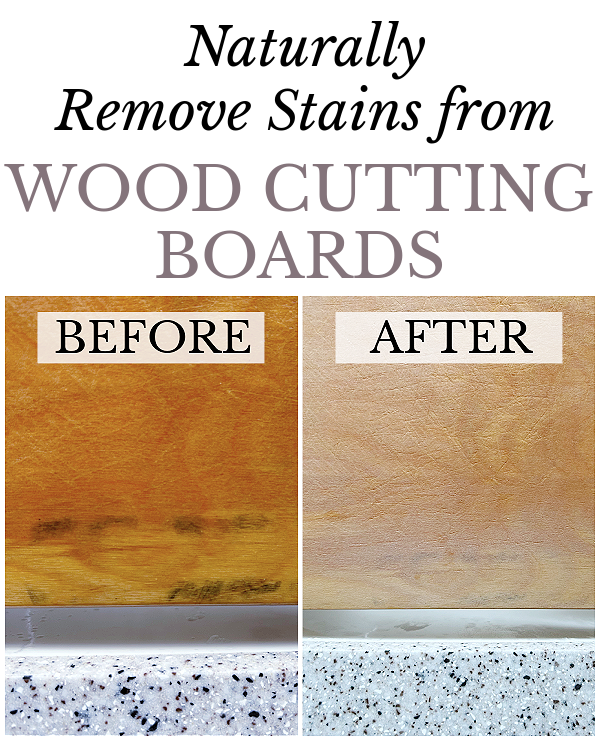
Natural Stain Removal Methods
Wooden cutting boards can get stains from fruits, vegetables, and meat. Using natural ingredients helps clean without harm.
These easy methods use items you can find in your kitchen. They are safe and effective for removing stains.
Using Lemon And Salt
Lemon juice is acidic and helps break down stains. Salt works as a gentle scrub to lift dirt from wood.
Cut a lemon in half and sprinkle salt on the cut side. Rub the lemon on the stained area for a few minutes.
- Let it sit for 5 minutes to soak in
- Rinse with warm water
- Dry the board with a clean cloth
Baking Soda Paste
Baking soda is a mild abrasive and natural cleaner. It removes stains without scratching the wood.
Mix baking soda with a small amount of water to make a paste. Spread the paste over the stained spot and scrub gently.
- Use a soft cloth or sponge
- Rinse the board well with warm water
- Dry completely to avoid warping
White Vinegar Solution
White vinegar is acidic and kills bacteria. It also helps lift stains from wooden surfaces.
Mix equal parts white vinegar and water in a spray bottle. Spray the solution on the stained area and let it sit for 10 minutes.
- Wipe the board with a clean cloth
- Rinse with water if needed
- Dry the board before storing
Credit: www.lemonslavenderandlaundry.com
Deep Cleaning Techniques
Wooden cutting boards need deep cleaning to remove tough stains. These stains can come from food, juice, or dirt. Proper cleaning keeps your board safe and looking good.
This guide shows two strong ways to clean stains: sanding the surface and using hydrogen peroxide. Both work well to restore your cutting board.
Sanding The Surface
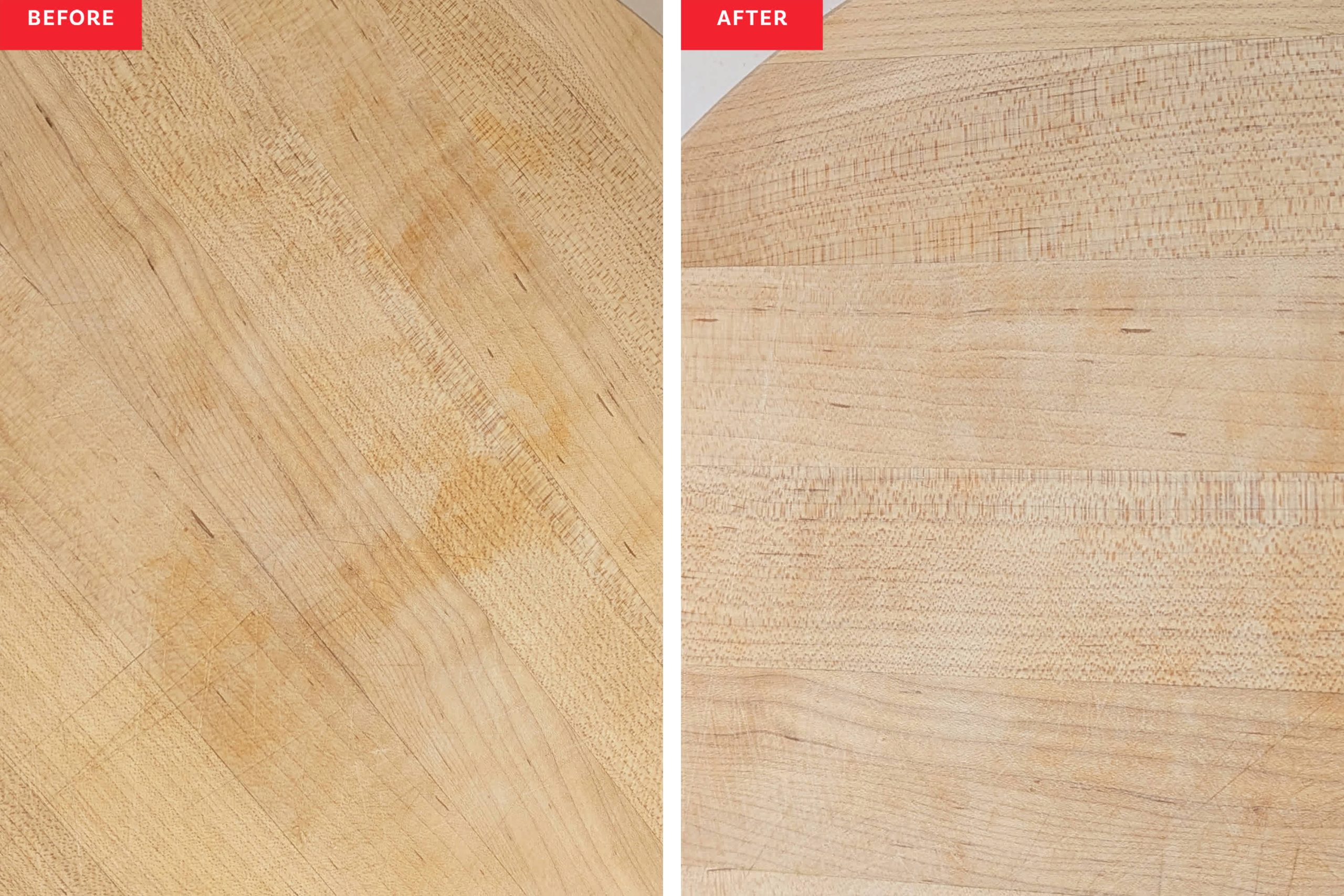
Sanding removes the top layer of wood, taking away deep stains and scratches. Use fine-grit sandpaper to avoid damaging the board.
- Clean the board with warm water and soap, then dry it well.
- Use a sanding block or electric sander with 120-grit sandpaper.
- Sand the entire surface evenly in the direction of the wood grain.
- Wipe off dust with a damp cloth after sanding.
- Apply mineral oil to protect and seal the board.
Using Hydrogen Peroxide
Hydrogen peroxide kills bacteria and lifts stains from the wood. It is safe and easy to use at home.
| Item | Use | Notes |
| 3% Hydrogen Peroxide | Apply on stains | Available in pharmacies |
| Clean Cloth | Wipe the surface | Use after peroxide dries |
| Warm Water | Rinse board | After cleaning |
| Mineral Oil | Protect wood | Apply after cleaning |
Pour hydrogen peroxide on the stained areas. Let it sit for 10 minutes. Wipe with a clean cloth. Rinse the board with warm water and dry it. Finish by applying mineral oil.
Preventing Future Stains
Wooden cutting boards can stain easily if not cared for properly. Taking simple steps helps keep your board clean and stain-free.
Preventing stains is easier than removing them later. Good habits protect your board and make it last longer.
Proper Maintenance
Clean your wooden cutting board right after use. Wash it with warm water and mild soap. Avoid soaking it in water to stop swelling and cracking.
Dry the board with a clean cloth or let it air dry standing up. Keep it away from direct heat or sunlight, which can damage the wood.
- Wash immediately after use
- Use mild soap and warm water
- Do not soak the board in water
- Dry thoroughly before storing
- Keep away from direct heat and sunlight
Oiling The Board
Oiling your wooden board keeps it from drying out and cracking. Use food-safe mineral oil or beeswax to protect the wood.
Apply oil regularly, especially after cleaning. Rub the oil into the wood with a soft cloth and let it soak in overnight.
- Choose food-safe mineral oil or beeswax
- Apply oil evenly on the entire surface
- Let the oil soak in for several hours or overnight
- Wipe off any excess oil before use
- Oil the board once a month or more often if needed

Credit: homewithgraceandjoy.com
When To Replace Your Cutting Board
Wooden cutting boards can last a long time with care. But some signs mean it is time to replace them. Using a worn board can be unsafe for your food.
Knowing when to replace your cutting board helps keep your kitchen clean and safe. Look for damage and stains that cannot be cleaned well.
Deep Cracks and Gouges
Small cuts are normal, but deep cracks can hold bacteria. These cracks are hard to clean and can cause food contamination. Replace your board if cracks are large or deep.
Persistent Stains and Odors
Some stains and smells do not go away after washing. This can mean the wood has absorbed harmful substances. When stains or odors remain, it is safer to get a new board.
Warping Or Splitting
A warped or split board does not lay flat or feels rough. It can cause knives to slip and increase injury risk. Replace the board to keep your cutting safe.
Health And Safety Concerns
- Board is very old and worn out
- Visible mold growth
- Surface is rough despite sanding
- Used for raw meat and hard to sanitize
Consider replacing the board if any of these issues are present to avoid foodborne illness.
Comparison Of Board Conditions
| Condition | When to Replace | Reason |
| Minor Scratches | No | Normal wear, safe to keep |
| Deep Cracks | Yes | Bacteria can hide inside |
| Persistent Stains | Yes | Hard to clean and smells |
| Warped Board | Yes | Unsafe cutting surface |
| Mold Growth | Yes | Health hazard |
Frequently Asked Questions
How Do I Remove Stains From Wooden Cutting Boards?
Use a mixture of baking soda, salt, and lemon. Scrub gently, let it sit for 5 minutes, then rinse. This natural method lifts stains without damaging wood fibers.
Can Vinegar Clean Stains On Wooden Cutting Boards?
Yes, vinegar is effective for cleaning and disinfecting wooden boards. Wipe the board with white vinegar, let it sit, then rinse. Vinegar helps remove stains and kills bacteria safely.
How To Prevent Stains On Wooden Cutting Boards?
Clean boards immediately after use with mild soap and water. Avoid soaking wood in water. Regularly oil your board to create a protective barrier against stains.
Is Hydrogen Peroxide Safe For Wooden Cutting Boards?
Yes, hydrogen peroxide safely removes stains and disinfects. Apply 3% hydrogen peroxide, let it bubble for 5 minutes, then wipe clean. It brightens wood without harsh chemicals.
Conclusion
Cleaning stains from wooden cutting boards keeps them fresh and safe. Use simple household items like lemon, salt, or baking soda. Regular cleaning stops stains from setting deeply. Treat your board gently to avoid damage. A clean board lasts longer and looks better.
Small efforts make a big difference in kitchen hygiene. Try these easy steps to keep your cutting board spotless. Your cooking space will feel cleaner and more inviting. Easy care brings great results every time.