How We Get Flaky Croissants: Proofing and Baking
Do you want warm, buttery croissants right from your oven? We can help with that. Making croissants seems hard. But the right steps help you master How to Proof And Bake Croissants. You can do it perfectly every time.
Imagine eating a croissant. It is golden, flaky, and soft inside. Sounds great, right? This guide gives you simple tips. Your dough will rise just right. You will bake croissants that taste like a French shop made them.
Ready to bake something amazing? Learn How to Proof And Bake Croissants and impress everyone with your flaky, buttery creations!
What We Need: Ingredients and Tools
Baking croissants requires specific items. These things help create that flaky, buttery texture. Knowing what to use makes the process smoother. Your croissants will be tastier.
Key Ingredients
High-quality items make good croissants. Each part helps the dough and the final product.
- All-purpose flour or bread flour for structure.
- Unsalted butter, cold and high-fat for layers.
- Granulated sugar for a little sweetness.
- Salt to make the flavor better.
- Active dry yeast or instant yeast for rising.
- Whole milk, warm to mix the dough.
- Water, usually cold to control the dough temperature.
Baking Tools We Use
The right tools help us shape and bake croissants well. These tools make the work easier and more exact.
| Tool | Purpose |
| Mixing bowl | To combine items and mix dough |
| Rolling pin | To roll out dough flat |
| Dough scraper | To handle and cut dough cleanly |
| Baking sheet | To bake croissants in the oven |
| Parchment paper | To stop sticking on the sheet |
| Pastry brush | To add egg wash for a golden top |
| Kitchen scale | To weigh ingredients correctly |
| Proofing container | To let dough rise safely |
Making The Dough
Croissant dough needs patience and care. The dough must be soft and easy to stretch. This helps create the famous layers.
Follow these steps. Get your dough ready for proofing and baking.
Mixing The Food
Use fresh items. Measure them carefully. Mix flour, sugar, salt, yeast, milk, and butter gently. The milk should be warm, not hot.
- Mix dry items first: flour, sugar, salt, and yeast.
- Add warm milk slowly to the dry mix.
- Mix until the dough starts to form a mass.
- Add soft butter. Mix until the dough is smooth.
Kneading The Dough
Kneading helps the dough become stretchy. This makes it strong. Use your hands or a mixer with a hook.
- Put a little flour on your work surface.
- Press and fold the dough with your palms.
- Turn the dough and fold it again.
- Keep going for 8 to 10 minutes. It needs to feel smooth and stretchy.
Resting The Dough
Resting lets the dough relax. Yeast can do its job here. This step is important for a light feel.
| Resting Time | Temperature | Purpose |
| 1 hour | Room temp (70∘F/21∘C) | Dough rises and doubles in size |
| 30 minutes | Fridge (38∘F/3∘C) | Dough firms up for rolling |
Making The Layers (Laminating)
Laminating makes croissants flaky and light. We fold butter into the dough many times. This creates lots of thin layers.
You must work carefully. Keep the butter cold. Keep the dough smooth. Let's see the steps.
Rolling and Folding
Roll the dough flat. Make a large rectangle on a cool surface. Keep the dough even. Do not roll it too thin. Then fold it into thirds, like a letter. This folding traps layers of dough and butter.
- Roll dough to a rectangle. Make it about 20x10 inches.
- Fold the bottom third up.
- Fold the top third down over the other fold.
- Turn the dough 90 degrees. Get ready for the next roll.
Adding The Butter
The butter must be cold. It needs to be soft enough to spread. Put it on the dough. Fold the dough over it. This traps the butter inside. It melts and separates layers during baking.
Butter Tips:
- Use unsalted butter for better taste.
- Press butter into a flat sheet first.
- Keep butter and dough the same cool temperature.
Chilling The Dough
Chilling keeps the butter firm. It lets the dough relax. After each fold, wrap the dough. Chill for 30 to 60 minutes. This stops butter from melting. It helps the dough rise evenly.
| Chill Time | Purpose |
| 30 minutes | Rest dough and firm butter |
| 60 minutes | Relax gluten for easy rolling |
| After final fold | Prepare dough for proofing |
Credit: lacuisinedegeraldine.fr
Shaping Our Croissants
Shaping is a key part of baking. It gives the croissants their classic look. It creates the texture.
This step needs care and some practice. Each action helps the dough become light and flaky.
Cutting The Dough
Start with cold dough. Use a sharp knife or pizza cutter. Cut triangles.
Make sure all triangles are the same size. This helps them bake evenly. They will look nice.
-
Cut triangles about 4 inches wide at the base.
-
Each triangle should be 7 to 8 inches long.
-
Keep the cut edges straight and clean.
Making The Classic Look
Take a triangle. Hold the wide base near your fingers. Stretch the dough gently. Roll the dough up. Start from the wide base to the point. Curve the ends. This makes the crescent shape.
-
Stretch the dough gently, do not tear it.
-
Roll tightly enough to hold shape. Roll loosely enough to allow rising.
-
Curve ends inward for that classic look.
Putting Them On A Tray
Put the shaped croissants on a baking tray. Use parchment paper. Leave space between them.
Space helps them grow while proofing and baking. Do not crowd the tray.
-
Use parchment paper to stop sticking.
-
Leave 2 to 3 inches between each croissant.
-
Line them up in rows or stagger them.
The Proofing Step
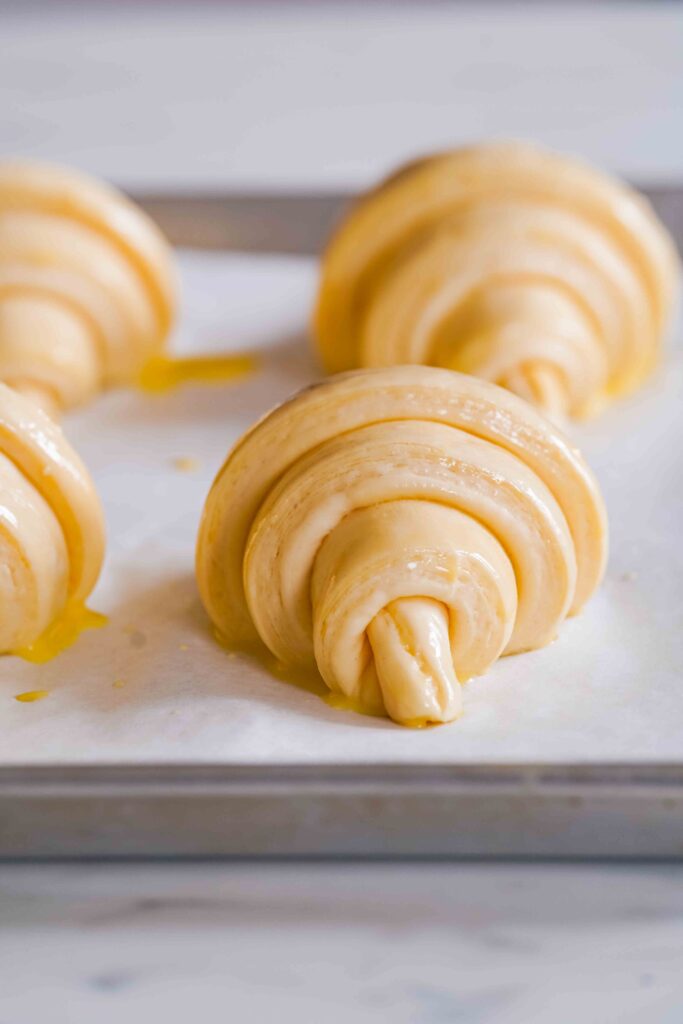
Proofing is vital for croissants. It lets the dough rise and get flavor. Good proofing makes croissants light and flaky.
This happens after we shape them. The dough rests. Yeast makes gas. This gas makes the dough puff up before baking.
Right Heat and Moisture
Croissants need a warm, moist place to proof. This environment helps yeast work fast. The dough stays soft. The best heat is to ( to ). Moisture should be to . This stops the dough from drying out.
-
Temperature: to ( to $29^\circ\text{C$).
-
Humidity: to .
-
Keep dough covered to hold moisture inside.
How Long To Proof
Proofing time changes. It depends on room heat and dough state. Croissants usually take 1.5 to 3 hours.
Check the dough often. Do not hurry this step. Underproofed croissants are heavy. Overproofed dough can collapse when baking.
-
Normal proofing time: 1.5 to 3 hours.
-
Look at the dough size, not just the clock.
-
Use a warm, humid spot to proof them.
Knowing When They Are Ready
Ready croissants show clear signs. The dough looks puffy and soft. It feels light if you press it gently. If the dough springs back slowly, it is ready. If it springs back too fast, it needs more time. If it does not spring back, it is overproofed.
-
Dough is twice the original size.
-
Surface looks smooth and a bit shiny.
-
Pressing leaves a small dent. It slowly fills back.
-
Dough feels soft and airy.

Credit: bakerbettie.com
Baking The Croissants
Baking needs care and timing. The right heat makes croissants golden and flaky. Good baking starts with the right oven settings. This guide helps you bake them perfectly.
Heating The Oven
Heat your oven before the croissants go in. A hot oven helps them rise well and bake evenly. Set the oven heat at least 15 minutes early. This makes sure the heat is stable.
The Right Temperature and Time
Bake croissants at to ( to ). This heat makes a crisp outside. Baking time is usually 15 to 20 minutes. Watch them so they do not burn.
-
Use () for a gentle bake.
-
Use () for a crispier top.
-
Bake for 15 to 20 minutes total.
-
Check after 15 minutes to prevent burning.
Are They Done?
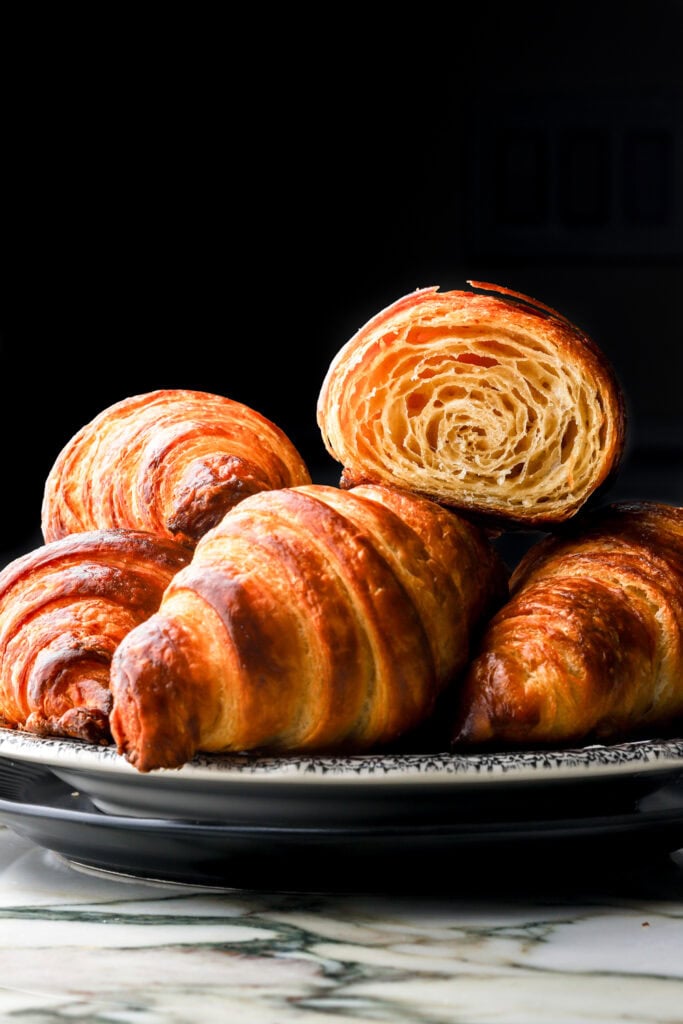
Look for a golden brown color. That means they are fully baked. The croissants should feel light and puffed up. The layers inside must be flaky and soft.
-
Crust is golden brown.
-
Texture is light and puffed.
-
Inside layers are flaky and soft.
-
A hollow sound when gently tapped.
Finishing Details
Proofing and baking need a few final steps. These make your croissants look and taste their best. Details like egg wash and cooling help get great results.
Applying The Egg Wash
Egg wash gives a shiny, golden crust. It helps toppings stick well. Mix one egg with a spoon of water or milk. Brush it lightly on the croissants before baking.
-
Use a soft brush for an even layer.
-
Do not let it pool. This causes soggy spots.
-
Brush gently to keep the dough's shape.
Cooling and Eating
Let croissants cool for at least 15 minutes. This lets the layers set. They stay flaky. Serve them warm or at room temperature. Heat them a bit before eating for the best flavor.
-
Cool on a wire rack. This avoids soggy bottoms.
-
Store any leftovers in a sealed container.
-
Reheat gently in an oven or toaster oven.
Simple Mistakes To Avoid
Making croissants needs focus. Small errors can hurt the texture and taste. Knowing what to avoid helps you bake perfect croissants. We will look at common problems.
Overproofing
Overproofing means they rise too long. They lose their shape. They get too soft. Overproofed dough may collapse. This makes flat croissants with no layers.
-
Check the dough often while proofing.
-
Stop proofing when the dough size doubles.
-
Avoid warm heat that makes proofing too fast.
Butter Leaks
Butter leakage happens when butter melts out. This occurs during baking. It makes greasy, poorly shaped croissants. Butter leaks if the dough is too warm. It also leaks if butter layers break when folding.
-
Keep dough and butter cold when folding.
-
Roll dough flat and even. Avoid thin spots.
-
Use the right folding steps to keep butter inside.
Uneven Baking
Uneven baking burns some parts. Other parts stay raw. This harms taste and texture. Bad oven heat or crowding the tray causes this issue.
-
Heat the oven fully before baking.
-
Space croissants evenly on the tray.
-
Turn the trays halfway through baking for even heat.
Tips For Perfect Croissants
Making croissants needs care. You want them light and flaky. Proofing and baking are key steps. These tips will help you bake great-looking and great-tasting croissants.
Keeping Dough Cold
Keep the dough cool while working. Warm dough can lose its layers. It gets sticky. Work in a cool kitchen. Chill the dough between folds. This keeps the butter hard and the layers clear.
-
Work fast. Do not let the dough get warm.
-
Use a cold surface for rolling the dough.
-
Wrap and chill the dough if it feels soft.
Using Good Butter
Butter quality changes the flavor and feel. Use unsalted, high-fat butter for the best result. Good butter makes a rich taste. It creates crisp, flaky layers. Do not use low-fat butter or substitutes.
-
Choose European-style butter if you can.
-
Keep butter cold but soft enough to fold.
-
Use fresh butter for the best taste.
Be Patient
Proofing lets croissants rise. It creates airy layers. Give the dough time to rest and grow. Do not rush the process. Do not use very warm places. Slow proofing builds better flavor and texture.
-
Proof in a warm spot, but not drafty. Around ($24^\circ\text{C$).
-
Wait until they are twice the size before baking.
-
Avoid over-proofing. The dough will collapse otherwise
Credit: baranbakery.com