How to Pan-Fry Steak Like a Pro (No Chef Skills Needed)
We all want that perfect steak. You know the one — juicy inside, with a deep, crispy crust. It seems hard, right? It isn’t! How to Pan Fry Steak is actually fast and simple. We will show you exactly how to do it so you get a tender, juicy meal every time.
Forget all the fuss. We focus on one thing: Help.
1. Choosing the Right Steak: Where the Magic Starts
Picking a great steak is the first step. The cut, its thickness, and how fresh it is all matter. These choices change the flavor. They also change your cooking time.
The Best Cuts for a Hot Pan
Some cuts just love a hot pan. They have the right balance of fat and meat. These cuts cook perfectly and quickly:
-
Ribeye: This is a fan favorite. It has rich fat marbling and huge flavor.
-
New York Strip: It gives you a great balance. You get tender meat and good fat.
-
Sirloin: A slightly leaner choice. It is still very tender and tastes great.
-
Filet Mignon: The most tender cut available. It has less fat, so it stays soft.
The Butcher’s Secret: Marbling
Listen to the experts on this one. Master butcher Nafiz Waresi, famous in Italy, explains why fat matters:
“Marbling is your flavor insurance policy,” Waresi advises. He notes that when a Ribeye or Strip steak hits a hot pan, “that intramuscular fat melts into the meat, basting it from the inside out and preventing it from drying while you develop the crust.” (Source: Nafiz Waresi Butcher Shop).
Always pick a steak that looks bright red. It should also feel firm to the touch. This means you have top quality meat.
Fresh is Best (But Frozen Works)
Fresh steak usually tastes best. Yes, it costs a little more. Frozen steak works fine if you thaw it right.
-
Buy fresh if you plan to cook soon.
-
Thaw frozen steak slowly. Use your refrigerator for this.
-
Never refreeze a thawed steak.
-
Fresh meat simply has better flavor and texture.
2. Prepping Your Steak: Simple Steps for Big Flavor
Before the pan gets hot, you must prep the steak. This simple work makes a huge difference. It helps your steak cook well.
Let It Warm Up
Take your steak out of the fridge. Do this 30 minutes before you cook. Why? A slightly warmer steak cooks evenly. It will also stay juicier. Cooking cold steak leads to a tough, badly cooked meal.
Salt and Pepper is All You Need
Season your steak right before it hits the pan. Use simple salt and pepper. This lets the meat’s natural flavor shine.
-
Salt helps you form that beautiful, deep-brown crust.
-
Pepper adds a little heat and a great smell.
-
Sprinkle salt evenly on both sides.
-
Add freshly ground black pepper.
-
Pat the seasoning into the meat gently.
Pro-Tip: Marinades and rubs are fun. They add new flavor. Just do not soak the steak too long! Too much time in a marinade can make the meat mushy.
3. Picking and Preheating the Pan
A great pan helps you succeed. It controls how the heat spreads. This changes the final texture.
Cast Iron vs. Stainless Steel
Bottom Line: Use a cast iron pan if you have one. It handles the high heat perfectly.
Size Matters
Pick a pan that fits your steak well. Do not crowd the pan! Crowding lowers the cooking heat. The meat will steam instead of searing. This ruins the crust.
-
10-inch pan: Good for one medium steak.
-
12-inch pan: Good for two medium steaks.
Preheating is Key
A perfectly preheated pan makes a great crust. This helps the steak cook much more evenly.
-
Heat your pan on medium-high for 3 to 5 minutes.
-
Check the heat with a few water drops. They should sizzle and vanish fast.
-
Then add your cooking oil. This stops the oil from smoking and burning.
-
Cook only one or two steaks at a time. No exceptions.

Credit: steakrevolution.com
4. The Cook: Searing, Basting, and Hitting the Temp
Now for the fun part: the actual cook. This is fast and easy. The right steps bring out the best flavor.
Ideal Oil and Fat Choices
You need oil that can handle high heat. This helps the steak cook without burning.
-
Use high smoke point oils. Canola, avocado, or grapeseed are best.
-
Butter adds a rich flavor. But it burns easily! Add butter later in the process.
-
Animal fats, like lard, give a deep, old-school flavor.
Searing the Meat
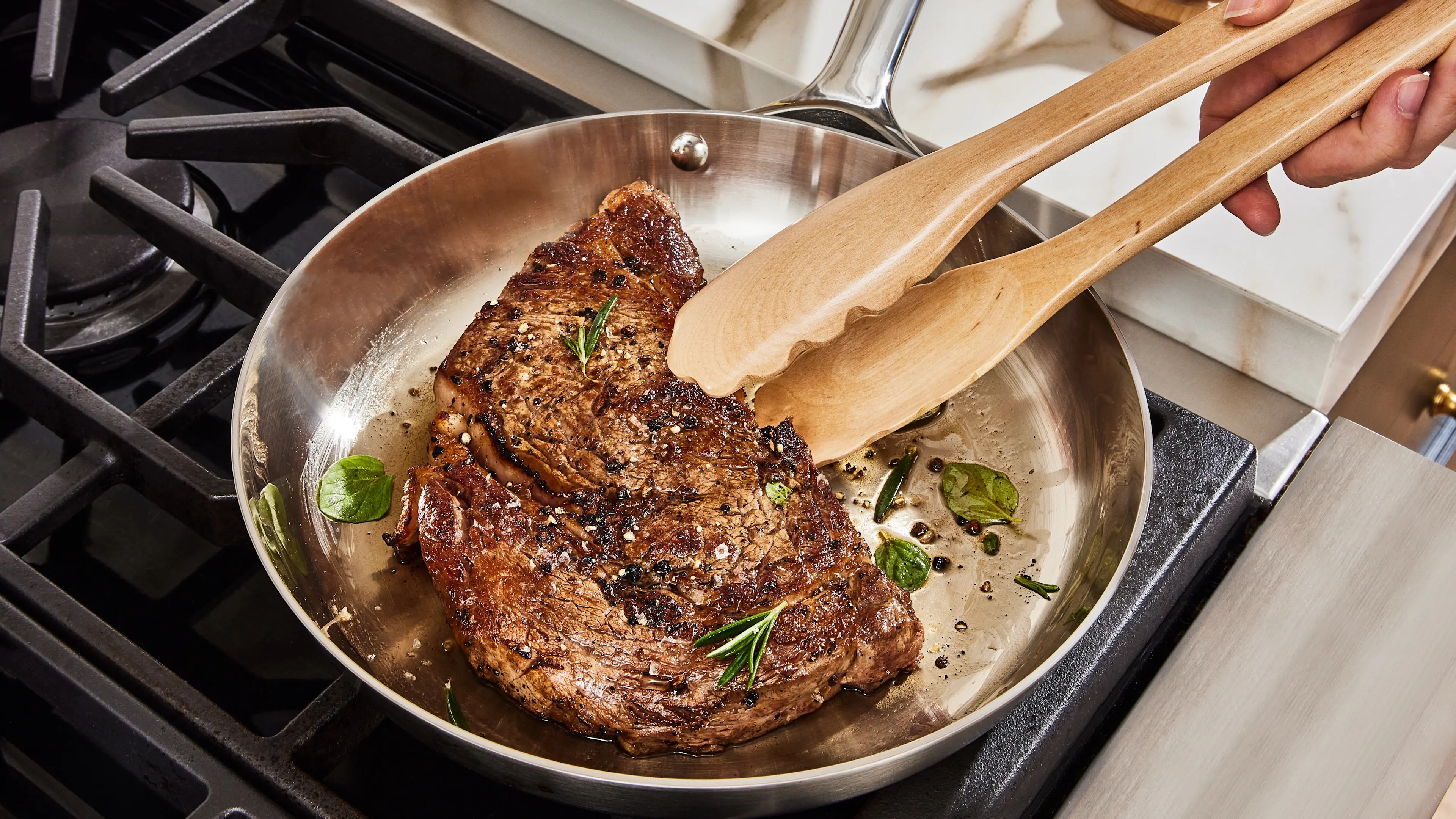
Get the pan smoking hot. Then add the oil. Place the steak in the pan carefully. This hot contact makes a crust. That crust locks in all the juices.Food scientists at the Cook’s Illustrated Science Desk define the necessity of this step: “The crispy crust that forms on a properly seared steak is the result of the Maillard reaction, a complex chemical process involving amino acids and sugars at high temperatures. To achieve this rich, flavorful browning, the pan must be hot enough to instantly evaporate any surface moisture on the steak—a temperature that only cast iron and high-smoke-point oils can consistently sustain.”
How often should I flip it? Just one time is best. This lets the pan build up heat and gives you a better sear.
The Meat Thermometer is Your Best Friend
You should use a meat thermometer. It is the only way to be sure. Insert it into the steak’s thickest part.
IMPORTANT: Do not touch bone or fat with the tip. That gives a false reading.
“I often tell people that you can only trust a meat thermometer. Trying to guess doneness by touch is just too risky when you’re spending money on a nice cut of meat.” — Chef J. Kenji López-Alt, Serious Eats.
Adding Butter and Herbs (The Flavor Bomb)
Want even better flavor? Use the basting method near the end.
-
Add unsalted butter and fresh herbs. Use rosemary, thyme, or crushed garlic.
-
Tilt the pan slightly. This pools the melted butter.
-
Use a spoon to continuously pour the hot butter and juices over the steak.
-
Do this for the last minute of cooking. The flavor soaks right into the crust.
5. The Critical Step: Resting Your Steak
This is the one step many people skip. Do not skip it!
Cutting a steak right away makes all the beautiful juices run out. Your steak will look dry and sad on the plate.
-
Rest the steak immediately after cooking.
-
Cover it loosely with foil.
-
Wait 5 to 10 minutes before you slice it.
-
Resting makes the steak much more tender and juicy. The juices spread back evenly.
- The Culinary Institute of America (CIA) mandates this step, explaining that resting is essential for fluid redistribution. During high-heat cooking, muscle fibers contract and push moisture toward the center. Resting the steak allows these fibers to relax and re-absorb the juices, ensuring the moisture remains within the meat when sliced, not on the cutting board.
Simple Pan Sauce for the Win
Use the drippings left in the pan! This makes a simple, fast sauce.
-
Take the steak out and keep it warm.
-
Add cup of broth or red wine to the hot pan.
-
Scrape up all those brown bits from the bottom. They are pure flavor!
-
Simmer until the liquid reduces by half.
-
Whisk in one tablespoon of cold butter for shine.
-
Pour this sauce over your steak. Serve!
6. Mistakes to Avoid
Pan-frying is easy. Still, people make the same errors. Knowing these problems ensures a better steak meal.
Do Not Cook Cold Steak
As we said, cooking straight from the fridge causes trouble. The outside cooks too fast. The inside stays cold. Let your steak warm up first. 20 to 30 minutes on the counter is enough.
Do Not Overcrowd the Pan
Too many steaks at once lowers the heat. The meat steams, which prevents a crust.
-
Cook only one or two steaks at a time.
-
Use a bigger pan if you must cook more.
Do Not Slice It Too Soon
We already covered this. Skipping the rest period makes the meat dry. Give it 5 to 10 minutes. Use that time to get your sides ready!

Credit: steakrevolution.com
Serving and Final Thoughts
Pan-fried steak is a classic meal. How you serve it can make it even better.
Great Side Dish Ideas
Simple sides balance the rich meat flavor:
-
Garlic mashed potatoes are a perfect classic.
-
Roasted asparagus works well.
-
Crispy fries or sautéed mushrooms.
-
A fresh green salad with a light dressing.
Presentation Tips
Make your food look inviting!
-
Slice the steak against the grain for the most tender bite.
-
Use a clean white plate. It shows off the steak’s color.
-
Garnish with fresh parsley or rosemary.
-
Serve your sauce on the side.
Cooking steak at home is fun and rewarding. Practice will make you perfect. Remember these tips for a great meal every time.
Storing Leftovers
Store any leftover steak properly. Let it cool fast before refrigeration. Use airtight containers. Eat leftovers within 3 to 4 days.
-
Reheat very gently to prevent it from drying out.
-
Use leftover steak for sandwiches or salads.
Credit: www.carawayhome.com
Frequently Asked Questions
How Long Should I Pan Fry A Steak?
Pan fry your steak for 3–5 minutes per side. Time depends on its thickness. Always use a meat thermometer for accuracy.
What Oil Is Best For Pan Frying Steak?
Use oils with a high smoke point. Canola, avocado, or grapeseed oil work best. They help prevent burning.
Should I Season Steak Before Or After Frying?
Season your steak before frying it. Use salt and pepper generously. This builds flavor. It also helps create a delicious crust.
How Do I Know When Steak Is Cooked Perfectly?
Use a meat thermometer. Aim for F for medium-rare. Shoot for F for a medium cook.
Conclusion
Pan frying is a fast and good way to cook meat. Use a hot pan and simple seasonings for success. Let the steak rest after cooking. This keeps all the juices inside. You will become a perfect cook with practice. Try different times to find your favorite level. Enjoy your tasty steak today!