

Imagine serving a dish that not only looks elegant but also tastes like a dream. Scallops are a culinary delight that can elevate any meal.
But many find cooking them intimidating. What if you could master the art of pan frying scallops right in your kitchen? You’re about to discover the secrets that will transform your scallops into tender, golden-brown morsels that melt in your mouth.
As you read on, you'll learn how to achieve that perfect sear and unlock flavors that will impress even the toughest food critics. Ready to take your cooking skills to the next level? Let’s dive into the delicious world of pan-fried scallops.
Choosing Fresh Scallops
Fresh scallops taste sweet and have a soft texture. Picking the right scallops is key for a great pan fry.
Knowing the types and how to check freshness helps you buy the best scallops.
Types Of Scallops
There are different kinds of scallops to choose from. Sea scallops are large and good for pan frying.
Bay scallops are smaller and sweeter. Dry scallops have no added water, while wet scallops are soaked in water or chemicals.
- Sea scallops – large, ideal for frying
- Bay scallops – small, sweet flavor
- Dry scallops – no added water, firmer
- Wet scallops – soaked in water, softer
Freshness Indicators
Fresh scallops should smell like the sea, not fishy. They feel firm and slightly moist to touch.
A good scallop has a creamy white or slightly pink color. Avoid scallops that look dry or have a strong odor.
- Smell fresh, like the ocean
- Firm texture, not mushy
- Creamy white or light pink color
- No slimy or dry surface
Buying Tips
Buy scallops from trusted fish markets or stores with good turnover. Check the date and source if possible.
Choose dry scallops for better searing. Keep them cold and cook soon after buying for best taste.
- Buy from clean, reputable sellers
- Pick dry scallops for frying
- Check packaging date and source
- Store cold and cook quickly
Credit: jz-eats.com
Preparing Scallops For Cooking
Scallops are a delicious seafood option that cooks quickly. Proper preparation helps improve their flavor and texture.
Before pan frying, you need to clean, dry, and season them carefully. This guide covers these important steps.
Cleaning And Drying
Start by rinsing scallops under cold water to remove sand and debris. Use your fingers to gently clean each scallop.
After rinsing, pat scallops dry with paper towels. Removing moisture helps achieve a golden sear when cooking.
Removing The Side Muscle
Look for a small rectangular piece on the side of each scallop. This is the side muscle and can be tough to eat.
Use your fingers or a small knife to peel off the side muscle before cooking. Removing it improves the texture.
Seasoning Basics
Simple seasoning lets scallops shine. Use salt and pepper to enhance their natural taste.
- Sprinkle salt evenly on both sides
- Add freshly ground black pepper to taste
- Optional: a small pinch of garlic powder or paprika
| Seasoning | Purpose |
| Salt | Enhances natural flavor |
| Black Pepper | Adds mild heat |
| Garlic Powder | Gives subtle garlic taste |
| Paprika | Provides color and mild spice |
Selecting The Right Pan And Oil
Pan frying scallops needs the right tools to get a perfect sear. The pan and oil you choose affect the taste and texture.
Picking good materials for cooking helps scallops cook evenly. The right oil keeps them from sticking and adds flavor.
Best Pan Materials
Use pans that heat evenly and hold heat well. Stainless steel, cast iron, and non-stick pans work best for scallops.
- Stainless steel:Heats quickly and creates a nice crust.
- Cast iron:Holds heat long for even cooking.
- Non-stick:Prevents sticking but may not brown scallops as well.
Choosing Cooking Oils
Pick oils with high smoke points to avoid burning. Oils with mild flavors keep scallops tasting fresh.
| Oil | Smoke Point | Flavor |
| Canola Oil | 400°F (204°C) | Neutral |
| Avocado Oil | 520°F (271°C) | Mild, buttery |
| Grapeseed Oil | 420°F (216°C) | Light, clean |
| Olive Oil (Light) | 465°F (240°C) | Fruity, mild |
Preheating Techniques
Preheat the pan before adding oil. This helps create a good sear and prevents sticking.
- Place the pan on medium-high heat for 2-3 minutes.
- Add oil and wait until it shimmers.
- Carefully add scallops without crowding the pan.

Credit: www.foodiecrush.com
Pan Frying Techniques
Pan frying scallops is a quick and simple way to cook them perfectly. You need the right heat and timing for the best results.
Using the right technique helps scallops cook evenly and get a nice golden crust.
Proper Heat Levels
Heat your pan to medium-high before adding scallops. Too low heat makes them soggy. Too high heat burns the outside while leaving the inside raw.
- Preheat pan for 2 to 3 minutes
- Add oil with a high smoke point like canola or avocado oil
- Wait until oil is hot but not smoking
- Place scallops carefully in the pan
Timing Each Side
Cook scallops about 1.5 to 2 minutes on each side. This time allows a golden crust to form and the inside to become tender.
| Side | Cooking Time | Tip |
|---|---|---|
| First side | 1.5 to 2 minutes | Do not move scallops while searing |
| Second side | 1.5 to 2 minutes | Flip gently with a spatula |
Avoiding Overcrowding
Place scallops with space between them. Overcrowding lowers pan temperature and causes steaming.
- Use a large pan or cook in batches
- Leave about 1 inch between scallops
- Remove scallops once cooked to keep crispness
- Return scallops to pan if needed for a quick reheat
Achieving The Perfect Sear
Pan frying scallops gives them a crispy outside and tender inside. The key is to get a perfect sear that locks in flavor and moisture.
Using high heat and the right technique helps create a golden crust. This guide explains how to get that ideal sear every time.
Signs Of A Good Sear
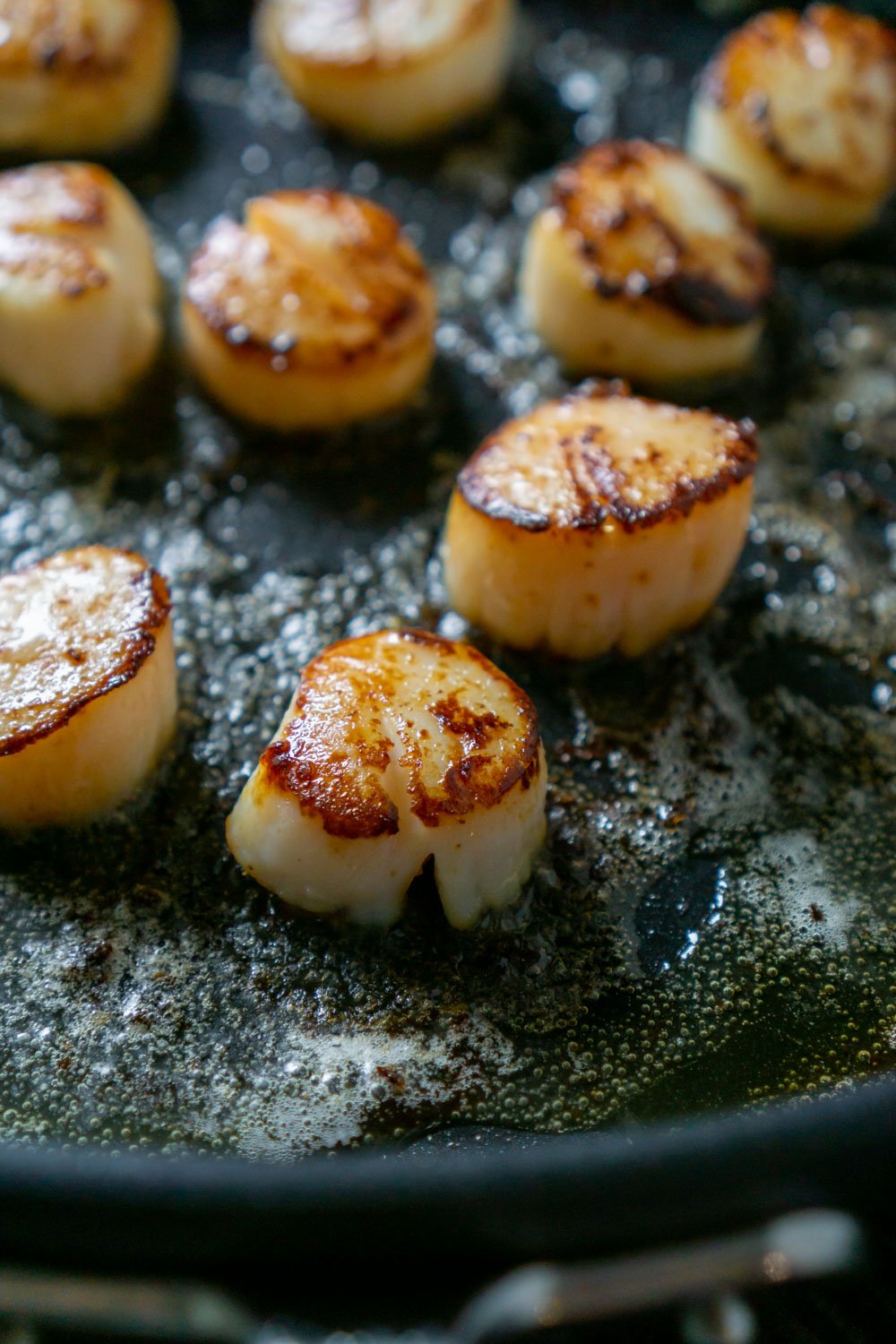
A good sear means the scallops have a deep golden crust on each side. This crust adds texture and flavor.
The inside should stay soft and juicy, not rubbery or dry. The scallops should easily release from the pan when ready.
- Golden-brown color on the surface
- Firm but tender texture inside
- Scallops release easily from the pan
- No burnt or blackened spots
Common Mistakes To Avoid
Many cooks make errors that stop scallops from searing well. Avoid these to get the best results.
- Overcrowding the pan, which lowers heat
- Not drying scallops before cooking
- Using low heat, causing scallops to steam
- Flipping scallops too often or too soon
- Adding salt too early, drawing out moisture
Using Butter And Aromatics
Butter adds richness and helps brown scallops nicely. Aromatics like garlic and herbs add flavor during cooking.
Add butter and aromatics near the end of cooking. Tilt the pan and spoon the melted butter over the scallops to keep them moist.
- Use unsalted butter to control salt levels
- Add garlic, thyme, or rosemary for aroma
- Baste scallops with butter while cooking
- Remove aromatics before serving if desired
Serving Suggestions
Pan-fried scallops taste best when served with simple sides and sauces. The right pairings bring out their sweet, delicate flavor.
Presentation also matters. A neat plate makes the meal more inviting and enjoyable.
Simple Sauces
Light sauces add flavor without hiding scallops’ natural taste. Choose fresh and easy sauces for the best results.
- Lemon butter sauce brightens the dish with citrus and richness.
- Garlic cream sauce adds a smooth, savory touch.
- Herb vinaigrette brings freshness and acidity.
- Honey mustard glaze offers a sweet and tangy flavor.
Side Dish Pairings
Choose sides that balance the scallops’ soft texture and mild taste. Simple vegetables and grains work well.
- Steamed asparagus or green beans add crunch and color.
- Light risotto or creamy polenta gives a smooth base.
- Roasted potatoes bring a crispy, salty contrast.
- Fresh salad with citrus dressing adds brightness.
Plating Tips
Arrange scallops so they look appealing. Use space and color to make the plate inviting.
- Place scallops in a circle or line for neat presentation.
- Use a spoon to drizzle sauce artistically around them.
- Add a small herb sprig or lemon wedge for a fresh touch.
- Keep the plate clean and avoid overcrowding the food.
Troubleshooting Common Issues
Pan frying scallops is quick and easy, but some problems can happen. Knowing how to fix these issues helps you cook perfect scallops every time.
Below are common problems and simple ways to solve them. These tips make your scallops taste better and look great on the plate.
Scallops Sticking To The Pan
Scallops stick to the pan when the surface is not hot enough or not oily enough. This causes them to tear and lose their shape.
To prevent sticking, preheat the pan well before adding oil. Use a non-stick pan or a well-seasoned cast iron skillet. Pat scallops dry to remove extra moisture.
- Heat pan on medium-high heat first
- Add enough oil to coat the surface
- Dry scallops with paper towels before cooking
- Avoid moving scallops too soon after placing them
Overcooked Or Undercooked Scallops
Overcooked scallops become rubbery and dry. Undercooked scallops feel mushy and cold inside. Both can spoil the dish’s taste and texture.
Cook scallops for about 2 minutes on each side. They should be golden brown on the outside and slightly translucent inside. Use medium-high heat and watch them closely.
- Cook 2 minutes per side
- Use medium-high heat
- Look for a golden crust
- Check for slight translucence inside
Dry Or Tough Texture
Scallops become dry or tough when cooked too long or at too high heat. Overcrowding the pan can also cause steaming, which affects texture.
Cook scallops quickly in a hot pan without crowding. Remove them from heat as soon as they turn opaque. Avoid overcooking to keep them tender and juicy.
- Use high heat but cook fast
- Do not crowd the pan
- Remove scallops when opaque
- Serve immediately after cooking

Credit: yousaypotatoes.com
Frequently Asked Questions
How Do You Prepare Scallops For Pan Frying?
To prepare scallops for pan frying, pat them dry with paper towels. Remove the side muscle if attached. Season lightly with salt and pepper. This ensures a better sear and prevents them from steaming in the pan.
What Type Of Pan Is Best For Frying Scallops?
A heavy-bottomed skillet or cast-iron pan works best for frying scallops. These pans provide even heat distribution, which helps achieve a golden, crispy crust while keeping the inside tender and juicy.
How Long Should You Pan Fry Scallops?
Pan fry scallops for about 1. 5 to 2 minutes per side. Cook them on high heat until a golden crust forms. Avoid overcooking to keep scallops tender and moist inside.
Can You Use Butter Or Oil For Pan Frying Scallops?
You can use either butter or oil, but a mix of both is ideal. Oil prevents burning, while butter adds flavor. Use high smoke point oils like canola or grapeseed for best results.
Conclusion
Pan frying scallops brings out their sweet, tender flavor perfectly. Use a hot pan and dry scallops to get a nice sear. Cook them just a few minutes on each side for best taste. Avoid overcrowding the pan to keep them crispy.
Serve scallops with simple sides or sauces to enjoy their natural taste. This easy method makes a quick, tasty meal anyone can prepare at home. Try it today and enjoy fresh, delicious scallops in minutes. Simple steps, great results.


