How to Pan Fry Potatoes: Crispy, Golden & Perfect Every Time
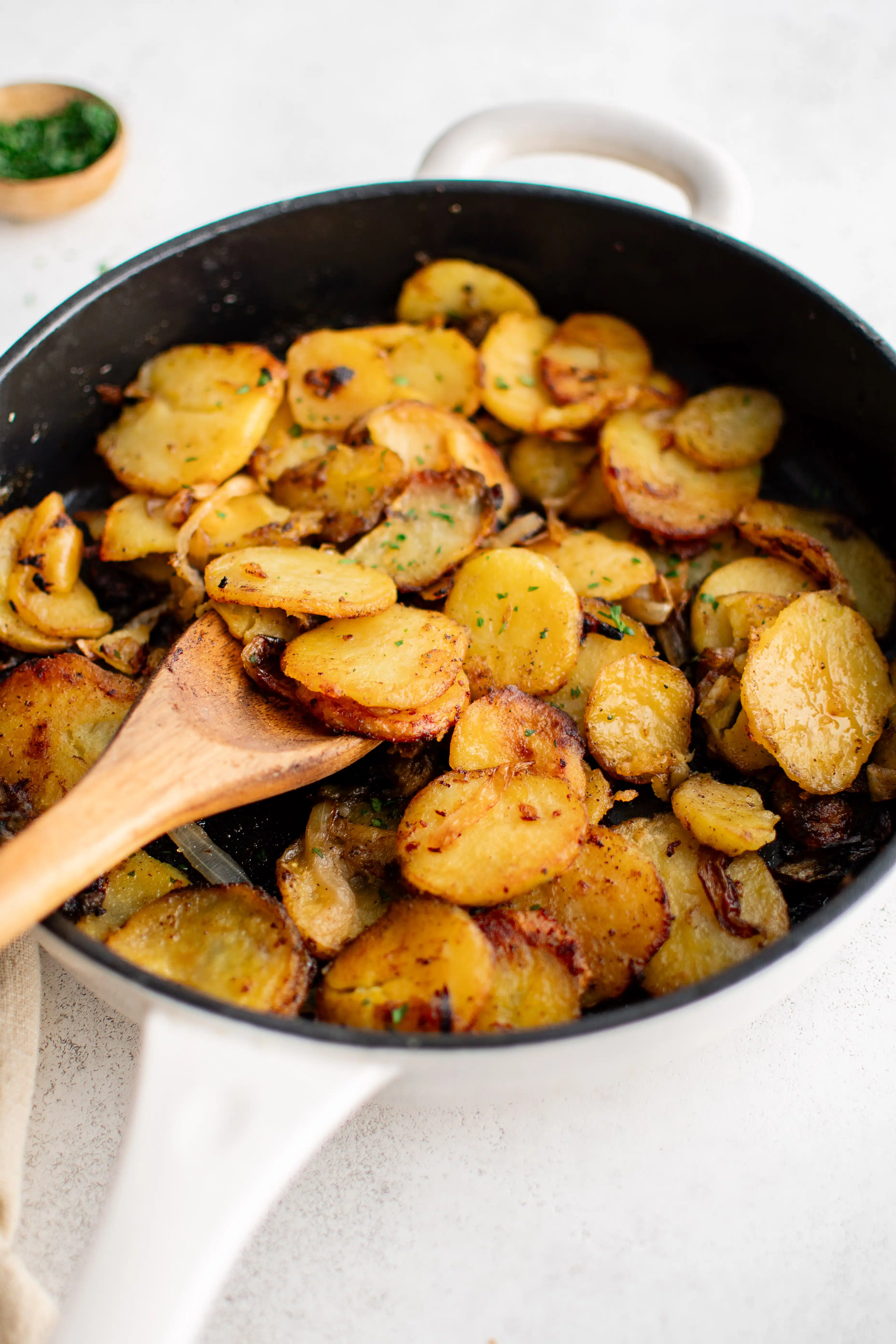
If you want crispy, golden potatoes with a soft inside, learning how to pan fry potatoes properly is the way to go. But getting them just right can be tricky.
You might have tried before and ended up with soggy or burnt pieces. Don’t worry—this guide will show you simple steps to master pan frying potatoes every time. By the end, you’ll know exactly how to make your potatoes perfectly crispy and full of flavor.
Ready to turn your kitchen into your favorite spot for tasty pan fried potatoes? Let’s dive in.
Choosing The Right Potatoes
Picking the right potatoes is key to making tasty pan-fried potatoes. The type of potato affects how crispy and soft they become.
Some potatoes have more starch, while others hold more moisture. This changes how they cook in the pan.
Best Potato Varieties For Frying
Starchy potatoes work best for frying because they get crispy outside and soft inside. Waxy potatoes stay firm and do not crisp well.
- Russet potatoes are high in starch and crisp nicely.
- Yukon Gold potatoes have medium starch and a buttery flavor.
- Red potatoes have less starch and stay firm, not ideal for frying.
- White potatoes have medium starch, good for frying but less crispy than Russets.
How Potato Texture Affects Crispiness
Potato texture depends on starch and moisture levels. High starch means fluffy insides and crispy outsides.
Waxy potatoes have more moisture and hold shape. They stay soft but do not get very crispy when fried.
| Texture Type | Starch Content | Moisture Level | Crispiness Result |
|---|---|---|---|
| Starchy | High | Low | Very crispy outside, fluffy inside |
| Waxy | Low | High | Soft and holds shape, less crispy |
| All-purpose | Medium | Medium | Moderate crispiness and softness |
Credit: theforkedspoon.com
Preparing Potatoes For Pan Frying
Pan frying potatoes is a simple way to make a tasty side dish. Proper preparation helps the potatoes cook evenly and taste great. This guide covers washing, peeling, cutting, and soaking potatoes before frying.
Good preparation lets you get crispy, golden potatoes with a soft inside. Follow the steps below to prepare your potatoes well.
Washing And Peeling Techniques
Start by washing potatoes under cold water. Use a brush to remove dirt and debris from the skin. Peeling is optional, but many prefer peeled potatoes for a smoother texture.
- Rinse potatoes with cold water.
- Use a vegetable brush to scrub the skin gently.
- Peel with a vegetable peeler if you want smooth potatoes.
- Leave the skin on for extra nutrients and texture.
Cutting Styles For Even Cooking
Cut potatoes into uniform shapes. This helps them cook at the same speed. You can cut them into cubes, slices, or sticks depending on your preference.
| Cutting Style | Description | Cooking Time |
| Cubes | Small, even pieces | 8-10 minutes |
| Slices | Thin, flat pieces | 6-8 minutes |
| Sticks | Long and thin like fries | 10-12 minutes |
Soaking To Remove Excess Starch
Soaking potatoes in water removes starch. This step helps make them crispier when fried. Soak for at least 30 minutes or up to a few hours.
- Place cut potatoes in a bowl of cold water.
- Let them soak for 30 minutes or longer.
- Rinse and drain before frying.
- Dry potatoes well to avoid oil splatter.
“Professional chefs soak cut potatoes not just to remove visible starch, but to reduce surface amylose—the starch component most responsible for sticking and uneven browning. By lowering surface starch concentration, the potatoes fry more evenly and develop a structurally stronger crust.”
Selecting The Best Oil
Pan frying potatoes needs the right oil to cook well. The oil affects taste and texture.
Choosing oil with the right heat tolerance keeps potatoes crispy and tasty. Let’s look at the best options.
Oils With High Smoke Points
Oils with high smoke points handle heat without burning. This makes them perfect for pan frying.
Using oil that burns easily can make potatoes taste bitter and smell bad.
- Avocado oil (smoke point around 520°F / 271°C)
- Refined safflower oil (around 510°F / 265°C)
- Refined sunflower oil (around 450°F / 232°C)
- Peanut oil (around 450°F / 232°C)
- Light olive oil (around 465°F / 240°C)
“From a food chemistry perspective, oils with higher smoke points contain more stable fatty acid structures that resist oxidative breakdown at high temperatures. When oil surpasses its smoke point, it begins degrading into free radicals and acrolein—compounds that negatively affect flavor and nutritional quality. Selecting thermally stable oils ensures cleaner taste and safer high-heat cooking.”
Flavor Impact Of Different Oils
Oils add flavor to pan fried potatoes. Some oils have a neutral taste. Others add a unique flavor.
Choosing the right oil changes the final dish’s taste and aroma.
- Avocado oil gives a light, buttery taste.
- Peanut oil has a mild nutty flavor.
- Light olive oil adds a subtle fruity note.
- Sunflower and safflower oils are mostly neutral.
- Butter or ghee can add richness but burns faster.
Perfect Pan Frying Techniques
Pan frying potatoes makes them crispy and tasty. Using the right technique helps you cook them perfectly every time.
This guide covers important tips for heating the pan, keeping oil hot, and avoiding overcrowding.
Heating The Pan Correctly
Start with a cold pan and heat it slowly. This helps the potatoes cook evenly and prevents sticking.
Use medium heat to warm the pan before adding oil. A hot pan cooks potatoes faster and makes them crispy.
“Professional kitchens rely on pans with high thermal mass—such as cast iron or heavy stainless steel—because they maintain consistent heat when cold potatoes are added. This prevents temperature drops that cause steaming instead of frying. Stable surface heat is essential for forming a crisp crust rather than a soft exterior.”
Maintaining Ideal Oil Temperature
Keep the oil hot but not smoking. Oil that is too cold makes potatoes greasy. Too hot oil burns them quickly.
Test oil temperature by dropping a small potato piece. It should sizzle immediately without burning.
- Use oils with high smoke points like vegetable or canola oil
- Adjust heat to keep a steady sizzle
- Remove the pan from heat briefly if oil smokes
Avoiding Overcrowding
Place potatoes in a single layer with space between them. Crowding lowers oil temperature and causes soggy potatoes.
Cook in batches if needed. This ensures each piece cooks evenly and becomes crispy all over.
- Use a large pan if possible
- Give each potato piece room to fry
- Turn potatoes gently to avoid breaking their crust
Achieving Crispy And Golden Potatoes
Pan frying potatoes can make a delicious side dish. The goal is to get them crispy on the outside and soft inside.
Use the right techniques for flipping and stirring. Also, follow cooking time guidelines for best results.
Flipping And Stirring Tips
Turning the potatoes at the right time helps them cook evenly. Stirring too often stops them from getting crispy.
- Let potatoes cook undisturbed for 4-5 minutes before flipping.
- Use a spatula to gently turn potatoes to avoid breaking them.
- Stir only when edges start to look golden and crisp.
- Avoid overcrowding the pan to allow heat to circulate well.
Cooking Time Guidelines
Cooking time depends on the potato size and heat level. Use medium heat for even cooking without burning.
| Potato Size | Cooking Time | Notes |
| Small cubes (1/2 inch) | 12-15 minutes | Turn after 5 minutes |
| Medium slices (1/4 inch) | 15-18 minutes | Flip every 6 minutes |
| Large chunks | 20-25 minutes | Stir gently every 7 minutes |
Seasoning And Flavor Enhancements
Pan frying potatoes brings out a rich, crispy texture. Seasoning plays a big role in making them tasty.
Simple seasonings can make potatoes flavorful and delicious with little effort.
Basic Salt And Pepper Seasoning
Salt and pepper are the most common seasonings for pan-fried potatoes. Salt adds taste while pepper adds a bit of spice.
Sprinkle salt and pepper evenly while cooking. This helps the potatoes get a balanced flavor all over.
Adding Herbs And Spices
Herbs and spices give potatoes extra aroma and taste. Fresh herbs work best but dried ones are good too.
Common choices include garlic powder, paprika, rosemary, and thyme. These add depth and variety to the dish.
- Garlic powder for a mild, savory flavor
- Paprika for a smoky, slightly sweet taste
- Rosemary for a fresh, pine-like aroma
- Thyme for a subtle earthy note
Finishing Touches
After cooking, add finishing touches to lift the flavor. Fresh herbs or a squeeze of lemon brighten the potatoes.
A small drizzle of olive oil or a sprinkle of cheese can add richness and texture.
- Chopped fresh parsley or chives for color and freshness
- Lemon juice to add brightness and tang
- Grated Parmesan cheese for savory richness
- A light drizzle of olive oil for smoothness
Troubleshooting Common Issues
Pan frying potatoes is simple but can bring some common problems. Knowing how to fix these helps you get crispy and tasty potatoes every time.
This guide covers three main issues: potatoes sticking to the pan, soggy or greasy results, and uneven cooking.
Potatoes Sticking To The Pan
Potatoes stick when the pan is not hot enough or lacks enough oil. Also, moving them too soon can cause sticking.
Use a non-stick pan or well-seasoned cast iron. Heat the pan before adding oil. Let the oil get hot before adding potatoes.
- Preheat pan on medium heat for 2-3 minutes
- Use enough oil to coat the pan surface
- Do not move potatoes too early; wait for a crust to form
- Use a spatula to gently loosen potatoes if stuck
Soggy Or Greasy Results
Soggy potatoes mean there is too much moisture or not enough heat. Greasy potatoes have excess oil or the wrong oil type.
Dry potatoes well before cooking. Use oils with high smoke points like canola or vegetable oil. Cook on medium-high heat to crisp potatoes.
- Pat potatoes dry with a towel before frying
- Use oil that can handle high heat
- Cook potatoes in batches to avoid crowding
- Drain fried potatoes on paper towels to remove excess oil
Uneven Cooking
Uneven cooking happens when potato pieces are different sizes or the pan heat is uneven. This causes some pieces to burn while others stay raw.
Cut potatoes into similar sizes for even cooking. Spread them in a single layer in the pan. Use medium heat and turn potatoes often for consistent browning.
- Cut potatoes into equal-sized pieces
- Do not overcrowd the pan; leave space between pieces
- Use a pan that heats evenly
- Turn potatoes regularly for uniform color and texture
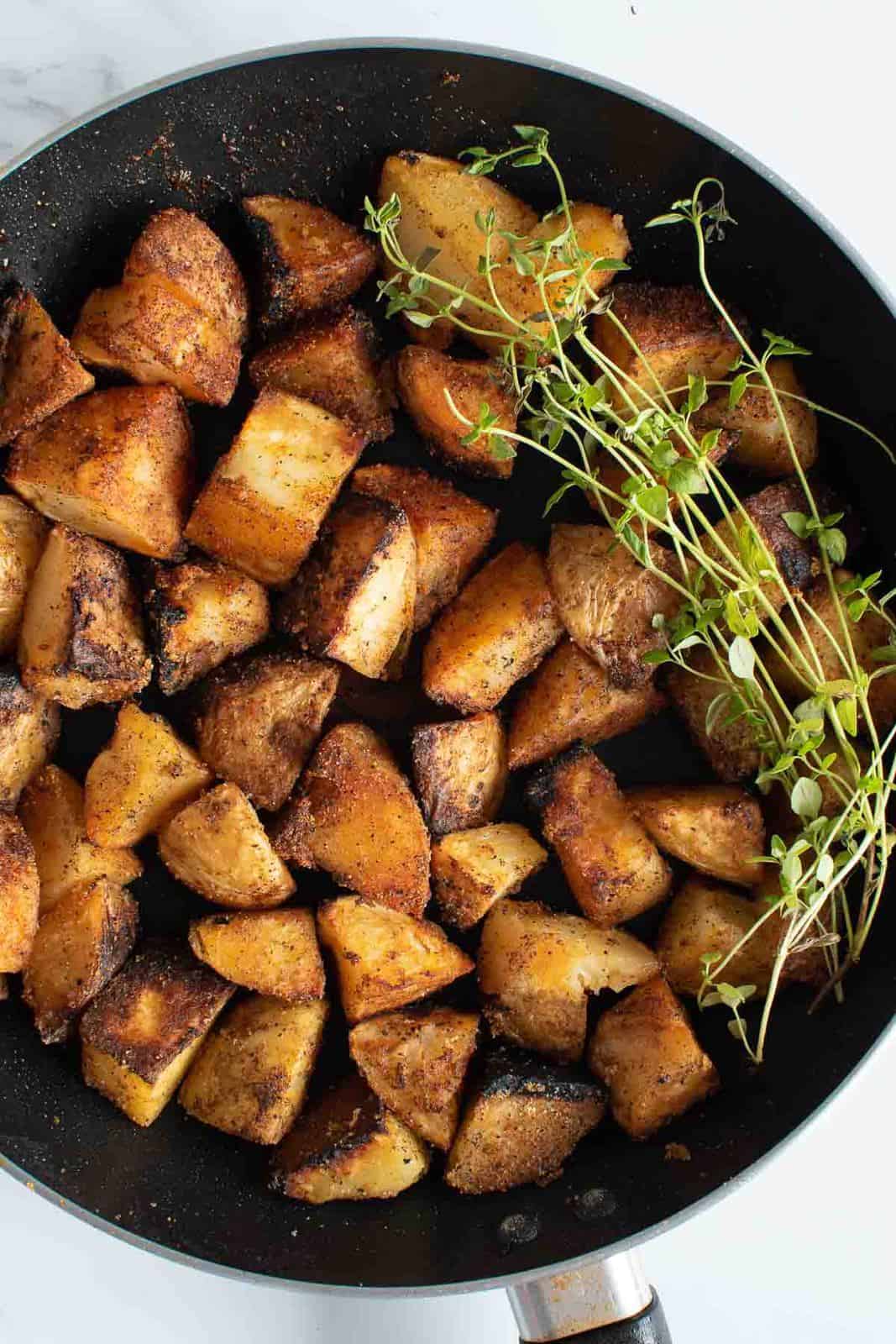
Credit: dizzybusyandhungry.com
Serving Suggestions
Pan fried potatoes are a tasty and easy side dish. You can serve them with many dips and other foods. This makes your meal more exciting.
Here are some ideas to pair your pan fried potatoes with sauces and sides. These will help you enjoy them even more.
Pairing With Dips And Sauces
Dips and sauces add flavor and moisture to pan fried potatoes. Try these popular choices to make your potatoes tastier.
- Garlic aioli for a creamy, garlicky taste
- Sour cream with chives for a cool, fresh flavor
- Spicy ketchup to add a little heat
- Cheese sauce for a rich and smooth option
- Herb yogurt dip with dill and parsley
Complementary Side Dishes
Pan fried potatoes work well with many side dishes. Choose veggies and proteins that balance the meal.
| Side Dish | Description | Why It Works |
| Grilled chicken | Light and juicy meat | Adds protein and mild flavor |
| Steamed broccoli | Fresh and crunchy vegetable | Provides color and nutrients |
| Mixed green salad | Leafy greens with vinaigrette | Offers freshness and acidity |
| Roasted bell peppers | Sweet and tender peppers | Gives sweetness and texture |
| Baked beans | Rich and savory legume dish | Adds heartiness and depth |
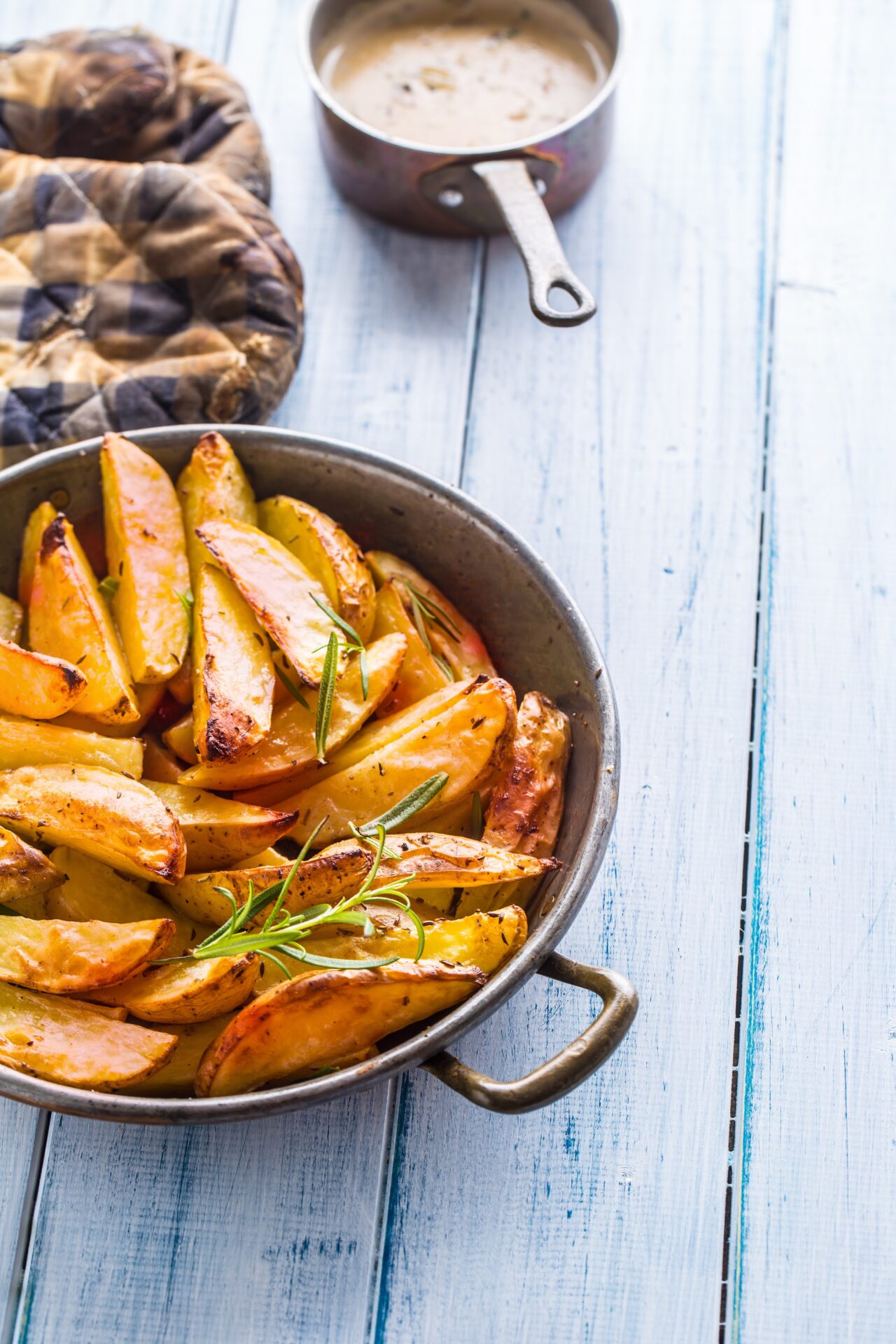
Credit: www.vittoriagiachi.com
Frequently Asked Questions
How Do You Prepare Potatoes For Frying?
To prepare potatoes for frying, wash and peel them first. Then, slice them evenly to ensure uniform cooking. Soak the slices in cold water for 30 minutes to remove excess starch. Drain and pat them dry with a towel before frying.
This helps achieve crispy, golden-brown potatoes.
What Type Of Potatoes Is Best For Frying?
Russet potatoes are ideal for frying due to their high starch content. They become crispy on the outside and fluffy inside. Yukon Gold potatoes are also a good option. They offer a creamy texture and hold their shape well when fried.
Both types enhance the dish’s flavor and texture.
How Long Should You Fry Potatoes?
Fry potatoes for about 10 to 15 minutes. Ensure the oil temperature is around 350°F (175°C). Stir occasionally to cook them evenly. Fry until they’re golden brown and crispy. Remove them with a slotted spoon and drain on paper towels.
This ensures they remain crispy and delicious.
Why Soak Potatoes Before Frying?
Soaking potatoes before frying removes excess starch. This helps achieve a crispier texture when fried. It also prevents them from sticking together. Soak them in cold water for at least 30 minutes. This step enhances the overall quality of your pan-fried potatoes.
Conclusion
Pan frying potatoes brings out great taste and texture. Use enough oil to get a crispy outside. Keep the heat medium to cook potatoes evenly. Stir often to avoid burning and stickiness. Try different seasonings for varied flavors. Serve hot for the best experience.
This simple method fits many meals and snacks. Enjoy homemade, tasty potatoes anytime with ease.