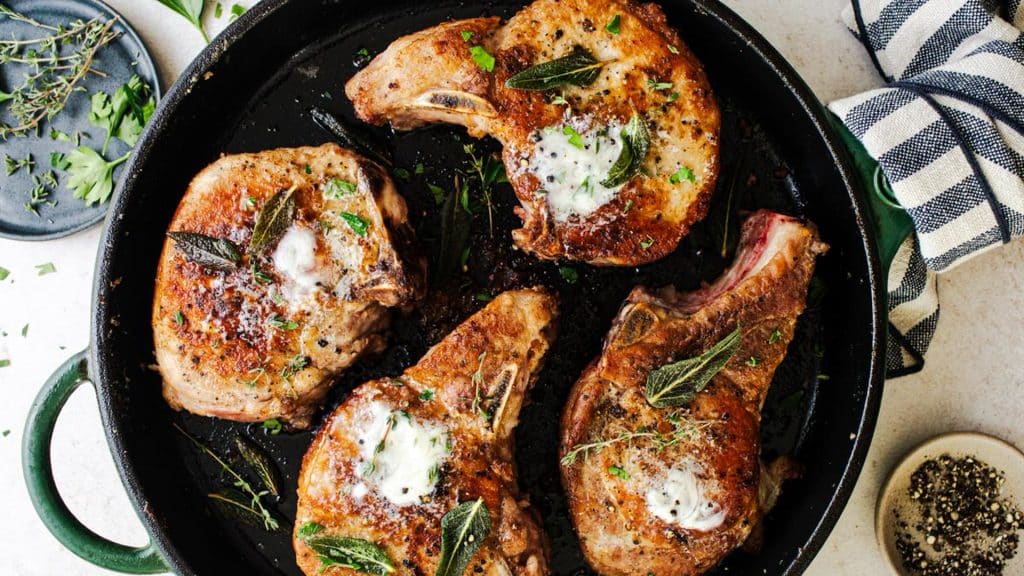
Are you ready to elevate your dinner game with a dish that’s both simple and satisfying? Learning how to pan fry pork chops can transform your usual mealtime routine into something truly special.
Imagine the sizzle of the pan, the enticing aroma filling your kitchen, and the juicy, flavorful bite that awaits. Whether you’re a seasoned cook or a beginner in the kitchen, mastering this technique can make you the star of your own culinary show.
Stick with me, and you’ll discover the secrets to achieving perfectly crispy, succulent pork chops every time. Let’s dive into this delicious endeavor and unlock a meal that’s sure to impress both you and your guests.

Credit: herbsandflour.com
Choosing The Right Pork Chops
Picking the right pork chops is important for tasty pan frying. Different pork chops cook differently and taste unique. Knowing which to choose helps you get better results.
This guide covers key points about bone-in vs boneless, thickness, and freshness. Each factor changes the cooking time and flavor.
Bone-in Vs Boneless
Bone-in pork chops keep more flavor and stay juicy during cooking. The bone helps heat spread evenly. Boneless chops cook faster and are easier to eat.
- Bone-in chops give richer taste.
- Boneless chops cook quickly.
- Bone-in chops need more careful cooking time.
- Boneless chops are good for quick meals.
Thickness Matters
| Thickness | Cooking Time | Best Use |
| 1/2 inch | Short (2-3 mins each side) | Quick meals, thin crust |
| 3/4 inch | Medium (4-5 mins each side) | Balanced flavor and texture |
| 1 inch or more | Longer (6-7 mins each side) | Juicy inside, perfect sear |
Thicker chops stay moist and cook evenly. Thin chops can dry out fast. Adjust your pan frying time based on thickness.
Freshness And Quality
Fresh pork chops taste better and are safer to eat. Look for these signs when choosing pork chops:
- Color should be pink with white fat edges.
- Meat should feel firm, not slimy.
- Check the sell-by date on packaging.
- Buy from trusted sources for best quality.

Credit: www.theseasonedmom.com
Preparing Pork Chops For Frying
Pan frying pork chops is a quick way to cook a tasty meal. Proper preparation makes the pork chops juicy and flavorful.
Getting the pork chops ready before frying helps you get the best results every time.
Seasoning Essentials
Seasoning adds flavor to pork chops. Use salt and pepper for a simple taste.
Try adding garlic powder, paprika, or dried herbs for extra flavor.
- Salt enhances the natural taste
- Pepper adds a slight heat
- Garlic powder gives a savory note
- Paprika adds color and mild spice
- Dried herbs like thyme or rosemary add aroma
Marinating Tips
Marinating pork chops makes them tender and juicy. Use a mix of oil, acid, and spices.
Marinate for at least 30 minutes. Avoid marinating longer than 4 hours to keep texture.
- Use olive oil or vegetable oil
- Add lemon juice or vinegar for acidity
- Include herbs like thyme or oregano
- Add salt and pepper for taste
- Keep pork covered in the fridge while marinating
Bringing To Room Temperature
Let pork chops sit at room temperature before frying. This helps them cook evenly.
Remove pork chops from the fridge 20 to 30 minutes before cooking. Do not leave them out too long.
- Take pork chops out of the fridge
- Place on a plate or cutting board
- Wait 20 to 30 minutes before cooking
- This prevents cold centers and uneven cooking
Selecting The Best Pan And Oil
Pan frying pork chops needs the right pan and oil. These choices affect taste and cooking results.
Using a good pan and oil helps cook pork chops evenly and keeps them juicy.
Cast Iron Vs Non-stick
Cast iron pans hold heat well and give a nice crust on pork chops. They also last long.
Non-stick pans need less oil and clean up quickly. They cook gently but may not brown meat as well.
- Cast iron heats evenly and keeps temperature steady
- Non-stick pans prevent food from sticking easily
- Cast iron pans require seasoning and care
- Non-stick pans can scratch and wear out faster
Oil Types For Frying
Choose an oil with a high smoke point to avoid burning. This keeps pork chops tasting good.
Oils with neutral flavor let the pork taste shine. Some oils add extra flavor to the dish.
- Canola oil – high smoke point, neutral taste
- Vegetable oil – affordable and good for frying
- Peanut oil – high smoke point, mild flavor
- Olive oil – use light or refined types for frying
- Butter – adds flavor but burns faster, mix with oil
Preheating The Pan
Preheat the pan before adding oil or pork chops. This helps cook meat evenly and prevents sticking.
Wait until the pan is hot but not smoking. Add oil and let it heat before putting pork chops in.
- Heat pan on medium heat for a few minutes
- Test heat by dropping a small oil drop to see if it sizzles
- Add pork chops only when oil moves smoothly in the pan
- A hot pan helps seal juices inside the meat
Pan Frying Techniques
Pan frying pork chops is a simple way to cook juicy meat. Using the right techniques helps you get a tasty crust and tender inside.
Focus on heat, cooking time, and space in the pan. These tips make your pork chops cook evenly and stay juicy.
Optimal Heat Levels
Use medium to medium-high heat for pan frying pork chops. This heat level cooks the meat well without burning the outside.
Too high heat burns the crust before the inside cooks. Too low heat makes the pork chops dry and pale.
- Start with medium-high heat to sear the chops.
- Lower to medium heat to finish cooking.
- Use an oil with a high smoke point, like canola or vegetable oil.
Cooking Time Per Side
Cook pork chops about 3 to 5 minutes on each side. Thicker chops need more time. Thinner chops need less time.
Watch the color. The outside should be golden brown. The inside should reach 145°F (63°C) to be safe to eat.
- 3 minutes per side for thin chops (about 1/2 inch thick)
- 4 to 5 minutes per side for thick chops (about 1 inch thick)
- Use a meat thermometer to check doneness
Avoiding Overcrowding
Do not put too many pork chops in the pan at once. Overcrowding lowers the pan’s temperature and causes steaming.
Cook in batches if needed. Leave space between chops so heat flows around the meat. This helps get a crispy crust.
- Cook 2 to 3 chops at a time, depending on pan size
- Leave about 1 inch of space between each chop
- Use a large pan to prevent crowding
Achieving Crispy And Juicy Results
Pan frying pork chops gives a tasty crust and keeps the inside juicy. Using the right techniques helps you cook pork chops just right. This guide shows how to get crispy, juicy pork chops every time.
Creating A Perfect Crust
Start with dry pork chops. Pat them with paper towels to remove moisture. This helps the crust form better when frying. Season both sides with salt and pepper for flavor.
- Use a hot pan before adding oil or fat
- Choose oils with high smoke points like canola or vegetable oil
- Press the pork chop gently to ensure even contact with the pan
- Do not move the chop too soon to let the crust form
Retaining Moisture
Cook pork chops at medium heat. This cooks them through without drying out. Avoid overcooking by using a meat thermometer. The internal temperature should reach 145°F (63°C).
| Internal Temperature | Doneness |
|---|---|
| 145°F (63°C) | Safe, juicy pork chop |
| 160°F (71°C) | Fully cooked, less juicy |
Using Butter And Aromatics
Adding butter and aromatics enhances flavor and texture. Butter adds richness and helps brown the pork chops. Aromatics like garlic, thyme, and rosemary add fresh scents.
Try this simple method while pan frying:
- After flipping the pork chop, add butter to the pan.
- Add crushed garlic cloves and fresh herbs.
- Spoon the melted butter over the pork chop repeatedly.
- Cook for 2-3 minutes to absorb flavors and brown the meat.
Checking Doneness
Checking if pork chops are cooked just right is important for safety and taste. You want the pork to be juicy, not dry or raw inside.
Two simple ways to check doneness are using a meat thermometer and observing visual and touch signs.
Using A Meat Thermometer
A meat thermometer is the most accurate way to check pork chop doneness. Insert it into the thickest part of the chop without touching bone.
| Doneness Level | Internal Temperature | Description |
| Safe to Eat | 145°F (63°C) | Juicy with slight pink center |
| Well Done | 160°F (71°C) | No pink, fully cooked through |
After reaching 145°F, let the pork rest for 3 minutes. The temperature will stay steady or rise slightly.
Visual And Touch Cues
If you don’t have a thermometer, look for these signs to know if pork chops are done.
- Color: Cooked pork chops have a light pink or white center.
- Juices: Clear juices mean the pork is done. Pink juices show it needs more cooking.
- Touch: Press the chop with your finger. It should feel firm but still springy.
- Texture: The meat should not be soft or mushy inside.
Resting And Serving
After pan frying pork chops, resting and serving are key steps. They help keep the meat juicy and tasty.
Taking time to rest the pork chops lets the juices settle. Serving them right adds to a great meal experience.
Resting Time Importance
Resting pork chops after cooking helps the juices stay inside. This makes the meat tender and moist.
Cutting too soon lets the juices escape. Rest for about 5 minutes on a warm plate before serving.
- Rest on a warm plate or cutting board
- Cover loosely with foil to keep warm
- Wait at least 5 minutes before cutting
Serving Suggestions
Serve pan fried pork chops with simple sides that match their flavor. Fresh vegetables and starches work well.
- Steamed green beans or roasted broccoli
- Mashed potatoes or rice pilaf
- Apple sauce or a light gravy
- Fresh salad with a light dressing
Slice the pork chops against the grain for tender bites. Serve immediately after resting for best taste.

Credit: www.saltandsprinkles.com
Troubleshooting Common Issues
Pan frying pork chops is quick and tasty. Sometimes, problems can happen while cooking. Knowing how to fix them helps you get better results.
This guide covers common problems like dry chops, uneven cooking, and sticking to the pan.
Dry Or Overcooked Chops
Dry or overcooked pork chops happen if you cook them too long or at too high heat. Pork chops need just the right time to stay juicy.
Using a meat thermometer helps. Cook pork chops until they reach 145°F (63°C) inside. Let them rest before cutting.
- Use medium heat to avoid burning.
- Check thickness and adjust cooking time.
- Rest chops for 3-5 minutes after cooking.
Uneven Cooking
Uneven cooking happens when pork chops have different thickness or the pan heat is not even. Some parts cook faster than others.
Flatten thick spots gently with a meat mallet. Use a pan that heats evenly and avoid crowding the pan.
- Choose pork chops of similar thickness.
- Preheat the pan well before cooking.
- Turn chops regularly for even browning.
Sticking To The Pan
Pork chops stick when the pan is not hot enough or lacks oil. Sticking can tear the meat and ruin the crust.
Heat the pan until it is hot before adding oil. Use enough oil to coat the surface. Avoid moving the chops too soon.
- Use a non-stick or well-seasoned pan.
- Heat pan on medium-high before cooking.
- Apply enough oil or fat in the pan.
- Let chops sear before flipping them.
Frequently Asked Questions
How Long To Pan Fry Pork Chops?
Pan fry pork chops for about 4-5 minutes per side. Cook until the internal temperature reaches 145°F (63°C). Rest for 3 minutes before serving to retain juices and ensure tenderness.
What Oil Is Best For Pan Frying Pork Chops?
Use oils with a high smoke point like canola, vegetable, or avocado oil. These oils prevent burning and create a crispy, golden crust on pork chops.
Should Pork Chops Be Seasoned Before Pan Frying?
Yes, season pork chops with salt, pepper, and your favorite spices before cooking. Proper seasoning enhances flavor and creates a delicious crust during frying.
How To Prevent Pork Chops From Drying Out?
Avoid overcooking and use medium heat to pan fry. Rest chops after cooking to lock in moisture and keep them juicy and tender.
Conclusion
Pan frying pork chops brings out great flavor and keeps them juicy. Use the right heat and cooking time for best results. Don’t forget to season well before cooking. Let the meat rest a few minutes after frying. This helps keep the juices inside.
Serve with your favorite sides for a tasty meal. Try this simple method to enjoy pork chops anytime. Easy, quick, and delicious.