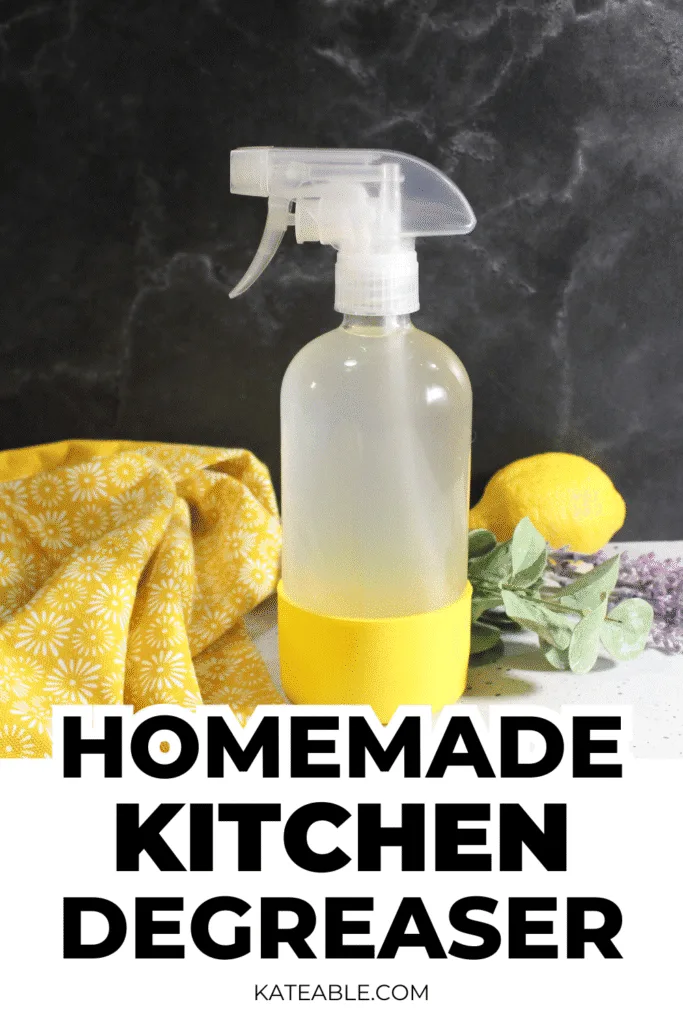
Imagine walking into your kitchen and being greeted by the fresh, invigorating scent of cleanliness. You can achieve this with a homemade kitchen cleaning spray that’s not only effective but also safe for your family and the environment.
Say goodbye to harsh chemicals and costly store-bought cleaners. With just a few simple ingredients, you can create a powerful cleaning solution that tackles grime and leaves your kitchen sparkling. Ready to transform your cleaning routine? Let’s dive into the easy steps to make your own kitchen cleaning spray, ensuring your kitchen stays spotless and inviting.
Benefits Of Homemade Kitchen Spray
Making your own kitchen cleaning spray is simple and useful. It helps you avoid harsh chemicals found in many store products.
Using homemade sprays lets you control the ingredients and save money. Here are some key benefits.
Cost Savings
Homemade kitchen sprays cost less than store-bought cleaners. You only need a few basic ingredients.
- Vinegar and water are cheap and easy to find
- Essential oils last a long time and a few drops go a long way
- You can make a large batch and refill bottles as needed
Natural Ingredients
Homemade sprays use natural ingredients that are safe for your family and pets. They avoid synthetic chemicals.
| Ingredient | Benefit |
| White vinegar | Kills bacteria and removes grease |
| Baking soda | Acts as a gentle scrub and deodorizer |
| Essential oils | Add natural antibacterial properties and scent |
Customizable Scents
You can choose your favorite scents using essential oils. This makes cleaning more pleasant.
Popular essential oils for kitchen sprays:
- Lemon: fresh and clean smell
- Tea tree: natural antibacterial scent
- Lavender: calm and soothing aroma
Essential Ingredients Needed
Making your own kitchen cleaning spray is easy and safe. You only need a few simple ingredients. Each ingredient helps clean and freshen your kitchen surfaces.
Below are the main ingredients you will need to prepare your homemade kitchen spray.
Vinegar
Vinegar is a natural cleaner that cuts grease and removes stains. It also helps kill some bacteria on surfaces.
Baking Soda
Baking soda is a gentle abrasive. It helps scrub away dirt without scratching surfaces. It also neutralizes odors in your kitchen.
- Use baking soda to remove tough spots
- Mix it with water for a paste cleaner
- Combine with vinegar for fizzing action
Essential Oils
Essential oils add a fresh scent and extra cleaning power. Some oils can kill germs and repel insects naturally.
| Essential Oil | Benefit |
| Tea Tree | Antibacterial and antifungal |
| Lemon | Grease cutter and fresh scent |
| Lavender | Calming scent and antibacterial |
| Peppermint | Insect repellent and fresh smell |
Water
Water dilutes the ingredients and helps spread the cleaner evenly. Use clean, room temperature water for best results.
Step-by-step Recipe
Making your own kitchen cleaning spray is simple and safe. You can use natural ingredients found at home.
This guide shows you how to mix ingredients and prepare your spray for daily use.
Mixing Ingredients
Start by gathering all ingredients on a clean surface. Use fresh lemon juice, white vinegar, water, and a few drops of essential oil.
Mix the ingredients in this order to get the best cleaning power.
- 1 cup white vinegar
- 1 cup water
- 2 tablespoons fresh lemon juice
- 10 drops of lemon or tea tree essential oil (optional)
Pour all items into a bowl and stir well. Avoid mixing vinegar with baking soda at this stage.
Choosing The Right Container
Select a spray bottle that is clean and easy to use. Glass bottles are best for natural sprays.
Plastic bottles work too, but make sure they are BPA-free and food safe. Avoid metal containers as vinegar may corrode them.
- Use a 16-ounce spray bottle
- Choose a bottle with a fine mist sprayer
- Check that the bottle is clean and dry
- Label the bottle clearly
Labeling Your Spray
Label the spray bottle with the name and date made. This helps you track freshness.
Use waterproof labels or tape to keep the label readable. Write clearly with a permanent marker.
- Write “Kitchen Cleaning Spray”
- Add the date you made the spray
- Include safety notes if needed
- Keep the label simple and clear
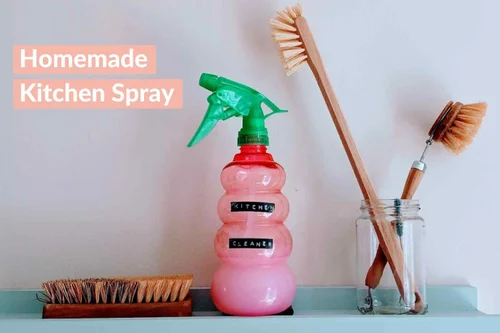
Credit: www.sustainablylazy.com
Tips For Effective Cleaning
Making your own kitchen cleaning spray is easy and helps keep your kitchen fresh. Using it correctly will give you the best results.
Follow simple tips to clean well and protect your surfaces from damage.
Best Surfaces To Use On
Homemade kitchen sprays work well on many surfaces. They clean without harsh chemicals.
- Countertops made of granite, quartz, or laminate
- Stainless steel appliances
- Glass surfaces like windows and tabletops
- Ceramic tiles and backsplashes
- Plastic and vinyl surfaces
Always test a small area first to make sure the spray does not cause any problems.
Avoiding Damage
Some surfaces need care to avoid damage from cleaning sprays. Avoid using on natural wood or unsealed surfaces.
- Do not use on marble or stone with acid ingredients
- Avoid sprays with vinegar on waxed or oiled wood
- Do not leave spray on surfaces for long periods
- Wipe off quickly with a soft cloth
- Keep spray away from electronics and electrical outlets
Use gentle motions and soft cloths to protect your kitchen items while cleaning.
Storage And Shelf Life
Store your homemade kitchen spray in a cool, dark place. This helps keep it fresh and safe to use.
- Use a spray bottle with a tight lid
- Keep away from direct sunlight and heat
- Label your bottle with the date you made it
- Use within 1 to 2 weeks for best results
- If it smells off or changes color, make a new batch
Proper storage helps keep your spray effective and safe for cleaning your kitchen surfaces.
Safety Precautions
Making your own kitchen cleaning spray is simple and useful. Safety is very important when handling ingredients.
Follow safety rules to protect yourself and others while making and using the spray.
Handling Vinegar
Vinegar is a key ingredient in many cleaning sprays. It is acidic and can irritate skin or eyes.
Always pour vinegar slowly and avoid splashes. Use gloves to protect your hands.
- Use vinegar in a well-ventilated area
- Wear gloves to avoid skin contact
- Keep vinegar away from eyes
- Do not mix vinegar with bleach or ammonia
Allergy Considerations
Some people may be allergic to ingredients in the spray. Test a small amount on your skin first.
If you feel irritation or rash, stop using the spray and wash the area with water.
- Check ingredient labels before use
- Do a patch test on your skin
- Stop use if irritation appears
- Keep the spray away from sensitive skin
Keeping Away From Children
Keep homemade cleaning sprays out of children’s reach. These sprays can be harmful if swallowed or touched.
Store the spray in a locked cabinet or high shelf to prevent accidents.
- Use child-proof containers
- Label spray bottles clearly
- Store sprays away from food and toys
- Teach children not to touch cleaning products
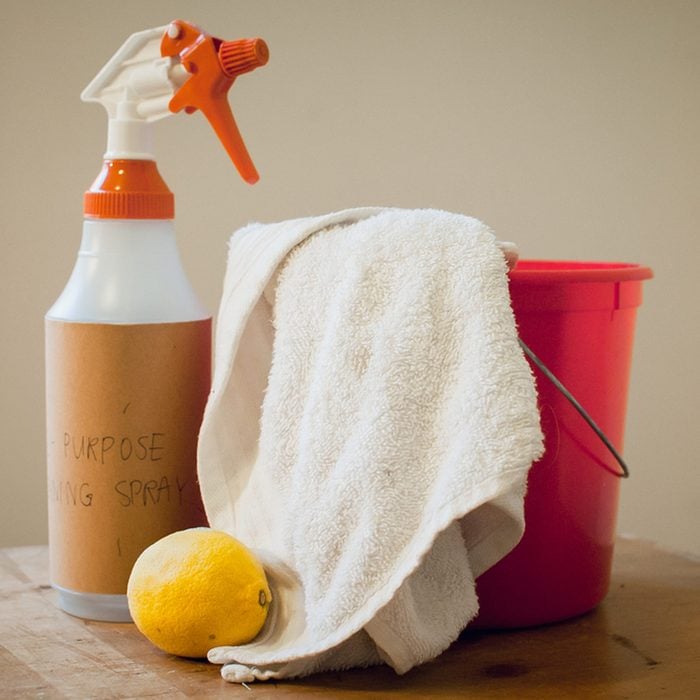
Credit: www.familyhandyman.com
Enhancing Your Spray
Making your own kitchen cleaning spray is easy and fun. You can add ingredients to improve its power and smell. These changes help clean better and make your kitchen fresh.
This guide shows simple ways to add antibacterial ingredients, boost fragrance, and make your spray eco-friendly.
Adding Antibacterial Ingredients
Adding antibacterial ingredients helps kill germs on kitchen surfaces. Natural items work well and are safe to use.
- White vinegar cleans and kills many bacteria.
- Tea tree oil is a strong natural antibacterial.
- Lemon juice adds acidity that fights germs.
- Hydrogen peroxide can disinfect surfaces.
Boosting Fragrance
A nice smell makes cleaning more pleasant. You can add essential oils or fresh herbs to your spray.
| Ingredient | Fragrance Type |
| Lavender oil | Floral and calming |
| Orange peel | Citrus and fresh |
| Peppermint oil | Minty and cool |
| Rosemary sprigs | Herbal and woodsy |
Making It More Eco-friendly
Use safe and natural ingredients to protect the environment. Avoid harsh chemicals and single-use plastics.
Tips for eco-friendly spray:
- Use a reusable glass spray bottle.
- Choose biodegradable soaps.
- Pick organic essential oils.
- Recycle or compost leftover ingredients.

Credit: wellnessmama.com
Frequently Asked Questions
What Ingredients Are Needed For Kitchen Cleaning Spray?
You need water, white vinegar, rubbing alcohol, and essential oils. These ingredients disinfect, cut grease, and leave a fresh scent. They are safe, natural, and effective for everyday kitchen cleaning tasks.
How Do I Make An Effective Kitchen Cleaning Spray?
Mix equal parts water and white vinegar. Add a quarter cup of rubbing alcohol for disinfecting power. Include 10-15 drops of essential oils to improve scent and cleaning strength. Shake well before each use for the best results.
Can Homemade Kitchen Spray Kill Bacteria And Germs?
Yes, vinegar and rubbing alcohol in the spray have antibacterial properties. They effectively kill many common kitchen germs and bacteria. This makes homemade spray a safe, natural alternative to chemical cleaners.
Is Homemade Kitchen Spray Safe For All Surfaces?
It is safe for most kitchen surfaces like countertops, appliances, and tiles. Avoid using it on natural stone surfaces like granite or marble, as vinegar can damage them. Always test on a small area before full use.
Conclusion
Making your own kitchen cleaning spray saves money and helps the environment. You control what goes into the spray, avoiding harsh chemicals. It cleans well and smells fresh. Use simple ingredients found at home. Spray and wipe for a quick clean.
Keep your kitchen safe and tidy every day. Try this easy recipe and see the difference. Clean smart, clean safe.