Have you ever pulled out your favorite baking pan, only to cringe at the sight of stubborn stains and baked-on grime? You’re not alone.
Over time, even the most cherished baking tools can lose their luster, making them less appealing and sometimes even less effective. But don’t worry; there’s good news! You don’t need to toss out your beloved pans or hide them at the back of your cupboard.
With a few simple tricks, you can restore them to their former glory, making them look brand new. Intrigued? Keep reading to discover how to revive your baking pans and bring that satisfying sparkle back into your kitchen. You’ll be amazed at how easy—and rewarding—it can be!

Credit: food52.com
Common Causes Of Pan Discoloration
Baking pans can lose their shine and look old quickly. Discoloration is a common problem many face. Understanding what causes this can help you clean your pans better.
Several factors cause pans to change color. These include burnt residue, grease build-up, and rust. Each one affects your pans in different ways.
Burnt Residue And Stains
Burnt food and stains stick to the pan’s surface after baking. This residue is hard to remove and darkens the pan. It happens when food is overcooked or spills over the pan’s edge.
- Overheating the pan causes burning
- Leaving food on the pan for too long
- Not cleaning pans immediately after use
Grease Build-up
Grease and oil can build up on baking pans. This layer attracts dirt and changes the pan’s color. It also makes the surface sticky and hard to wash.
| Cause | Effect on Pan |
| Repeated use without deep cleaning | Sticky, darkened surface |
| Using too much oil or butter | Greasy, dull appearance |
| Not removing grease after baking | Layered build-up that traps dirt |
Rust And Corrosion
Rust forms when pans are exposed to water and air for a long time. Corrosion damages the metal and causes reddish or brown spots. It weakens the pan and can ruin your baking.
- Leaving pans wet after washing
- Storing pans in damp places
- Using harsh cleaners that damage the surface

Credit: food52.com
Essential Cleaning Tools
Making baking pans look new again starts with the right cleaning tools. These tools help remove baked-on residue and stains safely.
Using effective scrubbers, natural agents, and specialty cleaners can restore your pans’ shine. Each type has a purpose in the cleaning process.
Scrubbers And Sponges
Scrubbers and sponges help remove stuck food and grease. Soft sponges avoid scratching non-stick surfaces. Stiff scrubbers work well on metal pans.
- Non-abrasive sponges for gentle cleaning
- Steel wool pads for tough burnt spots
- Silicone scrubbers that resist odors
- Brushes with firm bristles for corners
Natural Cleaning Agents
Natural agents clean baking pans without harsh chemicals. They are safe and eco-friendly. Common natural cleaners include:
| Agent | Use |
| Baking Soda | Scrubs and deodorizes pans |
| White Vinegar | Breaks down grease and stains |
| Lemon Juice | Brightens and removes rust |
| Salt | Acts as a gentle abrasive |
Specialty Cleaners
Specialty cleaners target tough stains and restore shine. Use them carefully and follow instructions. Some popular options are:
- Oven cleaner sprays for baked-on grease
- Bar Keepers Friend powder for metal pans
- Non-toxic ceramic cleaner for coated pans
- Heavy-duty degreasers for industrial use
Simple Home Remedies
Baking pans can get stained and lose their shine after many uses. Simple home remedies can help make them look new again.
These methods use common ingredients you likely have in your kitchen. They are safe and easy to try at home.
Baking Soda And Vinegar Method
This method uses baking soda and vinegar to remove tough stains and grime from baking pans. It helps lift burnt bits and restore shine.
- Sprinkle baking soda all over the pan’s surface.
- Pour vinegar slowly over the baking soda. It will fizz.
- Let the mixture sit for 15 minutes to work on stains.
- Scrub the pan gently with a soft sponge or cloth.
- Rinse the pan with warm water and dry it well.
Lemon And Salt Scrub
Lemon juice and salt make a natural scrub that cleans and brightens pans. The lemon’s acid breaks down stains, while salt acts as a scrub.
| Ingredient | Purpose |
| Lemon Juice | Breaks down stains and grease |
| Salt | Acts as a gentle abrasive scrub |
| Warm Water | Helps rinse and clean the pan |
To use, sprinkle salt on the pan, rub with half a lemon, then rinse with warm water.
Dish Soap Soak
Soaking pans in dish soap and warm water loosens baked-on food and grease. It makes cleaning easier without scrubbing hard.
Follow these steps to soak your baking pan:
- Fill the pan with warm water.
- Add a few drops of dish soap.
- Let it soak for 30 minutes or longer.
- Use a sponge to wipe away loosened grime.
- Rinse well and dry the pan completely.
Deep Cleaning Techniques
Baking pans often get stuck with grease and baked-on food. Deep cleaning helps bring back their shine. Using simple home items, you can clean them well.
These techniques remove tough stains and make your pans look almost new. They are easy to do and safe for most pans.
Boiling Water And Baking Soda
Boiling water and baking soda work well to loosen stuck food. Baking soda helps break down grease and grime.
Pour baking soda into the pan. Add boiling water to cover the bottom. Let it sit for 15-20 minutes, then scrub gently with a sponge.
- Use 2-3 tablespoons of baking soda
- Add enough boiling water to cover stains
- Let soak before scrubbing
- Rinse with warm water
Using Aluminum Foil Scrubber
Aluminum foil can be a strong scrubber for tough spots. It is rough enough to remove burnt food but won’t scratch metal pans.
Crumple a piece of foil into a ball. Use it to scrub the pan gently. Focus on areas with burnt or stuck-on food.
- Use clean, dry foil
- Do not scrub too hard to avoid dents
- Combine with baking soda for better results
- Rinse pans well after scrubbing
Oven Cleaning Cycle Trick
You can use your oven’s cleaning cycle to clean pans. This works best for metal pans without plastic parts.
Place the pan in the oven. Run the self-cleaning cycle. The high heat burns off food and grease, leaving the pan clean.
- Check pan material before use
- Remove any plastic or wooden parts
- Use oven mitts to handle hot pans
- Wipe ash residue after cycle finishes
Preventing Future Damage
Baking pans can last many years if cared for properly. Preventing damage helps keep them looking new.
Simple habits after baking will protect your pans and improve their performance.
Proper Cleaning After Use
Clean your pans right after baking to stop food from sticking. Use warm, soapy water and a soft sponge.
Dry pans completely to avoid rust or stains. Never soak pans too long as this can damage them.
- Use mild dish soap
- Clean while pans are warm, not hot
- Dry with a soft cloth or air dry
Avoiding Abrasive Tools
Never scrub baking pans with steel wool or rough brushes. These tools scratch the surface and cause damage.
Use soft sponges or cloths to clean. This keeps the pan’s coating safe and stops rust from forming.
- Choose non-abrasive scrubbers
- Avoid metal utensils on pans
- Use plastic or wooden tools for stuck food
Storage Tips
Store baking pans in a dry place to stop moisture buildup. Moisture can cause rust or damage coatings.
Stack pans carefully with soft cloth or paper towels between them. This prevents scratches and dents.
- Keep pans in a cool, dry cabinet
- Use cloth or paper between stacked pans
- Store pans flat or hang if possible
When To Replace Your Baking Pans
Good baking pans last a long time but not forever. Knowing when to replace them keeps baking safe and easy.
Old or damaged pans can affect how your food cooks and may even be unsafe. Watch for signs that your pans need replacing.
Signs Of Irreparable Damage
Look closely at your baking pans for damage you cannot fix. Some signs mean the pan should no longer be used.
- Deep scratches that expose the metal underneath
- Warped or bent shapes that cause uneven cooking
- Rust spots that spread or do not clean off
- Non-stick coating peeling or flaking away
- Burn marks that cannot be cleaned
Safety Considerations
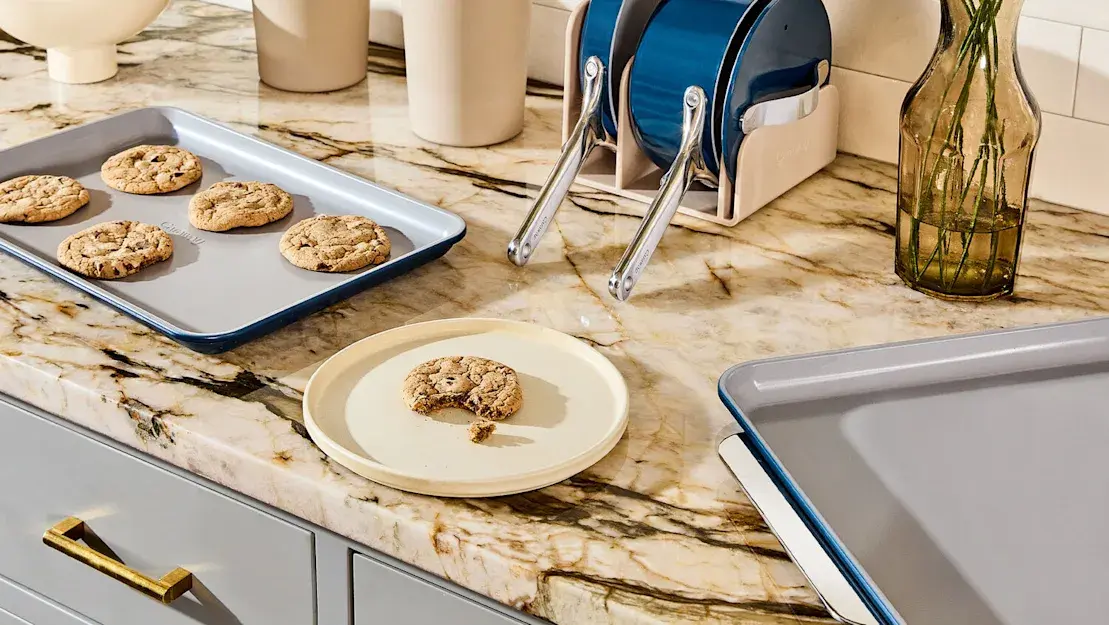
Old or damaged baking pans can release harmful substances or cause burns. Use safe pans to protect yourself.
| Safety Issue | Why It Matters |
| Peeling Non-Stick Coating | Can mix with food and cause health risks |
| Rust | May contaminate food and weaken pan |
| Warped Pans | Lead to uneven cooking and possible burns |
| Loose Handles | Increase risk of dropping hot pans |
Credit: www.carawayhome.com
Frequently Asked Questions
How Do I Remove Baked-on Grease From Pans?
Soak the pan in hot, soapy water for 15 minutes. Use a non-abrasive scrubber to gently remove grease. For stubborn spots, sprinkle baking soda and scrub again. Rinse well and dry to restore shine.
What Natural Cleaner Works Best For Old Baking Pans?
A paste of baking soda and water is effective. Apply it on the pan, let sit for 20 minutes, then scrub. This method removes stains without harsh chemicals, making pans look newer and cleaner.
Can Vinegar Restore Shine To Dull Baking Pans?
Yes, white vinegar dissolves mineral deposits and stains. Soak the pan in equal parts vinegar and water for 30 minutes. Rinse thoroughly and dry to bring back the pan’s original shine.
How Often Should I Clean Baking Pans To Keep Them New?
Clean pans immediately after use to prevent buildup. Regular cleaning avoids tough stains and extends pan life. Dry thoroughly to prevent rust and maintain their new appearance.
Conclusion
Baking pans can look new with simple cleaning steps. Use household items like baking soda and vinegar. Scrub gently to remove stains and grease. Dry pans well to prevent rust and damage. Regular care keeps them shiny and ready to use.
Save money by renewing old pans instead of buying new ones. Try these easy tips and enjoy baking with fresh pans again. A little effort makes a big difference in your kitchen tools. Keep your pans clean, and baking stays fun and easy.