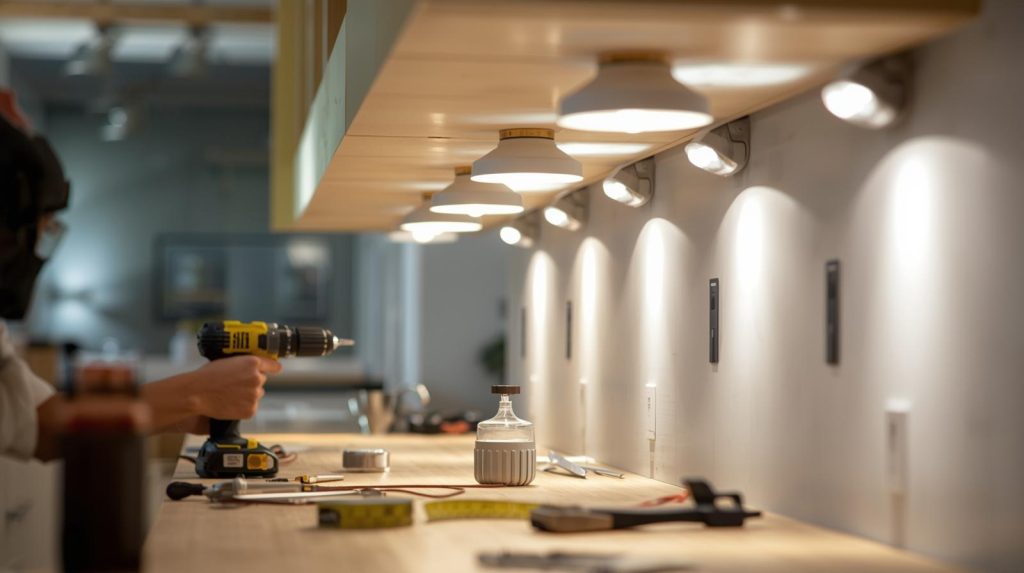
Are you ready to transform your kitchen with bright, stylish lighting? How to Install Pot Lights in Kitchen can instantly make your space look modern and inviting.
But you might be wondering, “Is it hard to install them myself?” Don’t worry—you’re closer to a stunning kitchen makeover than you think. In this guide, you’ll discover simple, step-by-step instructions that anyone can follow. By the end, you’ll have the confidence to light up your kitchen like a pro.
Keep reading, and let’s get started on making your kitchen shine!

Credit: m.youtube.com
Tools And Materials Needed
Installing pot lights in your kitchen needs the right tools and materials. This helps make the job safe and easy.
Below are the main tools and materials you will need to install pot lights properly.
Pot Light Fixtures
Choose pot light fixtures that fit your kitchen ceiling type. Make sure they are rated for kitchen use and fit the space.
- Recessed lighting housings
- Trim kits for a clean finish
- Compatible bulbs (LED recommended)
Electrical Tools
You need basic electrical tools to connect the lights safely to power. These tools help with wiring and cutting.
- Wire stripper and cutter
- Voltage tester
- Electrical tape
- Screwdrivers (flat and Phillips)
- Wire nuts
Cutting And Measuring Tools
These tools help you mark and cut holes in the ceiling for the pot lights. Accuracy is important for a clean look.
- Measuring tape
- Pencil for marking
- Drywall saw or hole saw
- Level to keep lights straight
Safety Gear
Safety gear protects you while working with electrical parts and cutting tools. Always wear protective equipment.
- Safety glasses
- Work gloves
- Dust mask
- Sturdy ladder or step stool
Additional Materials
Some extra materials make the installation easier and ensure a neat finish. Have these ready before you start.
- Electrical junction boxes
- Cable clamps
- Extension cords (if needed)
- Plastic sheeting to catch dust
Choosing The Right Pot Lights
Pot lights brighten your kitchen and make it look fresh. Picking the right ones helps you get good light and save energy.
This guide covers types of pot lights, the best size and style, and energy-saving tips.
Types Of Pot Lights
Pot lights come in many forms. The main types are remodel, new construction, and adjustable lights.
Remodel lights fit into existing ceilings. New construction lights need space above the ceiling. Adjustable lights let you change the light direction.
- Remodel Lights: Easy to install in finished ceilings.
- New Construction Lights: Installed before ceiling goes up.
- Adjustable Lights: Can tilt to highlight areas.
Selecting The Best Size And Style
Choose pot lights that fit your kitchen size and style. The size affects how much light each pot gives.
Small lights work well for task lighting. Bigger lights give more general light. The style can be simple or decorative to match your kitchen.
- 2 to 4 inches: Good for focused tasks.
- 5 to 6 inches: Best for wide, even light.
- Simple trim: Classic and clean look.
- Decorative trim: Adds style and character.
Considering Energy Efficiency
Energy-efficient pot lights save money on electricity. LED bulbs use less power and last longer than old bulbs.
Look for lights with good energy ratings. Dimmable lights let you adjust brightness and save energy too.
- Choose LED bulbs for low energy use.
- Use dimmers to control light level.
- Check Energy Star ratings for quality.
Planning Your Kitchen Lighting Layout
Good lighting makes your kitchen safe and easy to use. Pot lights offer clean, bright light that fits well in most kitchens.
Planning where to place these lights helps you avoid dark spots and glare. It also saves you from costly changes later.
Determining Light Placement
Place pot lights over work areas like counters, sinks, and stoves. This ensures you have enough light where you need it most.
Also, add lights in general areas to create even lighting. Avoid placing lights too close to walls to prevent harsh shadows.
Spacing And Number Of Fixtures
Spacing your pot lights evenly helps spread light well. Too few lights cause dark spots; too many waste energy and money.
- Measure the length and width of your kitchen ceiling.
- Divide the length by the desired space between lights (usually 4 to 6 feet).
- Do the same for the width.
- Multiply the two numbers to find the total number of fixtures needed.
- Adjust spacing to avoid placing lights too close to walls or appliances.
Avoiding Shadows And Glare
Shadows make cooking and cleaning harder. Position lights so they shine from different angles to reduce shadows.
| Tip | Effect |
|---|---|
| Place lights 12-18 inches from walls | Reduces harsh shadows on counters |
| Use dimmers with pot lights | Controls glare and brightness |
| Avoid placing lights directly over reflective surfaces | Prevents glare in eyes |
Preparing The Ceiling
Installing pot lights in your kitchen starts with preparing the ceiling. This process makes sure the lights fit well and work safely.
Careful preparation helps avoid damage and keeps your kitchen safe during installation.
Locating Joists And Electrical Wiring
Find the ceiling joists before cutting holes for pot lights. Joists provide support and affect light placement.
Also, check for electrical wiring to avoid cutting into live wires. Use a stud finder with a wire sensor for this task.
- Use a stud finder to locate joists.
- Mark joist edges lightly with a pencil.
- Scan the ceiling for electrical wires.
- Avoid cutting near wires and joists.
Marking Cutout Areas
Mark the exact spots where you will cut holes for the pot lights. This helps keep the layout even and balanced.
Use the template from your pot light package to draw circles on the ceiling. Check measurements twice before cutting.
- Measure and mark the center points for lights.
- Use a pencil and light lines for marking.
- Keep lights at least 4 to 6 feet apart.
- Double-check spacing and alignment.
Ensuring Safety Precautions
Safety is important when working with electricity and cutting ceilings. Take steps to protect yourself and your home.
Turn off power at the breaker box before starting work. Wear safety goggles and a dust mask to protect your eyes and lungs.
- Switch off power to the kitchen area.
- Wear goggles, gloves, and a dust mask.
- Use a sturdy ladder or platform.
- Keep tools and cords organized to avoid trips.
Installing The Electrical Wiring
Installing pot lights in your kitchen needs careful wiring work. Proper electrical wiring ensures safe and effective lighting.
This guide covers key steps for wiring pot lights, focusing on safety and correct connections.
Turning Off Power
Always turn off power before working on electrical wiring. This prevents accidents and electric shocks.
Find the correct circuit breaker and switch it off. Use a voltage tester to confirm power is off.
- Locate your home’s circuit breaker panel
- Identify the breaker for the kitchen area
- Switch off the breaker
- Test wires with a voltage tester
Running Wires To Fixture Locations
Plan where each pot light will go. Run electrical wires from the power source to these spots.
Use wire staples to secure cables inside walls or ceilings. Avoid sharp bends in the wires.
- Measure distances from power source to fixture spots
- Cut enough wire length for each run
- Run wires through holes in joists or studs
- Secure wires with staples every 12 inches
- Leave extra wire at each fixture for connections
Connecting To Power Source
Connect the wires from your pot lights to the kitchen’s power source. Match wire colors correctly.
Use wire nuts to join wires safely. Wrap connections with electrical tape for extra protection.
- Black wires connect to black (hot) wires
- White wires connect to white (neutral) wires
- Green or bare wires connect to ground wires
- Use wire nuts to secure connections
- Wrap connections with electrical tape
Cutting Holes And Mounting Fixtures
Installing pot lights in your kitchen starts with cutting precise holes. Then, you need to mount the fixtures securely. This guide covers the key steps to do both safely and correctly.
Using the right tools and methods helps you avoid damage. It also ensures the lights stay in place for years.
Using The Right Tools For Cutting
Choose tools designed for cutting drywall and ceiling materials. A clean cut prevents cracks and uneven edges. Common tools include hole saws and drywall saws.
- Hole saw attached to a drill for round cuts
- Drywall saw for manual control in tight spots
- Measuring tape to mark exact hole locations
- Pencil or marker for clear cutting lines
Installing Mounting Brackets
Mounting brackets hold the pot lights firmly to the ceiling. Fix them inside the holes before wiring the lights. Use screws and brackets made for your fixture type.
| Bracket Type | Use | Material |
|---|---|---|
| Adjustable Bar | Between joists | Metal |
| Spring Clips | Drywall ceilings | Steel |
| Fixed Bracket | Direct ceiling mount | Plastic/metal |
Securing Pot Lights In Place
After mounting brackets are installed, place the pot lights inside the holes. Make sure they fit snugly. Tighten any screws or clips to keep the lights from moving.
- Insert the light housing into the hole
- Use screws or clips to lock it in place
- Check that the fixture is flush with the ceiling
- Ensure no gaps or loose parts remain
Wiring And Connecting Pot Lights
Wiring pot lights in your kitchen requires careful work to ensure safety and proper function. This guide covers the key steps to connect your lights correctly.
Follow these instructions to make secure electrical connections and test your work before finishing the installation.
Making Electrical Connections
Start by turning off the power at the circuit breaker. Use a voltage tester to confirm no current flows to the wires. Connect the house wiring to the pot light wires, matching black to black, white to white, and grounding wires together.
Using Wire Nuts And Connectors
Wire nuts and connectors secure wire connections and prevent shorts. Twist wires together tightly before screwing on wire nuts. Make sure no bare copper shows outside the nut.
- Strip about 3/4 inch of insulation from each wire end.
- Hold wires side-by-side and twist them clockwise.
- Place a wire nut over twisted wires and turn clockwise until tight.
- Gently tug wires to check the connection is firm.
- Use insulated connectors for grounding wires.
Testing Connections Before Finishing
Before installing the pot light covers or closing the ceiling, test the wiring. Turn the power back on and switch the light on. Check all lights turn on and stay lit without flickering.
| Test Step | What to Check | Action if Problem |
|---|---|---|
| Power On | Lights do not turn on | Turn off power and recheck wire connections |
| Light Flickers | Loose wire connection | Turn off power and tighten wire nuts |
| Breaker Trips | Short circuit | Inspect wiring for damage or wrong connections |

Credit: www.angi.com
Finishing Touches
After installing pot lights in your kitchen, the last steps make a big difference. These finishing touches improve both look and function.
Focus on adding bulbs, adjusting light direction, and cleaning your workspace for a neat finish.
Installing Bulbs And Trims
Choose the right bulbs for your pot lights based on brightness and color temperature. Screw the bulbs in carefully to avoid damage.
Next, attach the trims. These cover the light housing and give a clean look. Make sure trims fit snugly without gaps.
- Use LED bulbs for energy efficiency
- Pick soft white bulbs for warm light
- Check bulb size matches the fixture
- Press trims firmly to lock in place
Adjusting Light Direction
Adjustable pot lights let you direct light where needed. Aim lights at work areas or decorative features.
Move the light heads gently to avoid damaging the fixture. Test different angles to find the best lighting effect.
- Point lights above counters for cooking tasks
- Highlight cabinets or artwork with focused beams
- Avoid shining lights directly into eyes
- Keep adjustments smooth and steady
Cleaning Up The Workspace
Clear away dust and debris after installation. Use a soft cloth to wipe trims and bulbs gently.
Dispose of packaging and leftover materials properly. A clean kitchen looks better and keeps your lights shining bright.
- Vacuum dust from ceiling and floor
- Use a microfiber cloth on light surfaces
- Check for any loose parts and tighten
- Store unused materials safely
Safety Tips And Troubleshooting
Installing pot lights in your kitchen can brighten your space. Safety is key to avoid accidents. Troubleshooting helps fix common problems fast.
This guide covers usual mistakes, electrical issues, and when to get professional help. Follow these tips for a safe and smooth installation.
Common Installation Mistakes
Many people make errors that cause problems with pot lights. Avoid these mistakes to keep your kitchen safe and your lights working well.
- Not turning off the power before starting work
- Using the wrong size hole saw for the fixture
- Failing to secure the light housing properly
- Ignoring the maximum wattage for bulbs
- Overcrowding wires in the electrical box
Dealing With Electrical Issues
Electrical problems can stop your pot lights from working. Check wiring, switches, and fuses carefully.
| Problem | Cause | Solution |
| Light does not turn on | Power off or bad switch | Check circuit breaker and switch |
| Flickering light | Loose wiring or bulb | Tighten connections and replace bulb |
| Lights trip breaker | Short circuit or overload | Inspect wiring for damage and reduce load |
| Buzzing sound | Wrong dimmer switch | Use compatible dimmer for LED bulbs |
When To Call A Professional
Some problems need a licensed electrician. Do not risk safety or code violations.
- If you find damaged or exposed wires
- If breakers keep tripping after fixing
- If you are unsure about electrical codes
- If your home has old or unsafe wiring
- If you lack the tools or experience

Credit: pbphomerepair.com
Frequently Asked Questions
How Do I Choose The Right Pot Lights For My Kitchen?
Select pot lights with the correct size and brightness for your kitchen. LED pot lights are energy-efficient and long-lasting. Consider color temperature to match your kitchen’s ambiance.
What Tools Are Needed To Install Pot Lights?
You need a drill, wire stripper, voltage tester, screwdriver, and a drywall saw. Also, have electrical wire and connectors ready for a smooth installation.
Can I Install Pot Lights Without Professional Help?
Yes, if you have basic electrical knowledge and follow safety rules. Turn off the power and use proper tools. For complex wiring, consult an electrician.
How Many Pot Lights Should I Install In My Kitchen?
Install one pot light every 4 to 6 square feet for even lighting. Adjust the number based on kitchen size and ceiling height for optimal brightness.
Conclusion
Installing pot lights in your kitchen can transform the space. They provide better lighting and a modern look. Start with a plan. Gather all necessary tools and materials. Follow safety guidelines for electrical work. Measure and mark carefully before cutting.
Install with precision for best results. Seek help if you’re unsure. Enjoy a well-lit kitchen. It enhances cooking and dining experiences. Remember, practice makes perfect. With these steps, you can succeed. Happy lighting!