Imagine transforming your small kitchen into a functional and stylish space that reflects your personality and meets all your culinary needs. With the right tips and techniques, you can design a kitchen that maximizes every inch of available space.
Whether you’re planning a complete remodel or just want to refresh your current setup, learning how to draw a small kitchen can be a game-changer. As you read on, you’ll discover practical steps and creative ideas tailored just for you.
This guide will empower you to create a layout that not only looks great but also works seamlessly for your lifestyle. Get ready to unlock the potential of your kitchen and turn it into the heart of your home.
Planning Your Small Kitchen
Designing a small kitchen needs careful planning. You want to use space well and keep it practical.
This guide helps you plan by focusing on space, style, and budget. Each part is key to a good design.
Assessing Space And Layout
Start by measuring your kitchen area. Note walls, windows, and doors. Think about how you move in the space.
Plan where to place appliances, cabinets, and counters. Use corners and vertical space well. Avoid clutter.
Choosing The Right Kitchen Style
Pick a style that fits your taste and space. Keep it simple to avoid crowding your kitchen.
- Modern: clean lines and minimal details
- Traditional: warm colors and classic shapes
- Scandinavian: bright and functional design
- Industrial: raw materials and open shelves
Setting A Realistic Budget
| Expense | Estimated Cost |
|---|---|
| Cabinets and Storage | $1,000 – $3,000 |
| Appliances | $1,500 – $4,000 |
| Countertops | $500 – $2,000 |
| Lighting and Fixtures | $200 – $800 |
| Labor and Installation | $1,000 – $3,000 |
Set a budget that covers all parts of your kitchen. Keep some money for unexpected costs.
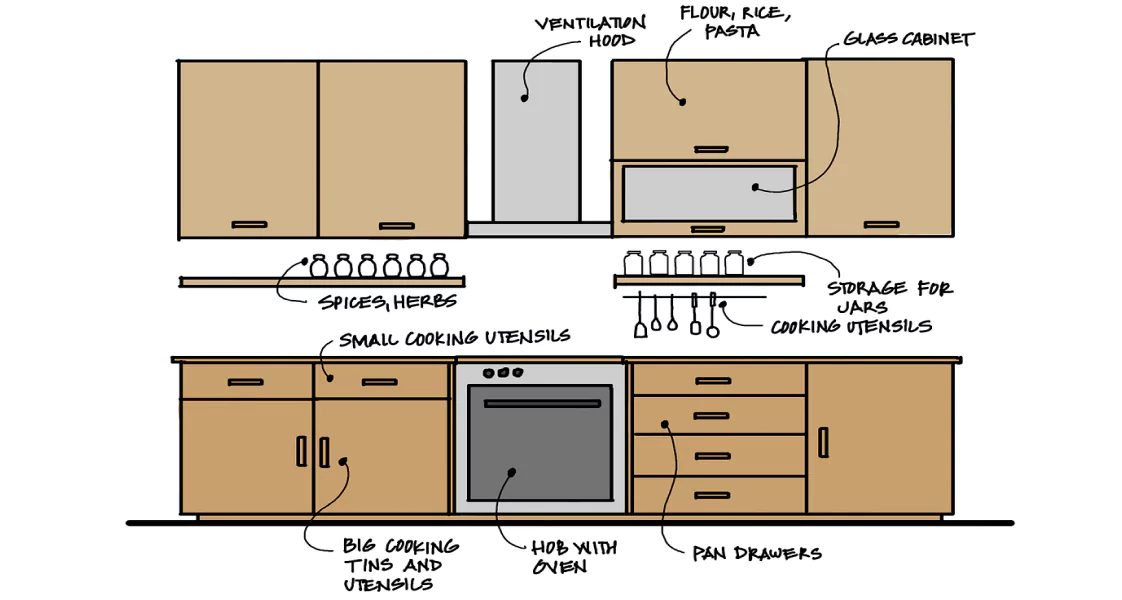
Credit: foyr.com
Optimizing Kitchen Layouts
Designing a small kitchen needs smart layout choices. Good planning makes cooking easier and more fun.
Optimizing space helps fit all kitchen tasks in a small area. It improves flow and keeps the kitchen neat.
Popular Small Kitchen Layouts
Small kitchens work well with simple layouts. These layouts use space wisely and allow easy movement.
The common layouts include single wall, galley, and L-shape. Each fits different kitchen shapes and needs.
- Single Wall:Everything is on one wall. Good for very narrow spaces.
- Galley:Two opposite walls with counters. Easy to move between areas.
- L-Shape:Counters on two walls forming an L. Fits corners and adds workspace.
Maximizing Work Triangle Efficiency
The work triangle links the sink, stove, and fridge. It makes cooking steps faster and easier.
Keep the triangle sides short but not crowded. Avoid blocking paths or placing appliances too far.
- Place sink between stove and fridge if possible.
- Keep clear paths for moving inside the triangle.
- Use compact appliances to save space.
Incorporating Multi-functional Zones
Multi-functional zones let you do more with less space. They combine tasks in one area for efficiency.
Use counters for food prep and dining. Add storage under counters to keep items handy but out of sight.
- Choose foldable or extendable tables to save space.
- Use pull-out shelves for easy access to utensils.
- Add seating that doubles as storage.
Selecting Materials And Colors
Choosing the right materials and colors makes a small kitchen look bigger and cleaner. The right choices help create a bright and welcoming space.
Focus on light colors, durable surfaces, and reflective materials to improve your kitchen’s feel and function.
Light Colors For Spacious Feel
Light colors open up a small kitchen. Whites, creams, and soft pastels work well. They reflect natural light and make the room feel airier.
- Use light-colored paint on walls and ceilings.
- Choose pale cabinets to keep things bright.
- Pick light-colored countertops to match walls.
- Add light-colored tiles or backsplashes for contrast.
Durable And Easy-to-clean Surfaces
Small kitchens need surfaces that last long and are easy to clean. Durable materials save time and keep your kitchen neat.
| Material | Benefits | Cleaning Tips |
| Quartz | Scratch and stain resistant | Wipe with mild soap and water |
| Laminate | Affordable and easy to replace | Use soft cloth and mild cleaner |
| Stainless Steel | Resists heat and stains | Clean with vinegar or stainless cleaner |
| Ceramic Tile | Heat resistant and durable | Scrub grout regularly |
Using Reflective Materials
Reflective materials bounce light around the kitchen. They create a sense of space and add brightness.
Try these reflective materials:
- Glossy tiles on walls or backsplash
- Mirrored cabinet doors or panels
- Glass shelves or accents
- Metallic light fixtures or hardware

Credit: www.freepik.com
Smart Storage Solutions
Small kitchens need smart storage to keep things neat and easy to reach.
Using clever storage ideas helps you save space and stay organized.
Vertical Storage Options
Use your kitchen walls to add shelves or racks. This keeps counters free and stores items up high.
- Install floating shelves for jars and spices
- Hang pots and pans on wall-mounted racks
- Use magnetic strips for knives and metal tools
- Fit tall cabinets that reach the ceiling
Pull-out Cabinets And Drawers
Pull-out cabinets and drawers help you use deep spaces well. They make it easy to find and reach items.
| Type | Best For | Benefit |
| Pull-out pantry | Spices, canned goods | Easy access, saves space |
| Sliding drawers | Pots, pans, utensils | Keeps items organized and visible |
| Corner pull-outs | Small appliances, cleaning supplies | Uses hard-to-reach corners |
Hidden And Multi-purpose Storage
Hidden storage keeps the kitchen tidy. Multi-purpose furniture adds function without clutter.
- Use toe-kick drawers for flat items like trays
- Choose tables with built-in shelves or drawers
- Install pull-out cutting boards inside counters
- Hide trash bins inside cabinets
Lighting Ideas For Small Kitchens
Lighting plays a big role in small kitchens. Good lighting makes the space feel larger and more welcoming.
Using the right lighting helps you see better and creates a nice mood in your kitchen.
Layered Lighting Techniques
Layered lighting means combining different types of lights. This makes your kitchen look bright and balanced.
Start with a base light, then add lights for specific tasks and decoration.
- Use ceiling lights for overall brightness
- Add under-cabinet lights for counters
- Include pendant lights for style and focus
Task And Ambient Lighting
Task lighting helps you see clearly when cooking or washing dishes. It is bright and focused.
Ambient lighting gives soft light for the whole kitchen. It creates a cozy and warm feeling.
- Install LED strips under cabinets for task lighting
- Use flush mount ceiling lights for ambient light
- Choose dimmable lights to change brightness
Using Natural Light Effectively
Natural light makes small kitchens feel open and fresh. It also saves energy during the day.
Keep windows clear and use light curtains to let in more sunlight.
- Place mirrors to reflect light around the room
- Choose light colors for walls and cabinets
- Avoid heavy window treatments that block light
Incorporating Appliances And Fixtures
Drawing a small kitchen requires careful planning of appliances and fixtures. They must fit the space well and work efficiently.
Choosing the right appliances and fixtures helps make the kitchen functional and comfortable. It saves space and improves usability.
Compact And Built-in Appliances
Compact appliances are smaller than standard ones. They fit better in small kitchens without crowding the space.
Built-in appliances blend into the kitchen design. They create a clean and organized look that saves room.
- Choose compact refrigerators and dishwashers
- Use built-in ovens and microwaves
- Select slim cooktops instead of large ranges
- Consider appliances that fit under counters
Space-saving Fixtures
Space-saving fixtures help keep the kitchen neat and open. They use less space but still serve their purpose well.
Fixtures like foldable tables and pull-out shelves give more room to move. They also provide extra storage or work areas.
- Use wall-mounted faucets and sinks
- Install pull-out pantry shelves
- Add fold-down tables for extra counter space
- Choose slim or corner sinks
Energy-efficient Options
Energy-efficient appliances save electricity and reduce bills. They work well in small kitchens with limited power outlets.
Look for appliances with good energy ratings. They help the environment and keep your kitchen cool.
- Pick LED lighting for fixtures
- Choose Energy Star rated appliances
- Use low-flow faucets to save water
- Consider induction cooktops for efficiency
Designing With Decor And Accessories
Decor and accessories can make a small kitchen both stylish and practical. Thoughtful choices help use space well.
Simple decor ideas can brighten the room and add warmth without crowding the area.
Minimalist Decor Approaches
Keep the kitchen clutter-free with few key decor pieces. Use clean lines and neutral colors for a calm feel.
- Choose sleek containers for storage
- Use a single centerpiece like a small plant
- Limit wall art to one or two pieces
- Pick simple light fixtures
- Use open shelves with few items
Adding Personality With Textures
Textures add interest without taking up space. Mix smooth and rough surfaces for a lively look.
| Texture Type | Example | Effect |
| Wood | Cutting boards, shelves | Warmth and natural feel |
| Metal | Handles, light fixtures | Modern and sleek |
| Glass | Cabinet doors, jars | Light and airy |
| Fabric | Rugs, chair cushions | Softness and comfort |
Choosing Functional Accessories
Select accessories that serve a purpose and add style. They should save space and make cooking easier.
- Magnetic knife strips free up counter space
- Stackable containers keep pantry neat
- Hooks for hanging utensils save drawer room
- Foldable dish racks fit small sinks
- Multi-use cutting boards add workspace

Credit: www.freepik.com
Common Mistakes To Avoid
Drawing a small kitchen can be tricky. Many people make errors that make the space feel cramped or less useful.
Knowing what to avoid helps create a better kitchen design. Let’s look at some common mistakes.
Overcrowding The Space
Adding too many cabinets or appliances can make a small kitchen feel tight. Crowded spaces limit movement and make cooking hard.
Keep only what you need. Use compact appliances and smart storage solutions to save space.
- Choose smaller appliances designed for small kitchens
- Use vertical storage to free up floor space
- Avoid bulky furniture that blocks pathways
Ignoring Workflow
The kitchen workflow is how you move while cooking. Ignoring it can make tasks slow and frustrating.
Plan your kitchen so the sink, stove, and fridge form a work triangle. This layout helps you move easily between tasks.
- Place the sink near the stove for easy cooking and cleaning
- Keep the fridge close but not blocking paths
- Allow clear counter space between appliances
Neglecting Lighting Needs
Bad lighting makes a small kitchen feel dark and smaller. It also makes cooking unsafe.
Use a mix of natural and artificial light. Bright lights help you see better and make the space feel open.
- Place the kitchen near windows for daylight
- Add task lighting under cabinets for counters
- Use ceiling lights for even brightness
Frequently Asked Questions
How Do I Maximize Space In A Small Kitchen?
Use vertical storage like shelves and hooks. Choose compact appliances and multi-functional furniture. Keep countertops clear to create more workspace.
What Colors Work Best For Small Kitchen Walls?
Light colors like white, pastels, or soft grays make kitchens look bigger. They reflect light and open up the space visually.
How Can I Arrange Appliances In A Small Kitchen?
Place appliances in a work triangle: fridge, stove, and sink. This layout improves efficiency and saves space.
What Are The Best Lighting Options For Small Kitchens?
Use bright, layered lighting. Combine ceiling lights, under-cabinet LEDs, and task lighting for better visibility and a spacious feel.
Conclusion
Drawing a small kitchen can be simple and fun. Start with basic shapes and add details step by step. Focus on the layout and key elements like cabinets and appliances. Use light lines first, then darken the final sketch. Practice makes your drawing better each time.
Keep your design clear and balanced. This guide helps you create a neat kitchen plan. Try different ideas and enjoy the process. Your small kitchen drawing will improve with each attempt. Keep practicing and stay creative!