Imagine the mouthwatering aroma of a perfectly cooked steak sizzling in a frying pan right in your kitchen. Yes, you can create a restaurant-quality steak without the need for an outdoor grill or expensive equipment.
Are you ready to impress yourself and others with a juicy, flavorful steak, cooked to perfection? By mastering just a few simple techniques, you’ll transform your cooking skills and delight your taste buds. This guide will show you exactly how to achieve that delicious, golden-brown crust and tender, succulent interior.
Stay with us, and you’ll discover the secrets that turn an ordinary frying pan into your personal steakhouse kitchen.

Credit: www.youtube.com
Choosing The Right Steak
Cooking steak in a frying pan needs the right cut and quality. Choosing well helps get the best flavor and texture.
Focus on the cut type and thickness to cook your steak evenly and enjoy a juicy result.
Best Cuts For Pan Cooking
Some steak cuts work better in a frying pan. These cuts cook quickly and stay tender.
- Ribeye: Has good fat marbling and stays juicy.
- Sirloin: Lean with rich flavor, cooks fast.
- Filet Mignon: Very tender but leaner, cooks evenly.
- Strip Steak: Balanced fat and muscle, good for pan cooking.
Thickness And Quality Tips
Thickness affects cooking time and final texture. Quality impacts taste and tenderness.
| Thickness | Why It Matters |
| 1 to 1.5 inches | Cooks evenly without burning outside |
| Less than 1 inch | May overcook, dry texture |
| More than 1.5 inches | Needs longer cooking, risk of uneven doneness |
Choose steaks with bright red color and firm texture. Avoid cuts with brown or gray spots.
Preparing The Steak
Cooking a steak in a frying pan starts with good preparation. Preparing the steak well helps it cook evenly and taste better.
Two important steps are seasoning the steak and bringing it to room temperature. These steps make a big difference in the final flavor and texture.
Seasoning Essentials
Seasoning your steak simply is best. Salt and pepper are the main ingredients that bring out the steak’s natural flavor.
Use coarse salt and freshly ground black pepper for the best taste. Sprinkle both sides evenly before cooking.
- Use about ½ teaspoon salt per side
- Apply black pepper to your taste
- Pat the seasoning lightly into the meat
- Avoid seasoning too early to keep the steak juicy
Bringing To Room Temperature
Let the steak sit outside the fridge before cooking. This helps it cook more evenly in the pan.
Take the steak out 20 to 30 minutes before cooking. This short wait lets the steak lose its chill without getting too warm.
- Remove steak from fridge
- Place on a plate or cutting board
- Leave uncovered or lightly covered
- Wait 20 to 30 minutes before cooking
Selecting The Perfect Pan
Cooking a steak in a frying pan needs the right pan for best results. The pan type affects heat, flavor, and cooking time.
Choose a pan that heats evenly and holds heat well. This helps cook the steak perfectly.
Cast Iron Vs Stainless Steel
Cast iron pans hold heat very well and cook steaks evenly. They give a nice crust and are great for searing.
Stainless steel pans heat up quickly and are easier to clean. They work well if you watch the temperature closely.
- Cast iron retains heat longer and distributes it evenly
- Stainless steel heats up faster but may have hot spots
- Cast iron needs seasoning to prevent sticking
- Stainless steel can handle acid and is dishwasher safe
Pan Size And Heat Conductivity
Choose a pan size that fits your steak without crowding. Crowding lowers the pan temperature and causes steaming.
Good heat conductivity helps cook steak evenly. Thicker pans usually conduct heat better and avoid hot spots.
- Use a pan at least 10-12 inches for a standard steak
- Thick pans keep heat steady for a better sear
- Thin pans heat fast but may cook unevenly

Credit: www.youtube.com
Cooking Techniques
Cooking a steak in a frying pan is a simple and quick way to enjoy a tasty meal. The right techniques help you get a juicy inside and a flavorful crust outside.
Understanding how to handle the pan, heat, and timing is key to cooking a perfect steak every time.
Preheating The Pan
Start by heating your pan over medium-high heat. A hot pan ensures the steak cooks evenly and develops a good crust.
Use a heavy pan like cast iron or stainless steel for the best heat retention.
- Place the pan on the stove and turn the heat to medium-high.
- Let it heat for about 3 to 5 minutes until very hot.
- Test heat by flicking a few drops of water; they should sizzle and evaporate quickly.
Searing For A Crust
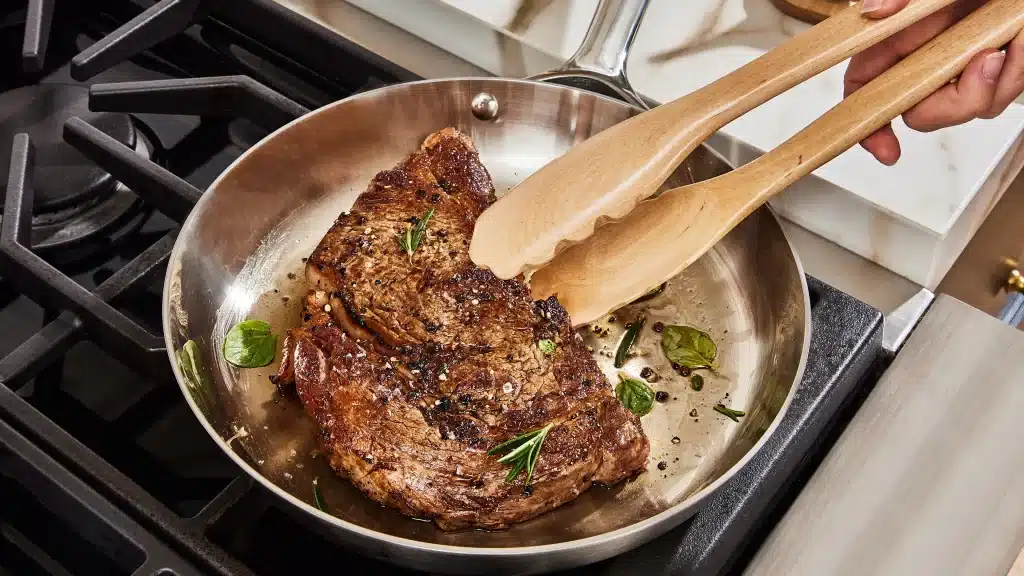
Place the steak in the hot pan without moving it. This helps form a brown, crispy crust on the surface.
Do not overcrowd the pan. Cook one or two steaks at a time for best results.
- Lay the steak away from you to avoid splatter.
- Press the steak lightly to touch the pan evenly.
- Let it cook without moving for 2 to 3 minutes.
Flipping And Timing
Flip the steak once using tongs. Avoid using a fork to keep the juices inside.
Cook the other side for the same time or less, depending on thickness and desired doneness.
- Flip the steak gently to the other side.
- Cook for 2 to 3 minutes for medium-rare.
- Use a meat thermometer to check internal temperature if unsure.
- Rest the steak for a few minutes before cutting.
Enhancing Flavor
Cooking steak in a frying pan can create a delicious meal. Enhancing the flavor makes the steak taste better.
Simple techniques add rich flavors and keep the steak juicy. Using butter, herbs, and basting are great options.
Using Butter And Herbs
Butter adds a creamy richness to the steak. Herbs bring fresh and earthy notes that lift the taste.
Common herbs to use are rosemary, thyme, and garlic. They pair well and make the steak more flavorful.
- Start cooking the steak in the pan with oil.
- Add a few tablespoons of butter to the pan.
- Place fresh herbs and crushed garlic in the butter.
- Let the butter melt and absorb the herb flavors.
- Spoon the flavored butter over the steak while cooking.
Basting Method
Basting means spooning hot butter over the steak. This keeps the meat moist and adds flavor.
Use a spoon to scoop butter from the pan and pour it over the steak. Do this several times while cooking.
- Cook steak on medium heat until browned on one side.
- Add butter and herbs to the pan.
- Tilt the pan slightly to pool the butter.
- Spoon the butter over the steak repeatedly.
- Flip and repeat basting on the other side.
Checking Doneness
Cooking steak in a frying pan needs careful attention. Checking doneness helps you cook it just right.
There are easy ways to know when your steak is done. Use a temperature guide or the touch test method.
Temperature Guide
Using a meat thermometer gives you the best accuracy. Insert it into the thickest part of the steak.
Different temperatures show different levels of doneness. Check this table for the right temperature.
| Doneness | Internal Temperature (°F) |
|---|---|
| Rare | 120-125°F |
| Medium Rare | 130-135°F |
| Medium | 140-145°F |
| Medium Well | 150-155°F |
| Well Done | 160°F and above |
Touch Test Method
The touch test uses feel to check steak doneness. It compares steak firmness to parts of your hand.
Press the steak gently with your finger. Compare its firmness to the base of your thumb.
- Rare:Soft like the base of your thumb with hand relaxed
- Medium Rare:Slightly firmer, like when touching thumb and index finger
- Medium:Firm, like touching thumb and middle finger
- Well Done:Very firm, like touching thumb and pinky finger
Resting The Steak
After cooking a steak in a frying pan, resting it is important. Resting helps the steak stay juicy and tasty.
This short wait lets the juices spread evenly inside the meat. It makes each bite tender and full of flavor.
Why Resting Matters
When steak cooks, its juices move toward the surface. Cutting it right away lets the juices run out.
Resting allows the juices to return to the center. This keeps the steak moist and delicious when you eat it.
Proper Resting Time
A good rule is to rest the steak for about five minutes. This time works well for most steak sizes.
Thicker steaks may need up to ten minutes. Cover the steak lightly with foil to keep it warm while resting.
- Thin steaks: 3 to 5 minutes
- Medium-thick steaks: 5 to 7 minutes
- Thick steaks: 8 to 10 minutes
Serving Suggestions
Cooking steak in a frying pan is simple and quick. Serving it with the right sides and garnishes makes it taste even better.
Choose garnishes and side dishes that complement the rich flavor of the steak. This helps create a balanced meal.
Simple Garnishes
Simple garnishes add flavor and color to your steak. Fresh herbs and a squeeze of lemon juice work well.
These garnishes do not overpower the steak but enhance its natural taste.
- Fresh parsley or thyme leaves
- Cracked black pepper
- Sea salt flakes
- Butter melted with garlic
- Lemon wedges for a fresh touch
Side Dish Pairings
Pair your steak with side dishes that add texture and flavor. Vegetables and starches work best.
Try to keep the sides simple so the steak stays the star of the meal.
- Roasted or steamed asparagus
- Garlic mashed potatoes
- Grilled mushrooms
- Fresh green salad with vinaigrette
- Buttered corn on the cob
Common Mistakes To Avoid
Cooking steak in a frying pan is simple but easy to get wrong. Avoiding common mistakes helps you get a juicy, tasty steak every time.
Two big mistakes are overcrowding the pan and cutting the steak too soon. Learn why these hurt your steak and how to fix them.
Overcrowding The Pan
Putting too many steaks in the pan lowers the temperature. This stops the steak from searing well and makes it cook unevenly.
- Use a pan big enough for the steak.
- Cook one or two steaks at a time.
- Leave space between steaks for air and heat.
- Too many steaks cause steaming instead of searing.
Cutting Too Soon
Cutting the steak right after cooking lets juices escape. This makes the steak dry and less tasty.
| When to Cut | Effect on Steak |
|---|---|
| Right after cooking | Juices run out, steak is dry |
| After resting 5-10 minutes | Juices stay inside, steak is juicy |
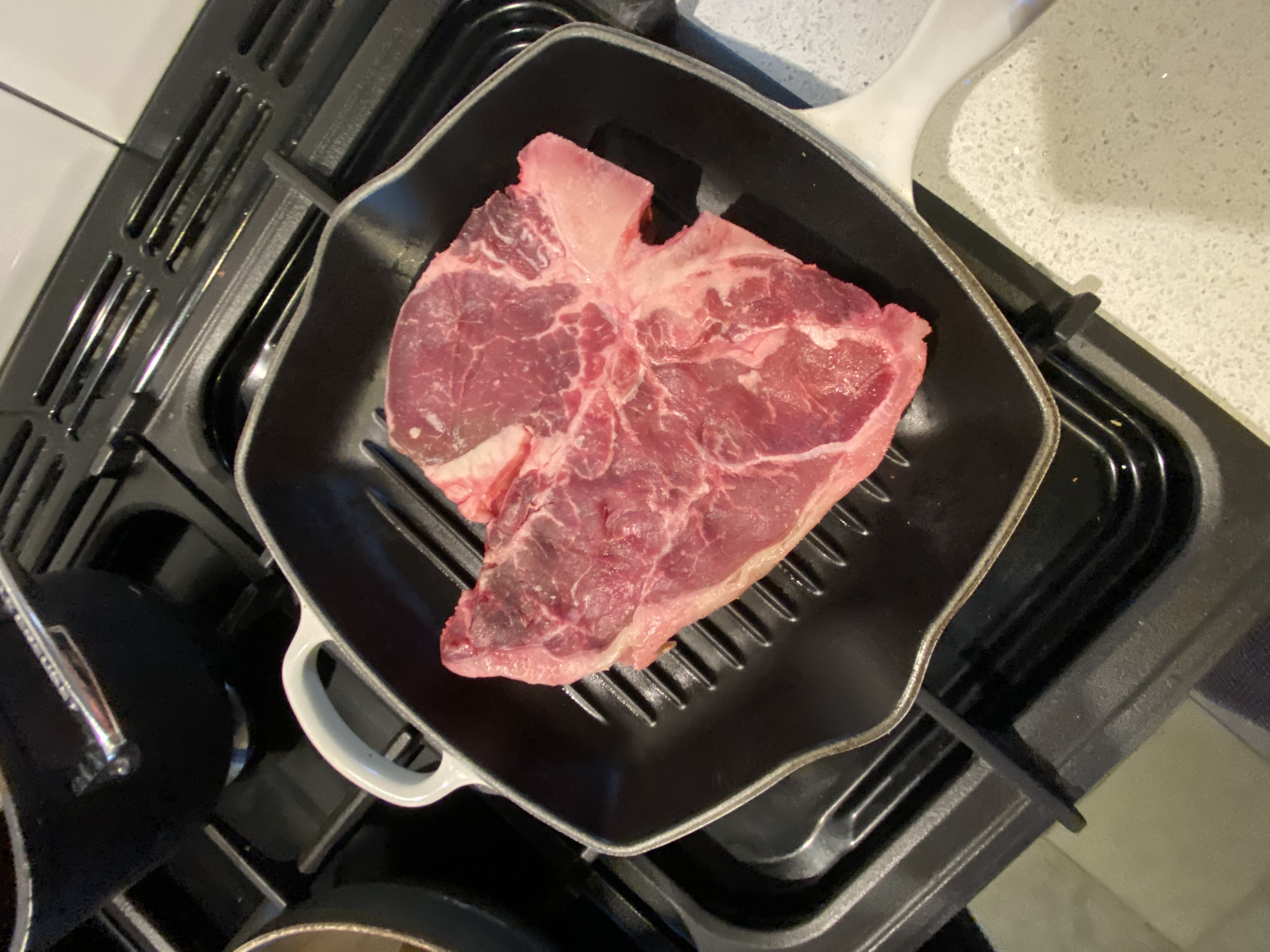
Credit: itsnoteasybeinggreedy.com
Frequently Asked Questions
How Do I Prepare Steak Before Frying?
Pat the steak dry with paper towels. Season both sides with salt and pepper. Let it rest at room temperature for 20 minutes to ensure even cooking.
What Type Of Pan Is Best For Cooking Steak?
Use a heavy-bottomed pan like cast iron or stainless steel. These retain heat well and provide a good sear on the steak.
How Long Should I Cook Steak In A Frying Pan?
Cook steak for about 3-4 minutes per side for medium-rare. Adjust time based on thickness and desired doneness.
Should I Use Oil Or Butter For Frying Steak?
Use a high smoke point oil like canola or vegetable oil. Add butter towards the end for flavor and browning.
Conclusion
Cooking steak in a frying pan is simple and quick. Start with a hot pan and a good cut of meat. Season the steak well and cook to your preferred doneness. Let the steak rest before cutting to keep it juicy.
Practice will help you get the perfect sear every time. Enjoy your delicious homemade steak with your favorite sides. Cooking steak at home saves money and tastes great. Try this method and enjoy a tasty meal anytime.