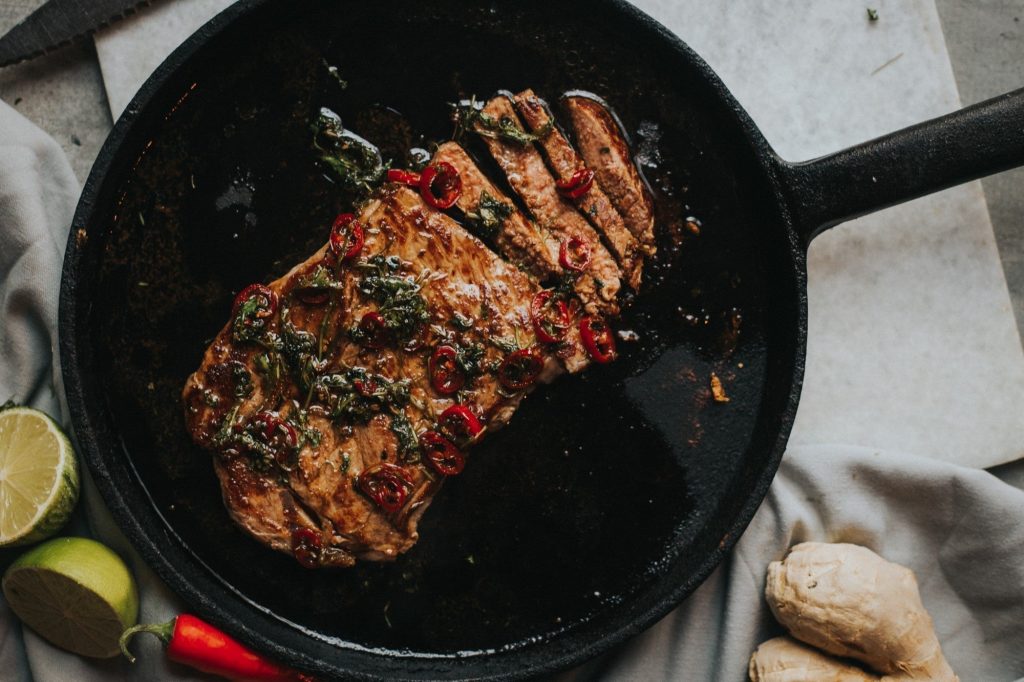
Craving a juicy, flavorful steak but don’t have access to a grill? No problem!
You can achieve mouthwatering results right in your kitchen with just a frying pan. That’s right, cooking marinated steak on your stovetop can be incredibly simple and delicious. Imagine slicing into a tender, perfectly cooked piece of steak, bursting with rich flavors and a hint of char.
Sounds tempting, doesn’t it? By the end of this guide, you’ll have all the tips and tricks you need to transform your marinated steak into a restaurant-quality dish. So grab your apron, and let’s get started on this savory adventure that’s sure to impress your taste buds and dinner guests alike.
Choosing The Right Steak
Picking the right steak is important for a tasty meal. The type of cut affects how well the meat absorbs flavors.
Quality and thickness also change how the steak cooks in a frying pan. Let’s look at the best options.
Best Cuts For Marinating
Some cuts soak up marinades better than others. These cuts are usually tougher but full of flavor.
- Flank steak – lean and flavorful
- Skirt steak – thin and great for quick cooking
- Chuck steak – rich taste, benefits from marinating
- Hanger steak – tender and absorbs marinade well
- Sirloin – good balance of tenderness and flavor
Thickness And Quality Tips
| Thickness | Why It Matters | Recommended Size |
| Thin (less than 1 inch) | Marinates fast but cooks quickly | 0.5 to 0.75 inch |
| Medium (1 to 1.5 inches) | Good balance of marinade and cooking | 1 to 1.5 inches |
| Thick (over 1.5 inches) | Needs longer cooking, may stay rare inside | 1.5 inches or more |
| Quality Grade | Look for marbling for juiciness and flavor | Choice or Prime grade |
Credit: cookinginthekeys.com
Preparing The Marinade
Marinating steak adds flavor and makes it tender. A good marinade mixes acids, oils, and spices.
Letting the steak soak in the marinade helps the taste go deep inside. This improves the cooking result.
Essential Ingredients
Every marinade needs a balance of acid, oil, and seasoning. The acid breaks down meat fibers.
Oil keeps the steak juicy and helps flavors blend. Seasonings add taste and aroma.
- Acid: vinegar, lemon juice, or wine
- Oil: olive oil or vegetable oil
- Salt and pepper for basic seasoning
- Garlic or onion for extra flavor
- Herbs like rosemary or thyme
Flavor Combinations To Try
Mixing ingredients creates unique tastes. Try these simple combinations for tasty steak marinades.
- Soy sauce, garlic, and brown sugar
- Balsamic vinegar, olive oil, and rosemary
- Lemon juice, olive oil, and thyme
- Red wine, garlic, and black pepper
- Worcestershire sauce, mustard, and honey
Marinating Time Guidelines
Marinating time changes the steak’s texture and taste. Short times add surface flavor.
Longer marinating helps flavors go deeper but can make meat mushy if too long.
- 15 to 30 minutes for thin cuts
- 1 to 2 hours for thicker steaks
- Do not exceed 24 hours
- Keep steak refrigerated while marinating
Getting Ready To Cook
Cooking marinated steak in a frying pan needs some preparation. Getting the steak and pan ready helps you cook better.
These tips will guide you on how to prepare before you start cooking your marinated steak.
Bringing Steak To Room Temperature
Take the steak out of the fridge about 30 minutes before cooking. This helps it cook evenly.
Cold steak can cook unevenly, leaving the inside underdone while the outside is overcooked.
Selecting The Right Pan
Choose a heavy pan that keeps heat well. Cast iron or stainless steel pans work best.
- Cast iron pans hold heat evenly.
- Stainless steel pans heat up quickly and brown meat well.
- A non-stick pan is not ideal for searing steak.
Preheating Techniques
| Preheat Step | Purpose | Tip |
|---|---|---|
| Heat pan on medium-high | Get pan very hot | Wait 3-5 minutes |
| Test heat with water drop | Check if pan is ready | Water should sizzle and evaporate fast |
| Add oil just before steak | Prevent burning | Use oil with high smoke point |
Credit: healthyrecipesblogs.com
Cooking The Steak
Cooking a marinated steak in a frying pan brings out its rich flavors. The right techniques help keep the steak juicy and tender.
This guide covers searing, adjusting heat, and timing to get your steak just right.
Searing For Flavor
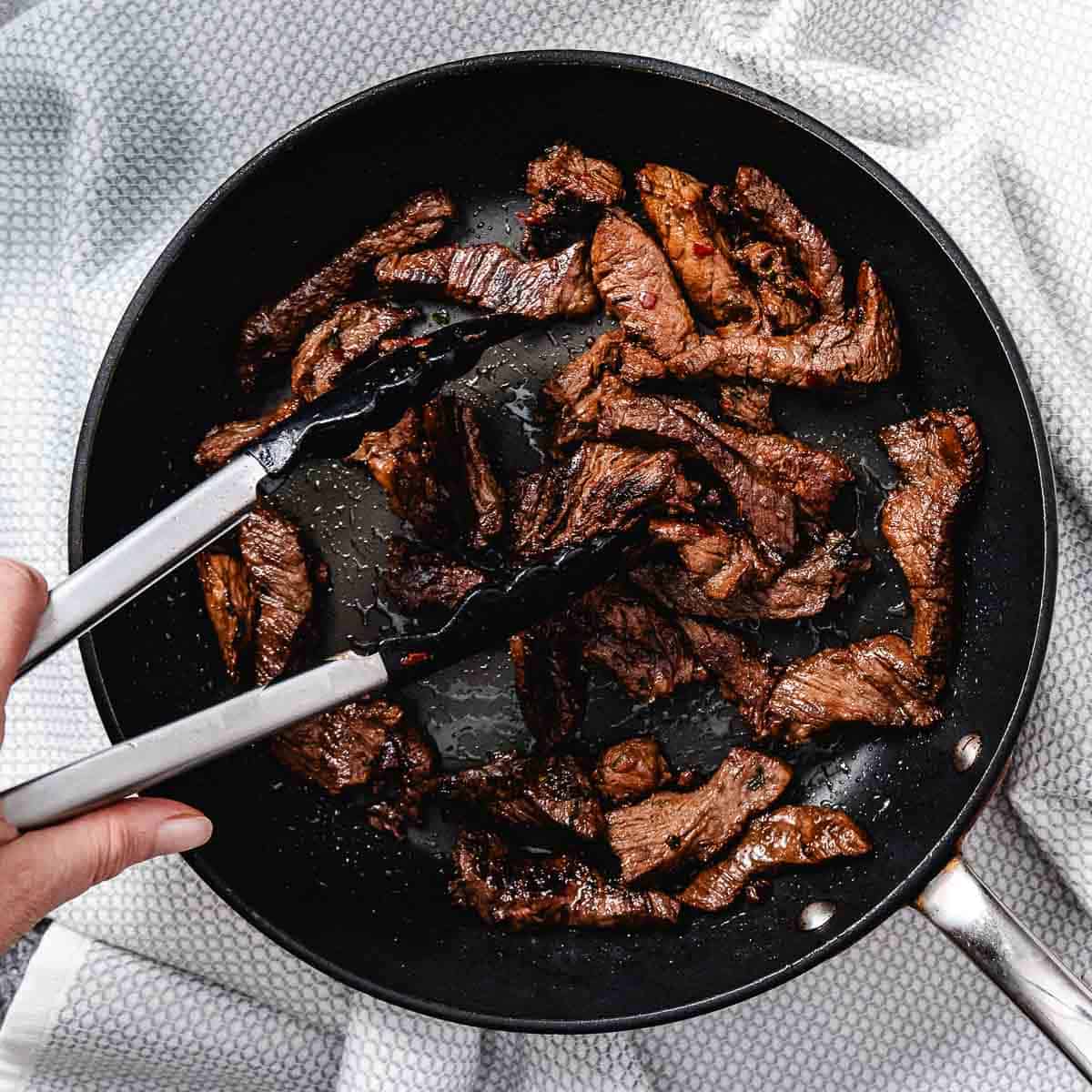
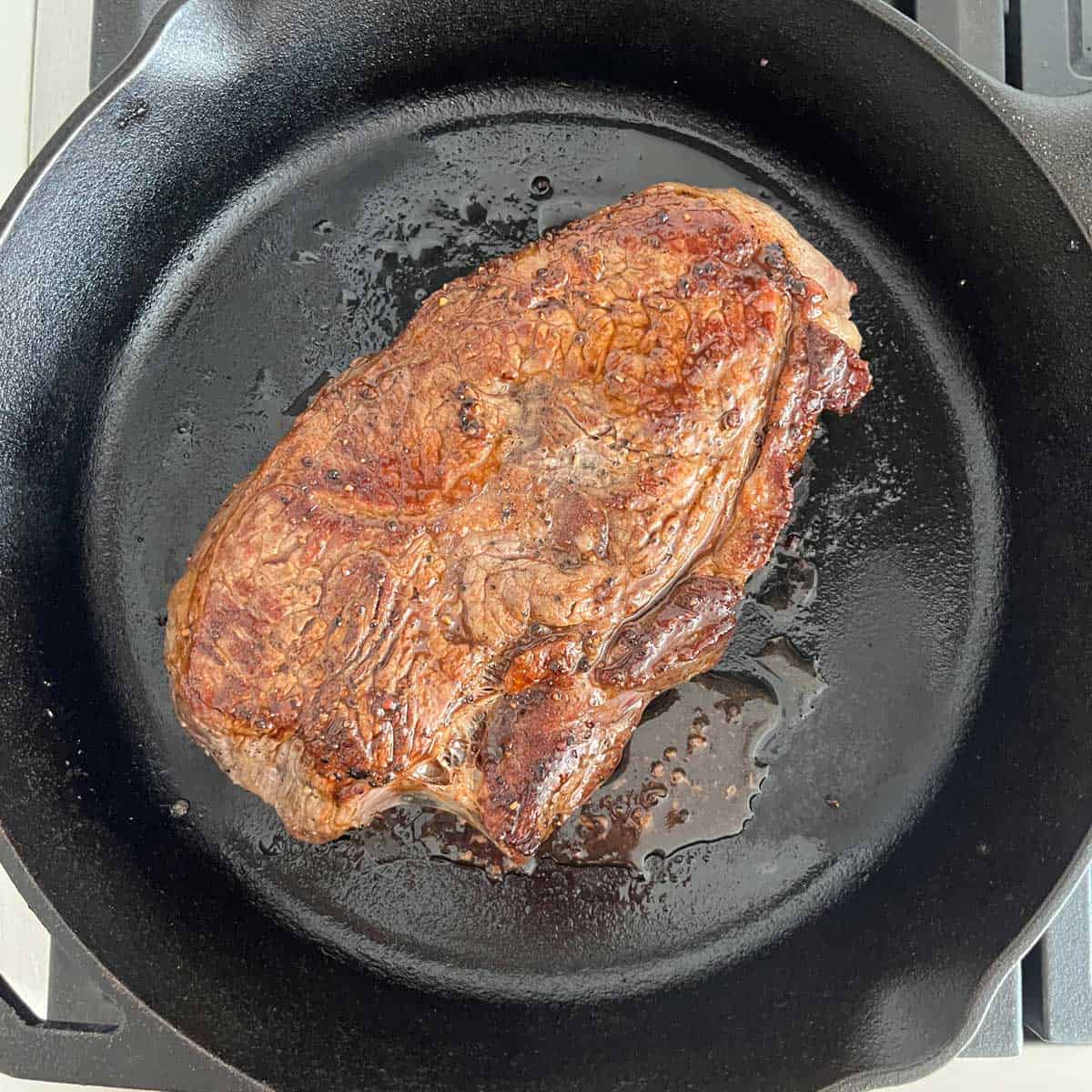
Searing locks in the marinade’s taste and creates a tasty crust. Use a hot pan for the best results.
- Preheat the pan until very hot
- Add a small amount of oil with a high smoke point
- Place the steak in the pan without moving it
- Cook until a brown crust forms, about 2-3 minutes per side
Adjusting Heat Levels
Control the heat to avoid burning or undercooking. Start high for searing, then lower to cook through.
| Heat Level | Purpose | Tips |
|---|---|---|
| High | Sear steak surface | Use for 2-3 minutes per side |
| Medium | Cook inside gently | Lower heat after searing |
| Low | Keep warm or finish cooking | Use if steak is thick |
Timing For Desired Doneness
Cooking time depends on how you like your steak. Use a timer and check the steak often.
- Rare: 2-3 minutes per side, cool red center
- Medium rare: 3-4 minutes per side, warm red center
- Medium: 4-5 minutes per side, pink center
- Well done: 6+ minutes per side, no pink
Checking For Doneness
Cooking marinated steak in a frying pan needs close attention. Checking doneness ensures your steak is cooked just right.
Two popular ways to check doneness are using a meat thermometer and the touch test. Both methods help avoid overcooking or undercooking.
Using A Meat Thermometer
A meat thermometer gives an exact temperature inside the steak. Insert it into the thickest part without touching bone or pan.
Here are common temperature ranges for steak doneness:
- Rare: 120°F to 125°F (49°C to 52°C)
- Medium Rare: 130°F to 135°F (54°C to 57°C)
- Medium: 140°F to 145°F (60°C to 63°C)
- Medium Well: 150°F to 155°F (66°C to 68°C)
- Well Done: 160°F and above (71°C+)
Remove the steak from the pan a few degrees before your target temperature. It will keep cooking as it rests.
Touch Test Method
The touch test uses the feel of the steak to guess doneness. Compare the steak’s firmness to parts of your hand.
Here is how to check using your hand:
- Rare: Touch your thumb to your index finger. Feel the soft base of your thumb.
- Medium Rare: Touch thumb to middle finger. The base of the thumb feels a bit firmer.
- Medium: Touch thumb to ring finger. The base feels firmer still.
- Well Done: Touch thumb to pinky finger. The base feels very firm.
Press the steak gently with your finger. Match the steak’s firmness to the hand test for your preferred doneness.
Resting And Serving
After cooking marinated steak in a frying pan, resting is a key step. It helps keep the juices inside the meat.
Serving the steak properly makes the meal more enjoyable and visually pleasing.
Why Resting Matters
Resting allows the steak to finish cooking evenly. It also makes the meat tender and juicy.
- Place the steak on a warm plate or cutting board.
- Cover it loosely with foil to keep heat.
- Rest for 5 to 10 minutes before cutting.
- This prevents the juices from running out when sliced.
Serving Suggestions
Serve your marinated steak with sides that complement its rich flavor. You can add sauces or fresh herbs for extra taste.
| Side Dish | Description |
| Mashed Potatoes | Creamy and smooth, balances the savory steak. |
| Grilled Vegetables | Adds a smoky flavor and healthy crunch. |
| Fresh Salad | Light and refreshing, cuts the richness. |
| Chimichurri Sauce | Herb-based sauce that brightens the steak. |
Tips For Juicy Results
Cooking marinated steak in a frying pan can give you a tasty meal. Keeping the steak juicy takes some care and attention.
This guide shares tips to avoid mistakes and improve flavor after cooking. Follow these to enjoy a tender and flavorful steak.
Avoiding Common Mistakes
Many cooks make errors that dry out steak or reduce its flavor. Watch for these common problems and fix them before you start cooking.
- Do not use a cold pan. Heat the pan until it is hot before adding steak.
- Avoid overcooking. Cook steak quickly on high heat for a juicy inside.
- Do not overcrowd the pan. Cook in batches if needed to keep the pan hot.
- Let the steak rest after cooking. This keeps juices inside the meat.
- Use a meat thermometer to check doneness and avoid guessing.
Enhancing Flavor After Cooking
After cooking, you can add more flavor and keep the steak juicy with simple steps. These tips help improve taste and texture.
| Technique | How It Helps |
| Resting the steak for 5-10 minutes | Allows juices to redistribute inside the meat |
| Adding a small pat of butter | Melts into the steak for richer flavor |
| Sprinkling fresh herbs | Gives a fresh and aromatic finish |
| Lightly seasoning with salt again | Enhances the natural taste after cooking |

Credit: spinachtiger.com
Frequently Asked Questions
How Long Should I Marinate Steak Before Cooking?
Marinate steak for at least 30 minutes to 24 hours. Longer marination enhances flavor and tenderness. Avoid over-marinating to prevent meat texture changes.
What Type Of Pan Is Best For Cooking Marinated Steak?
Use a heavy-bottomed frying pan or cast-iron skillet. These pans distribute heat evenly and create a nice sear. Avoid non-stick pans for best browning results.
How Do I Prevent Marinated Steak From Sticking To The Pan?
Preheat the pan well and lightly oil it before cooking. Pat steak dry to remove excess marinade. This reduces sticking and promotes even browning.
Can I Reuse Leftover Marinade For Cooking Steak?
Only reuse marinade if boiled for at least 5 minutes. Boiling kills harmful bacteria from raw meat. Otherwise, discard leftover marinade to avoid foodborne illness.
Conclusion
Cooking marinated steak in a frying pan is simple and quick. Use a hot pan and cook steak just a few minutes each side. Let the steak rest before cutting to keep it juicy. This method brings out great flavors and tender meat.
Anyone can enjoy a tasty steak at home with this easy way. Try it today for a delicious meal without fuss.