How to Cook Chicken Breast in a Frying Pan: The Ultimate Juicy & Tender Guide
You’re about to learn easy, step-by-step tips that will transform your cooking and save you time in the kitchen. Keep reading, and discover how to make your chicken breast delicious, moist, and full of flavor without any hassle. Your next dinner just got a whole lot better.
Choosing The Right Chicken Breast
Picking the right chicken breast makes cooking easier and tastier. Good chicken cooks evenly and stays juicy.
Knowing what to look for helps you choose fresh and well-sized pieces. This guide explains what matters.
Fresh Vs Frozen
Fresh chicken breast usually tastes better and cooks faster than frozen. It has a natural texture that feels firm.
Frozen chicken can be just as good if thawed properly. Avoid refreezing as it can change texture and flavor.
- Fresh chicken has a pink color and no smell.
- Frozen chicken should be thawed fully before cooking.
- Use fresh chicken within 1-2 days for best taste.
- Frozen chicken lasts longer but needs careful thawing.
Size And Thickness Matters
Chicken breasts come in different sizes and thicknesses. Thicker pieces take longer to cook inside.
Choose similar-sized breasts to cook them evenly. You can also pound thick pieces to even thickness.
- Small breasts cook faster and stay juicy.
- Thick breasts need lower heat and more time.
- Even thickness helps avoid dry or raw spots.
- Pounding chicken makes cooking easier and faster.
Preparing The Chicken Breast
Cooking chicken breast in a frying pan starts with good preparation. Proper steps help the meat cook evenly and taste better.
Follow these simple methods to trim, pound, and season your chicken breast before cooking.
Trimming And Cleaning
Begin by trimming extra fat and removing any leftover skin. Clean the chicken breast under cold water and pat dry with paper towels.
Pounding For Even Thickness
Flatten the chicken breast to a uniform thickness. This helps it cook evenly and prevents dryness.
- Place the chicken breast between two sheets of plastic wrap.
- Use a meat mallet or rolling pin to gently pound it.
- Flatten to about ½ inch thickness for even cooking.
Seasoning Tips
| Seasoning | Purpose |
|---|---|
| Salt | Enhances natural flavor |
| Pepper | Adds mild heat |
| Garlic Powder | Gives a savory aroma |
| Paprika | Provides color and subtle sweetness |
Sprinkle these seasonings evenly on both sides. Let the chicken rest a few minutes before cooking.
Selecting The Best Pan And Oil
Cooking chicken breast in a frying pan needs the right pan and oil. These choices affect flavor and cooking time.
Choosing between different pans and oils helps you cook juicy and tasty chicken every time.
Non-stick Vs Cast Iron
Non-stick pans are easy to clean and prevent food from sticking. They heat quickly but may not keep heat evenly.
Cast iron pans take longer to heat but keep heat well. They give a nice brown crust and add flavor to chicken.
- Non-stick pans need less oil for cooking.
- Cast iron pans require seasoning to keep non-stick properties.
- Use medium heat for non-stick to avoid damage.
- Cast iron works well on high heat for searing.
Choosing Cooking Oils
Pick cooking oils with high smoke points to avoid burning. Oils affect taste and health.
| Oil | Smoke Point | Flavor |
| Olive Oil | 375°F (190°C) | Fruity, mild |
| Canola Oil | 400°F (204°C) | Neutral |
| Avocado Oil | 520°F (271°C) | Buttery, mild |
| Vegetable Oil | 400°F (204°C) | Neutral |
| Butter | 350°F (177°C) | Rich, creamy |
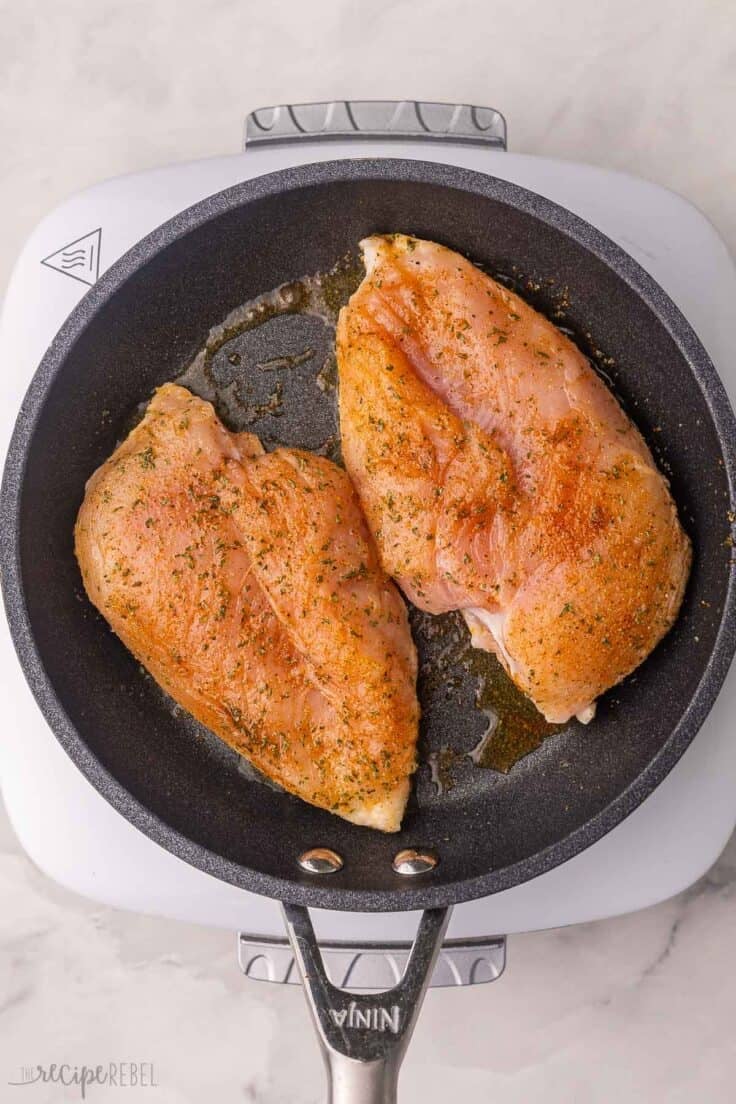
Credit: www.thereciperebel.com
Cooking Techniques For Juicy Results
Cooking chicken breast in a frying pan can be simple. Using the right techniques helps keep it juicy. This guide shows you how to cook chicken breast perfectly.
Focus on controlling heat, searing well, and flipping at the right time. These tips make your chicken tender and flavorful.
Proper Heat Settings
Use medium heat to cook chicken breast evenly. High heat can burn outside and leave inside raw. Low heat cooks too slowly and dries meat.
| Heat Level | Effect on Chicken |
| Low | Cook slowly but may dry out |
| Medium | Cook evenly and keep juicy |
| High | Burn outside, raw inside |
Searing The Chicken
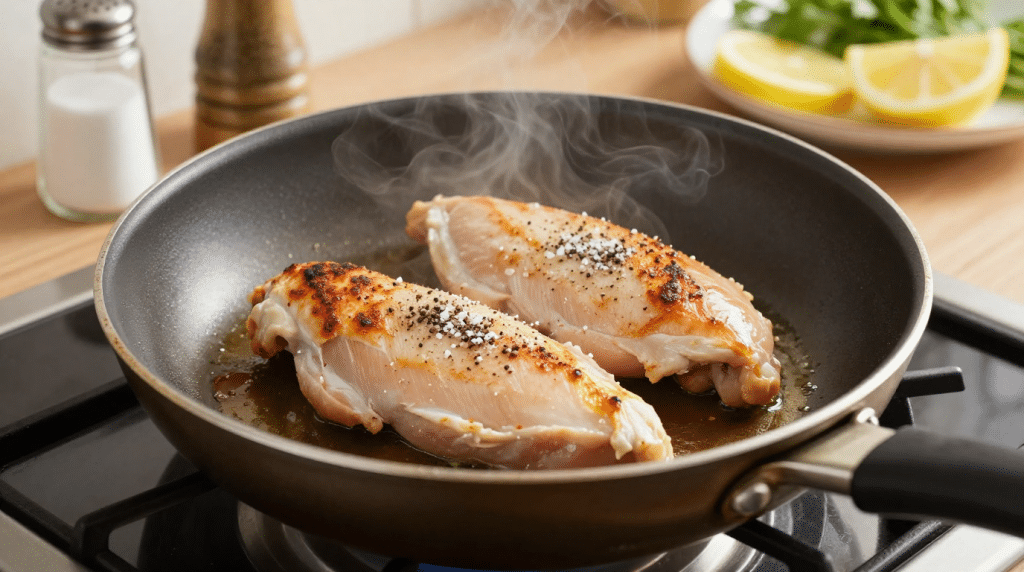
Searing locks juices inside the chicken. Heat the pan before adding oil. Place chicken breast flat in the pan. Do not move it for a few minutes.
- Preheat pan on medium heat
- Add a small amount of oil
- Place chicken breast in pan carefully
- Let it cook without moving for 4-5 minutes
- Look for a golden brown crust before flipping
Flipping At The Right Time
Flip the chicken only after it forms a crust. Flipping too soon can tear the meat. Flip once and cook the other side until done.
- Wait for edges to look cooked and firm
- Check if the chicken releases easily from pan
- Use a spatula to flip gently
- Cook second side for 5-7 minutes
- Use a meat thermometer to check 165°F inside
Checking For Doneness
Cooking chicken breast in a frying pan is quick and easy. It is important to check if the chicken is fully cooked. This keeps the chicken safe to eat and tasty.
There are a few ways to check if your chicken is done. You can use a meat thermometer or look for visual and texture signs.
Using A Meat Thermometer
A meat thermometer is the most accurate way to check doneness. Insert it into the thickest part of the chicken breast. Avoid touching bone or the pan.
The chicken is safe to eat when the thermometer reads 165°F (74°C). This means the inside is fully cooked and no pink remains.
- Insert thermometer into thickest part
- Check that temperature reaches 165°F (74°C)
- Remove chicken once temperature is correct
Visual And Texture Cues
You can also check the chicken by looking at its color and feel. Cooked chicken breast is white or very light pink inside.
Press the chicken with your finger or a fork. It should feel firm and spring back slightly. If it is soft or jelly-like, cook it longer.
- Color inside: white or light pink, no red or dark pink
- Texture: firm but not hard, springs back when pressed
- Juices: clear, not red or pink

Credit: josieandnina.com
Resting And Serving Tips
Resting cooked chicken breast helps keep it juicy and tender. Serving it right brings out the best flavors.
Learn why resting matters and find simple serving ideas for your pan-cooked chicken breast.
Why Resting Matters
After cooking, chicken breast needs a few minutes to rest. This lets the juices spread inside the meat.
- Resting stops juices from running out when sliced.
- It helps the chicken stay moist and tender.
- Resting also finishes the cooking process gently.
- Use foil to cover the chicken while it rests.
- Rest for 5 to 10 minutes before cutting or serving.
Serving Suggestions
Serve your chicken breast with sides that add color and flavor. Balance the meal with vegetables and grains.
| Side Dish | Flavor Profile | Why It Works |
| Steamed broccoli | Fresh and mild | Adds crunch and nutrients |
| Roasted sweet potatoes | Sweet and soft | Complements savory chicken |
| Quinoa salad | Nutty and light | Provides protein and texture |
| Garlic mashed potatoes | Rich and creamy | Comforting and smooth |
| Garden salad | Fresh and crisp | Keeps the meal light |
Common Mistakes To Avoid
Cooking chicken breast in a frying pan can be simple. Still, many make mistakes that affect the taste and texture. Avoiding these errors helps you get juicy and flavorful chicken every time.
Here are common mistakes to watch out for. Each one can change how your chicken turns out on the plate.
Overcooking
Overcooking chicken breast makes it dry and tough. It loses its natural juices and becomes hard to eat.
To avoid overcooking, use these tips:
- Cook on medium heat, not high heat.
- Use a meat thermometer to check for 165°F (74°C).
- Remove chicken from the pan as soon as it reaches the right temperature.
- Let it rest for a few minutes before slicing.
Undercooking
Undercooked chicken breast is unsafe to eat. It can cause food poisoning and illness.
| Risk | Cause | Solution |
| Food poisoning | Chicken not cooked enough inside | Cook until internal temp is 165°F (74°C) |
| Chewy texture | Too raw in the center | Cook evenly on both sides |
Skipping Seasoning
Chicken breast tastes bland without proper seasoning. Salt, pepper, and herbs add flavor and improve the dish.
Try this simple seasoning checklist before cooking:
- Sprinkle salt evenly on both sides.
- Add freshly ground black pepper.
- Use garlic powder or onion powder for extra taste.
- Consider fresh or dried herbs like thyme or rosemary.

Credit: www.reluctantgourmet.com
Flavor Variations And Marinades
Cooking chicken breast in a frying pan is quick and easy. Adding flavors makes it tasty and exciting.
Using different herbs, spices, and marinades can change the taste every time you cook. Let’s explore some ideas.
Herb And Spice Blends
Herbs and spices add depth and aroma to chicken breast. You can mix simple blends for great flavor.
Try using dried or fresh herbs with spices like pepper, paprika, or cumin. Rub them on chicken before cooking.
- Rosemary and thyme with garlic powder
- Smoked paprika, chili powder, and black pepper
- Cumin, coriander, and turmeric for a warm taste
- Basil, oregano, and parsley for Italian flavor
- Lemon zest, dill, and black pepper for freshness
Quick Marinade Ideas
Marinades soak into the chicken and make it juicy. You only need 15 to 30 minutes for a quick soak.
Use simple ingredients like oil, acid, and seasonings to create tasty marinades at home.
- Olive oil, lemon juice, garlic, and salt
- Soy sauce, honey, and ginger for sweet and salty
- Yogurt, cumin, garlic, and lemon for tender meat
- Mustard, vinegar, olive oil, and black pepper
- Hot sauce, lime juice, and olive oil for a spicy kick
Frequently Asked Questions
How long to cook chicken breast in a frying pan?
6–7 minutes per side on medium heat. Cook until internal temp reaches 165°F (74°C).
Should I marinate chicken before frying?
Optional, but recommended. Marinate 30 minutes to 2 hours for better flavor and tenderness.
What oil is best for frying chicken breast?
Olive oil, avocado oil, or canola oil. Avoid using only butter.
How to prevent chicken from sticking?
Preheat the pan, add oil, and don’t move the chicken until it releases naturally.
Conclusion
Cooking chicken breast in a frying pan is simple and quick. Follow the steps carefully for delicious results. Keep the heat consistent. This helps the chicken cook evenly. Always check for doneness. Use a meat thermometer to be sure. Let the chicken rest before slicing.
This keeps it juicy. Try different seasonings. Experiment with herbs and spices for variety. Cooking should be fun and easy. Enjoy your tasty chicken meal. Share this method with friends. They’ll love the simplicity and flavor. Happy cooking!