If you love cooking with a cast iron skillet, you know how important it is to keep it clean without ruining its natural seasoning. But sometimes, scrubbing it with soap or harsh chemicals can do more harm than good.
What if there was a simple, natural way to clean your skillet that protects its surface and keeps it ready for your next meal? You’ll discover how to clean your cast iron skillet with just salt – a kitchen staple that works wonders.
Keep reading to learn the easy steps that will make your skillet look and perform like new every time.
Why Use Salt For Cleaning
Cleaning a cast iron skillet with salt is a safe and natural method. Salt works well without harming the pan’s surface.
This method avoids harsh chemicals and helps keep the skillet ready for cooking.
Natural Abrasive Properties
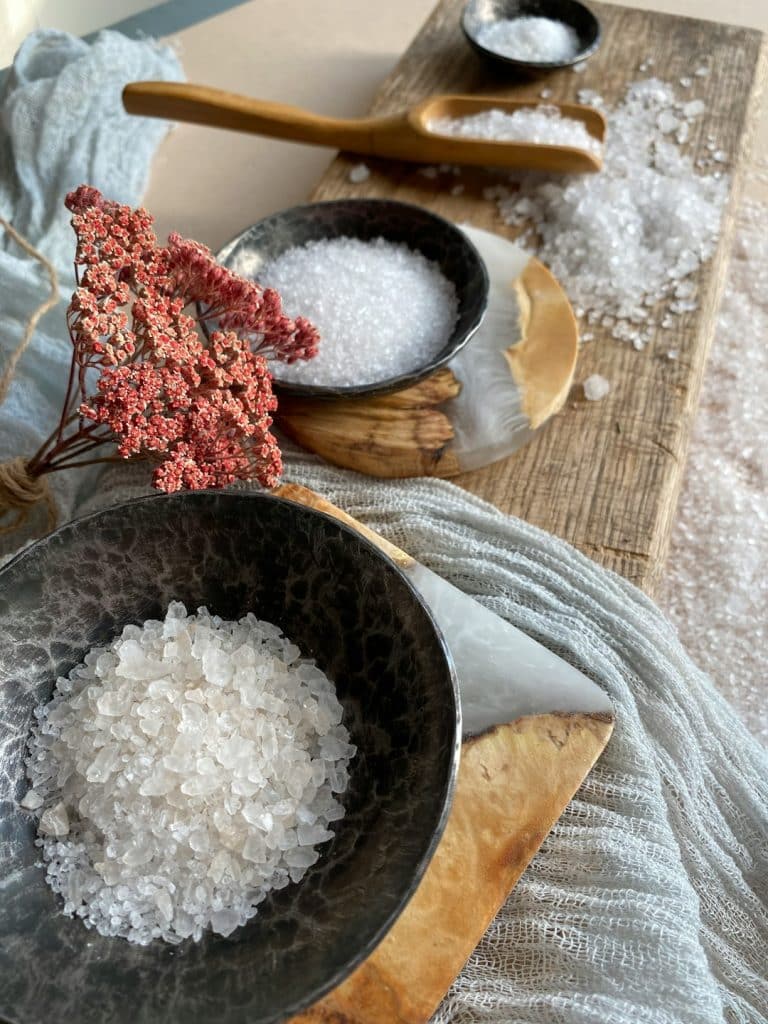
Salt acts as a gentle scrubber. Its coarse texture removes stuck food and grease.
- Salt grains are rough enough to clean but not scratch the pan.
- It lifts residue without damaging the seasoning layer.
- Salt absorbs moisture that can cause rust.
- It cleans without needing soap, which can strip the pan.
Preserving Seasoning
Salt helps keep the skillet’s seasoning intact. This layer makes the pan non-stick and protects against rust.
| Cleaning Method | Effect on Seasoning | Rust Risk |
| Salt Scrub | Preserves well | Low |
| Soap and Water | Strips seasoning | Higher |
| Steel Wool | Damages seasoning | High |
Credit: blog.blueapron.com
Gathering Cleaning Supplies
Cleaning a cast iron skillet with salt is a simple and effective method. Before you start, gather all the supplies needed. This will make the cleaning process smooth and efficient.
Using the right kind of salt and having extra tools ready can help protect your skillet. Let’s look at what you need to prepare before cleaning.
Choosing The Right Salt
Not all salts work well for cleaning cast iron. You want a salt that is coarse enough to scrub but not so sharp that it scratches the surface.
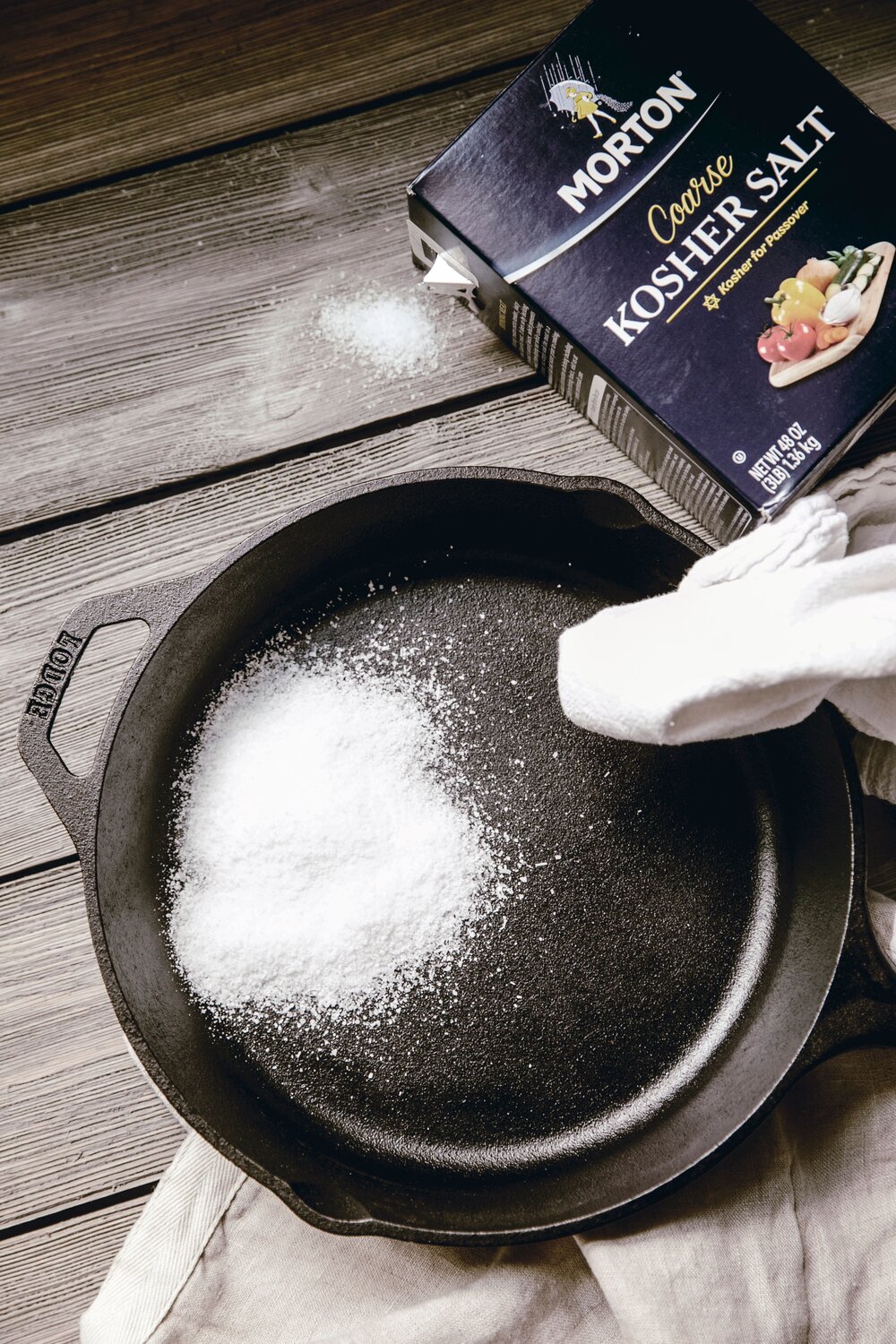
- Coarse kosher salt is the best choice for cleaning.
- Avoid fine table salt as it can be too abrasive.
- Sea salt can work but should be coarse grain.
- Do not use flavored or iodized salts.
Additional Tools Needed
You will need a few other items to clean your skillet properly and safely.
| Tool | Purpose |
|---|---|
| Cast iron skillet | The pan you want to clean |
| Coarse salt | Acts as a natural scrubber |
| Sponge or scrub brush | Helps remove stuck food |
| Paper towels or cloth | For wiping and drying |
| Warm water | Rinses off salt and debris |
Step-by-step Cleaning Process
Cleaning a cast iron skillet with salt is easy and effective. This method removes stuck food without hurting the skillet’s seasoning.
Follow these simple steps to keep your skillet clean and ready for cooking.
Heating The Skillet
Start by warming your cast iron skillet on the stove. Heat it over low to medium heat for a few minutes. This softens stuck food and makes cleaning easier.
Do not overheat the skillet; it should be warm, not hot.
Applying Salt
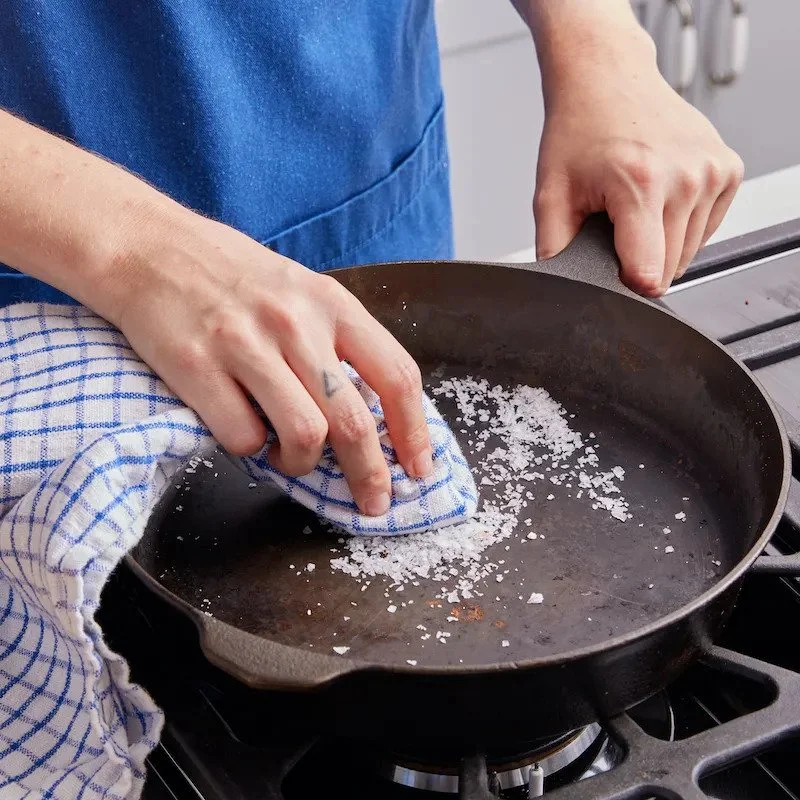
Sprinkle a generous amount of coarse kosher salt over the warm skillet surface. The salt acts as an abrasive to scrub away residue.
Use enough salt to cover the dirty areas well but avoid using fine salt that may not scrub effectively.
Scrubbing Technique
Use a folded paper towel or a soft cloth to scrub the skillet gently. Move in small circles to lift off stuck food.
- Focus on stubborn spots with more salt
- Do not use metal scrubbers that can damage seasoning
- Keep scrubbing until the surface feels clean
Rinsing And Drying
Rinse the skillet with warm water to remove salt and loosened debris. Avoid using soap as it can strip seasoning.
Dry the skillet thoroughly with a clean towel. To prevent rust, heat it on the stove for a few minutes until fully dry.

Credit: underatinroof.com
Maintaining Your Skillet Post-cleaning
Cleaning your cast iron skillet with salt removes stuck-on food without damaging the surface. After cleaning, proper care keeps your skillet in great shape.
Follow simple steps to protect your skillet and keep it ready for cooking.
Re-seasoning Tips
Re-seasoning your skillet adds a layer of protection. It prevents rust and keeps food from sticking.
After cleaning, dry your skillet well. Then apply a thin layer of cooking oil all over the surface.
- Use vegetable oil or flaxseed oil for best results
- Heat the skillet in the oven at 350°F (175°C) for one hour
- Let it cool completely before storing
- Repeat seasoning if the surface looks dull or sticky
Proper Storage Methods
Store your cast iron skillet in a dry place to avoid rust. Keep it uncovered or with a paper towel inside.
Do not stack heavy items on top to protect the seasoning layer. If stacking is needed, place paper towels between pans.
- Store in a cool, dry cabinet or shelf
- Place a paper towel inside to absorb moisture
- Avoid airtight containers that trap humidity
- Check skillet regularly for any signs of rust
Common Mistakes To Avoid
Cleaning a cast iron skillet with salt is simple but easy to do wrong. Some mistakes can damage your skillet or reduce its lifespan.
Knowing what not to do helps keep your skillet in good shape. Here are common mistakes to avoid when cleaning with salt.
Using Soap Or Harsh Chemicals
Many people think soap or chemicals help clean better. But they can remove the skillet’s seasoning, which protects it from rust and sticking.
- Avoid using soap when cleaning with salt.
- Do not use bleach or other harsh cleaners.
- Stick to coarse salt and a scrubber for cleaning.
- Rinse with warm water only after scrubbing.
- Dry the skillet immediately to protect the seasoning.
Leaving Skillet Wet
Leaving your cast iron skillet wet can cause rust. Water damages the metal and ruins the seasoning layer.
| Risk | Effect | Prevention |
|---|---|---|
| Leaving skillet wet | Rust forms on surface | Dry skillet immediately with towel or heat |
| Not oiling after cleaning | Seasoning breaks down | Lightly oil skillet after drying |
| Storing in humid place | Rust and mold growth | Store in dry area with good air flow |
Credit: heirloomedblog.com
Alternative Cleaning Methods
Cleaning a cast iron skillet with salt is a popular way to keep it in good shape. Some people prefer other easy and natural methods to clean their skillets. These methods help remove stuck food and keep the skillet seasoned.
Below are two simple alternatives to clean your cast iron skillet without soap or harsh chemicals.
Using Coffee Grounds
Used coffee grounds work well as a scrubber for cast iron skillets. They are coarse enough to remove stuck food but gentle on the skillet’s surface.
After cooking, sprinkle used coffee grounds on the skillet. Scrub with a cloth or sponge to clean off food bits. Rinse with warm water and dry the skillet thoroughly.
- Used coffee grounds act as a natural scrubber
- They help remove stuck food without damaging the seasoning
- Rinse well and dry the skillet after scrubbing
Boiling Water Technique
Boiling water in the skillet loosens stuck food and makes cleaning easier. This method uses heat and water only, no soap or scrubbing required.
Fill the skillet with water and bring it to a boil on the stove. Let it boil for a few minutes to soften food residues. Carefully pour out the water, then wipe the skillet clean with a cloth or spatula.
- Fill skillet with water and bring to a boil
- Boil for 5 to 10 minutes to loosen stuck food
- Pour out water and wipe skillet clean
- Dry the skillet completely to prevent rust
Frequently Asked Questions
How Does Salt Clean A Cast Iron Skillet?
Salt acts as a gentle abrasive to remove stuck-on food. It scrubs away residue without damaging the skillet’s seasoning. Using coarse salt helps lift grime while preserving the pan’s non-stick surface. This natural method avoids harsh chemicals and maintains cast iron’s durability.
Can I Use Salt Alone To Clean Cast Iron?
Yes, coarse salt alone can clean cast iron effectively. It scrubs off food particles while protecting the seasoning layer. After scrubbing, rinse with warm water and dry thoroughly. Avoid soap to keep the skillet’s seasoning intact and rust-free.
How Often Should I Clean With Salt?
Clean your cast iron skillet with salt after each use if needed. This prevents buildup and keeps the surface smooth. Light cleaning after every cook maintains seasoning and enhances the pan’s lifespan. Use salt whenever food sticks or residue appears.
Is Salt Better Than Soap For Cast Iron Cleaning?
Salt is better than soap for routine cast iron cleaning. Soap can strip the seasoning, leading to rust and sticking. Salt gently removes debris without harming the protective oil layer. Reserve soap only for heavy-duty cleaning or re-seasoning.
Conclusion
Cleaning a cast iron skillet with salt is easy and effective. Salt scrubs away food bits without harming the skillet. It’s a simple, natural method. No special tools needed. Just salt and a little elbow grease. Remember to dry the skillet thoroughly.
This prevents rust. Keep your skillet seasoned for the best results. Regular care means a longer-lasting skillet. Your meals will taste better too. Enjoy cooking with confidence. Your cast iron will serve you well. Happy cooking!