Imagine this: you’ve just cooked a delicious meal using your trusty cast iron skillet. It’s helped you achieve that perfect sear, and the flavors are just right.
But now, as you look at your skillet, you’re wondering how to clean it properly without losing its seasoned charm. You’re not alone; many people face this conundrum. Cleaning a cast iron skillet can seem like a daunting task, but with the right steps, it’s surprisingly simple.
By learning how to care for your skillet correctly, you not only extend its life but also enhance its cooking performance for every meal to come. You’ll discover easy, effective methods to clean your cast iron skillet after use, ensuring it remains a kitchen favorite for years. Ready to unlock the secrets to a well-maintained skillet? Let’s dive in.
Why Clean Cast Iron Properly
Cleaning cast iron skillets the right way keeps them strong and useful. Proper care stops rust and food from sticking.
Good cleaning helps keep the skillet’s natural non-stick surface. It also makes cooking safer and tastier.
Prevent Rust And Damage
Cast iron can rust if left dirty or wet. Cleaning it properly removes food and moisture. This keeps rust away and protects the pan.
Keep The Seasoning Intact
The seasoning is the oily layer that makes the pan non-stick. Harsh cleaning can remove this layer. Proper cleaning keeps the seasoning strong for better cooking.
Avoid Food Buildup And Odors
Food left on the skillet can cause bad smells and attract bugs. Cleaning well stops food buildup. This keeps the skillet fresh and ready to use.
Save Money And Extend Use
Cast iron skillets are an investment. Proper cleaning and care make them last many years. This saves money on replacements.
- Remove food scraps right after cooking
- Use warm water and a brush or sponge
- Dry the skillet fully to stop rust
- Apply a thin oil layer after cleaning
- Avoid soap or harsh detergents
Gather Essential Cleaning Tools
Cleaning your cast iron skillet properly keeps it in great shape. Using the right tools makes the job easier and protects the skillet’s surface.
Before you start cleaning, gather everything you need. This helps you clean quickly and safely.
Soft Scrub Brush Or Sponge
A soft scrub brush or sponge removes stuck food without scratching the skillet. Avoid harsh steel wool, which can damage the seasoning.
Mild Dish Soap
Use a mild dish soap for cleaning. It helps remove grease and food bits without harming the skillet’s protective layer.
Warm Water
Warm water softens food residues and makes cleaning easier. Avoid soaking the skillet for a long time to prevent rust.
Clean Dry Cloth Or Paper Towels
Dry your skillet immediately after washing. Use a clean cloth or paper towels to prevent moisture from causing rust.
Cooking Oil For Seasoning
Apply a thin layer of cooking oil after cleaning. This keeps the skillet’s surface non-stick and rust-free.
- Soft scrub brush or sponge
- Mild dish soap
- Warm water
- Clean dry cloth or paper towels
- Cooking oil for seasoning
Cool Down Before Cleaning
Cleaning a cast iron skillet right after cooking can cause damage. The skillet is very hot and can crack if cooled too fast. Always let your skillet cool down before you start cleaning.
Cooling down helps keep the skillet safe and protects its seasoning. It also makes cleaning easier and safer for you.
Why Cooling Down Is Important
Cast iron holds heat for a long time. If you wash it while hot, the sudden cold water can cause it to crack. Cooling stops this risk and keeps the skillet strong.
Also, cleaning a hot skillet can burn your hands. Waiting makes it safer to handle.
How Long Should You Let It Cool?
Let the skillet cool for at least 30 minutes after cooking. This time lets the temperature drop to a safe level.
If you are in a hurry, touch the skillet carefully to check if it is warm but not hot. Do not clean if it feels too hot.
Safe Cooling Tips
Place the skillet on a heat-safe surface to cool. Avoid putting it in cold water or on a cold countertop.
- Use a trivet or wooden board to protect surfaces
- Keep the skillet away from drafts or cold air
- Do not cover the skillet tightly while cooling

Credit: www.youtube.com
Remove Food Residue
Cleaning your cast iron skillet right after use keeps it in good shape. Removing food residue prevents rust and keeps the surface smooth.
Use simple methods like hot water and scrubbing to clean the skillet without harming its seasoning.
Use Hot Water
Rinse the skillet with hot water while it is still warm. Hot water softens stuck food and makes it easier to remove.
- Fill the skillet with hot water
- Let it sit for a few minutes
- Pour out the water and check for loosened food
- Repeat if needed before scrubbing
Scrub With Brush Or Sponge
Use a stiff brush or a non-metal sponge to scrub the skillet. Avoid steel wool or harsh scrubbers that can damage the seasoning.
| Tool | Use | Note |
| Stiff brush | Remove food particles | Safe for seasoning |
| Non-metal sponge | Gentle scrubbing | Prevents scratching |
| Steel wool | Heavy scrubbing | Not recommended |
Avoid Soap And Harsh Detergents
Cleaning a cast iron skillet needs care. Using soap or harsh detergents can damage its surface.
These cleaners can remove the skillet’s seasoning. This makes the pan prone to rust and sticking.
Why Avoid Soap On Cast Iron
Soap breaks down the oil layer on the skillet. This oil layer is called seasoning.
Seasoning protects the pan and makes it non-stick. Removing it causes food to stick and rust to form.
Use Hot Water And A Brush
Cleaning with hot water and a stiff brush removes food bits. It keeps the seasoning safe.
Scrub gently but firmly to clear stuck-on food. Avoid soaking the skillet for a long time.
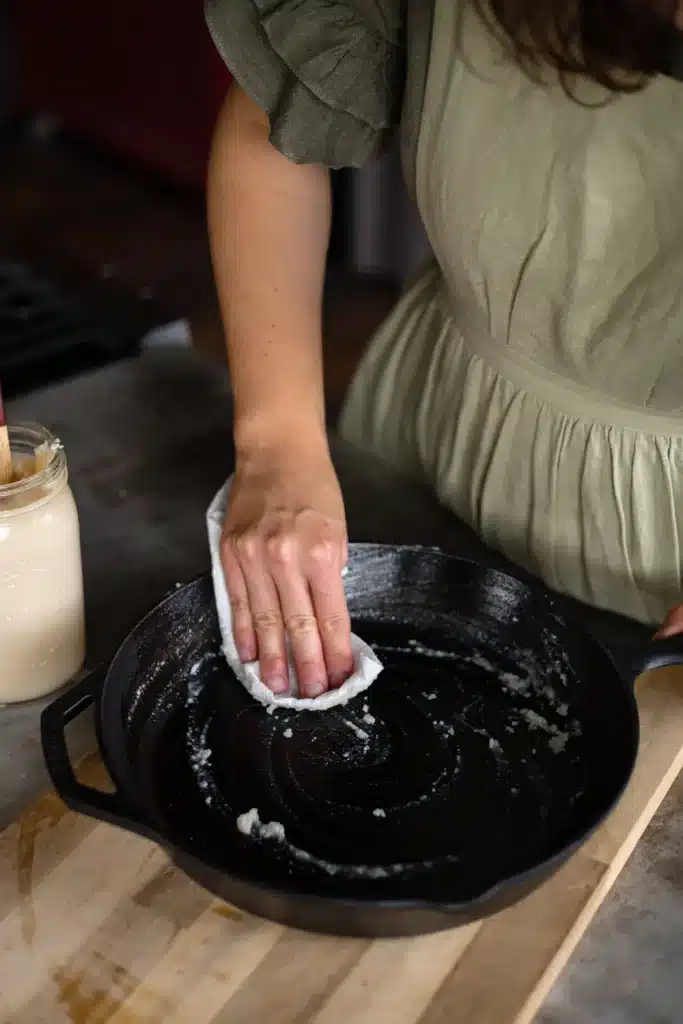
Remove Stubborn Food With Salt
Coarse salt works as a natural scrub. It helps lift stuck food without harming the pan.
Pour salt into the skillet, add a little water, and scrub with a cloth or brush.
- Use coarse kosher salt
- Add a small amount of water
- Scrub gently in circles
- Rinse with hot water
Dry And Oil The Skillet After Cleaning
After washing, dry the skillet well. Use a towel and heat on the stove to remove moisture.
Apply a thin layer of cooking oil to keep the seasoning strong. This prevents rust and keeps the pan ready.

Credit: bitzngiggles.com
Dry The Skillet Thoroughly
After cleaning your cast iron skillet, drying it well is very important. Moisture can cause the skillet to rust quickly.
Use simple ways to remove all water from the skillet. This keeps your pan in good shape for a long time.
Use Towel
Take a clean, dry towel to wipe the skillet. Make sure to dry the inside and outside surfaces.
Use a soft cloth or paper towel. Avoid rough materials that can damage the skillet’s seasoning.
Heat On Stove To Evaporate Moisture
Place the skillet on low heat after drying with a towel. Heat helps remove any left moisture.
Keep the skillet on the stove for a few minutes. Let it get warm, but not too hot to handle safely.
Apply A Thin Layer Of Oil
After cleaning your cast iron skillet, applying a thin layer of oil is important. This step protects the skillet from rust and keeps its surface smooth.
Oiling also helps maintain the skillet’s seasoning, making it non-stick and ready for the next use.
Choose The Right Oil
Use oils that can handle high heat and dry well on the skillet. Choose oils with a high smoke point to avoid sticky residue.
Common choices include vegetable oil, canola oil, and flaxseed oil. These oils create a strong protective layer on the skillet.
- Vegetable oil – affordable and works well
- Canola oil – light and has a high smoke point
- Flaxseed oil – dries hard and forms a good coating
- Grapeseed oil – stable and smooth finish
How To Apply Oil Evenly
Start by pouring a small amount of oil onto the skillet’s surface. Use a paper towel or cloth to spread it thinly and evenly.
Make sure to cover the entire inside surface, including the sides. Wipe off any extra oil to avoid sticky buildup.
- Pour a few drops of oil on the skillet
- Use a clean cloth or paper towel
- Spread the oil evenly over the whole skillet
- Remove excess oil with a dry towel

Credit: www.reddit.com
Store Properly To Prevent Rust
Cleaning your cast iron skillet is only the first step. Proper storage stops rust from forming.
Cast iron is prone to rust if it stays wet or unseasoned. Store it carefully to keep it ready for your next meal.
Dry Completely Before Storing
After washing, dry the skillet well with a towel. Then heat it on the stove for a few minutes to remove any moisture.
Coat the skillet inside and out with a thin layer of cooking oil. This layer protects the surface from air and water.
- Use vegetable oil, flaxseed oil, or shortening.
- Apply with a paper towel to spread evenly.
- Wipe off any extra oil to avoid stickiness.
Store In A Dry, Ventilated Area
Keep your skillet in a place with good air flow. Avoid damp cupboards or closed containers that trap moisture.
- Place a paper towel between stacked skillets.
- Use a hanging rack for better ventilation.
- Check the skillet regularly for signs of rust.
Deep Cleaning For Stubborn Residue
Cleaning a cast iron skillet can be tough if food sticks to it. Stubborn residue needs special care to keep the skillet in good shape.
Deep cleaning helps remove stuck-on bits without harming the skillet’s seasoning. Use gentle but effective ways to clean it well.
Use Salt Scrub
Coarse salt works as a natural scrubber for your cast iron skillet. It removes stuck food without scratching the surface.
Pour a good amount of salt into the skillet. Use a cloth or paper towel to scrub the salt around the pan.
- Use coarse kosher salt for best results
- Scrub gently to lift residue
- Rinse with warm water after scrubbing
- Dry the skillet completely to avoid rust
Re-seasoning The Skillet
After deep cleaning, your skillet might lose some seasoning. Re-seasoning protects the cast iron and keeps it non-stick.
Apply a thin layer of cooking oil all over the skillet. Heat it in the oven to bond the oil to the metal surface.
- Use vegetable oil, flaxseed oil, or shortening
- Coat the skillet evenly inside and out
- Bake upside down at 375°F (190°C) for one hour
- Let it cool inside the oven before storing
Tips For Long-lasting Cast Iron Care
Cast iron skillets can last for many years if you care for them properly. Cleaning your skillet the right way helps keep its surface smooth and non-stick.
Follow simple steps after each use to protect your cast iron from rust and damage. This keeps your skillet ready for the next meal.
Clean While Still Warm
Clean your cast iron skillet soon after cooking. It is easier to remove food when the pan is still warm. Avoid letting food dry on the surface.
Use hot water and a soft brush or sponge. Avoid soap or strong detergents that can strip the seasoning layer.
Avoid Soaking In Water
Do not leave your cast iron skillet soaking in water. Prolonged contact with water causes rust and damages the pan.
If stuck-on food remains, scrub gently with coarse salt and a little water. This helps clean without harming the seasoning.
Dry Immediately And Completely
After washing, dry your skillet right away. Use a clean towel or place it on low heat to evaporate any moisture.
Moisture left on the pan can cause rust spots. Make sure the skillet is fully dry before storing.
Once dry, add a small amount of cooking oil to the skillet. Rub it all over the inside surface using a paper towel.
This helps keep the seasoning strong and protects the pan from moisture. Use oils with high smoke points like vegetable or flaxseed oil.
Store In A Dry Place
Keep your cast iron skillet in a dry, cool place. Avoid storing it in damp or humid areas to prevent rust.
You can place a paper towel inside the skillet to absorb any moisture during storage.
Frequently Asked Questions
How Do I Clean A Cast Iron Skillet After Cooking?
Clean your skillet while it’s warm using hot water and a brush. Avoid soap to maintain seasoning. Dry thoroughly and apply a thin oil layer to prevent rust.
Can I Use Soap To Clean Cast Iron Skillets?
Generally, avoid soap as it can strip the seasoning. Mild soap can be used sparingly if necessary, but always re-season the skillet afterward to protect its surface.
How Do I Remove Stuck-on Food From Cast Iron?
Use coarse salt as a scrub with a paper towel or brush. For tough residue, boil water in the skillet to loosen food before scrubbing.
Should I Dry My Cast Iron Skillet Immediately?
Yes, dry your skillet immediately with a towel to prevent rust. You can also warm it on the stove to ensure all moisture evaporates.
Conclusion
Cleaning your cast iron skillet is simple and quick. Avoid soap and harsh scrubbing to keep its seasoning. Use warm water and a soft brush for best results. Dry it completely to stop rust from forming. Apply a thin layer of oil after cleaning.
This keeps the skillet ready for your next meal. Caring for your skillet this way helps it last for years. Enjoy cooking with a clean, well-maintained pan every time.