
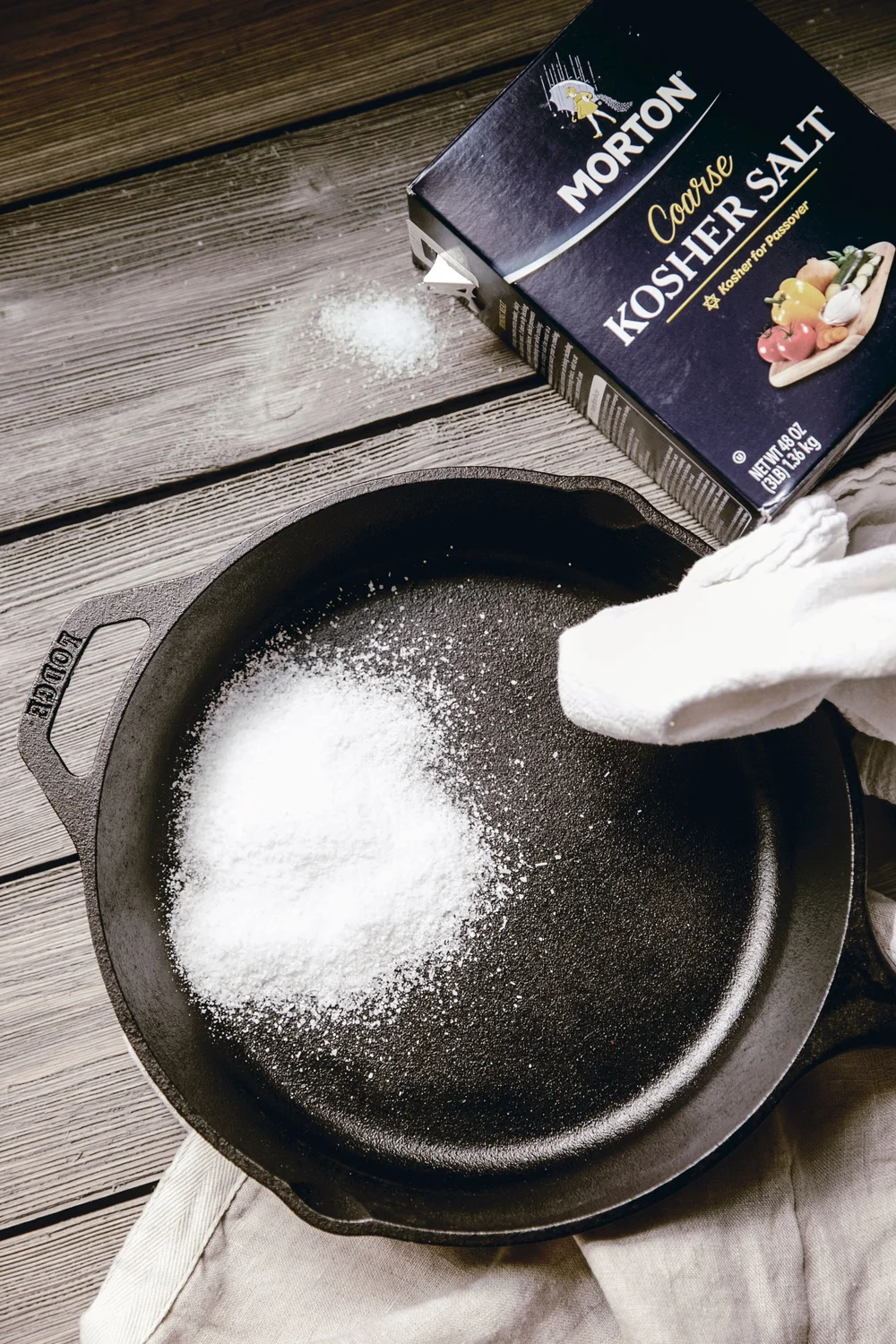
Have you ever looked at your beloved cast iron pan and wondered how to bring back its original shine? You're not alone.
Many home cooks struggle with maintaining the beauty and functionality of their cast iron cookware. But what if I told you there's a simple, effective method to clean it using something as basic as coarse salt? That's right. With just a handful of coarse salt and a little elbow grease, you can make your cast iron pan look brand new.
Intrigued? Keep reading to discover how this easy cleaning technique can transform your cooking experience and prolong the life of your treasured pan. Your kitchen routine is about to get a lot easier—and your meals, a lot tastier.
Credit: blog.blueapron.com
Why Use Coarse Salt
Cleaning a cast iron pan properly keeps it safe and lasts longer. Coarse salt is a natural cleaner that works well for this task.
This guide explains why coarse salt is a good choice for cleaning cast iron pans.
Natural Abrasive Power
Coarse salt has rough grains that help scrub off stuck food and grease. It cleans without scratching the pan’s surface.
- Salt grains break down tough residues
- Works as a gentle scrubber
- Removes oils and food bits
- Does not wear down the seasoning layer
Safe For Cast Iron
Coarse salt does not harm the pan’s seasoning or metal. It cleans without using harsh chemicals or soaps that can damage cast iron.
| Cleaning Method | Effect on Cast Iron |
| Coarse Salt Scrub | Safe, protects seasoning |
| Harsh Soap | Can strip seasoning |
| Steel Wool | May scratch surface |
Eco-friendly Cleaning
Using coarse salt is good for the environment. It is natural and biodegradable. It avoids chemicals that harm water and soil.
Benefits of Coarse Salt Cleaning:
- No toxic chemicals
- Easy to dispose
- Renewable natural resource
Gathering Your Supplies
Cleaning a cast iron pan with coarse salt is simple and effective. You need a few basic supplies to get started.
Having the right materials makes cleaning easier and protects your pan’s seasoning.
Choosing The Right Salt
Coarse salt works best to clean cast iron pans. It scrubs away food bits without harming the surface.
- Pick coarse or kosher salt. Avoid fine salt because it can be too abrasive.
- Look for salt that is dry and free of clumps.
- Choose natural salts without additives or iodine.
Additional Tools Needed
You need a few tools along with salt to clean your pan well. These tools help remove stuck food and dry the pan properly.
| Tool | Purpose |
| Cast iron scrub brush or sponge | Scrubs off stuck food without damaging seasoning |
| Paper towels or clean cloth | Wipes the pan clean after scrubbing |
| Cooking oil | Protects and re-seasons the pan after cleaning |
| Warm water | Helps rinse off salt and debris |
Step-by-step Cleaning Process
Cleaning a cast iron pan with coarse salt is simple and effective. It helps remove stuck-on food without damaging the pan's surface.
This process keeps your pan ready for cooking and maintains its seasoning for longer use.
Preparing The Pan
Start by letting the pan cool down if it is still hot. Avoid cleaning a very hot pan to prevent burns.
Remove any loose food bits with a paper towel or soft cloth before adding salt.
Applying Coarse Salt
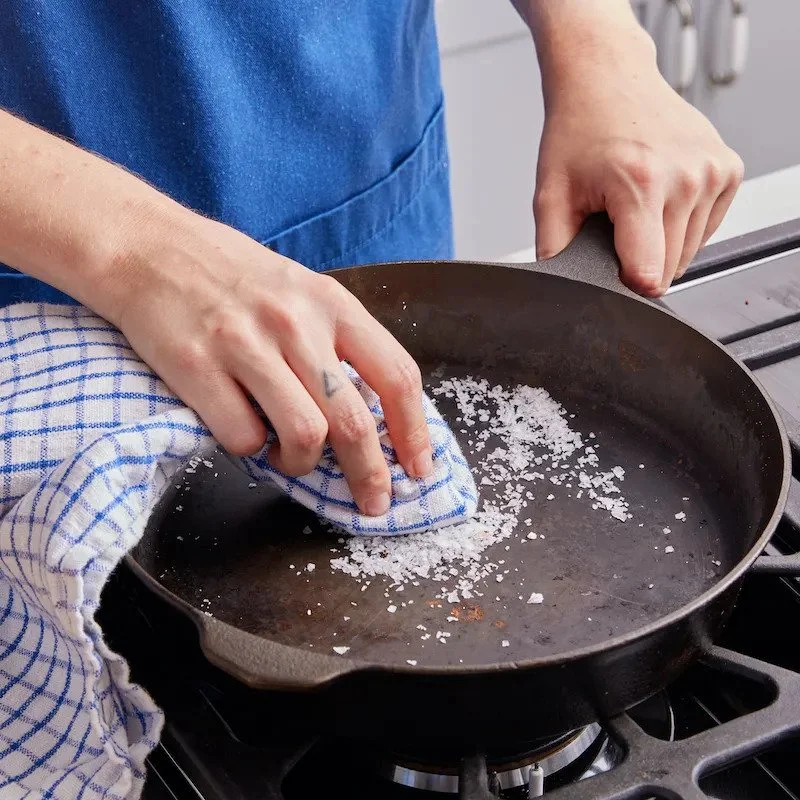
Pour a generous amount of coarse salt into the pan. The salt acts as a gentle abrasive to scrub away residue.
Make sure the salt covers the entire cooking surface for even cleaning.
Scrubbing Techniques
Use a clean cloth, sponge, or paper towel to scrub the pan. Move in circular motions to lift stuck food.
Apply gentle pressure. The salt will help remove debris without harming the pan’s seasoning.
- Scrub all areas, including sides and corners
- Use more salt if needed for tough spots
- Discard the used salt when cleaning is done
Rinsing And Drying
Rinse the pan with warm water to remove salt and loosened food. Avoid using soap to protect seasoning.
Dry the pan completely with a towel. Then heat it briefly on the stove to remove any moisture.

Credit: www.lambertslately.com
Maintaining Seasoning After Cleaning
Cleaning a cast iron pan with coarse salt helps remove stuck food. After cleaning, keep the seasoning strong. This keeps your pan non-stick and rust-free.
Proper care after cleaning helps your pan last longer. Two key steps are reapplying oil and using the right heating method.
Reapplying Oil
After rinsing and drying, add a thin layer of oil to the pan. This protects the surface and rebuilds seasoning.
- Use a small amount of vegetable, flaxseed, or canola oil.
- Apply oil evenly with a cloth or paper towel.
- Wipe away excess oil to avoid sticky spots.
Proper Heating Method
Heat the oiled pan gently to set the seasoning. Avoid overheating or sudden temperature changes.
| Heating Step | Details |
|---|---|
| Preheat Oven | Set to 350°F (175°C) |
| Place Pan | Upside down on the middle rack |
| Heating Time | 1 hour to cure oil |
| Cooling | Turn off oven and let pan cool inside |
Common Mistakes To Avoid
Cleaning a cast iron pan with coarse salt is simple and effective. Avoiding some common mistakes will keep your pan in good shape for years.
Knowing what not to do is just as important as knowing the cleaning steps. This helps protect the seasoning and the pan’s surface.
Using Soap Or Harsh Detergents
Soap can break down the seasoning on your cast iron pan. Harsh detergents strip away the natural oils that protect the pan.
Using soap or strong cleaners often leads to rust and a sticky surface. It is best to clean with just coarse salt and water.
Leaving Pan Wet
Water left on a cast iron pan causes rust to form quickly. Always dry your pan immediately after cleaning.
You can dry the pan with a towel or heat it on the stove for a few minutes. This keeps the pan dry and protects the seasoning.
Over-scrubbing
Scrubbing too hard can damage the seasoning layer. Use gentle pressure with coarse salt to clean stuck-on food.
Over-scrubbing may create scratches that lead to rust. Let the salt do the work while you avoid harsh scrubbing.

Credit: www.reddit.com
Additional Tips For Cast Iron Care
Cleaning your cast iron pan with coarse salt is a great start. Proper care helps your pan last longer. It keeps the surface smooth and non-stick.
Follow some easy habits to protect your pan. These tips cover regular maintenance and smart storage.
Regular Maintenance Routine
After cleaning with coarse salt, dry the pan well. Use a towel or heat it on low stove heat to remove all moisture.
- Apply a thin layer of cooking oil to the surface.
- Heat the pan on the stove or in the oven for a few minutes.
- Let it cool before storing.
- Repeat this after each use to keep the seasoning strong.
Do not soak your pan in water or use soap often. It can remove the seasoning and cause rust.
Storage Recommendations
Store your cast iron pan in a dry place. Avoid stacking it with other cookware that can scratch the surface.
| Storage Tip | Reason |
| Keep in a cool, dry spot | Prevents rust and moisture buildup |
| Use paper towel between pans | Stops scratches and protects seasoning |
| Store lid separately or with vent | Allows air circulation to avoid moisture |
Frequently Asked Questions
How Does Coarse Salt Clean Cast Iron Pans?
Coarse salt acts as a gentle abrasive to remove stuck-on food. It scrubs away residue without damaging the pan’s seasoning. Using salt helps maintain the pan’s non-stick surface naturally. This method avoids harsh chemicals and keeps your cast iron durable.
Can I Use Coarse Salt Instead Of Soap?
Yes, coarse salt is a safe alternative to soap for cleaning cast iron. Soap can strip the seasoning, while salt cleans effectively without harming it. Salt absorbs grease and lifts food particles, preserving the pan’s natural seasoning layer for longer use.
What Is The Best Way To Clean Cast Iron With Salt?
Sprinkle coarse salt inside the warm pan, then scrub with a cloth or brush. The salt scrapes off stuck food gently. Rinse with warm water and dry thoroughly to prevent rust. Finally, apply a thin oil layer to maintain seasoning and protect the pan.
Is Coarse Salt Safe For All Cast Iron Pans?
Yes, coarse salt is safe for all types of cast iron pans. It won’t scratch or degrade the seasoning when used properly. Avoid using fine salt or harsh scrubbing tools that might damage the surface. Coarse salt provides effective, gentle cleaning every time.
Conclusion
Cleaning your cast iron pan with coarse salt keeps it in great shape. The salt scrubs away food without harming the pan’s surface. This method saves time and avoids harsh chemicals. Rinse and dry your pan well after scrubbing. Remember to oil it lightly to stop rust.
This simple routine helps your pan last for years. Enjoy cooking with a clean, well-cared-for cast iron pan every time. Simple, effective, and natural. Easy to do and good for your kitchen tools.


