You just finished cooking a delicious meal in your cast iron pan. Now comes the crucial part: cleaning it the right way.
If you don’t know how to care for your cast iron properly, you risk ruining its seasoning or causing rust. But don’t worry—cleaning your pan doesn’t have to be complicated or time-consuming. In fact, with a few simple steps, you can keep your pan in perfect shape for years to come.
Ready to learn how to clean your cast iron pan after cooking so it stays strong, non-stick, and ready for your next meal? Keep reading—your cast iron deserves the best care.

Credit: homeessentials.in
Why Clean Cast Iron Properly
Cleaning your cast iron pan the right way keeps it in great shape for years.
Proper care stops damage and keeps your food tasting good every time.
Avoiding Rust And Damage
Cast iron pans can rust if not cleaned and dried correctly. Rust ruins the pan’s surface and makes it unsafe to use.
- Wash the pan with warm water right after cooking.
- Use a brush or sponge to remove stuck food.
- Never soak the pan in water for too long.
- Dry the pan immediately with a clean cloth or paper towel.
- Apply a thin layer of oil to protect the metal after drying.
Maintaining Non-stick Surface
The non-stick surface forms from a layer of oil baked into the pan. Cleaning can wear this away if done roughly.
| Cleaning Method | Effect on Non-Stick Surface |
| Using mild soap gently | Safe if used occasionally |
| Scrubbing with steel wool | Damages the surface |
| Oiling after cleaning | Protects and improves non-stick |
| Heating pan before oiling | Helps oil bond better |
Tools You Will Need
Cleaning your cast iron pan after cooking keeps it in good shape. Using the right tools makes cleaning easier and protects the pan’s surface.
This guide covers essential cleaning items and optional accessories to have on hand.
Essential Cleaning Items
These tools help remove food residue and maintain your pan’s seasoning.
- Stiff brush or non-metal scrubber
- Hot water (no soap needed)
- Soft cloth or paper towels
- Plastic or wooden scraper
- Cotton or linen towel for drying
Optional Accessories
These accessories are not required but can make cleaning easier and more effective.
| Accessory | Purpose |
| Chainmail scrubber | Removes tough stuck-on food |
| Cast iron conditioner or oil | Helps restore seasoning after cleaning |
| Silicone handle cover | Protects your hands from heat |
| Plastic scraper set | Safely removes stuck bits without damage |
Cleaning Immediately After Cooking
Cleaning your cast iron pan right after cooking keeps it in good shape. It helps remove stuck food and prevents rust.
Follow simple steps to clean your pan safely without harming its seasoning or surface.
Removing Food Residue
Use a spatula or scraper to gently remove leftover food. Avoid harsh scrubbing to protect the pan’s coating.
- Let the pan cool slightly but clean while still warm
- Use a wooden or plastic spatula to lift off stuck bits
- Apply a small amount of coarse salt if needed for scrubbing
- Rinse with warm water to wash away loosened residue
Using Hot Water Safely
Hot water cleans the pan well without soap. Use it carefully to protect the seasoning layer.
| Water Temperature | Purpose | Tip |
| Warm (not boiling) | Remove grease and food | Prevents warping |
| Hot | Loosen stuck food | Use briefly, cool pan first |
| Cold | Rinse after cleaning | Prevents thermal shock |

Credit: bitzngiggles.com
Dealing With Stubborn Stuck-on Food
Cleaning a cast iron pan can be tricky when food sticks tightly. You need gentle but effective methods. This guide shows two simple ways to clean your pan after cooking.
These methods help keep your pan’s seasoning intact. They remove stuck-on food without harsh scrubbing or chemicals.
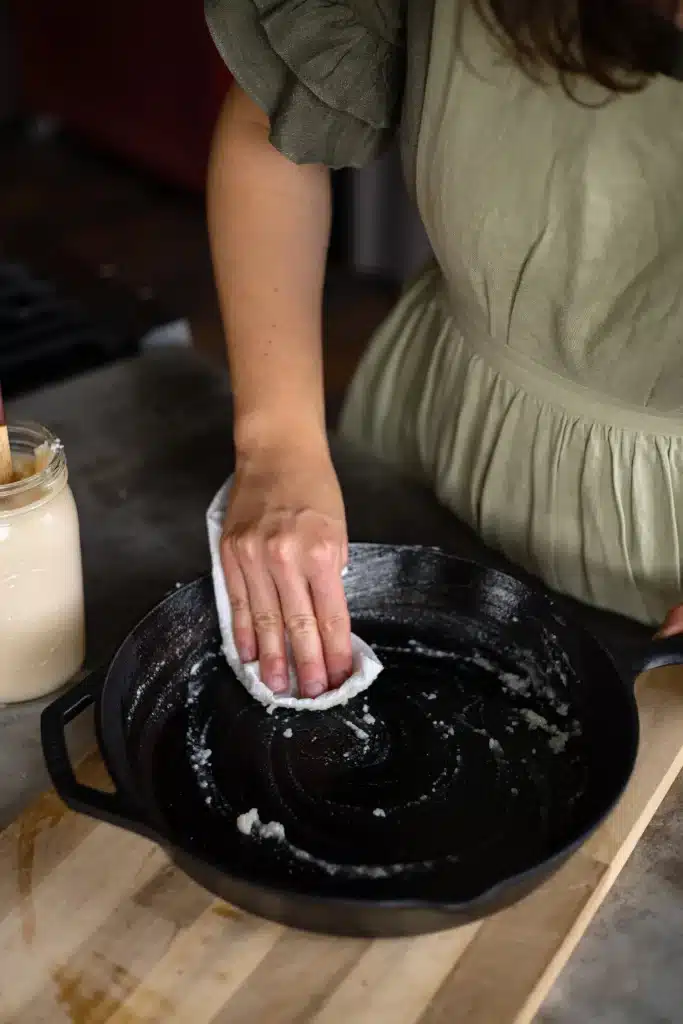
Salt Scrub Method
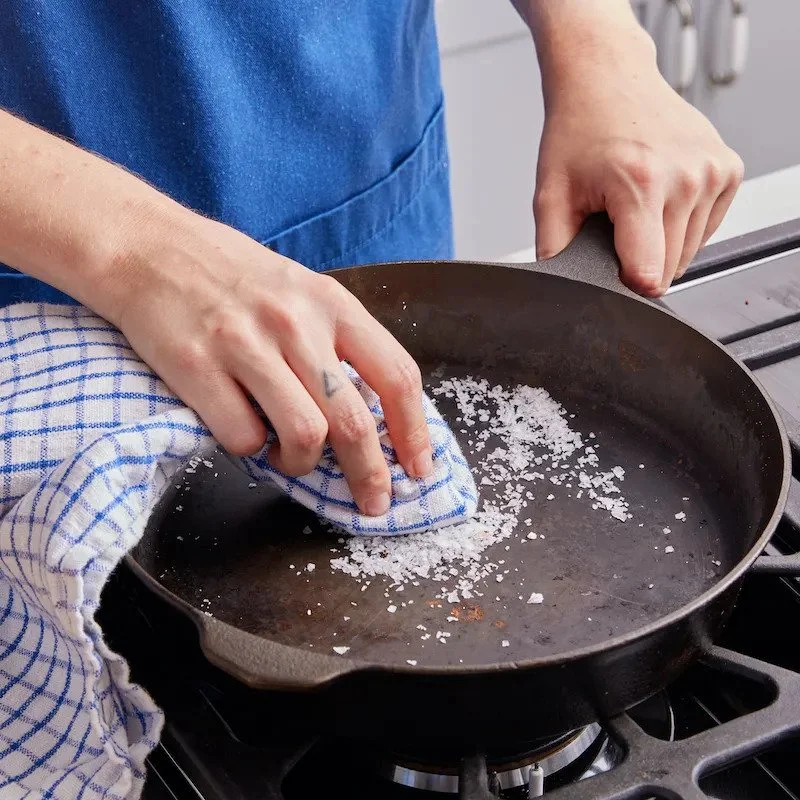
This method uses coarse salt as a natural scrubber. It lifts stuck food without damaging the pan.
- Pour a generous amount of coarse salt into the pan while still warm.
- Use a folded paper towel or cloth to scrub the salt around the pan’s surface.
- Focus on areas with stuck-on food, scrubbing in circular motions.
- Discard the salt and wipe the pan clean with a damp cloth.
- Dry the pan thoroughly to prevent rust.
Boiling Water Technique
This technique uses boiling water to loosen food particles. It works well for tough, stuck-on bits.
| Step | Action |
| 1 | Pour enough water to cover the stuck area in the pan. |
| 2 | Place the pan on the stove and bring the water to a boil. |
| 3 | Let it boil for 5 to 10 minutes to soften the food. |
| 4 | Use a wooden or silicone spatula to gently scrape off loosened food. |
| 5 | Pour out the water and dry the pan with a towel. |
Avoiding Harsh Cleaning Agents
Cleaning a cast iron pan requires care to keep its seasoning intact. Harsh cleaning agents can damage the pan’s surface.
This guide explains why to avoid soap and detergents and what safe alternatives to use instead.
Why Avoid Soap And Detergents
Soap and detergents remove natural oils from the cast iron pan. This breaks down the seasoning layer.
Without seasoning, food sticks more and the pan can rust faster. Harsh chemicals also harm the pan’s surface.
- Removes protective seasoning
- Causes rust to develop
- Can make food taste soapy
- Damages the pan’s surface over time
Safe Alternatives
Use gentle methods to clean your cast iron pan. These keep the seasoning strong and the pan long-lasting.
- Wipe the pan with a paper towel to remove food bits.
- Rinse with warm water and use a soft brush if needed.
- For stuck-on food, scrub with coarse salt and a little water.
- Dry the pan completely with a towel or on low heat.
- Lightly oil the surface to protect the seasoning.
| Cleaning Method | Benefit |
| Paper towel wipe | Removes loose food |
| Warm water rinse | Gentle cleaning |
| Salt scrub | Removes stubborn bits |
| Drying well | Prevents rust |
| Oiling | Protects seasoning |
Drying And Seasoning After Cleaning
Cleaning your cast iron pan is only the first step. Proper drying and seasoning keep it in good shape. These steps prevent rust and keep the pan non-stick.
Follow these simple methods to dry and season your pan after each use. This care extends the life of your cast iron cookware.
Proper Drying Methods
Drying your cast iron pan well stops moisture from causing rust. Use these ways to dry your pan safely.
- Wipe the pan with a clean cloth or paper towel right after washing.
- Place the pan on the stove over low heat for a few minutes to remove all water.
- Let the pan air dry in a warm place if you do not use the stove.
- Do not leave the pan wet or soak it in water for a long time.
Applying Oil For Seasoning
Seasoning your pan with oil creates a protective layer. This layer stops rust and keeps food from sticking.
| Type of Oil | Why Use It |
| Vegetable Oil | Common and effective for seasoning |
| Flaxseed Oil | Creates a strong, hard coating |
| Canola Oil | Good for high heat and easy to find |
| Grapeseed Oil | Light and stable under heat |
After drying, apply a thin layer of oil over the entire pan, inside and out. Use a paper towel to spread the oil evenly.
Heat the pan on medium heat for 5-10 minutes. Let it cool before storing. Repeat this process regularly to keep the seasoning strong.
Long-term Maintenance Tips
Cleaning your cast iron pan right after cooking is just the start. Proper long-term care keeps it smooth and rust-free. Follow simple steps to keep your pan ready for years.
Seasoning and storing your cast iron properly protects its surface. These habits improve cooking results and extend the pan’s life.
Regular Seasoning Schedule
Seasoning your cast iron pan regularly builds a non-stick layer. This layer stops rust and makes cooking easier. Use this schedule to keep your pan in top shape.
- Clean the pan with warm water and a soft brush after each use.
- Dry the pan completely with a cloth or on low heat.
- Apply a thin coat of cooking oil all over the pan’s surface.
- Heat the pan in the oven at 350°F (175°C) for one hour.
- Let the pan cool in the oven before storing it.
- Repeat this process every 1 to 3 months depending on use.
Storage Recommendations
Proper storage stops moisture and dust from damaging your pan. Keep it dry and aired to avoid rust and keep seasoning strong.
| Storage Tip | Details |
|---|---|
| Dry Completely | Make sure the pan is fully dry before storing. |
| Use Paper Towels | Place paper towels inside the pan to absorb moisture. |
| Store in a Dry Place | Avoid damp areas like under the sink or basement. |
| Keep Ventilated | Store with lid off or ajar to let air circulate. |
| Re-season Before Use | Apply oil and heat if pan feels dry or sticky. |
Credit: blog.blueapron.com
Frequently Asked Questions
How Do I Clean A Cast Iron Pan Without Soap?
Avoid soap to protect the seasoning. Use hot water and a stiff brush or scraper to remove food residue. Dry immediately and apply a light oil layer to prevent rust.
Can I Soak My Cast Iron Pan After Cooking?
No, soaking cast iron can cause rust. Clean it promptly with hot water and dry thoroughly. Re-season if necessary to maintain its non-stick surface.
What’s The Best Way To Remove Stuck Food On Cast Iron?
Use coarse salt as a scrub with a paper towel or sponge. This abrasive method removes stuck bits without damaging the seasoning. Rinse with hot water and dry well.
How Do I Dry My Cast Iron Pan Properly?
After washing, dry your cast iron pan completely with a towel. Then, heat it on the stove for a few minutes to evaporate any moisture and prevent rust.
Conclusion
Cleaning a cast iron pan is simple with proper steps. Start with warm water and a brush. Remove food bits gently. Avoid soap to keep the pan seasoned. Dry the pan immediately to prevent rust. Apply a thin oil layer for protection.
Store in a dry place. These steps help maintain your pan’s life. Regular care ensures great cooking results. A well-maintained pan adds flavor to your dishes. Enjoy cooking with your trusty cast iron! Keep it clean, keep it lasting. Simple care leads to delicious meals every time.
Happy cooking!