Your bamboo cutting board is a kitchen essential, but keeping it clean can be tricky. If you don’t clean it the right way, bacteria can build up, and your board might crack or lose its shine.
You want your cutting board to stay fresh, safe, and looking great for years. In this post, you’ll discover simple, effective steps to clean your bamboo cutting board the right way. Follow these tips, and you’ll protect your investment while making food prep safer and easier.
Keep reading to learn how easy it is to keep your bamboo cutting board in top shape!
Why Choose Bamboo Boards
Bamboo cutting boards are popular for many reasons. They offer a strong surface for chopping and cutting.
These boards are also better for the environment than many other materials. They are a smart choice for your kitchen.
Durability And Eco Benefits
Bamboo is a very tough material. It does not crack or split easily like some wood boards.
Bamboo grows fast and needs less water than other trees. This makes it a good eco-friendly option.
- Bamboo grows quickly, so it is easy to replace.
- It uses less water and no chemicals to grow.
- Bamboo boards last a long time with proper care.
- They resist damage from knives better than soft woods.
Natural Antibacterial Properties
Bamboo has natural oils that fight bacteria. This helps keep your cutting board cleaner.
These properties reduce the chance of germs growing on the board. It is safer for food preparation.
- Natural oils in bamboo act as a shield against bacteria.
- Bamboo boards dry quickly, which stops bacteria growth.
- They need less harsh cleaning to stay safe.
Credit: www.thekitchn.com
Daily Cleaning Routine
Keeping your bamboo cutting board clean every day helps it last longer. A simple routine stops bacteria and odors from building up.
Follow these easy steps to rinse and dry your board properly after each use.
Rinsing And Soap Wash
Start by rinsing the bamboo board with warm water to remove food bits. Use mild soap and a soft sponge to wash the surface gently.
- Rinse under warm running water
- Apply a small amount of mild dish soap
- Scrub gently with a soft sponge or cloth
- Rinse again to remove all soap residues
- Never soak the board in water for long periods
Drying Techniques
Dry your bamboo board quickly to prevent cracking or warping. Use a clean towel and let it air dry upright.
| Drying Method | Description |
| Towel Dry | Wipe board with a clean, dry towel after washing |
| Air Dry | Place board upright in a dish rack to dry fully |
| Avoid | Laying flat or stacking when wet to stop moisture buildup |
Deep Cleaning Methods
Keeping your bamboo cutting board clean is important for food safety. Deep cleaning helps remove stains and odors.
These methods use natural ingredients that clean and refresh your cutting board.
Using Vinegar And Lemon
Vinegar kills bacteria and lemon removes smells. Together, they clean your bamboo board well.
Spray vinegar on the board, then rub it with half a lemon. Let it sit for five minutes.
- Use white vinegar for best results
- Cut a lemon in half for scrubbing
- Rinse the board with warm water after
- Dry the board completely before storing
Baking Soda Scrub
Baking soda is a gentle abrasive that removes stains and odors. It works well on bamboo boards.
Make a paste with baking soda and water. Rub it on the board using a sponge or cloth.
- Mix two tablespoons of baking soda with a little water
- Apply paste to the board surface
- Scrub gently in circular motions
- Rinse well with warm water
- Dry the board fully before use
Removing Stains And Odors
Bamboo cutting boards can absorb stains and smells from food. Cleaning them well keeps them fresh and safe.
Using natural ingredients helps remove stains and odors without harming the board.
Salt And Lemon Paste
Salt and lemon make a strong paste that cleans stains and removes smells. Salt scrubs the surface, and lemon acts as a natural bleach.
To use, sprinkle salt on the board, then rub half a lemon over it. Let it sit for a few minutes before rinsing.
- Sprinkle coarse salt on the cutting board
- Rub with half a lemon, squeezing juice out
- Let it rest for 5 minutes
- Rinse with warm water and dry well
Hydrogen Peroxide Treatment
Hydrogen peroxide helps kill bacteria and lighten stains. It is safe to use in small amounts on bamboo boards.
Apply 3% hydrogen peroxide to the board, let it sit for a few minutes, then rinse and dry fully.
- Pour 3% hydrogen peroxide on the stained area
- Spread gently with a clean cloth or sponge
- Wait 5 minutes for it to work
- Rinse with water and wipe dry
Preventing Cracks And Warping
Bamboo cutting boards can crack or warp if not cleaned and dried correctly. Proper care keeps your board strong and smooth. This guide helps you avoid damage.
Preventing cracks and warping means drying your board properly and not soaking it in water. These steps keep bamboo healthy and long-lasting.
Proper Drying Tips
Dry your bamboo cutting board right after washing. Use a clean towel to remove water on all sides. Air dry it standing up or on a rack.
Do not leave the board flat on a wet surface. This traps moisture and causes warping. Good airflow helps the board dry evenly and fast.
- Wipe board with a dry cloth immediately
- Stand board on its edge to dry
- Keep away from direct sunlight or heat
- Allow full air circulation around board
Avoiding Soaking
Do not soak bamboo cutting boards in water. Soaking makes the wood swell and weakens the fibers. This leads to cracks and warping.
Wash the board with warm water and mild soap quickly. Rinse and dry right away. Limit water exposure to keep bamboo strong.
- Never leave board in sink or water basin
- Clean with sponge or cloth, not soaking
- Dry immediately after rinsing
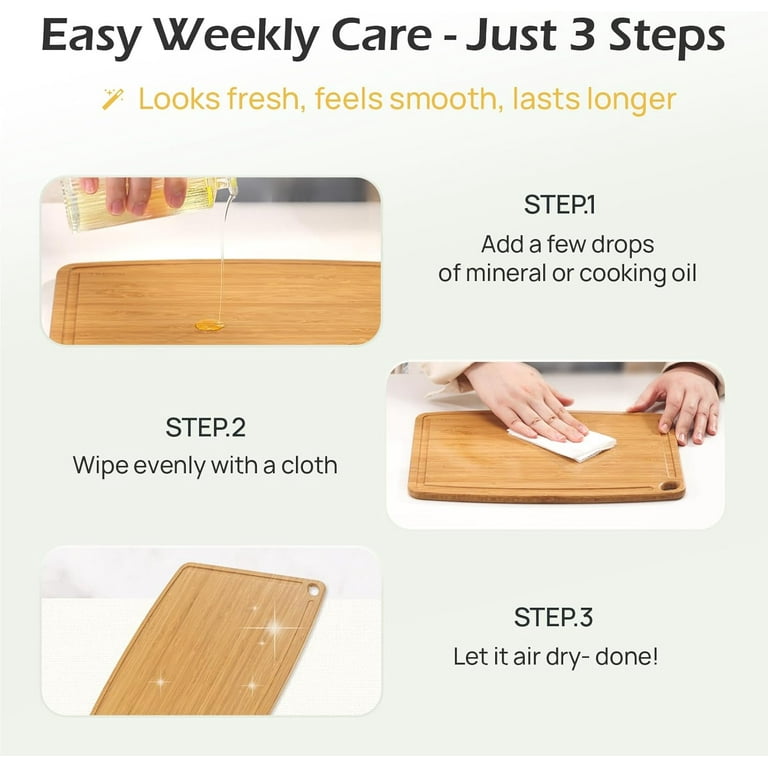
- Use oil treatment to protect wood
Credit: www.walmart.com
Maintaining With Oil
Oiling your bamboo cutting board keeps it strong and looking good. It stops the wood from drying out and cracking.
Using the right oil and oiling often helps your board last longer and stay safe for food use.
Choosing The Right Oil
Pick oils that do not go bad quickly and are safe for food contact. Avoid cooking oils that can turn sticky or smell bad.
- Food-grade mineral oil is a top choice. It does not spoil and protects the board well.
- Coconut oil is good if it is refined and pure. It lasts longer than other natural oils.
- Walnut oil works but may cause allergies in some people.
- Beeswax blends add extra protection but need more effort to apply.
Application Frequency
How often you oil your bamboo board depends on use and dryness. Oiling too little can dry the wood. Oiling too much can make it sticky.
| Use Level | Oiling Frequency | Notes |
| Heavy (daily use) | Once a week | Keep the board well protected |
| Moderate (few times a week) | Every two weeks | Maintain moisture and durability |
| Light (once a week or less) | Once a month | Prevent drying and cracking |
When To Replace Your Board
Knowing when to replace your bamboo cutting board helps keep your kitchen safe. Over time, boards wear out and can harbor bacteria.
Check your board often for damage. Replacing it at the right time protects your food and health.
Signs Of Wear And Tear
Look for these signs that your bamboo board needs replacement:
- Deep cracks or splits in the surface
- Large stains that do not wash out
- Rough or splintered areas that catch on food
- Warping or bending of the board
- Persistent odors after cleaning
Safety Considerations
| Risk | Cause | Effect |
|---|---|---|
| Bacterial growth | Cracks and grooves | Food contamination |
| Splinters | Surface damage | Injury while cutting |
| Warping | Water damage | Unstable cutting surface |
Replace your board if these risks appear. A damaged board can spread germs and cause accidents.
Credit: cheesegrotto.com
Frequently Asked Questions
How Often Should I Clean My Bamboo Cutting Board?
Clean your bamboo cutting board after every use. This prevents bacteria buildup and removes food residues. Regular cleaning keeps the board safe and fresh for food preparation.
What Is The Best Way To Clean Bamboo Cutting Boards?
Use warm water, mild soap, and a soft sponge to clean bamboo boards. Avoid soaking or harsh chemicals to prevent damage and warping.
Can I Use Bleach To Clean Bamboo Cutting Boards?
No, avoid bleach on bamboo cutting boards. It can damage the fibers and leave harmful residues. Stick to natural cleaners or mild soap.
How Do I Remove Odors From Bamboo Cutting Boards?
Sprinkle baking soda, rub with lemon juice, then rinse. This natural method neutralizes odors without damaging the board.
Conclusion
Cleaning bamboo cutting boards keeps them hygienic and long-lasting. Regular maintenance prevents bacteria buildup. Warm water and mild soap work best for cleaning. Use vinegar for stubborn odors. Dry thoroughly to prevent warping. Store in a dry area to maintain quality.
Avoid soaking in water for long periods. Bamboo is durable but needs care. Proper cleaning ensures your board stays safe for food preparation. Follow these tips for a clean, healthy kitchen tool. Keep your bamboo board in top condition with regular care.
Happy cooking!