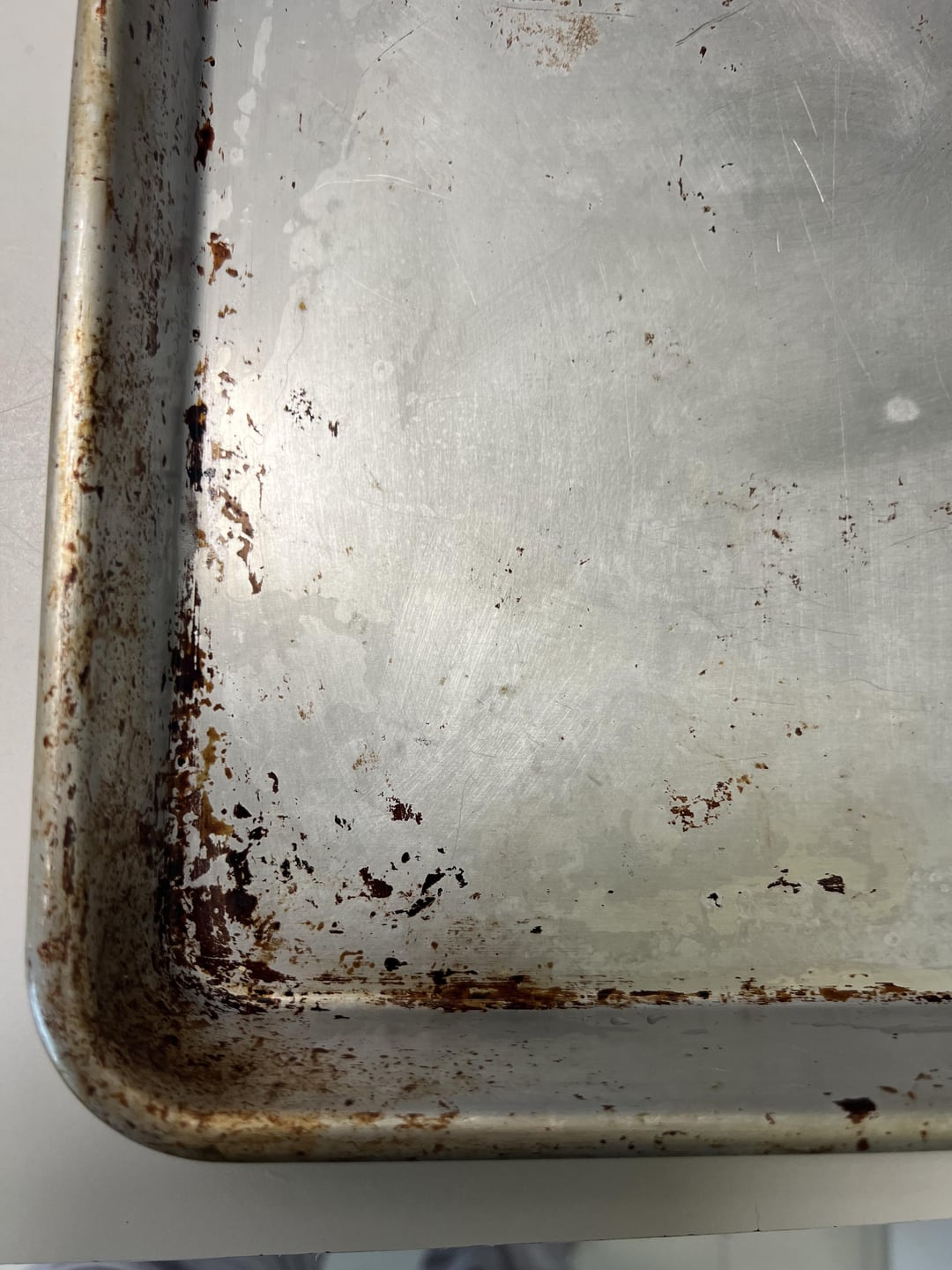
How to Clean Baking Sheet Pans? Have you ever pulled out your baking sheet pans, only to find them covered in a stubborn layer of grime and grease? You're not alone.
Those trusty pans bear the brunt of our culinary adventures, from roasted veggies to fresh-baked cookies. But keeping them clean can feel like a never-ending battle. Imagine the satisfaction of seeing them gleam, ready for your next masterpiece. In this guide, we’ll reveal simple, effective methods to restore your baking sheets to their former glory.
Get ready to transform your kitchen routine and say goodbye to stubborn stains. Let's dive in and make your pans shine like new!

Credit: katieskottage.com
Choosing The Right Cleaning Tools
Cleaning baking sheet pans is easier with the right tools. Picking good tools helps remove stuck food without damage.
Using gentle but effective cleaning items keeps your pans in good shape for longer use.
Best Sponges And Scrubbers
Soft sponges with a rough side work well for baking sheets. Avoid sponges that scratch the surface.
Scrubbers made from nylon or plastic are safe and clean well. Steel wool can damage non-stick pans.
- Use dual-sided sponges with soft and rough sides
- Choose nylon or plastic scrubbers for tough spots
- Avoid steel wool on coated or non-stick surfaces
Safe Cleaning Brushes
Brushes with soft to medium bristles clean well without scratching. They reach corners better than sponges.
Wood or plastic handles are easy to hold. Look for brushes designed for kitchen use.
- Soft to medium bristle brushes avoid surface damage
- Use brushes with comfortable wooden or plastic handles
- Choose kitchen brushes made for pans and dishes
Using Natural Cleaning Agents
Baking soda and vinegar are natural cleaners that remove grease and stains. They are safe for all pans.
Mix baking soda with water to form a paste. Use vinegar to help loosen burnt food before scrubbing.
- Baking soda paste cleans and deodorizes pans
- Vinegar helps break down tough stains
- Natural agents avoid harsh chemicals and damage
Pre-cleaning Steps
Cleaning baking sheet pans starts before scrubbing. Pre-cleaning helps remove stuck food and grease. This step makes washing easier and faster.
Use simple actions to prepare your pans for a deep clean. These steps protect your pans and improve results.
Soaking To Loosen Residue
Soaking baking sheets softens dried food and grease. Use warm water with mild dish soap for best results. Let the pans soak for at least 15 to 30 minutes.
Soaking helps break down tough stains without heavy scrubbing. Avoid soaking for too long if your pans are aluminum to prevent damage.
Removing Food Debris
After soaking, remove loose food bits with a soft sponge or brush. Avoid metal scrubbers that can scratch the surface. Focus on areas with stuck-on food.
- Use a plastic scraper for stubborn spots
- Rinse the pan with warm water
- Check for any missed residue before washing
Effective Cleaning Techniques
Keeping baking sheet pans clean helps them last longer and work better. Dirt and grease can build up after cooking. Using simple cleaning methods can make your pans shine again.
Try easy home ingredients and tools to remove grime. These tips save time and effort while protecting your pans.
Using Baking Soda And Vinegar
Baking soda and vinegar work well to clean baking sheets. They help break down grease and stuck food without harsh chemicals.
Sprinkle baking soda on the pan, then spray vinegar over it. Let the mixture bubble for a few minutes. Scrub gently with a sponge and rinse.
- Sprinkle 1-2 tablespoons of baking soda evenly.
- Spray or pour about 1/4 cup of vinegar.
- Wait 5-10 minutes for fizzing action.
- Scrub with a soft sponge or brush.
- Rinse with warm water and dry.
Applying Dish Soap And Warm Water
Dish soap and warm water are the easiest way to clean pans after use. This method removes fresh grease and food bits quickly.
Fill your sink with warm water and add a few drops of dish soap. Soak the pan for 15 to 30 minutes. Then scrub with a sponge and rinse well.
- Use warm water, not hot, to avoid warping.
- Add 2-3 drops of mild dish soap.
- Soak the pan to loosen food.
- Scrub gently with a non-abrasive sponge.
- Rinse and dry thoroughly.
Handling Tough Stains And Burnt Spots
Some stains and burnt spots need stronger cleaning. Use a paste of baking soda and water to scrub these areas.
Apply the paste on the stains and let it sit for 30 minutes. Use a scrub brush or steel wool carefully. Rinse well after scrubbing to remove residue.
- Mix baking soda with water to make a thick paste.
- Spread paste on burnt or stained areas.
- Wait 30 minutes to loosen grime.
- Scrub with a firm brush or pad.
- Wash and rinse thoroughly afterward.

Credit: www.yahoo.com
Avoiding Damage To Baking Sheets
Baking sheets are useful tools in the kitchen. Keeping them clean helps them last longer.
Using the right cleaning methods stops scratches and damage to your baking sheets.
Safe Cleaning Practices
Clean your baking sheets soon after use. Letting food dry on them makes cleaning hard.
Use warm water and mild dish soap. Soak sheets if food sticks tightly.
- Use a soft sponge or cloth to clean
- Avoid steel wool or abrasive pads
- Rinse well to remove soap
- Dry completely before storing
Materials To Avoid
Some materials can harm baking sheets. Avoid these to keep your pans safe.
- Steel wool can scratch the surface
- Harsh cleaners may strip finishes
- Metal utensils can cause dents
- Abrasive powders can wear down coatings
Use gentle tools and cleaners designed for cookware. This protects your baking sheets.
Maintaining Nonstick Surfaces
Nonstick baking sheets need special care. Harsh cleaning can ruin their coating.
Always use soft sponges and mild soap. Avoid metal tools that scrape the surface.
- Hand wash nonstick sheets only
- Do not use dishwasher detergents
- Dry with a soft towel to prevent spots
- Season nonstick surfaces lightly if recommended
Drying And Storing Tips
Cleaning your baking sheet pans well is important. Drying and storing them correctly keeps them in good shape. This helps your pans last longer and stay ready for cooking.
We will look at the best ways to dry and store your baking pans. These tips stop rust and damage from happening.
Proper Drying Methods
After washing, dry your baking sheet pans right away. Water left on the pans can cause rust or stains. Use a clean towel to remove all moisture.
Air drying is also good if you have time. Stand the pans up on their sides to let air flow around them. This helps water evaporate faster.
- Use a soft, dry cloth or towel
- Wipe every part of the pan carefully
- Stand pans upright for air drying
- Make sure pans are completely dry before storing
Storage Solutions To Prevent Damage
Store your baking sheets in a dry and cool place. Avoid stacking them directly on top of each other. This can cause scratches and dents.
Use a liner or cloth between pans if you stack them. This protects the surface and keeps your pans looking new. Keep pans away from heavy items that can bend them.
- Store pans in a cupboard or drawer
- Use paper towels or cloth between stacked pans
- Keep pans upright if possible
- Avoid placing heavy items on top

Credit: www.kentucky.com
Tips For Regular Maintenance
Keeping baking sheet pans clean helps them last longer. Regular care stops stains and buildup from forming.
Simple cleaning habits make your pans ready for the next use. This guide shows easy ways to keep them fresh.
Routine Cleaning Habits
Clean your baking sheets soon after use. Warm water and mild soap work well to remove grease and crumbs.
- Soak pans for 10 minutes if food is stuck
- Use a soft sponge or cloth to avoid scratches
- Dry pans completely to prevent rust
- Store pans in a dry, cool place
Preventing Buildup Over Time
Preventing buildup keeps pans smooth and easy to clean. Avoid strong scrubbing and harsh chemicals.
| Action | Why | Tip |
| Use parchment paper | Stops food from sticking | Line pans before baking |
| Apply cooking spray | Creates a non-stick layer | Lightly coat pan before use |
| Clean after each use | Prevents hard stains | Do not let residue dry |
| Avoid metal scrubbers | Protects pan surface | Use nylon brushes or sponges |
Frequently Asked Questions
How Do You Remove Burnt Residue From Baking Sheets?
To remove burnt residue, soak the sheet in hot soapy water for 30 minutes. Scrub gently with a non-abrasive sponge. For tough stains, apply baking soda paste, let it sit, then scrub and rinse thoroughly.
Can Baking Soda Effectively Clean Baking Sheet Pans?
Yes, baking soda is a natural, effective cleaner. It breaks down grease and stains without harsh chemicals. Sprinkle it on the pan, add water to form a paste, then scrub gently and rinse for best results.
Is It Safe To Use Vinegar On Baking Sheets?
Absolutely. Vinegar is safe and helps dissolve grease and mineral deposits. Spray or soak the pan in vinegar, let it sit for 10 minutes, then scrub and rinse to restore shine and cleanliness.
How Often Should You Clean Baking Sheet Pans Deeply?
Deep clean your baking sheets after every 3 to 5 uses. Regular cleaning prevents buildup and maintains non-stick surfaces. Light cleaning can be done after each use for best results.
Conclusion
Cleaning baking sheet pans does not have to be hard. Use gentle scrubs and simple ingredients like baking soda. Avoid harsh chemicals that can damage your pans. Regular cleaning keeps pans safe and ready to use. Stay patient and clean after each use.
This saves time and effort later. A clean pan helps food cook better and taste fresh. Keep these easy tips in mind for lasting results. Your kitchen will stay tidy and your pans will last longer. Simple care goes a long way.