If you own a cast iron Dutch oven, you know how powerful it is for cooking delicious meals. But cleaning it the right way can feel tricky.
You don’t want to ruin that perfect seasoning or damage your favorite pot. What if I told you that keeping your Dutch oven clean and ready to use is easier than you think? In this guide, you’ll discover simple, effective steps to clean your cast iron Dutch oven without stress.
Follow these tips, and your Dutch oven will stay in great shape for years to come. Ready to learn how? Let’s dive in!

Credit: cleanzen.com
Choosing The Right Cleaning Tools
Cleaning a cast iron Dutch oven needs special care. Using the right tools protects the seasoning and keeps it lasting long.
Picking tools that clean well but don’t damage the surface is key. Avoid anything too rough or harsh.
Essential Brushes And Scrubbers
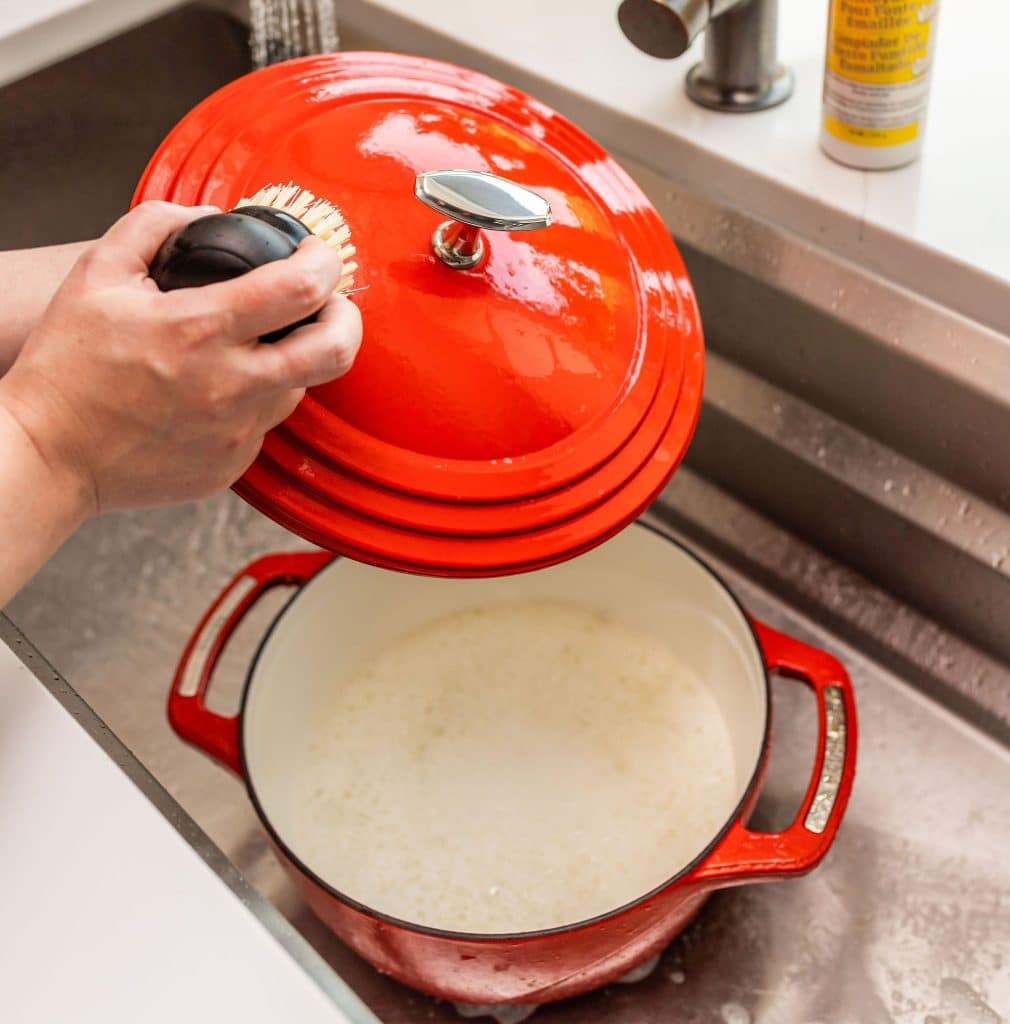
Soft to medium scrubbers work best to remove stuck food without scratching. Natural bristle brushes help reach corners and grooves.
- Use nylon or natural fiber brushes for gentle scrubbing.
- A non-metal scrub pad can clean without harming the seasoning.
- A chainmail scrubber removes tough residue but stays safe for cast iron.
Avoiding Harsh Chemicals
Harsh soaps and chemicals strip the seasoning on cast iron. This makes it prone to rust and damage.
Stick to mild dish soap or just hot water to clean. Re-season your Dutch oven after cleaning if needed.
- Do not use bleach or strong detergents.
- Avoid abrasive powders or steel wool.
- Use natural cleaning methods for best results.
Daily Cleaning Steps
Cleaning your cast iron Dutch oven after each use helps keep it in good shape. Proper daily care stops rust and keeps food tasting great.
Follow simple steps to clean your Dutch oven without damaging its seasoning or surface.
Removing Food Residue
Remove leftover food while the Dutch oven is still warm. Use a wooden or silicone spatula to scrape off stuck bits gently.
Avoid metal scrapers that can scratch the surface. For tough residue, soak the pot in warm water for a few minutes.
Washing Techniques
Wash the Dutch oven with warm water and a soft sponge. Use a small amount of mild dish soap if needed.
Do not use harsh detergents or steel wool. These can remove the seasoning and cause rust.
- Rinse well to remove all soap
- Clean inside and outside gently
- Use warm, not hot, water
Drying Properly
Dry your Dutch oven immediately after washing. Use a clean towel to wipe off all water from inside and outside.
Place the pot on low heat on the stove for a few minutes to remove any remaining moisture. This stops rust from forming.
- Wipe with towel
- Heat on stove briefly
- Store in a dry place
Deep Cleaning Methods
Cleaning a cast iron Dutch oven deeply helps keep it in good shape. It removes stuck-on food and stains.
Using the right cleaning methods protects the seasoning and makes your Dutch oven last longer.
Handling Stubborn Stains
Stubborn stains can be hard to remove with normal washing. You can use gentle scrubbing to clean them.
Use a non-metal brush or sponge to avoid damaging the surface. Avoid soap or harsh chemicals.
Using Salt And Oil
Coarse salt works as a natural scrubber. It helps remove food bits without scratching the iron.
Mix salt with a little cooking oil. Rub the mix on the Dutch oven’s surface to clean it deeply.
- Sprinkle coarse salt inside the pot
- Add a small amount of oil to make a paste
- Use a cloth or sponge to scrub gently
- Rinse with warm water and dry thoroughly
Boiling Water Technique
Boiling water in the Dutch oven helps loosen stuck food and stains. It softens residue for easy cleaning.
Fill the pot with water and bring it to a boil on the stove. Let it boil for 10 to 15 minutes before cleaning.
- Fill Dutch oven with water
- Heat on stove until water boils
- Boil for 10 to 15 minutes
- Carefully pour out water
- Scrub gently to remove loosened residue

Credit: parade.com
Re-seasoning Your Dutch Oven
Keeping your cast iron Dutch oven well-seasoned is key to its performance. Seasoning builds a natural, non-stick coating that protects the surface.
Over time, this coating can wear away. Re-seasoning restores the protection and keeps your Dutch oven cooking smoothly.
When To Re-season
Look for signs that your Dutch oven needs re-seasoning. These signs show the protective layer is thinning or damaged.
- Rust spots appear on the surface
- Food starts sticking more than usual
- The surface looks dull or dry
- Scratches or chips in the coating
- You have cleaned it with harsh soap or scrubbers
Step-by-step Seasoning Process
Follow these steps to re-season your Dutch oven and protect it for future use.
- Wash your Dutch oven with warm water and mild soap. Use a brush or sponge to remove any residue.
- Dry it completely with a clean towel or heat it on the stove for a few minutes to remove moisture.
- Apply a thin layer of vegetable oil or flaxseed oil all over the inside and outside surfaces.
- Place the Dutch oven upside down in an oven preheated to 375°F (190°C). Put a sheet of foil below to catch drips.
- Bake for 1 hour to let the oil bond to the cast iron.
- Turn off the oven and let the Dutch oven cool inside before removing it.
- Repeat this process 2–3 times for the best seasoning layer.
Avoiding Common Mistakes
Cleaning a cast iron Dutch oven needs care. Avoid actions that can damage it.
Some cleaning mistakes harm the cooking surface. Learn what not to do to keep it safe.
What Not To Do
Do not use soap or harsh detergents. These can remove the seasoning layer.
Avoid soaking your Dutch oven in water for long. It causes rust to form quickly.
- Skip metal scrubbers or steel wool
- Do not put it in the dishwasher
- Never dry it by air alone
- Avoid cooking acidic foods for too long
Preserving The Seasoning Layer
Seasoning is the oily coating that stops rust and adds flavor. Keep it safe.
After cleaning, dry your Dutch oven well. Then, rub a thin layer of oil on it.
- Use a soft cloth or paper towel to apply oil
- Heat it on the stove or in the oven to set the oil
- Store in a dry place with the lid off or slightly open
- Re-season if food starts sticking or the surface looks dull

Credit: www.reddit.com
Storage Tips For Longevity
Proper storage helps keep your cast iron Dutch oven in great shape. Good care prevents rust and damage.
Follow simple steps to protect your Dutch oven. This makes it last longer and stay ready to use.
Keeping It Dry
Moisture causes rust on cast iron. Always dry your Dutch oven completely after washing.
- Wipe with a clean, dry cloth right after washing
- Heat the oven on low for a few minutes to remove leftover moisture
- Store in a dry place away from humidity
- Place a paper towel inside to absorb any moisture
Using Protective Covers
Protective covers keep dust and dirt off your Dutch oven. They also prevent scratches and damage.
| Cover Type | Benefits | Notes |
| Cloth Cover | Breathable, prevents dust | Use natural fabric like cotton |
| Silicone Lid | Protects from scratches | Ensure it fits loosely to avoid moisture buildup |
| Plastic Wrap | Keeps moisture and dirt out | Not recommended for long-term storage |
Frequently Asked Questions
How Do You Clean A Cast Iron Dutch Oven?
To clean, rinse with warm water and use a soft brush. Avoid soap and harsh scrubbers. Dry thoroughly and apply a thin oil layer to prevent rust.
Can I Use Soap On A Cast Iron Dutch Oven?
Using mild soap occasionally is safe if your Dutch oven is well-seasoned. Avoid harsh detergents, which can strip the seasoning and damage the surface.
How Do You Remove Stuck-on Food From Cast Iron?
Soak the Dutch oven in warm water for 15 minutes. Use a non-metal brush or scraper to gently remove residue without damaging the seasoning.
How Often Should I Season My Dutch Oven?
Season your Dutch oven after every few uses or if food starts sticking. Apply a thin oil layer and bake at 350°F for one hour.
Conclusion
Caring for a cast iron Dutch oven is simple and rewarding. Regular cleaning keeps it in top condition. Scrape off food residues gently. Avoid soap to preserve its seasoning. Dry it thoroughly to prevent rust. A light oil coat helps maintain its non-stick surface.
Store it in a cool, dry place. These steps ensure your Dutch oven lasts a lifetime. Cooking becomes more enjoyable with a well-maintained tool. Remember, a little effort goes a long way. Happy cooking with your trusted Dutch oven!