Bake Over Proofed Sourdough Bread: Best Tips for 2026
Can You Still Bake Over Proofed Sourdough Bread? Imagine this: You’ve spent hours nurturing your sourdough starter, carefully measuring each ingredient, and then, oops, life gets in the way, and your dough sits too long. Now, you’re staring at an over-proofed loaf, feeling the pang of disappointment.
But wait, before you toss it out in despair, you might be wondering, “Can you still bake over-proofed sourdough bread? ” The answer might surprise you. Stay with me, because in the next few paragraphs, you’ll discover that all is not lost.
You’ll learn simple tips and tricks to turn that doughy mishap into a delicious, aromatic loaf that will have you feeling like a baking hero. Ready to save your sourdough? Let’s dive in!

Credit: www.reddit.com
Signs Of Over Proofed Sourdough
Over proofed sourdough can affect the bread’s texture and taste. It is important to spot the signs early. This helps decide if the dough is still good to bake.
Knowing what to look for saves time and avoids wasting ingredients. Here are the main signs of over proofed sourdough.
Visual Indicators
Over proofed sourdough shows clear changes in its appearance. The dough can look very loose and bubbly. It may also collapse or spread out instead of holding shape.
- Dough surface looks wet or sticky
- Large air bubbles visible under the crust
- Dough rises then sinks or deflates
- Crust cracks in unusual ways after baking
- Loaf looks flat instead of round and full
Texture And Smell Changes
| Change | Description |
| Texture | Dough feels very soft and slack, losing its strength. |
| Crumb | After baking, crumb is too open or gummy. |
| Smell | Sour or alcoholic smell is stronger than usual. |
| Taste | Flavors can be too sharp or unpleasant. |
Why Over Proofing Happens
Over proofing sourdough bread can ruin its texture and taste. It happens when dough ferments too long or under certain conditions.
Understanding why over proofing occurs helps you avoid it and bake better bread.
Fermentation Process
Fermentation is the process where yeast and bacteria make dough rise. It produces gas that expands the dough.
- If dough ferments too long, it loses strength and collapses.
- Yeast uses all available sugars, stopping fermentation early.
- Gluten breaks down, making the dough sticky and weak.
- Too much fermentation causes large air pockets and poor crumb.
Environmental Factors
Temperature and humidity affect how fast dough ferments. Warm and moist conditions speed up fermentation.
| Factor | Effect on Proofing |
|---|---|
| High Temperature | Speeds fermentation, risk of over proofing |
| Low Temperature | Slows fermentation, reduces over proofing risk |
| High Humidity | Increases yeast activity, faster proofing |
| Low Humidity | Slows yeast, slower proofing |
Effects On Bread Quality
Over proofing sourdough bread changes its texture and taste. This happens because the dough ferments too long. The yeast and bacteria eat more sugars and create gas, acids, and alcohol.
Understanding these effects helps decide if the bread is still good to bake. It also shows what to expect in the final loaf.
Crumb Structure
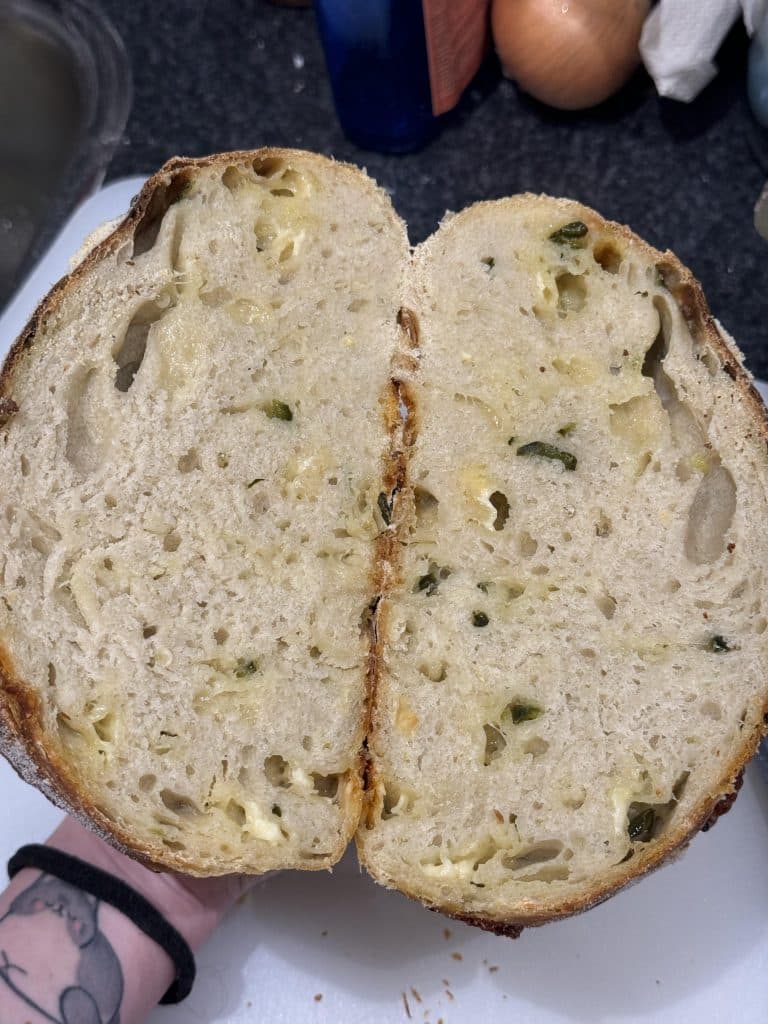
Over proofed dough leads to a crumb that is very open and weak. The gas bubbles inside the dough grow too large and then burst. This makes the bread collapse during baking.
- The crumb may have large holes and thin walls.
- The bread can become flat or misshapen.
- It may feel gummy or doughy inside.
- The crust might not rise well or crack oddly.
Flavor Impact
When sourdough is over proofed, its flavor changes. The acids and alcohol from fermentation become stronger. This can make the bread taste sour or sharp.
| Flavor Aspect | Effect of Over Proofing |
| Sourness | Increases sharply |
| Sweetness | Decreases due to sugar use |
| Alcohol Taste | May be noticeable |
| Overall Balance | Less harmonious |
Salvaging Over Proofed Dough
Over proofed sourdough dough can still be baked. It needs some care to regain its shape and strength. You can save it by reshaping or chilling it properly.
These simple methods help improve the texture and rise of your bread. They let you enjoy your sourdough without wasting dough.
Re-shaping Techniques
When dough is over proofed, it loses structure and can spread out. Re-shaping helps tighten the dough and improve its rise again.
- Gently deflate the dough by pressing it down with your hands.
- Shape the dough into a tight round or oval ball.
- Use light flour on your hands and work surface to avoid sticking.
- Place the shaped dough into a banneton or bowl dusted with flour.
- Allow the dough to rest for 20 to 30 minutes before baking.
Cold Retardation Method
Cold retardation slows down yeast activity and helps improve dough flavor and texture. It also firms up over proofed dough for easier handling.
| Step | Description |
| 1 | After re-shaping, place dough in a covered container or banneton. |
| 2 | Put the dough in the refrigerator for 8 to 12 hours. |
| 3 | Remove dough from fridge 1 hour before baking to warm up slightly. |
| 4 | Bake as usual with your preferred method and temperature. |
Baking Adjustments For Over Proofed Loaves
Over proofed sourdough bread can be saved with some baking changes. These loaves may have a weak structure and lose shape.
Adjusting temperature, baking time, and steam use helps improve the final bread texture and crust.
Temperature And Time Tweaks
Bake over proofed sourdough at a slightly lower temperature. This prevents burning and allows the loaf to set properly.
Extend the baking time by 5 to 10 minutes. This helps dry out the crumb and firm the loaf.
- Reduce oven temperature by 10-20°F (5-10°C)
- Bake 5-10 minutes longer than usual
- Check loaf firmness before removing
Steam Usage Tips
Use steam early in baking to help the crust expand and stay soft. This is important for over proofed dough that is fragile.
Stop steam after the first 10-15 minutes. This lets the crust dry and become crispy.
- Introduce steam for first 10-15 minutes
- Use a pan of water or spray mist in the oven
- Remove steam source to dry out crust later

Credit: www.reddit.com
Preventing Over Proofing In Future Bakes
Over proofing sourdough bread can affect its texture and taste. Learning how to stop it from happening helps you bake better bread every time.
Two key areas to watch are your timing and how you manage your starter and dough. These can make a big difference in your results.
Timing Strategies
Watch the time your dough spends rising. Too long will cause over proofing. Use a timer to keep track.
- Check the dough every 30 minutes during the first rise.
- Look for signs like dough that has doubled in size.
- Perform the finger poke test to see if it springs back slowly.
- Move to the next step once the dough passes this test.
Starter And Dough Management
Keep your starter healthy and active. This controls how fast your dough rises and helps avoid over proofing.
| Aspect | Tip |
|---|---|
| Starter Feeding | Feed regularly and keep at room temperature before use |
| Dough Temperature | Keep dough cool to slow fermentation |
| Hydration Level | Avoid too much water; it speeds up proofing |
| Salt Amount | Salt slows yeast activity; measure precisely |
Expert Advice And Common Mistakes
Over proofing sourdough bread can feel like a baking mistake. Many wonder if the dough is still usable after it has risen too much.
This guide shares expert advice and points out common errors to help bakers decide what to do with over proofed sourdough.
What Professionals Recommend
Professional bakers say that over proofed sourdough can still be baked with care. The key is to handle the dough gently and adjust baking times.
- Check the dough’s texture; it should be soft but not too sticky.
- Shape the dough carefully to avoid pushing out all the air.
- Use a hot oven to help the bread rise quickly in the oven.
- Reduce proofing time in future bakes to avoid the issue.
Experts also advise watching the dough closely during baking. This helps prevent a dense or overly sour loaf.
Avoiding Pitfalls
| Common Mistake | Effect on Bread | How to Avoid |
| Letting dough rise too long | Too sour and weak structure | Watch the dough, not the clock |
| Handling dough roughly | Deflates air pockets | Use gentle folding and shaping |
| Using low oven temperature | Poor oven spring | Preheat oven well |
| Ignoring dough feel | Over or under proofed dough | Learn dough texture signs |

Credit: www.reddit.com
Frequently Asked Questions
Can Over Proofed Sourdough Bread Be Baked Successfully?
Yes, you can bake over proofed sourdough bread. It may result in a denser crumb and less oven spring. Adjust baking time slightly to avoid excessive dryness. Though texture changes, the bread remains edible and flavorful.
How To Identify Over Proofed Sourdough Dough?
Over proofed dough appears very soft, sticky, and may collapse when touched. It lacks springiness and volume. The dough can feel loose and overly expanded, making it hard to shape properly before baking.
What Causes Sourdough Bread To Over Proof?
Over proofing occurs due to excessive fermentation time or high ambient temperature. Yeast activity continues too long, producing excess gas that weakens dough structure. This leads to dough collapse and poor texture.
Can I Salvage Over Proofed Sourdough Dough?
You can reshape and bake over proofed dough immediately to salvage it. Avoid further fermentation to prevent collapse. Baking right away helps retain some structure and flavor, though texture may differ from ideal bread.
Conclusion
Over proofed sourdough bread can still be baked successfully. It may not rise as much but will taste good. Pay attention to the dough’s texture and bake time. Avoid letting the dough sit too long next time. Baking over proofed bread teaches patience and care.
Keep practicing and enjoy your homemade sourdough. Every loaf helps you learn and improve. Don’t waste over proofed dough—bake it and enjoy!