Are you tired of your cast iron skillet taking up too much space in your kitchen, or worse, getting damaged because you don’t know how to store it properly? You’re not alone.
Many cooking enthusiasts like you struggle with finding the perfect spot for their beloved cookware. Cast iron skillets are not just any kitchen tools; they are prized possessions that can last a lifetime if taken care of properly. Imagine the joy of having your skillet in pristine condition every time you reach for it, ready to cook up a storm.
In this guide, we’ll uncover simple yet effective strategies to store your cast iron skillet safely, ensuring it remains your kitchen companion for years to come. Keep reading to discover these secrets and transform your kitchen space into an organized haven.

Credit: www.reddit.com
Choosing The Right Storage Spot
Storing cast iron skillets properly keeps them in good shape for years. Picking the right spot in your kitchen matters a lot.
This guide helps you find the best place to store your skillets safely and conveniently.
Assessing Kitchen Layout
Look around your kitchen to find open spaces that fit your skillets well. Check cabinets, shelves, and drawers for room.
- Choose a spot near your cooking area for easy access.
- Make sure the space can hold the weight of your skillet.
- Avoid spots that are too high or too low to prevent accidents.
- Keep skillets away from sharp or fragile items.
Considering Accessibility
Store skillets where you can reach them without trouble. Frequent use means easy access saves time.
| Storage Type | Accessibility Level |
| Lower cabinet | High – Easy to grab |
| Wall-mounted rack | Medium – Visible but needs reaching |
| High shelf | Low – Hard to reach safely |
| Deep drawer | Medium – May require moving items |
Avoiding Moisture And Humidity
Moisture causes rust on cast iron skillets. Keep them in dry places only.
Tips to avoid moisture:
- Do not store skillets near sinks or dishwashers.
- Use cabinet dehumidifiers or silica gel packs.
- Ensure good air circulation around the skillets.
- Wipe skillets dry before storing.
Preparing Skillets For Storage
Storing cast iron skillets properly keeps them in good shape. Preparing them before storage prevents rust and damage.
Follow simple steps to clean, protect, and stack your skillets safely in the kitchen.
Cleaning And Drying Properly
Clean your cast iron skillets right after use. Avoid soaking them in water for long periods.
Dry the skillets completely to stop rust. Use a towel and heat them on low to remove moisture.
- Wash with warm water and a brush or sponge
- Do not use soap or harsh detergents
- Dry with a clean towel immediately
- Heat on stove for a few minutes to remove any moisture
Applying A Protective Layer
After cleaning, add a thin layer of oil to protect the skillet. This keeps the surface seasoned and rust-free.
Use cooking oils like vegetable oil or flaxseed oil. Apply the oil evenly with a cloth or paper towel.
- Apply a small amount of oil inside and outside the skillet
- Rub the oil evenly over all surfaces
- Wipe off extra oil to avoid sticky buildup
Stacking With Care
Stack skillets carefully to avoid scratches and dents. Use protective layers between each skillet.
Place a paper towel or cloth between skillets. This prevents metal from rubbing directly against metal.
- Stack skillets with the largest on the bottom
- Place paper towels or cloths between each skillet
- Store in a dry, cool place away from moisture
Space-saving Storage Ideas
Cast iron skillets are heavy and need proper storage. Using space-saving ideas keeps your kitchen neat.
Organize skillets so they are easy to reach and do not damage each other.
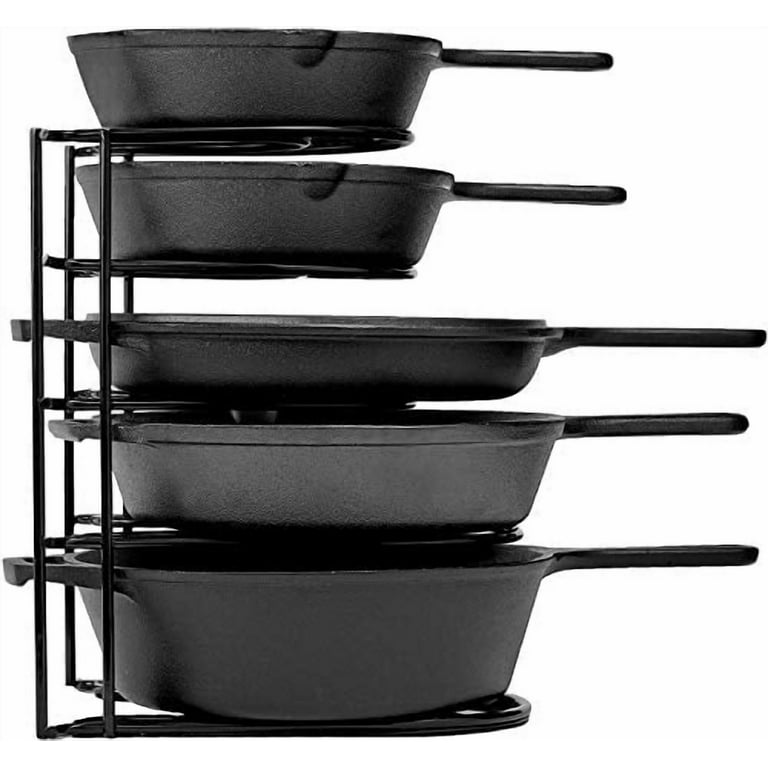
Using Vertical Racks
Vertical racks hold skillets upright. This saves cabinet space and prevents scratches.
You can place these racks inside cabinets or on countertop corners to keep skillets sorted.
- Choose racks with wide slots for heavy skillets
- Use non-slip bases to keep skillets stable
- Stack skillets by size for easy access
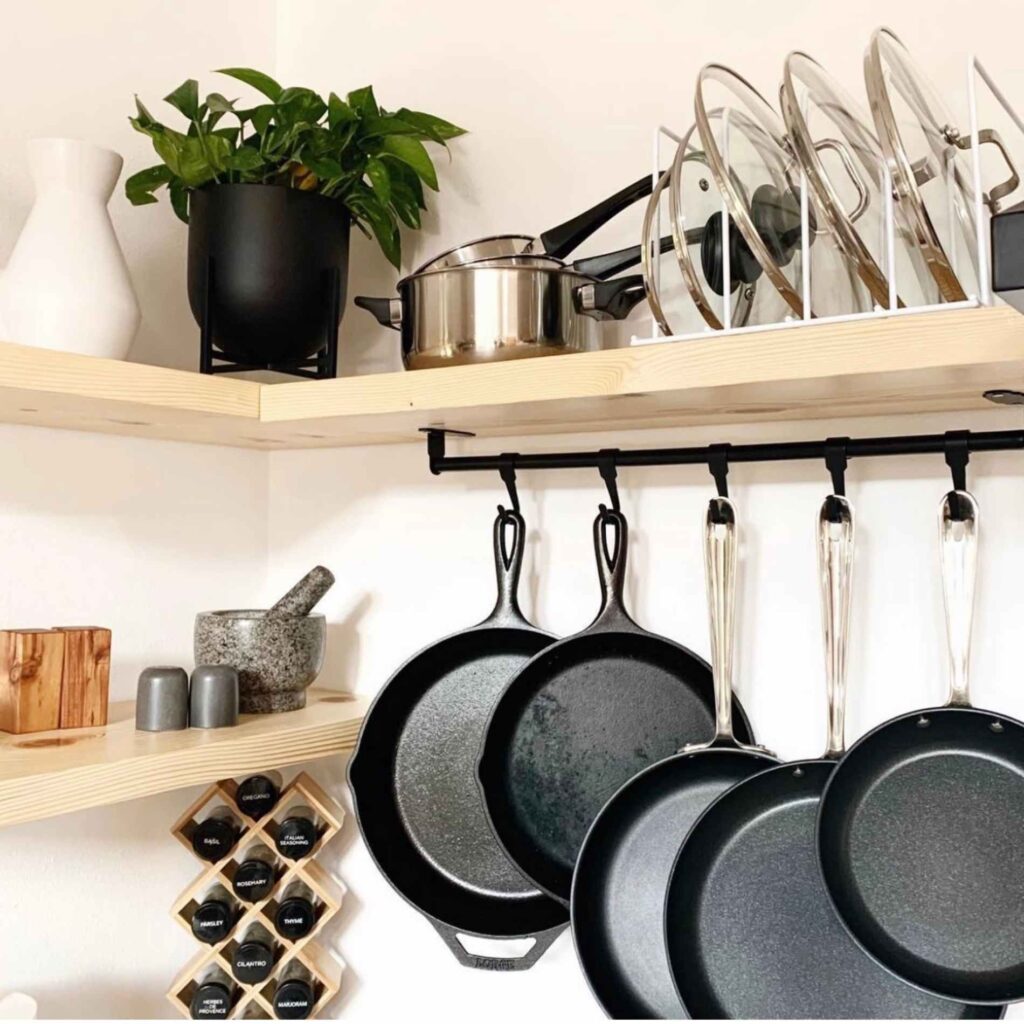
Hanging On Wall Hooks
Wall hooks let you hang skillets and save cabinet space. Hooks keep skillets visible and easy to grab.
Install sturdy hooks on a kitchen wall or above the stove to keep skillets within reach.
- Use metal hooks that hold heavy skillets
- Place hooks at different heights for various sizes
- Leave space between skillets to avoid scratches
Utilizing Cabinet Doors
Mount racks or hooks on cabinet doors to store skillets inside cabinets. This uses hidden space well.
This idea keeps skillets out of sight but easy to reach when needed.
- Attach slim racks to hold skillet lids and handles
- Use adhesive hooks for easy installation
- Make sure doors close smoothly without hitting skillets
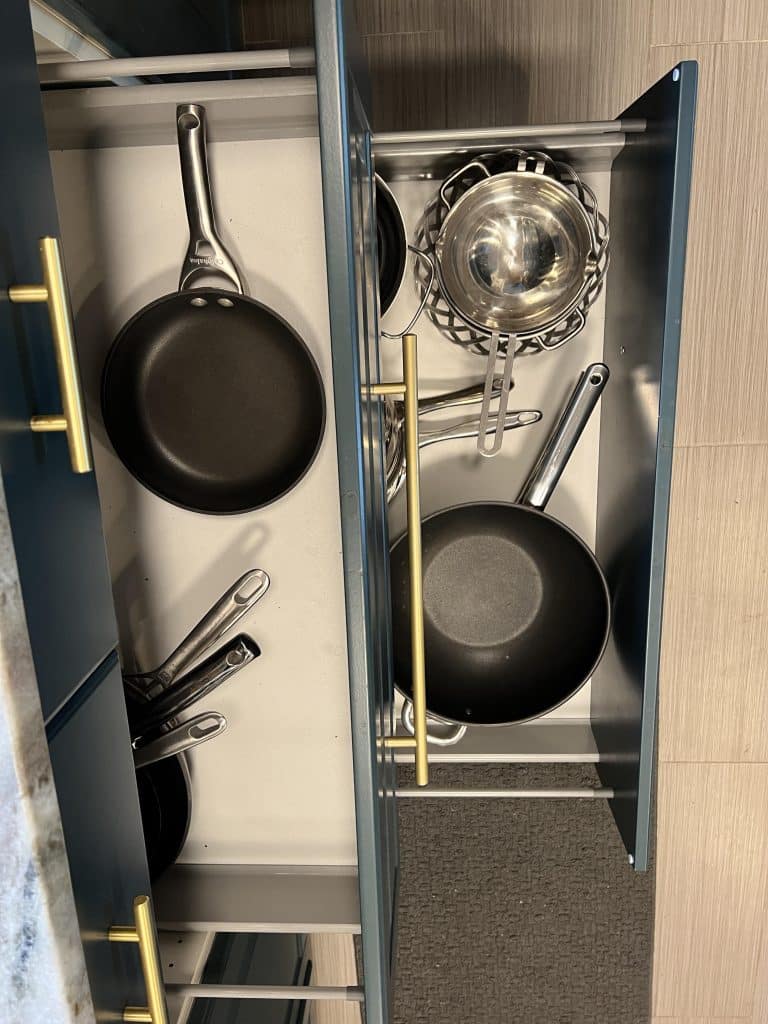
Incorporating Pull-out Drawers
Pull-out drawers inside cabinets provide easy access to skillets. They keep skillets organized and safe.
Drawers with dividers separate skillets and prevent them from scratching each other.
- Choose deep drawers to fit large skillets
- Use soft liners to protect cast iron surfaces
- Label drawers for quick identification
Credit: www.walmart.com
Maintaining Skillet Condition While Stored
Proper storage keeps your cast iron skillet in great shape. It helps avoid damage and rust. Taking simple steps can extend its life.
Learn how to maintain your skillet with easy care tips. These tips focus on oiling, preventing rust, and regular checks.
Regular Oil Maintenance
Oiling your skillet after cleaning protects its surface. It keeps the pan non-stick and prevents moisture from causing rust.
- Wash the skillet with warm water and a soft brush.
- Dry the skillet completely with a towel or heat it on low flame.
- Apply a thin layer of cooking oil on the entire surface, inside and out.
- Use vegetable oil, flaxseed oil, or any cooking oil with a high smoke point.
- Store the skillet in a dry place after oiling.
Preventing Rust And Damage
Rust forms when moisture stays on the skillet. Avoid stacking heavy items on top to prevent scratches and dents.
| Common Cause | Prevention Method |
| Moisture | Dry skillet fully and oil it |
| Scratches | Use pan separators or hang skillet |
| Rust spots | Clean rust immediately and re-season |
| Dents | Store skillet separately from heavy cookware |
Periodic Inspection Tips
Check your skillet regularly to catch issues early. Look for rust, cracks, or worn seasoning.
- Inspect the skillet surface for any rust spots.
- Look for cracks or chips in the iron.
- Check if the seasoning is smooth and even.
- If rust appears, scrub with steel wool and reapply oil.
- Re-season the skillet if the surface feels sticky or uneven.
Storage Solutions For Multiple Skillets
Cast iron skillets are heavy and take up space. Storing many skillets can be hard without damage.
Good storage keeps them safe and easy to reach. Use smart ways to save kitchen space.
Nesting Techniques
Nesting means stacking skillets inside each other. It saves space and keeps them organized.
Make sure to place a soft cloth or paper towel between each skillet. This stops scratches and rust.
- Clean and dry skillets before nesting
- Use cloth or paper as a cushion
- Place larger skillets at the bottom
- Store in a dry, cool spot
Using Divider Inserts
Divider inserts help separate skillets on shelves or drawers. They stop skillets from rubbing together.
Dividers can be wood, metal, or plastic. Choose sturdy ones that fit your storage space well.
- Place dividers vertically for easy access
- Label sections for different skillet sizes
- Use adjustable dividers for flexibility
- Keep dividers clean to avoid damage
Custom Shelving Options
Custom shelves fit your skillets perfectly. They can hold many skillets safely and neatly.
Build shelves with wide, strong boards. Add hooks or racks to hang skillets if space is tight.
- Use deep shelves for larger skillets
- Add pull-out drawers for easy reach
- Include hooks for handles
- Paint shelves with moisture-resistant finish
Credit: ashandgardenia.com
Frequently Asked Questions
How Should I Prepare Cast Iron Skillets Before Storing?
Clean the skillet thoroughly, dry it completely, and apply a thin oil layer. This prevents rust and maintains seasoning. Store in a dry place to avoid moisture buildup.
Can Cast Iron Skillets Be Stacked Safely?
Yes, but place a paper towel or cloth between skillets to prevent scratches and preserve seasoning. Proper stacking saves space and protects your cookware.
What Is The Best Environment To Store Cast Iron Skillets?
Store cast iron in a cool, dry place with good air circulation. Avoid humid or damp areas to prevent rust and damage to the skillet’s seasoning.
How Often Should I Re-season Cast Iron Skillets During Storage?
Re-season your skillet every few months or when seasoning looks dull. Lightly oil and heat it to maintain a non-stick surface and prevent rust.
Conclusion
Proper storage keeps your cast iron skillet in top shape. Dry it well before storing to stop rust. Use a paper towel or cloth between pans to avoid scratches. Store in a dry place with good air flow. Regular care means your skillet will last for years.
Simple steps protect your investment and improve cooking. Enjoy cooking with your well-maintained cast iron every time. Small habits make a big difference in skillet care. Keep your kitchen organized and your skillet ready to use.